A Local Guide to a Wolmi Island Day Trip from Seoul

Incheon Station is the end of the line, a place where the city air starts to smell like salt and diesel. I often come here when I need to escape the dense high-rises of Seoul without spending a fortune on a KTX ticket to the southern coast. You step off the dark blue Line 1 train, walk past the red gate of Chinatown, and within ten minutes, you are at the edge of the West Sea. This is the gateway to Wolmi Island, a spot that feels like a nostalgic time capsule from the 1990s mixed with modern industrial grit.
This wolmi island day trip guide is for independent travelers who want a break from the standard tourist circuits in Myeongdong. I will show you how to navigate the longest monorail in the country, where to find the most chaotic amusement park rides in Korea, and how to catch a ferry to the nearby islands for a few dollars. Whether you are here for the seafood or the sunset, Wolmi offers a side of Incheon that most visitors skip.
How to get to Wolmi Island from Seoul
Getting to Wolmi Island is straightforward because it is the final stop on Seoul Subway Line 1. If you are starting in central Seoul, like near Seoul Station or Yongsan, look for the trains headed toward Incheon Station. Be careful not to board the trains bound for Sinchang or Incheon-Incheon (Suin-Bundang line) unless you want a very long detour. I usually recommend taking the Gyeongin Line express train (Gup-haeng) from Yongsan Station. These express trains skip many of the smaller local stops and can save you about twenty minutes, making the total trip roughly 70 minutes. The base fare from central Seoul is ₩1,550 (about $1.15), though a small distance surcharge will apply by the time you reach the end of the line.
Once you arrive at Incheon Station, take Exit 1. You will see the entrance to Chinatown directly across the street. To get to Wolmi Island itself, you have three main options. You can take a local bus (numbers 2, 10, or 45) from the stop right outside the station; the ride takes about ten minutes and costs ₩1,500 (about $1.10). If the weather is clear, you might prefer to walk, which takes about 25 minutes along a flat, industrial road. However, the most interesting way to arrive is via the Wolmi Sea Train, which has a station located just to the left as you exit the subway building.
If you choose to walk, you will pass by the massive grain silos of the Incheon Port. These silos hold a Guinness World Record for the largest outdoor mural in the world. It is a massive piece of art that depicts the four seasons and the growth of a young boy into a man. Seeing it up close gives you a sense of the scale of Incheon’s shipping industry before you reach the more relaxed boardwalk area of the island.
Tip: Check the Destination
On Line 1, trains split toward Incheon or Sinchang. Always check the digital sign on the platform or the front of the train to ensure it says ‘Incheon’ or you will end up in the wrong province.
Riding the Wolmi Sea Train
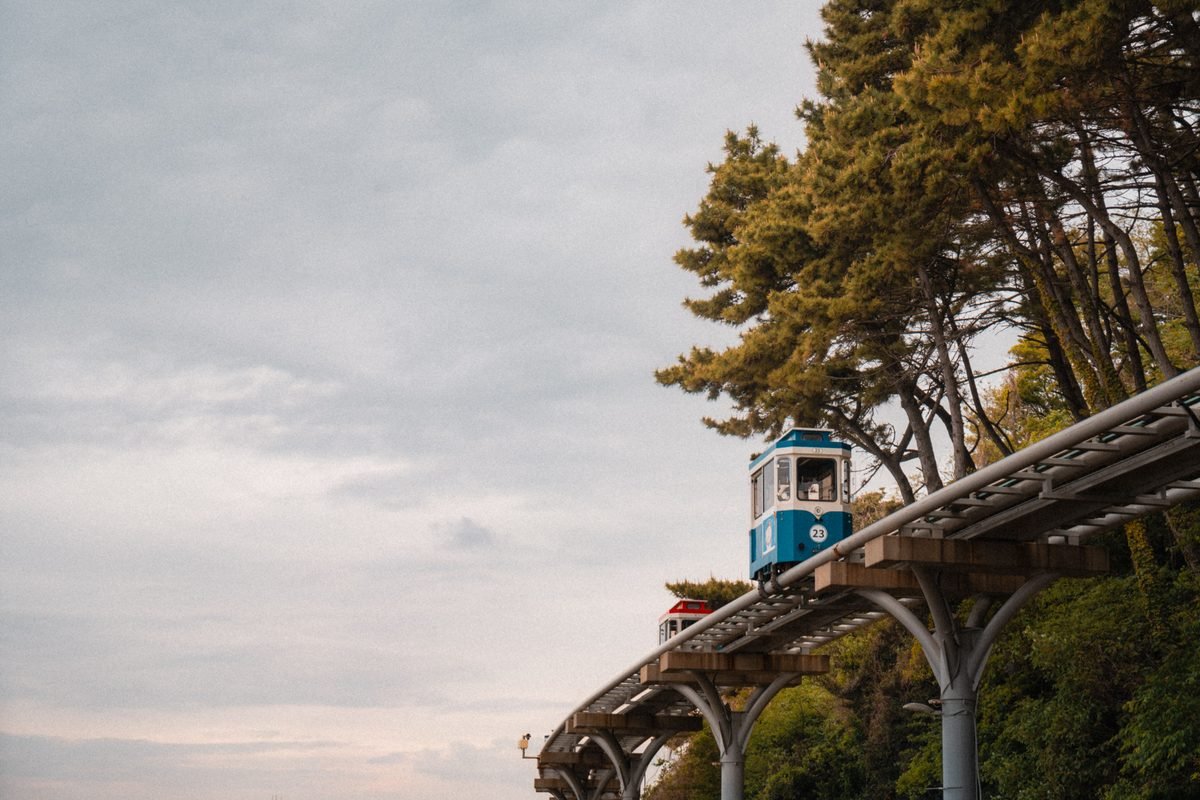
The Wolmi Sea Train is the longest urban monorail in South Korea, circling the entire island in about 45 minutes. It is a great way to get an elevated view of the port, the amusement park, and the sea without having to navigate the crowds on the ground. The track sits about 7 to 18 meters above the ground, providing a unique perspective on the industrial landscape that defines this part of the city. You can see the massive cargo ships being loaded at the docks and the intricate network of cranes that keep the country’s economy moving.
A ticket for the Sea Train costs ₩8,000 (about $6) for adults and allows for two boardings. This means you can start at Incheon Station, get off at the Wolmi Culture Street stop to eat and walk around, and then get back on later to finish the loop back to the station. The train moves at a leisurely pace of about 10 kilometers per hour, so do not expect a high-speed thrill. It is designed for sightseeing, and the large windows are perfect for taking photos of the West Sea. During the weekends, the wait times can be long, often exceeding an hour, so I suggest arriving early in the day to secure a spot.
The monorail operates from 10:00 to 18:00 on weekdays and often stays open until 21:00 on weekends during the peak season. In October, the evening rides are particularly popular because the sun sets directly over the water. Watching the sky turn orange from the elevated cabin is a highlight for many visitors. You can book tickets online in advance, which I highly recommend if you are visiting on a Saturday or Sunday, as they frequently sell out of walk-in slots by midday.
Book ahead: Reserve Your Seat
Book your Sea Train tickets on the official Incheon Transit Corporation website at least three days in advance for weekend visits to avoid long queues.
Thrill rides at Wolmi Theme Park
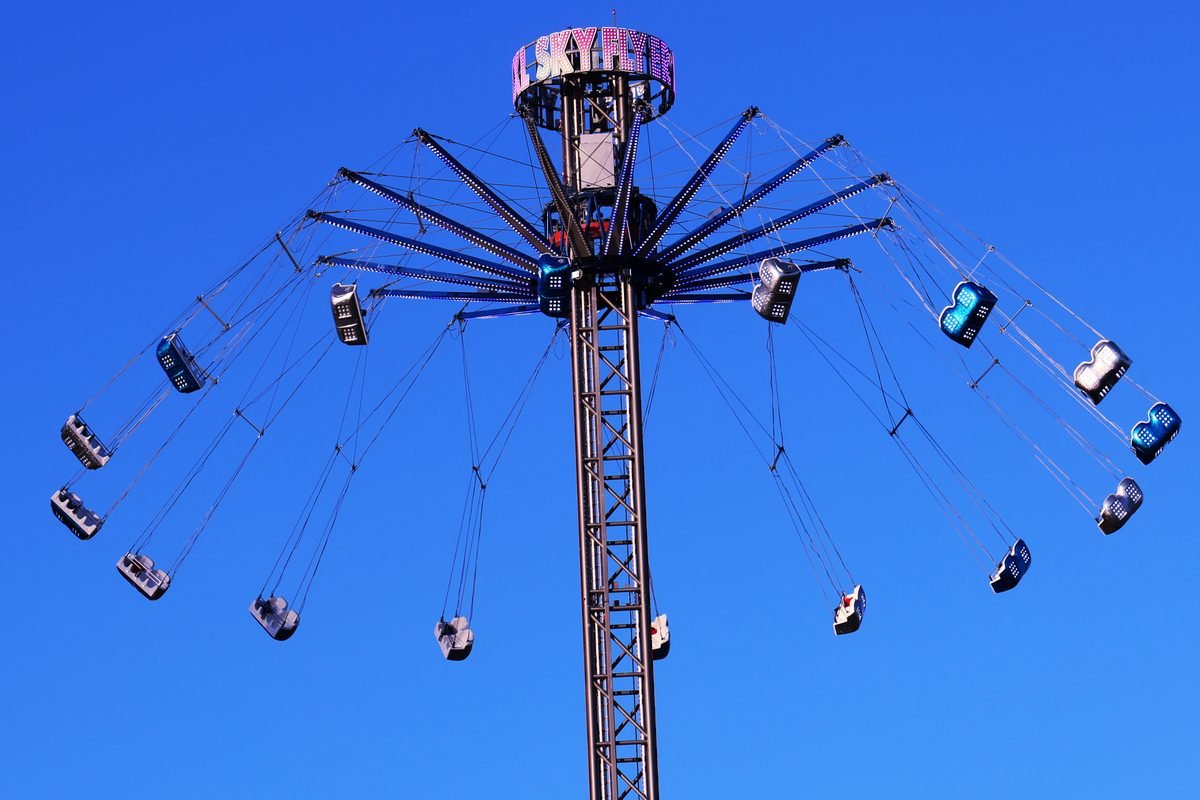
Wolmi Theme Park is not your typical polished corporate park like Everland or Lotte World. It has a gritty, seaside carnival energy that is hard to find elsewhere. There is no admission fee to enter the park grounds; instead, you pay per ride. Most individual rides cost around ₩6,000 (about $4.50) for adults. This makes it a great place to wander through even if you are not a fan of heights, just to soak in the noise and the smell of fried snacks. The park is famous across Korea for two specific attractions: the Viking and the Disco Pang Pang.
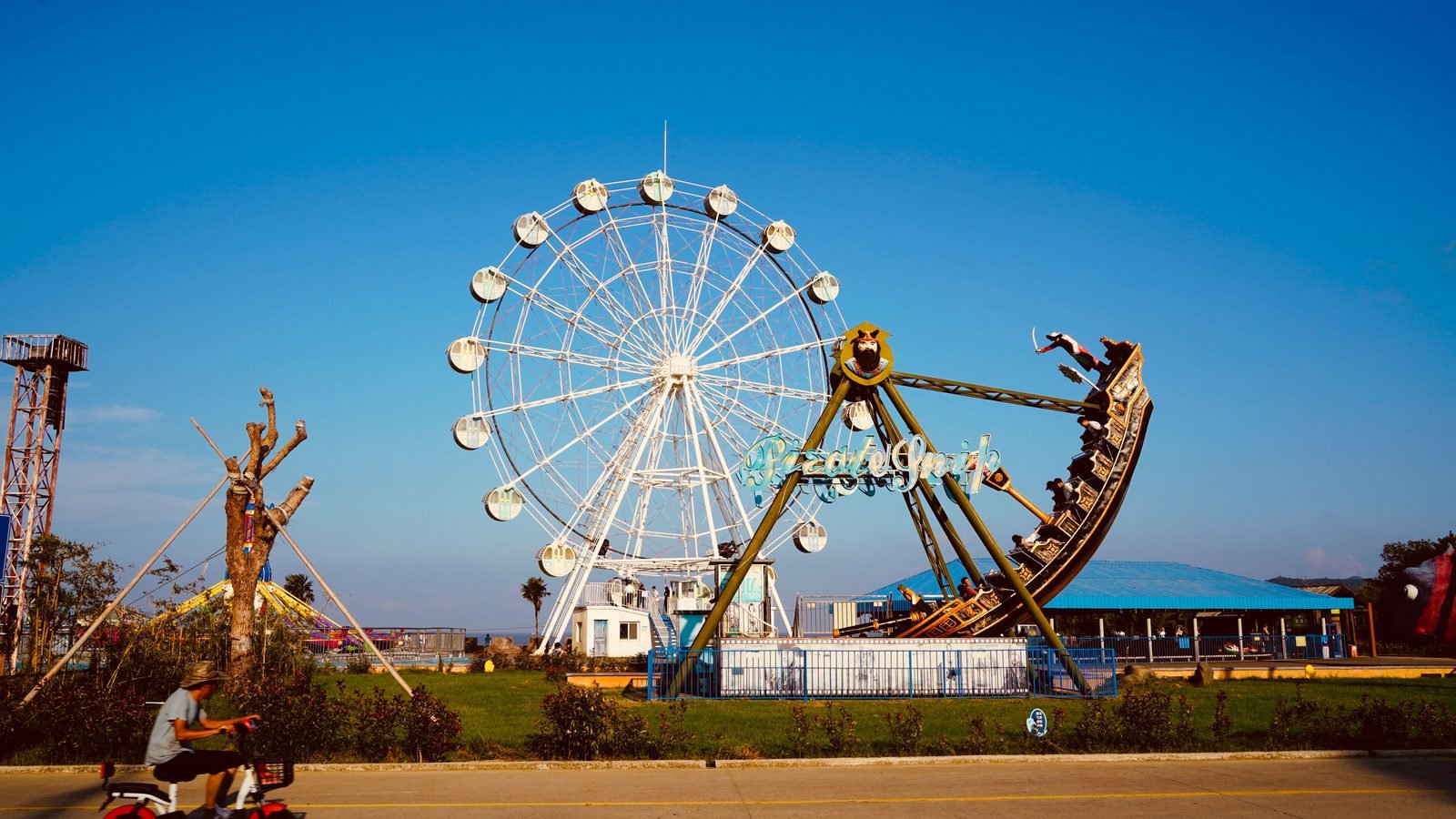
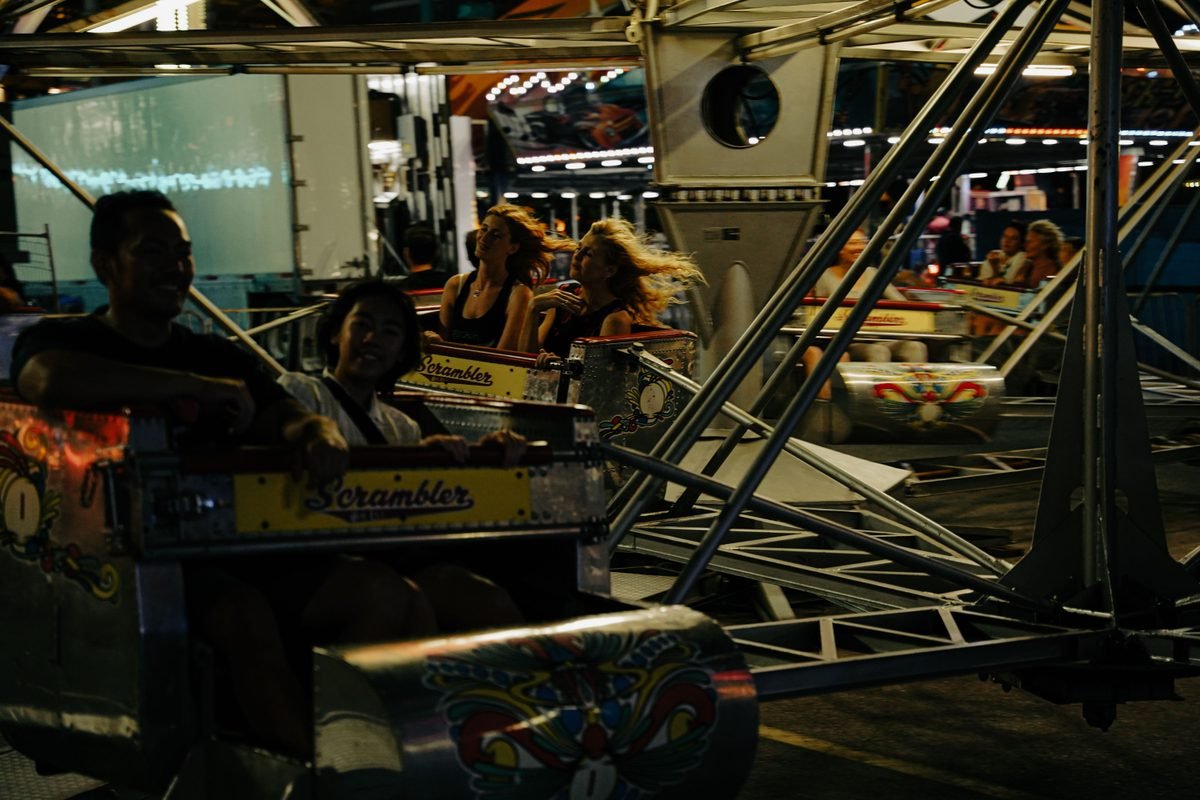
The Wolmi Viking is legendary among locals. While it looks like a standard pirate ship ride, it is notorious for swinging much higher and steeper than those in the bigger parks. At its peak, you are nearly vertical, looking straight down at the concrete below with only a lap bar keeping you in place. It is a genuine test of nerves. Right next to it is the Disco Pang Pang, a spinning circular platform where a DJ mocks the riders over a loudspeaker while bouncing the machine to try and knock them off their seats. Even if you do not ride it, standing in the crowd to watch people struggle to hold on while the DJ cracks jokes is a local pastime.
For those who prefer something calmer, there is a large Ferris wheel that offers a wide view of the Incheon Bridge and the surrounding islands. It is particularly quiet during the morning hours. The park also has plenty of arcade games and smaller rides for children, making it a popular spot for families. In October, the air is crisp enough that the metal of the rides feels cold, but the lack of summer humidity makes the outdoor experience much more comfortable. I recommend visiting in the late afternoon so you can see the neon lights flicker on as the sun goes down.
Heads up: Hold on Tight
The Disco Pang Pang does not have seatbelts; you rely entirely on your grip strength. Avoid riding if you have back or shoulder issues, as the bouncing can be quite jarring.
Where to eat on the seafood street
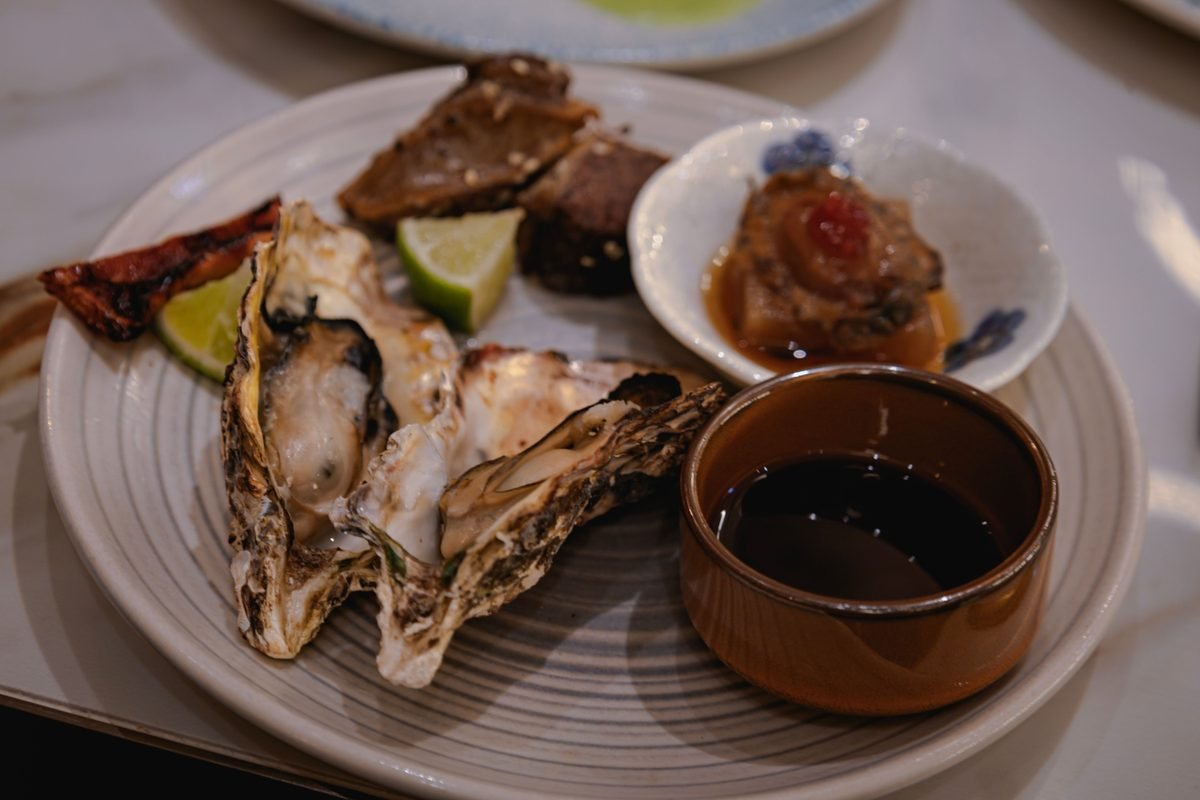
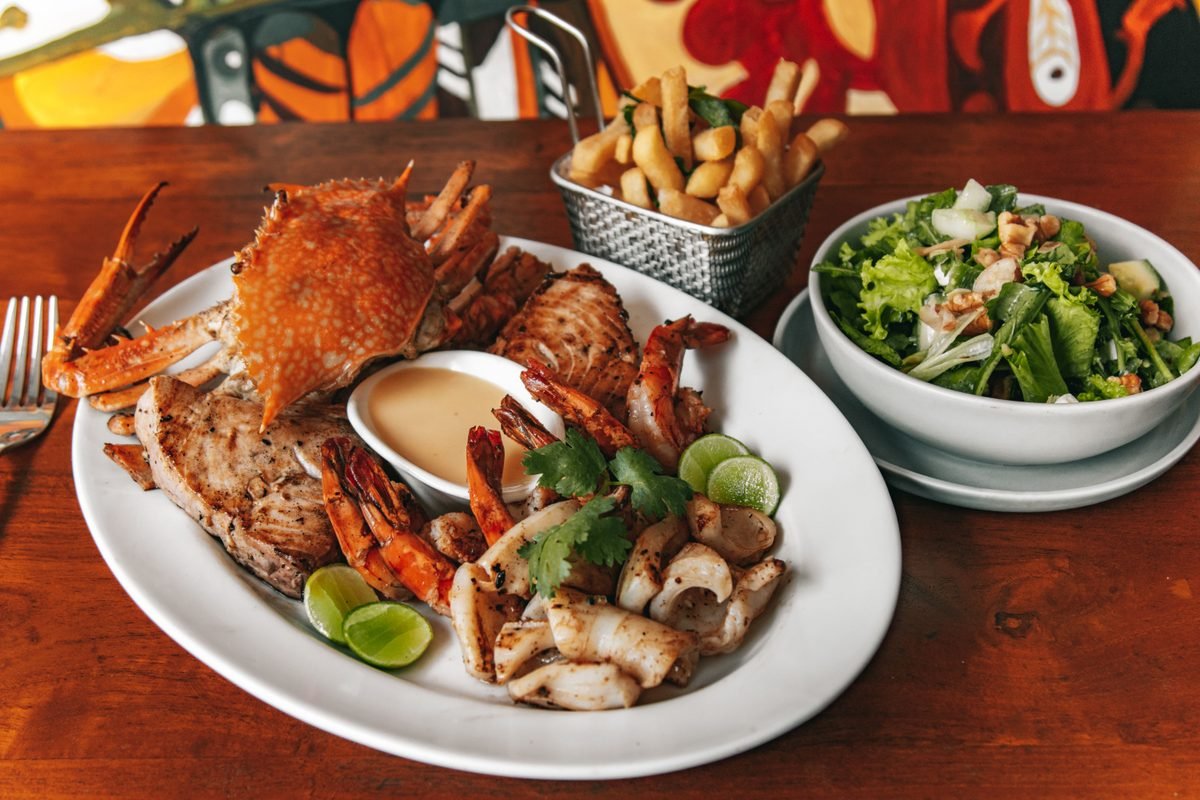
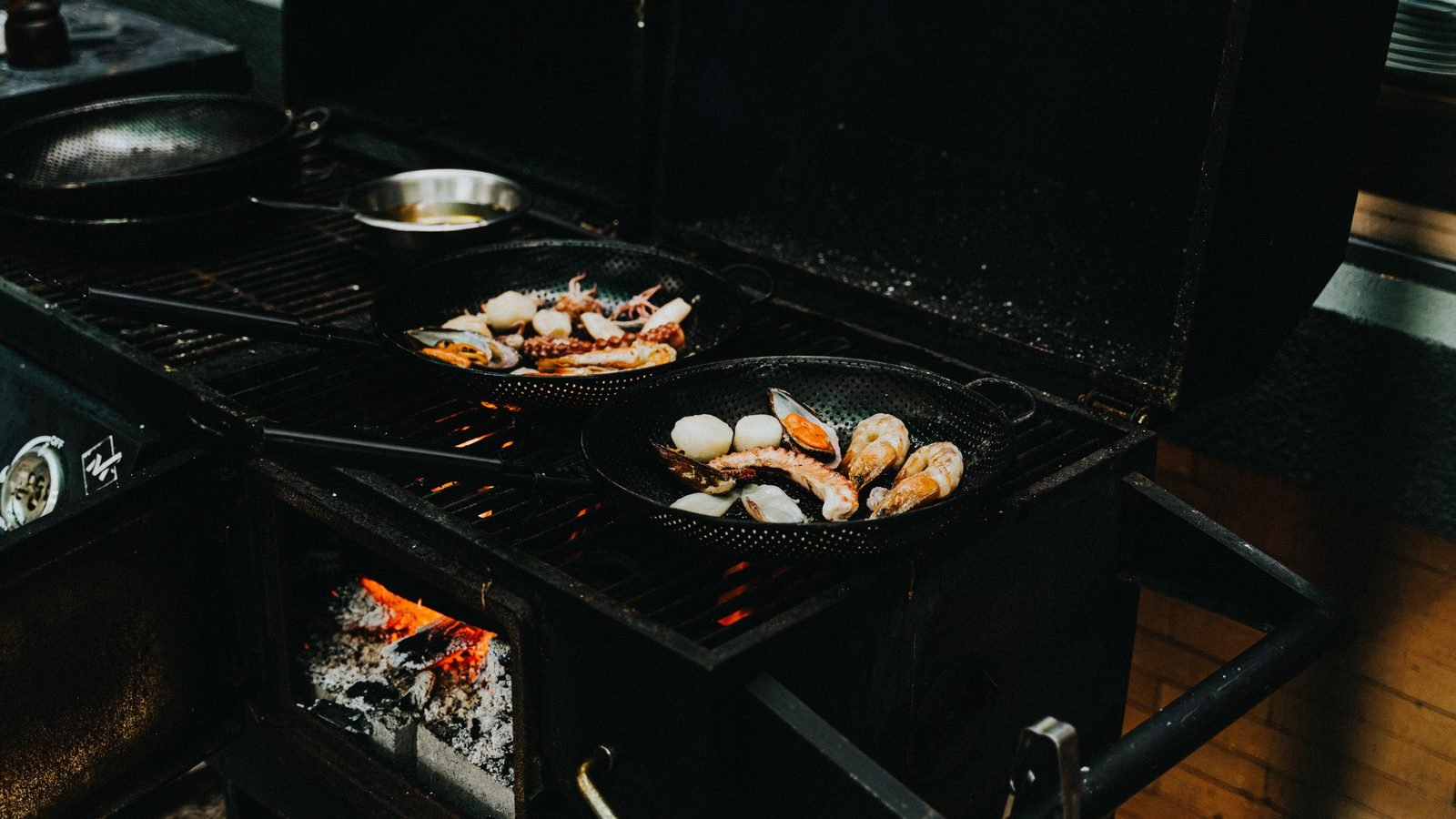
The main boardwalk, known as Wolmi Culture Street, is lined with dozens of seafood restaurants. The specialty here is jogae-gui, or grilled clams. You will see large tanks outside the restaurants filled with various shellfish, from scallops to abalone. Typically, you order a large set that comes with a variety of clams, which you then cook yourself over a gas or charcoal grill built into the center of your table. A set for two people usually starts around ₩60,000. It is a slow, tactile meal that is best enjoyed with a bottle of cold beer or soju while looking out at the water.
If you are not in the mood for a full sit-down meal, the street food scene here is excellent. You can find classic Korean snacks like hotteok (sweet pancakes), tornado potatoes, and dak-kkochi (chicken skewers). I always look for the stalls selling grilled squid or dried filefish (jwipo), which have a smoky, salty flavor that pairs perfectly with the sea breeze. These snacks usually cost between ₩3,000 and ₩5,000 (about $2.20 to $3.70). Most stalls only accept cash or domestic bank transfers, so keep some small bills in your pocket.
For a more formal dining experience, head toward the northern end of the boardwalk where the restaurants are slightly more modern. Some of these spots offer kkal-guksu (hand-cut noodle soup) with seafood for around ₩10,000 (about $7.50), which is a great budget-friendly alternative to the expensive clam sets. The broth is usually rich with the flavor of manila clams and shrimp. Many locals prefer this for a quick lunch before heading back to the subway station. No matter where you eat, try to get a seat by the window; the view of the ferries crossing the channel is part of the experience.
From a local: The Best Kalguksu
Look for restaurants that have a high number of local families inside rather than just young couples. They usually serve the most generous portions of seafood noodle soup.
Taking the ferry to Yeongjongdo
One of the best kept secrets of a Wolmi Island visit is the ferry that departs from the pier near the center of the boardwalk. This boat runs between Wolmi and Gueup-batteo on Yeongjongdo, the island where Incheon International Airport is located. The fare is only ₩3,500 (about $2.60) for an adult one-way ticket, and the journey takes about 15 minutes. It is a car ferry, but foot passengers are welcome and usually outnumber the vehicles. You can buy your ticket at the small booth right on the pier shortly before departure.
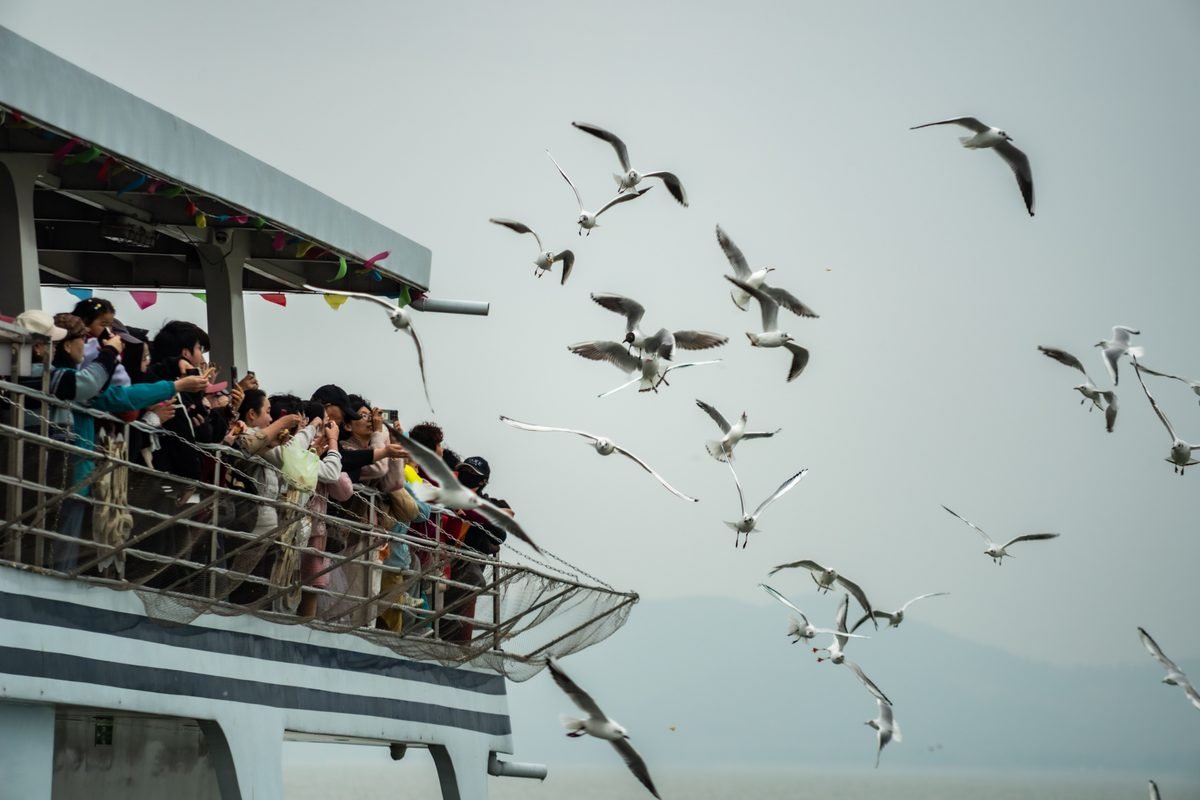
The main reason to take this ferry is the seagulls. As soon as the boat leaves the dock, hundreds of seagulls swarm the upper deck, waiting for passengers to toss them Saewookkang (shrimp crackers). You can buy bags of these crackers at the convenience stores near the pier or on the boat itself. It is a chaotic and loud experience, but it provides some of the best photo opportunities of the trip. The birds are surprisingly precise and will often catch the crackers right out of your hand, though I recommend just throwing them into the air if you want to keep your fingers clean.
Once you arrive at Yeongjongdo, you are in a developing area with several seaside cafes and a long coastal park. From here, you can take a local bus or a taxi further into the island to reach places like Muuido. Muuido is famous for Hanagae Beach, where several Korean dramas were filmed. It used to require another ferry, but a bridge now connects it to the mainland. If you have the time, starting your day at Wolmi and ending it with a walk on the sands of Muuido makes for a perfect coastal itinerary. Just keep an eye on the time, as the last ferry back to Wolmi usually departs around 18:00 or 19:00 depending on the season.
Sunset views from the Wolmi Pier
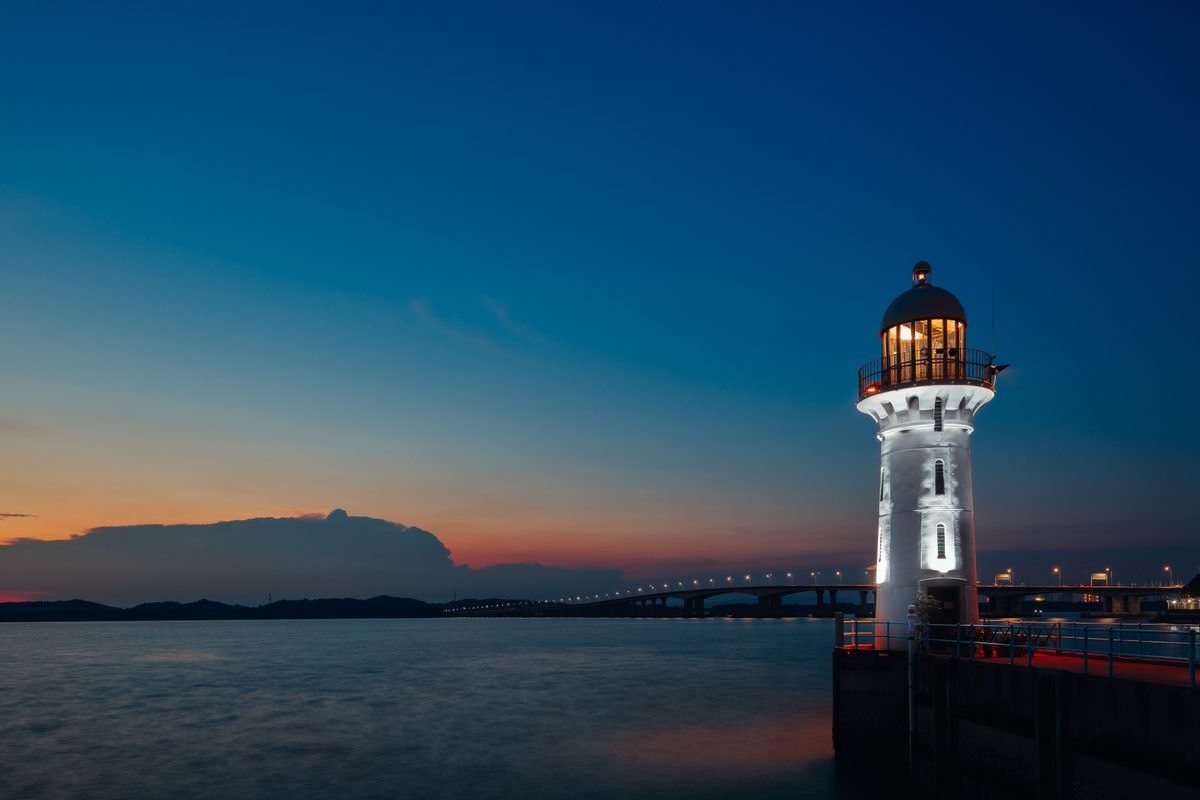
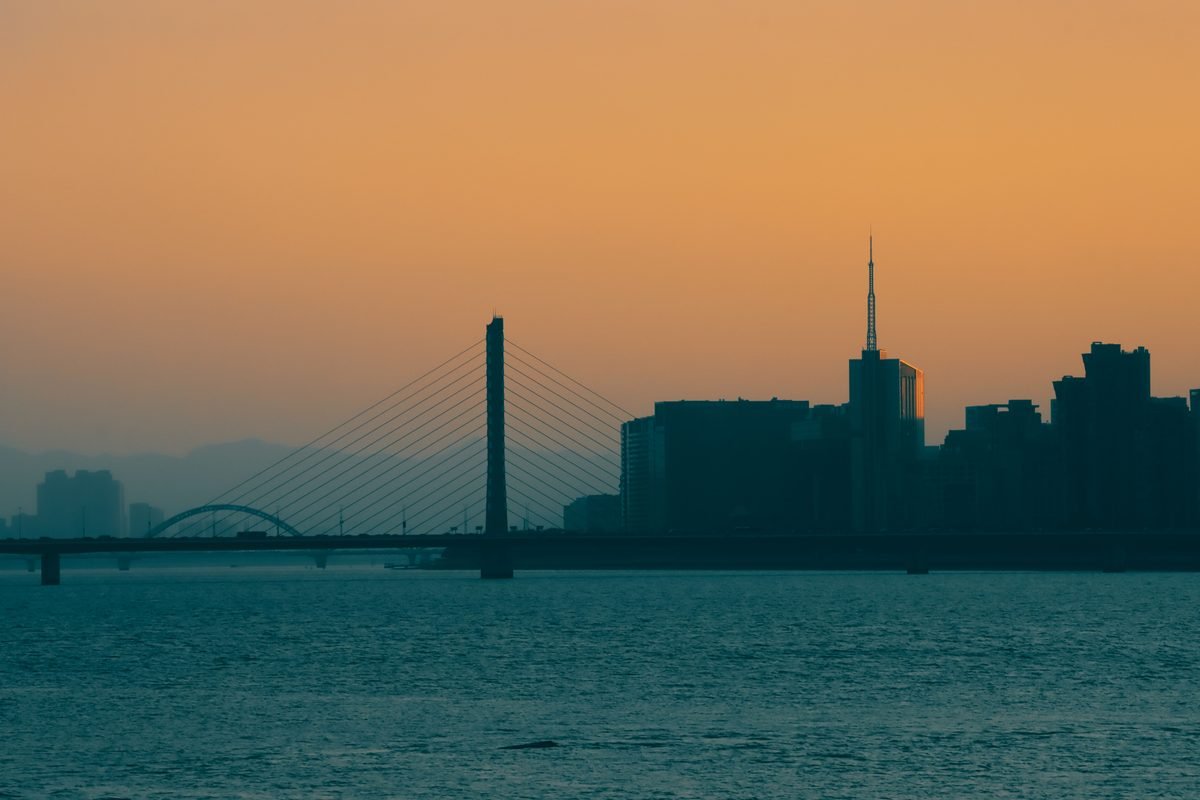
As the day ends, the focus of Wolmi shifts to the western edge of the island. The Incheon coast is famous for its dramatic tides and sharp sunsets. Because the island faces west across the Yellow Sea, you get an unobstructed view of the sun dipping below the horizon. The best place to watch this is from the red lighthouse at the end of the breakwater. It is a long walk out, but the air is fresh and the view of the Incheon Bridge—one of the longest cable-stayed bridges in the world—is spectacular when it begins to light up.
During October, the sunset usually happens between 17:40 and 18:15. I recommend finding a spot on the concrete steps of the boardwalk about thirty minutes before. You will see local photographers setting up tripods to capture the silhouette of the Sea Train as it passes against the orange sky. The atmosphere is very social; you will hear street performers playing acoustic guitars and see couples walking dogs. It is a stark contrast to the loud, clanking machinery of the amusement park just a few hundred meters away.
After the sun disappears, the boardwalk neon lights take over. The entire Culture Street is illuminated in pinks, blues, and yellows. This is when the island feels most alive. If you are heading back to Seoul, the walk back to Incheon Station takes you through the quiet industrial zone, which feels quite different under the streetlights. If you still have energy, stop by Chinatown for a bowl of Jjajangmyeon (black bean noodles) before catching the subway. Most of the restaurants there close by 20:30, so do not wait too late. The subway runs late into the night, so there is no rush to catch the train back to the city center.
What it costs in Incheon
| Item | Local price | USD |
|---|---|---|
| Subway (Round trip from Seoul) | ₩3,100 | $2.30 |
| Wolmi Sea Train (Loop ticket) | ₩8,000 | $6.00 |
| Viking Amusement Ride | ₩6,000 | $4.50 |
| Grilled Clams (Per person, shared) | ₩60,000 | $22.50 |
| Ferry to Yeongjongdo (One way) | ₩3,500 | $2.60 |
| Street food snacks | ₩5,000 | $3.70 |
| Total per person | ₩55,600 | $41.60 |
Prices checked October 2026. Always confirm with the provider before you book.
Where to stay in Incheon
Budget
Incheon Station area, for guesthouses near Chinatown
This area is perfect for those who want to be first in line for the Sea Train or explore the history of Chinatown. You can find basic, clean rooms for about ₩45,000 to ₩60,000 per night.
Mid-range
Wolmi Culture Street, for seaside hotels
Staying directly on the boardwalk gives you the best sunset views from your window and easy access to the seafood restaurants. Expect to pay between ₩80,000 and ₩120,000 for a room with an ocean view.
Splurge
Songdo Central Park, for luxury high-rises
While a 25-minute taxi ride away, Songdo offers international luxury brands and futuristic park views. Nightly rates here typically range from ₩200,000 to ₩350,000.
Mistakes to avoid
- Visiting on a weekend without a Sea Train reservation, which often leads to hours of waiting in line.
- Expecting the amusement park rides to follow international safety standards; they are safe but much more ‘thrilling’ and loose than corporate parks.
- Forgetting that the tide in Incheon goes out very far; check a tide chart if you want to see the water up close rather than just mudflats.
FAQ
Is a wolmi island day trip guide necessary for solo travelers?
Yes, while the island is easy to reach, solo travelers should know that many seafood restaurants specialize in large platters meant for two or more people. Knowing where to find smaller portions of kalguksu or street food will save you money and frustration.
How long does it take to get to Wolmi Island from Seoul?
It takes about 70 to 80 minutes on Subway Line 1 from central hubs like Seoul Station or Yongsan. If you take a local bus from Incheon Station, add another 10 minutes to your journey.
Can I use my T-money card on the Wolmi Sea Train?
No, the Sea Train is operated by the Incheon Transit Corporation and requires a separate ticket. You can buy these at the automated kiosks at the Sea Train stations using cash or credit card.
What is the best time of year to visit Wolmi Island?
October is ideal because the weather is cool and the skies are usually clear for sunsets. Spring is also popular for cherry blossoms, but the summer months can be uncomfortably humid for outdoor amusement rides.
Is there an entrance fee for Wolmi Island?
There is no fee to enter the island, the boardwalk, or the theme park grounds. You only pay for specific activities like the Sea Train, individual amusement rides, or the ferry.