
Suwon Hwaseong Fortress Day Trip From Seoul

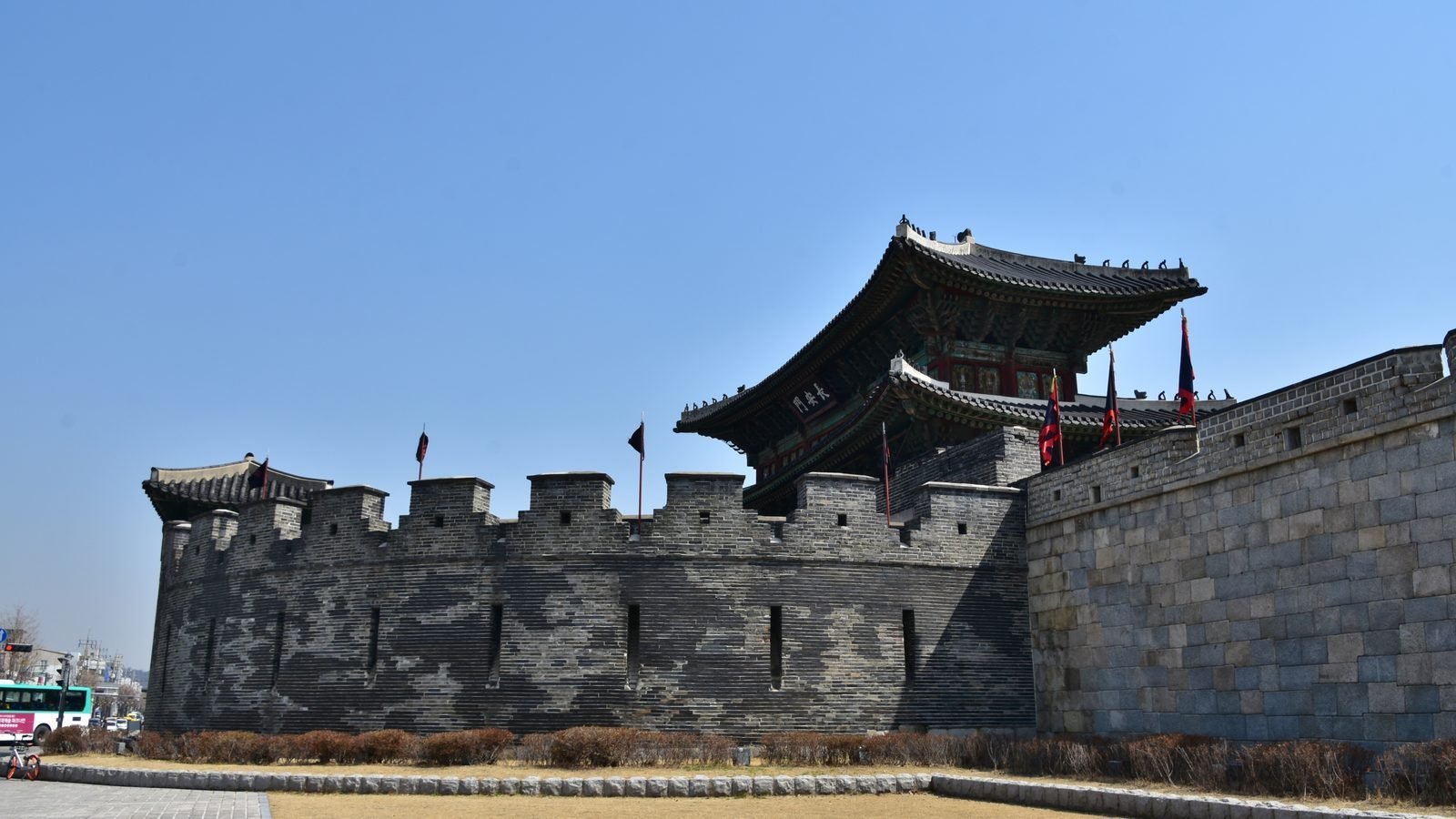
I stepped off the train at Suwon Station at 9:30 AM, instantly trading the sleek glass of central Seoul for the massive stone gates of an 18th-century military powerhouse. Located just 30 kilometers south of my home base in Seoul, this historic city offers a dramatic contrast to the capital’s modern skyscrapers. It is a place where ancient defensive walls wrap around a living, breathing neighborhood, making history feel accessible rather than preserved behind museum glass.
If you want to escape the neon and concrete of the capital, a Suwon Hwaseong Fortress day trip from Seoul is the absolute best way to spend a day. This guide is written for curious independent travelers who want to navigate the local transit, hike the massive stone walls, explore temporary royal palaces, and eat the best marinated beef ribs in the country without needing a tour guide.
How to plan a Suwon Hwaseong Fortress day trip from Seoul
Getting to Suwon is simple, but choosing the right train can save you a lot of time. The cheapest and most straightforward route is taking Seoul Subway Line 1 directly to Suwon Station. From central stations like Yongsan or Seoul Station, the subway takes roughly 60 to 70 minutes and costs about ₩2,100 (about $1.60) using a standard T-money card. However, Line 1 is a regular commuter line with dozens of stops. It can get crowded during morning rush hours, and you will likely stand for most of the trip. It is incredibly easy.
For a much more comfortable ride, I highly recommend booking a Korail train instead. The Mugunghwa-ho regular train departs from Seoul Station and takes only 30 minutes to reach Suwon Station. A one-way ticket costs a mere ₩2,700 (about $2.00). If you want slightly newer carriages, the ITX-Saemaeul is also available for ₩4,800 (about $3.60) and takes about 25 minutes. You get a guaranteed, comfortable seat with plenty of legroom. You can easily book these train tickets on the official Korail website or the Korail Talk app up to a month in advance.
Once you arrive at Suwon Station, do not try to walk to the fortress walls immediately. The station is about 2.5 kilometers from the closest fortress gate, Paldalmun. Instead, exit the station and head to the bus transit center. Board bus number 11, 13, or 35. These buses run every few minutes and will drop you off right at Paldalmun Gate or Janganmun Gate in about 10 minutes for ₩1,500 (about $1.15). Make sure to tap your transit card when boarding and exiting the bus to get a free transfer.
Book ahead: Book Korail in Advance
Book your Korail tickets on the official website up to 30 days in advance, especially if you plan to travel on a weekend morning when trains sell out quickly.
Best time of day and year to visit Suwon
Timing your visit makes a massive difference in how much you will enjoy walking the open stone ramparts. Because the fortress walls are completely exposed to the elements, mid-summer is brutally hot and offers almost no shade. Spring and autumn are the absolute peak seasons. September, October, and May bring crisp air, clear blue skies, and comfortable temperatures that make walking the six-kilometer wall a breeze. If you visit in early October, you might even catch the Suwon Hwaseong Cultural Festival, which features massive historical reenactments, traditional performances, and lantern displays along the stream.
On a daily level, I suggest arriving in Suwon around mid-morning, roughly 10:00 AM. This gives you plenty of daylight to explore the palace and complete the wall walk before the afternoon heat peaks. It also positions you perfectly to eat a late lunch of Suwon’s famous galbi (beef short ribs) just as the lunch crowds begin to thin out.
Alternatively, an afternoon-to-evening trip is highly rewarding. The fortress is fully illuminated at night, transforming the massive stone structures into glowing ribbons that wrap around the modern city. The walls remain open 24 hours a day, and walking them under the stars is a favorite local activity. If you choose this route, arrive around 3:00 PM, explore the palace, grab dinner, and then head up to the northern gate, Janganmun, to watch the sunset and see the lights flicker on. It gets very windy.
Walking the Hwaseong Fortress wall: Routes and times
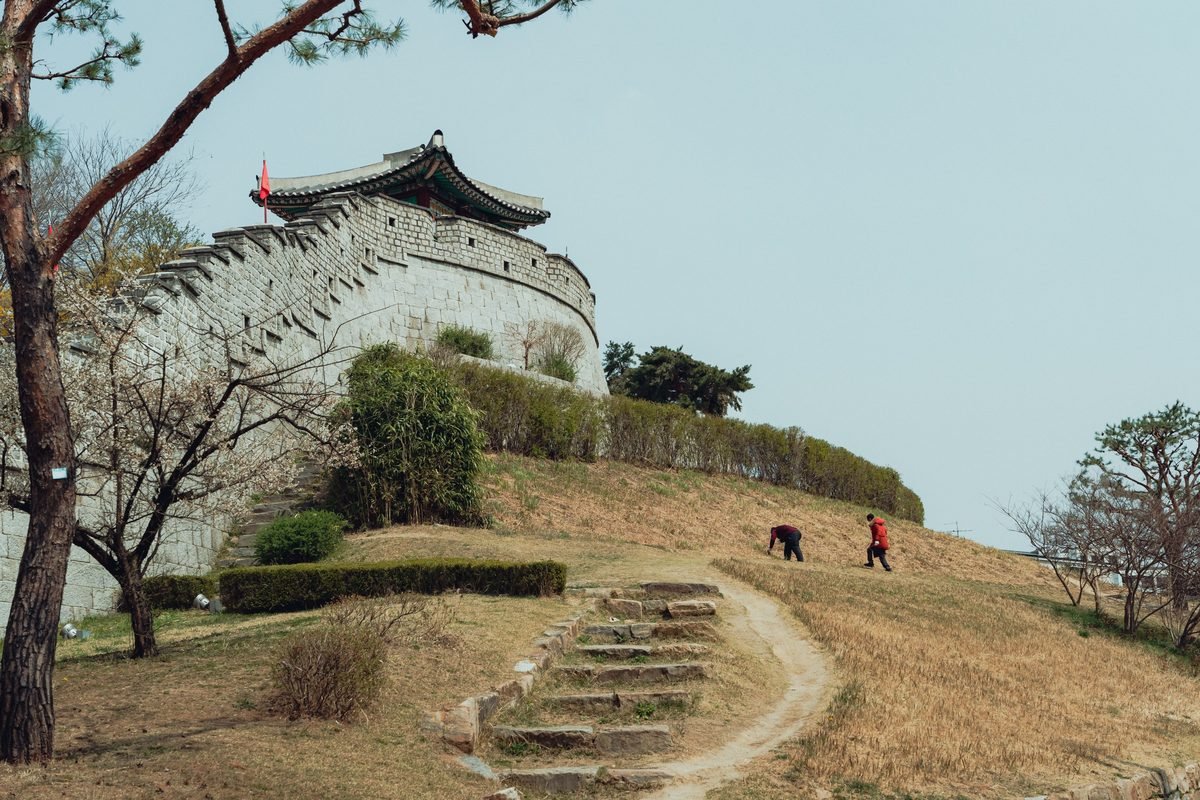
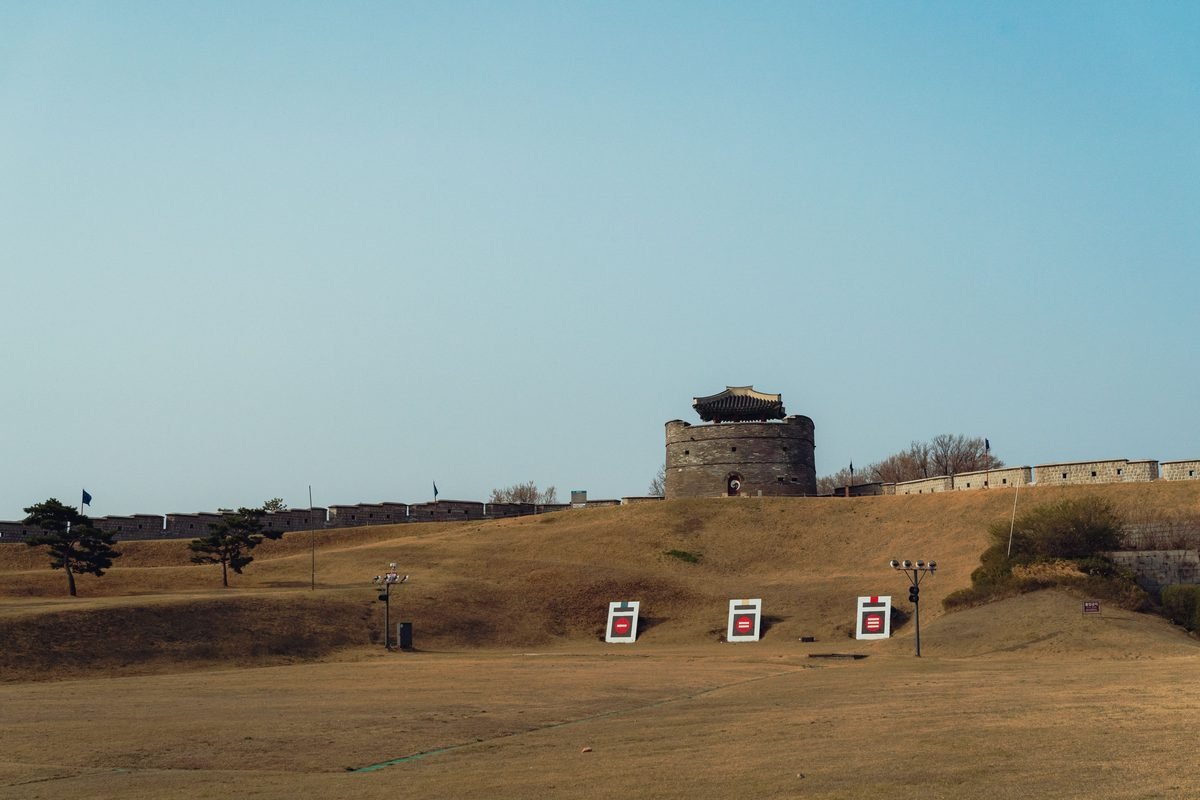
The Hwaseong Fortress wall stretches for exactly 5.74 kilometers, encircling the historic heart of Suwon. Walking the entire loop takes between two and three hours, depending on your pace and how often you stop to take photos. You do not have to walk the entire distance to appreciate the scale of this UNESCO World Heritage site, but you should target the most scenic sections.
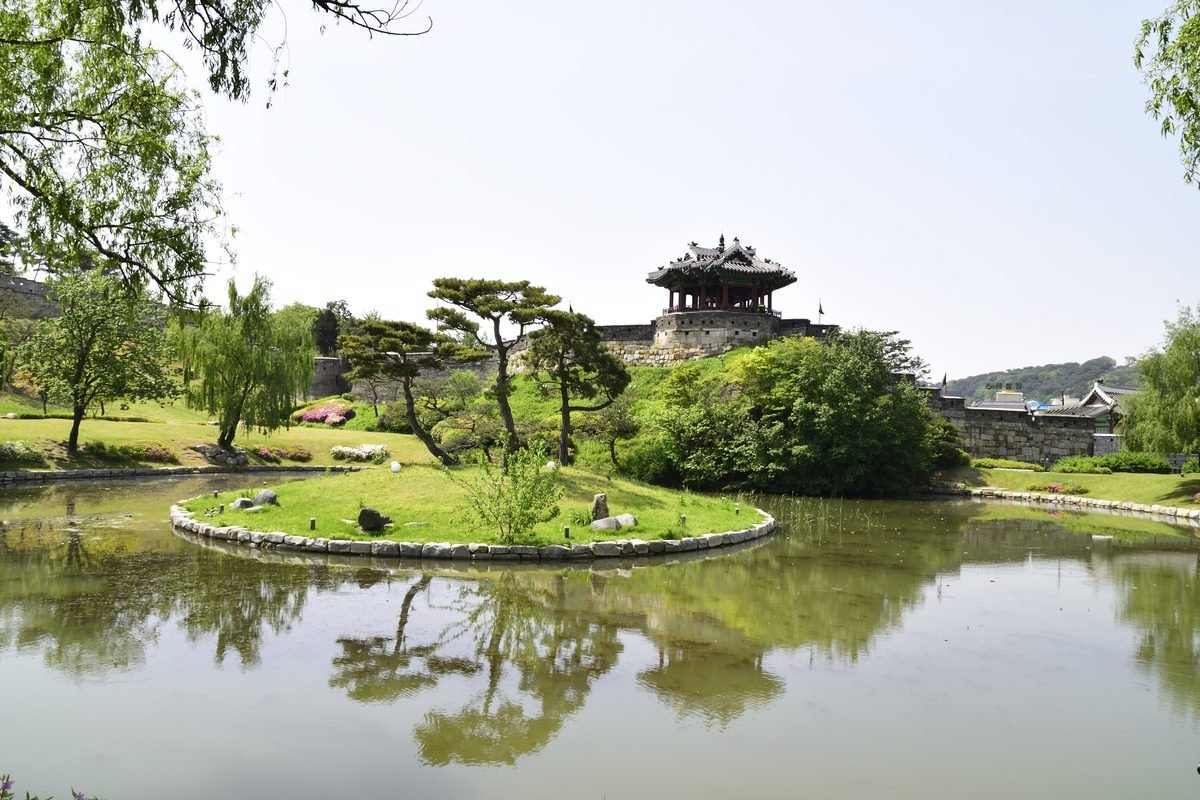
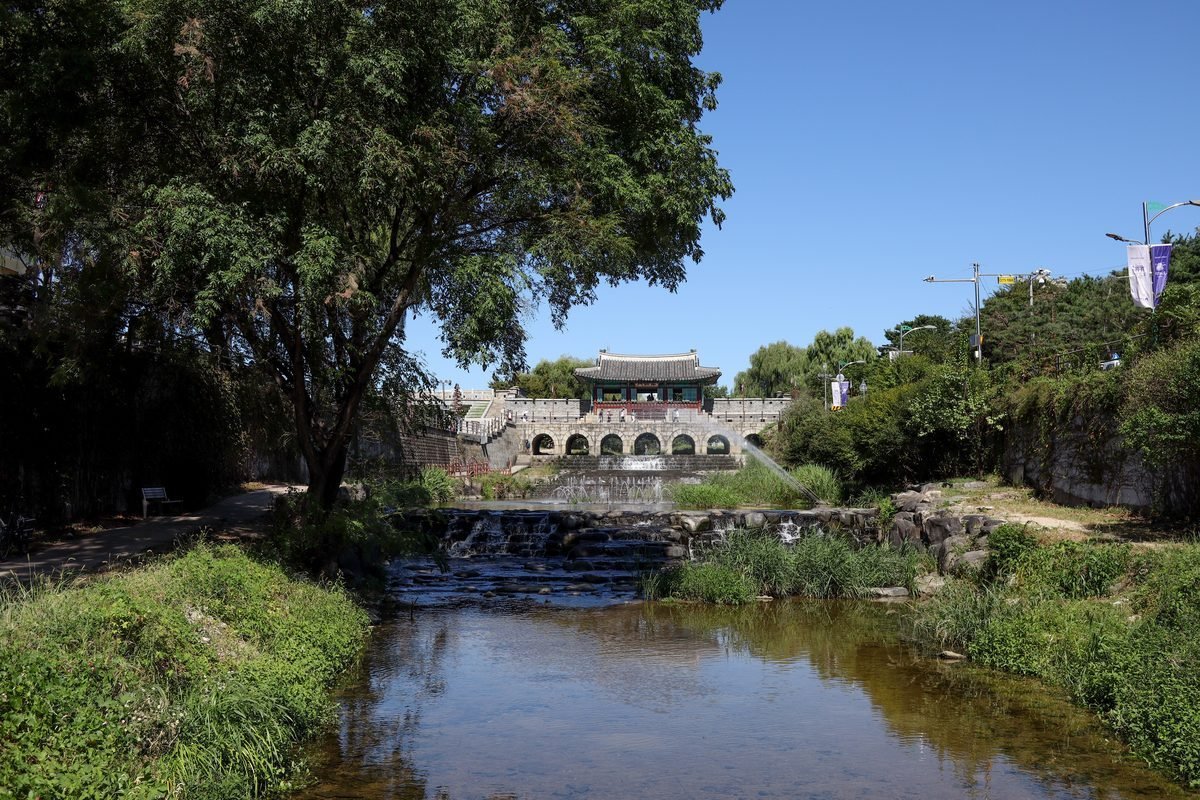
I recommend starting your walk at Janganmun, the massive northern gate. It is the largest gate in the fortress and features an impressive semi-circular brick guard wall called an ongseong that protected the main entrance from invaders. From Janganmun, walk east toward Hwahongmun, the beautiful water gate built over the Suwoncheon Stream. Just past the water gate sits Banghwasuryujeong, a wooden pavilion perched on a rocky cliff overlooking a peaceful lotus pond called Yongyeon. This is the most scenic spot on the entire wall.
From there, you can continue south toward Changnyongmun, the eastern gate. The terrain here is relatively flat and easy to navigate. If you want a serious workout, however, head west from Janganmun toward Paldalsan, the steep hill that rises behind the palace. Climbing the stone steps to the top of Paldalsan is exhausting, but it rewards you with a panoramic view of the entire city and the military command post, Seojangdae. The views are spectacular. Admission to the fortress walls is free, though some specific interior exhibits may charge a nominal fee of ₩1,000 (about $0.75). Bring comfortable walking shoes.
From a local: Sunset Spot
If you want the best sunset photo, head to the wooden pavilion at Banghwasuryujeong. The reflection of the pavilion in the pond below is a favorite spot for local photographers.
Exploring Hwaseong Haenggung Palace and Flying Suwon
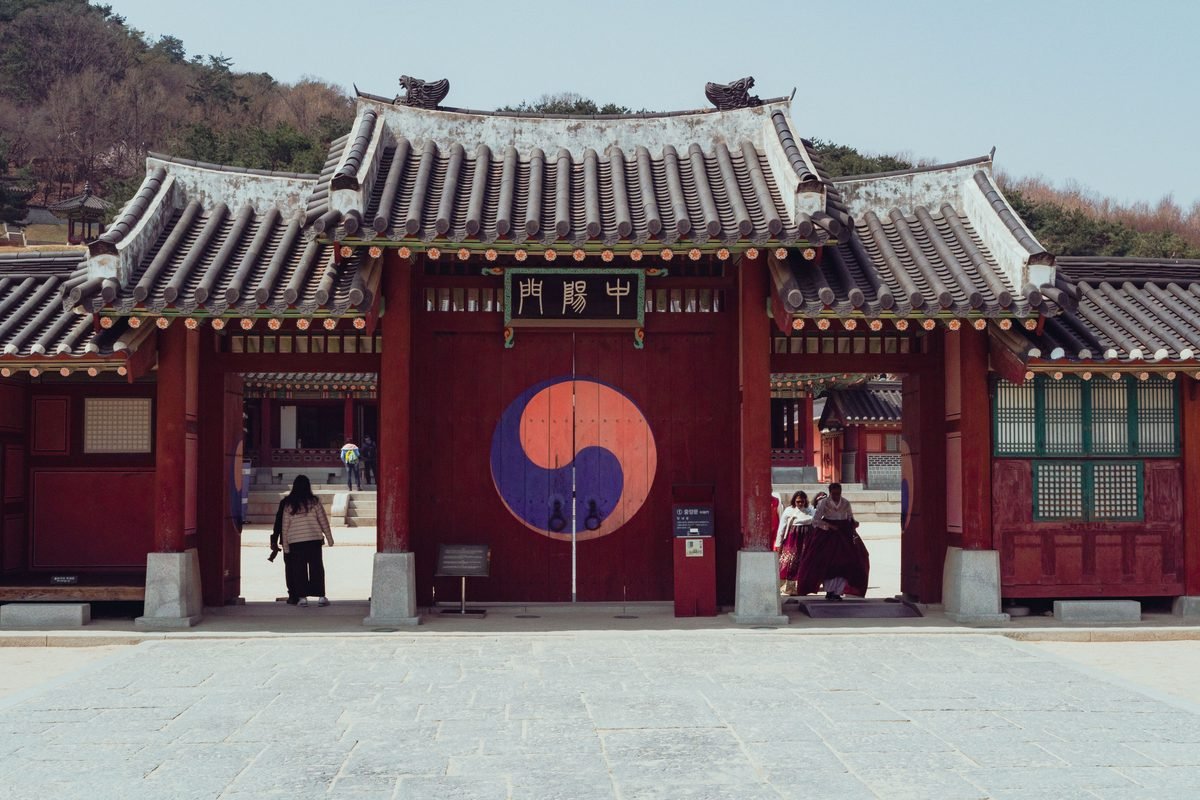
At the base of Paldalsan hill lies Hwaseong Haenggung, a temporary palace built by King Jeongjo in the late 18th century. Unlike the main palaces in Seoul, a haenggung was a residence where the royal family stayed when traveling outside the capital. King Jeongjo used this palace when visiting his father’s nearby tomb. The palace complex is incredibly well-preserved and costs just ₩2,000 (about $1.50) to enter. As you walk through the courtyards, look for the massive 600-year-old zelkova tree in the main plaza, which predates the palace itself. Visitors often write wishes on small slips of paper and tie them to the protective railing around the tree.
After exploring the historic palace, head over to the eastern side of the fortress near Changnyongmun Gate to experience a modern Suwon landmark: Flying Suwon. This is a massive, tethered helium balloon that rises up to 150 meters into the air, offering unparalleled views of the entire fortress complex and the modern city skyline.
The balloon ride lasts about 15 minutes and costs ₩21,000 (about $16.00) for adults. It operates from mid-afternoon until late at night, weather permitting. I highly recommend going just before sunset. Watching the sky turn orange behind the ancient stone watchtowers while the city lights begin to twinkle below is an incredible experience. Keep in mind that the balloon will not fly if winds exceed a certain speed, so it is wise to check their social media or call ahead on windy days. Do not skip this.
Where to eat: Suwon galbi and Paldalmun market snacks
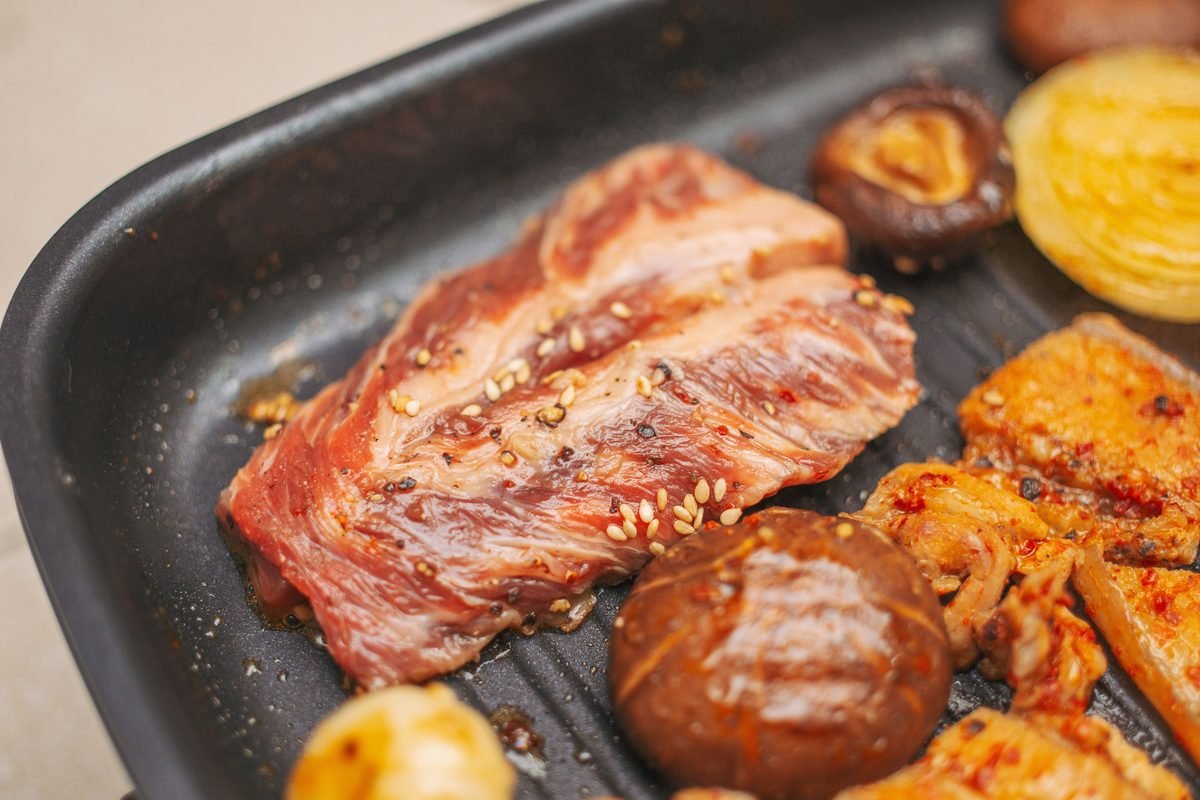
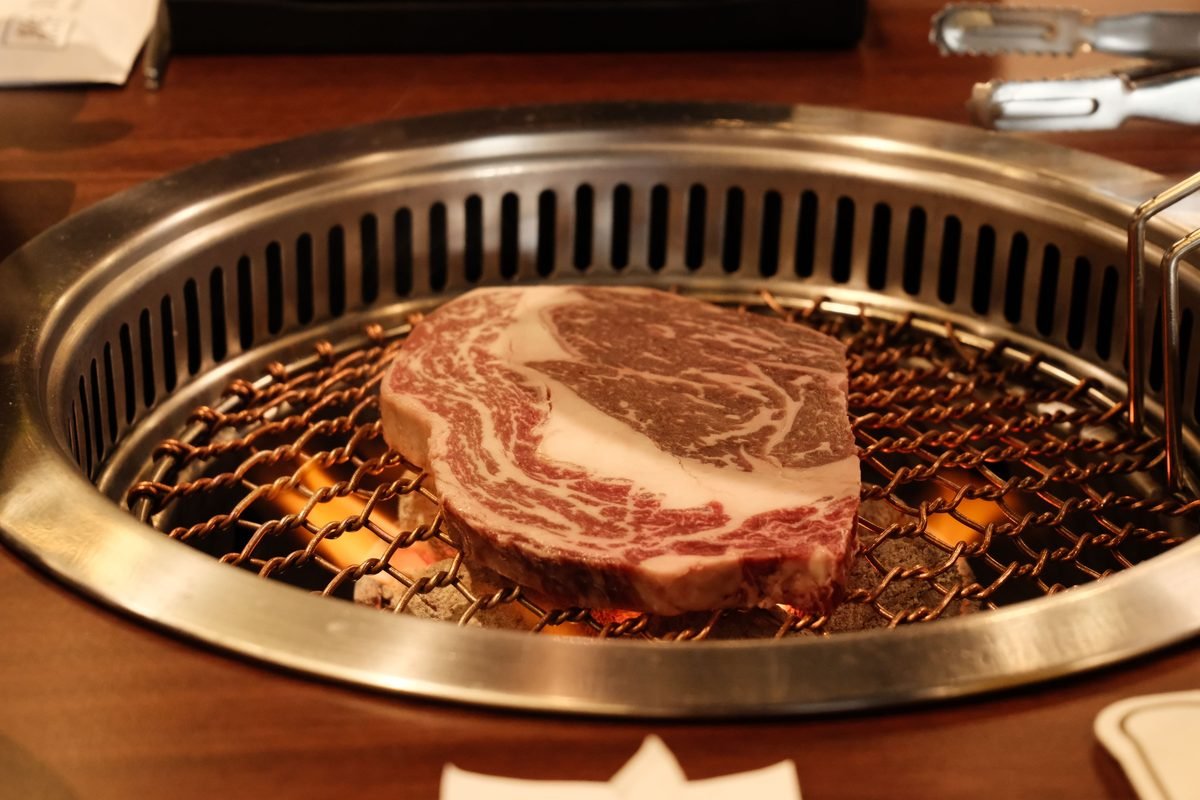
Suwon is legendary across Korea for its culinary contributions, specifically its oversized beef short ribs, known as Suwon galbi. Historically, Suwon was home to one of the largest cattle markets in the country during the Joseon Dynasty, which naturally led to a thriving beef culture. Suwon galbi is distinct because it is seasoned primarily with salt rather than soy sauce, which allows the natural flavor of the high-quality beef to shine.
For an exceptional lunch, head to Kabojung, one of the most famous galbi restaurants in the city. Located slightly outside the fortress walls, this massive restaurant spans multiple buildings but still draws long lines. A lunch special of marinated beef galbi costs roughly ₩45,000 (about $34.00) per person and comes with an array of traditional side dishes. If you prefer to stay closer to the fortress, Yeonpo Galbi near Hwahongmun Gate is another excellent option with a great view of the water gate. Suwon galbi is famous.
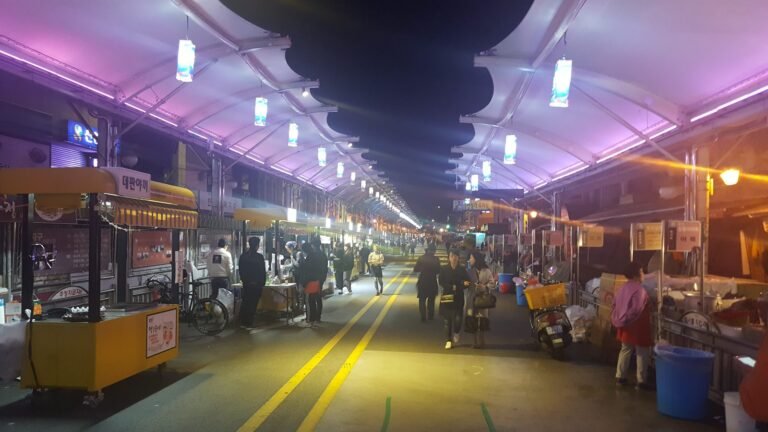
If you want something more casual, head directly to Paldalmun Market. This traditional market is packed with street food vendors selling spicy rice cakes, hotteok (sweet pancakes), and mandu (dumplings). Right next to the market is the famous Suwon Tongdak Street, dedicated entirely to old-school Korean fried chicken. Here, restaurants like Jinmi Tongdak and Yongsung Tongdak fry whole chickens in massive cauldrons, resulting in incredibly crispy skin and juicy meat. A giant platter of half-fried, half-seasoned chicken costs about ₩20,000 (about $15.00) and is easily enough to feed two hungry travelers.
Practical tips for your Suwon day trip
To ensure your day trip from Seoul runs smoothly, you need to prepare for a few local quirks. First and foremost, do not rely on Google Maps for walking or transit directions once you arrive in Suwon. Google Maps does not function properly for navigation in South Korea due to government security restrictions. Instead, download Naver Map or KakaoMap before you leave Seoul. Both apps are available in English and provide highly accurate, real-time bus and walking routes.
You should also make sure your transit card is pre-loaded with at least ₩10,000 (about $7.50) before leaving Seoul. While you can top up cards at Suwon Station, it is much easier to have it sorted beforehand. You will use this card to ride the subway, the local buses, and even some taxis if you choose to skip the bus.
Because you will be walking outdoors for several hours, sun protection is vital. There is very little shade along the fortress walls, and the summer sun can be punishing even in September. Bring a hat, wear sunscreen, and carry a bottle of water. You can find small convenience stores near the major gates, but there are long stretches of the wall where no shops are available. Finally, if you plan to visit the palace, check the schedule for the traditional martial arts performances and guard changing ceremonies. These free events usually take place in front of the main gate of Hwaseong Haenggung at designated times during the spring and autumn months, adding a wonderful layer of historical context to your trip.


Heads up: Avoid Google Maps
Do not try to navigate Suwon using Google Maps. It will not show walking paths along the fortress wall, so download Naver Map instead.
What it costs in Suwon
| Item | Local price | USD |
|---|---|---|
| Mugunghwa train ticket (one-way) | ₩2,700 | about $2.00 |
| Local bus fare (with transit card) | ₩1,500 | about $1.15 |
| Hwaseong Haenggung Palace entry | ₩2,000 | about $1.50 |
| Flying Suwon balloon ride | ₩21,000 | about $16.00 |
| Lunch special at Kabojung (beef galbi) | ₩45,000 | about $34.00 |
| Fried chicken at Tongdak Street | ₩20,000 | about $15.00 |
| Estimated daily total per person | ₩92,200 | about $70.00 |
Prices checked September 2026. Always confirm with the provider before you book.
Mistakes to avoid
- Walking from Suwon Station to the fortress walls instead of taking a local bus.
- Visiting on a Monday without checking which minor palace exhibits and local museums are closed.
- Ordering imported beef instead of local Hanwoo at galbi restaurants to save a few dollars, missing the authentic taste.
FAQ
How much time do I need for a Suwon Hwaseong Fortress day trip from Seoul?
You should plan to spend about 6 to 8 hours in Suwon. This gives you enough time to complete a scenic portion of the wall walk, tour the temporary palace, ride the helium balloon, and sit down for a traditional galbi lunch.
Is Suwon Hwaseong Fortress free to enter?
Yes, walking along the fortress walls is completely free of charge. However, entering the Hwaseong Haenggung Palace costs ₩2,000 (about $1.50), and riding the Flying Suwon balloon costs ₩21,000 (about $16.00).
Can I use my T-money card in Suwon?
Yes, your T-money transit card works perfectly on the Seoul subway lines that run to Suwon, as well as all local Suwon city buses. You can also use it to pay for taxi rides within the city.
What is the best way to get to Suwon from Seoul?
The fastest and most comfortable way is taking the Mugunghwa train from Seoul Station, which takes 30 minutes and costs ₩2,700 (about $2.00). Alternatively, you can take Seoul Subway Line 1, which takes about 60 to 70 minutes but runs much more frequently.
Where is the best place to eat in Suwon?
You should head to the Suwon Tongdak Street near Paldalmun Market for classic cauldron-fried chicken, or visit famous restaurants like Kabojung for the city’s signature marinated beef short ribs.

One Comment