Flight Delay Compensation EU261: How to Claim Your Money

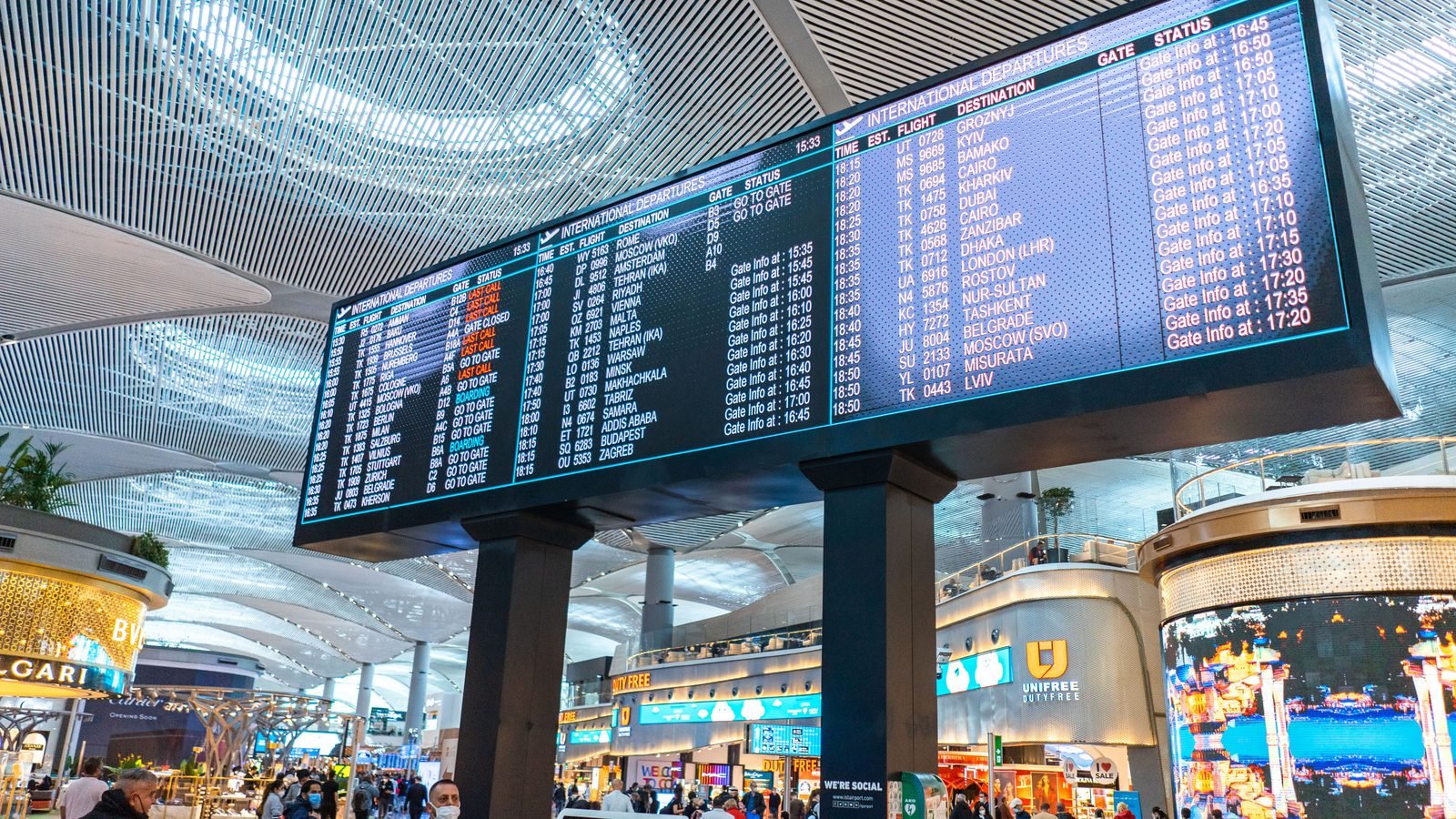
Picture the departures board at London Heathrow or Paris Charles de Gaulle as the text for your flight flickers from ‘On Time’ to a bright red ‘Delayed’. For many independent travelers, this is the start of a long, frustrating wait in an expensive terminal. However, if your flight involves a European airport or a European airline, you might be entitled to significant financial compensation under a regulation known as EU261. This law is designed to protect passengers, ensuring that airlines take responsibility for the time you lose when their operations fail.
This guide is for travelers who want to handle their own claims without handing over a large percentage of their payout to a third-party agency. We will cover exactly when flight delay compensation EU261 applies, the specific amounts you can expect to receive, and the ‘duty of care’ services the airline must provide while you wait. We will also look at the common excuses airlines use to avoid paying and how you can navigate the process to get the money you are legally owed.
When does flight delay compensation EU261 apply?
The scope of EU261 is broader than many people realize, but it is not universal. To qualify for flight delay compensation EU261, your flight must meet specific criteria regarding its origin and the airline operating it. The law applies to any flight departing from an airport located in an EU member state, regardless of the airline’s nationality. This means if you are flying from Rome to New York on a US-based carrier like United or Delta, you are still protected by these regulations. The law also covers flights arriving in the EU from a non-EU country, provided the flight is operated by an EU-based airline, such as Lufthansa or Air France.
It is important to understand what ‘EU’ means in this context. For the purposes of flight delay compensation EU261, the regulation covers all 27 EU member states, plus Iceland, Norway, and Switzerland. It also includes ‘outermost regions’ like the Canary Islands, Madeira, and French Guiana. However, it does not cover flights from a non-EU country to an EU country if the airline is not European. For example, a flight from Singapore to Frankfurt on Singapore Airlines would not be covered for a delay, but the return leg from Frankfurt to Singapore would be, because it departs from an EU airport.
The protection also extends beyond simple delays. It covers denied boarding due to overbooking and flight cancellations. For a delay to trigger compensation, you must arrive at your final destination more than three hours later than originally scheduled. Arrival is timed not when the plane lands on the tarmac, but when at least one of the aircraft doors is opened and passengers are permitted to leave. This distinction is vital. If the plane lands two hours and fifty minutes late but sits on the taxiway for fifteen minutes before opening the doors, you have passed the three-hour threshold. Check the flight distance first. The distance of your flight determines the amount of money you can claim.
How much can you claim under EU261?
The amount of flight delay compensation EU261 you can receive is fixed based on the distance of your flight and the length of the delay upon arrival. It is not tied to the price you paid for your ticket, meaning a passenger on a €20 budget flight can claim the same amount as someone in business class. For short-haul flights of 1,500 kilometers or less, the compensation is €250 (about $275). This typically covers most domestic flights within Europe or short hops between neighboring countries. If your flight is between 1,500 and 3,500 kilometers, the amount increases to €400 (about $440). This applies to longer intra-European routes or flights to nearby regions like North Africa or the Middle East.
For long-haul flights exceeding 3,500 kilometers, the compensation is €600 (about $660). This is the maximum amount per person. There is a small caveat for long-haul flights: if the delay is between three and four hours, the airline is permitted to reduce the compensation by 50%, leaving you with €300 (about $330) [Note: UK equivalent is £260]. Once the delay exceeds four hours at your final destination, the full €600 (about $660) applies. It is your money. Do not let the airline tell you otherwise. These figures are per passenger, so a family of four could potentially claim €2,400 (about $2,640) for a significantly delayed transatlantic flight.
To calculate the distance accurately, airlines use the ‘Great Circle’ route, which is the shortest distance between two points on a globe. You can find many free online tools to check this distance yourself. Remember that the delay is measured at your ‘final destination.’ If you have a connecting flight booked on a single ticket and a short delay on the first leg causes you to miss your connection, resulting in a three-hour delay at your final stop, you are eligible for compensation based on the total distance of the entire journey. Always keep your boarding pass. It is the most important piece of evidence you have.


What is the airline's duty of care?
While you are waiting at the airport, the airline has a ‘duty of care’ toward you, regardless of what caused the delay. This is a separate right from the cash compensation and kicks in much earlier. For short flights, the duty of care starts after a two-hour delay. For mid-range flights, it starts after three hours, and for long-haul flights, it starts after four hours. The airline must provide you with food and drink vouchers appropriate to the length of the wait. If they do not provide vouchers, you are entitled to buy reasonable refreshments yourself and claim the cost back later. Keep every single receipt. Do not buy alcohol, as airlines will almost always refuse to reimburse it.
In addition to food, the airline must provide two phone calls, emails, or faxes. While this seems outdated in the age of smartphones, it remains a legal requirement. More importantly, if the delay is pushed overnight, the airline must provide hotel accommodation and transport between the airport and the hotel. If the airline staff is overwhelmed and tells you to find your own hotel, you should do so, but keep the costs ‘reasonable.’ Do not book a luxury suite if a standard mid-range hotel is available. The airline is required to cover the room and the taxi to get there. They cannot refuse this even if the delay was caused by weather or other ‘extraordinary circumstances.’
If you find yourself stuck, look for the airline’s customer service desk immediately. Ask specifically for your ‘duty of care’ entitlements. If the line is too long, you can make your own arrangements, but you must be able to prove that you tried to contact the airline first or that their assistance was unavailable. Many travelers make the mistake of assuming that because a delay is due to weather, they are on their own. This is false. The airline must still look after you. The door must open before the clock stops. Until then, you are under their care.


What are extraordinary circumstances in EU261?
The most common way airlines avoid paying flight delay compensation EU261 is by claiming the delay was caused by ‘extraordinary circumstances.’ Under the law, these are events that are outside the airline’s control and could not have been avoided even if all reasonable measures had been taken. Genuine extraordinary circumstances include severe weather that makes flying unsafe, air traffic control strikes, political instability, or security risks at the airport. If a volcano erupts and shuts down airspace, the airline does not have to pay cash compensation, though they still owe you a duty of care.
However, many things airlines call ‘extraordinary’ actually are not. Technical faults with the aircraft are the biggest point of contention. European courts have repeatedly ruled that most technical problems are a normal part of running an airline and do not count as extraordinary. Unless the fault was caused by an act of sabotage or a hidden manufacturing defect that affects an entire fleet, the airline is usually liable. Similarly, crew shortages or ‘crew rest’ requirements are not considered extraordinary circumstances. It is the airline’s responsibility to staff their flights correctly. If a pilot is sick and there is no backup, that is an operational failure, not an act of God.
Bird strikes are generally considered extraordinary, as are strikes by airport staff (like baggage handlers) who do not work for the airline. However, strikes by the airline’s own pilots or cabin crew are generally not considered extraordinary, as the airline has the power to negotiate and resolve the dispute. If an airline tells you the delay was due to ‘operational reasons’ or ‘technical issues,’ do not give up yet. These are often vague terms used to discourage passengers from claiming. Ask for a specific written explanation of the delay while you are still at the airport. This document will be very helpful if you need to escalate your claim later.
How to claim EU261 without an agency
Many travelers turn to ‘claim farm’ agencies that advertise heavily online. These companies take a significant cut of your compensation, often between 25% and 35% plus VAT. You can easily avoid this by claiming directly from the airline. The first step is to visit the airline’s website and look for their ‘claims’ or ‘complaints’ section. Most major carriers now have a dedicated online form for flight delay compensation EU261. You will need your flight number, date of travel, and booking reference (PNR). You do not need to write a complex legal letter; just provide the facts of the delay and state that you are claiming under Regulation (EC) No 261/2004.
If the airline does not have a form, you can send an email or a physical letter. Be firm but polite. Include copies of your boarding passes and any receipts for food or hotels if you are also claiming for expenses. Never send your original documents; always send copies or scans. The airline has a reasonable amount of time to respond, usually around six to eight weeks. If they reject your claim, they must provide a specific reason. If you disagree with that reason, or if they simply ignore you, the next step is to contact the National Enforcement Body (NEB) in the country where the delay occurred.
Each EU country has an NEB that oversees airline compliance. They can investigate your claim and pressure the airline to pay if they find the airline is in the wrong. This service is free for passengers. In the UK, you can also use Alternative Dispute Resolution (ADR) schemes, which are independent bodies that make binding decisions on airline disputes. Using these official channels takes longer than using an agency, but it ensures you keep every cent of the compensation. It is a straightforward process that requires a little patience but pays off significantly. Do not let the paperwork intimidate you. The law is on your side.


Does EU261 apply to UK flights?
Since the United Kingdom left the European Union, the original EU261 regulation no longer applies directly to flights within or from the UK. However, the UK government has mirrored the law into domestic legislation known as UK261. The rules, rights, and thresholds are almost identical to the EU version, but the compensation is paid in British Pounds rather than Euros. For a short-haul delay, the payout is £220 (about $285). For mid-haul, it is £350 (about $455), and for long-haul delays over four hours, it is £520 (about $675). The same ‘duty of care’ requirements for food and hotels apply under UK law.
The interaction between EU261 and UK261 can be confusing on routes between the two. If you fly from London to Paris on British Airways, UK261 applies because you are departing from a UK airport. If you fly from Paris to London on Air France, EU261 applies because you are departing from an EU airport. If you fly from Paris to London on British Airways, both laws could technically apply, but you can only claim once. Usually, the airline will process the claim under the law of the country where the flight departed. The protection for UK travelers remains very strong, and the process for claiming is the same as described for the EU.
One area where the law is particularly helpful is for connecting flights. If you book a journey from Manchester to Dubai with a connection in London, and a delay on the first leg causes you to miss the second, the airline is responsible for the delay at your final destination (Dubai). This applies as long as the entire journey was booked under a single reservation. If you booked the flights separately as ‘self-transfer’ tickets, the airline is only responsible for getting you to the destination of the specific flight that was delayed. For independent travelers, booking everything on one ticket provides a much higher level of protection. Always check your itinerary carefully before you fly.
What this trip costs
| Item | Local price | USD |
|---|---|---|
| Short-haul delay (<1,500km) | €250 / £220 | (about $275 / $285) |
| Mid-haul delay (1,500-3,500km) | €400 / £350 | (about $440 / $455) |
| Long-haul delay (>3,500km, >4h) | €600 / £520 | (about $660 / $675) |
| Long-haul delay (>3,500km, 3-4h) | €300 / £260 | (about $330 / $335) |
| Maximum claim per person | €600 / £520 | (about $660 / $675) |
Prices checked October 2026. Always confirm with the provider before you book.
Mistakes to avoid
- Throwing away your boarding pass or luggage tags, which serve as proof that you were on the flight.
- Accepting travel vouchers or ‘air miles’ from the airline at the airport instead of cash compensation.
- Assuming that weather is always an excuse for the airline to deny cash compensation.
FAQ
Does EU261 apply to US airlines?
Yes, but only if the flight is departing from an airport located in the EU. If you are flying from the US to the EU on a US airline, flight delay compensation EU261 does not apply, though it would apply if you were flying on an EU-based airline.
Can I claim flight delay compensation EU261 for weather?
You cannot claim the cash compensation if the delay was truly caused by extraordinary weather. However, the airline must still provide you with the ‘duty of care,’ which includes food, drinks, and hotel accommodation if necessary.
How far back can I claim EU261?
The time limit depends on the country where you bring the claim. In the UK, you have up to six years to claim. In Germany, it is usually three years, and in France, it is five years. It is best to claim as soon as possible.
What if the airline offers me a voucher?
Airlines often offer vouchers to settle claims quickly. You are legally entitled to cash (via bank transfer or check). You only have to accept a voucher if you sign a document specifically agreeing to it; otherwise, insist on cash.
Does EU261 cover missed connections?
Yes, provided the flights were booked as part of a single journey under one booking reference. If a delay on the first leg causes you to miss a connection and arrive at your final destination over three hours late, you can claim.