Bangkok Street Food Guide: How to Eat Well and Cheap

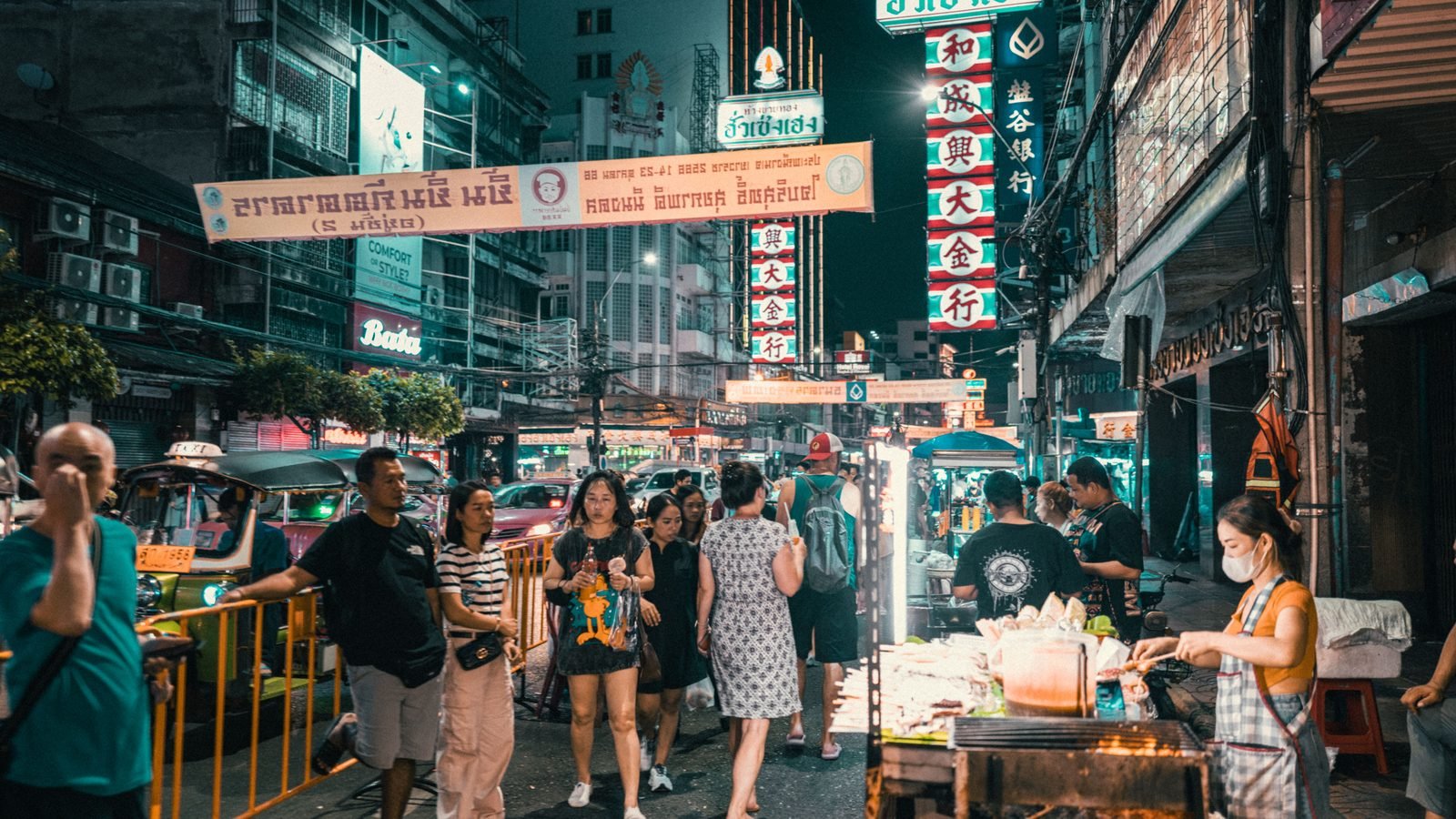
At 8:00 PM on a Tuesday, Yaowarat Road smells of charcoal smoke, toasted garlic, and sweet crushed pandan leaves. Metal folding tables spill off the sidewalks, taking up full traffic lanes while tuk-tuks squeeze past diner elbows. For just ฿60 (about $1.80), a cook hands you a steaming bowl of rolled rice noodles swimming in peppery pork broth that will clear your sinuses in two spoonfuls.
This practical Bangkok street food guide is written for independent travelers who want to dive straight into the city’s street kitchens without ending up sick or overcharged. We cover navigating transit to food hubs, timing your meals between morning alleys and evening roads, five iconic dishes you cannot miss, hygiene rules that actually work, and real meal budgets.
How to get to Bangkok street food hubs by transit
Bangkok traffic is famously brutal. Sitting in a gridlocked taxi on Charoen Krung Road while your stomach grumbles is an amateur mistake. Fortunately, the mass transit network now connects directly to the city’s premier eating neighborhoods. The MRT Blue Line is your best tool. Taking the underground train to Wat Mangkon Station drops you straight into the glowing heart of Chinatown’s Yaowarat Road. The single-journey fare ranges from ฿17 to ฿43 (about $0.50 to $1.30) depending on distance.
For classic old-town morning eating around Banglamphu and Phra Sumen Road, transit requires water routes or walking. The Chao Phraya Express Boat is cheap and fast. Hop off at Phra Arthit Pier (N13) for ฿16 (about $0.50) on the orange flag boat. From there, you are a short five-minute walk from legendary crab omelet joints and curry rice vendors. You avoid traffic completely.
To reach the boat noodle alley near Victory Monument, take the BTS Skytrain Sukhumvit Line directly to Victory Monument Station (BTS N3). Exit north toward the overhead skywalk that loops around the massive traffic circle. Follow the elevated walkway northeast for about five minutes until you see the canal below. If you stay near Sukhumvit or Silom, the trains run reliably from 6:00 AM until midnight every day.
Tip: Use Rabbit Cards for BTS
Get a stored-value Rabbit Card for ฿100 (about $3) at any BTS ticket window to skip the long token lines during rush hour.
When to go: morning markets versus late night streets
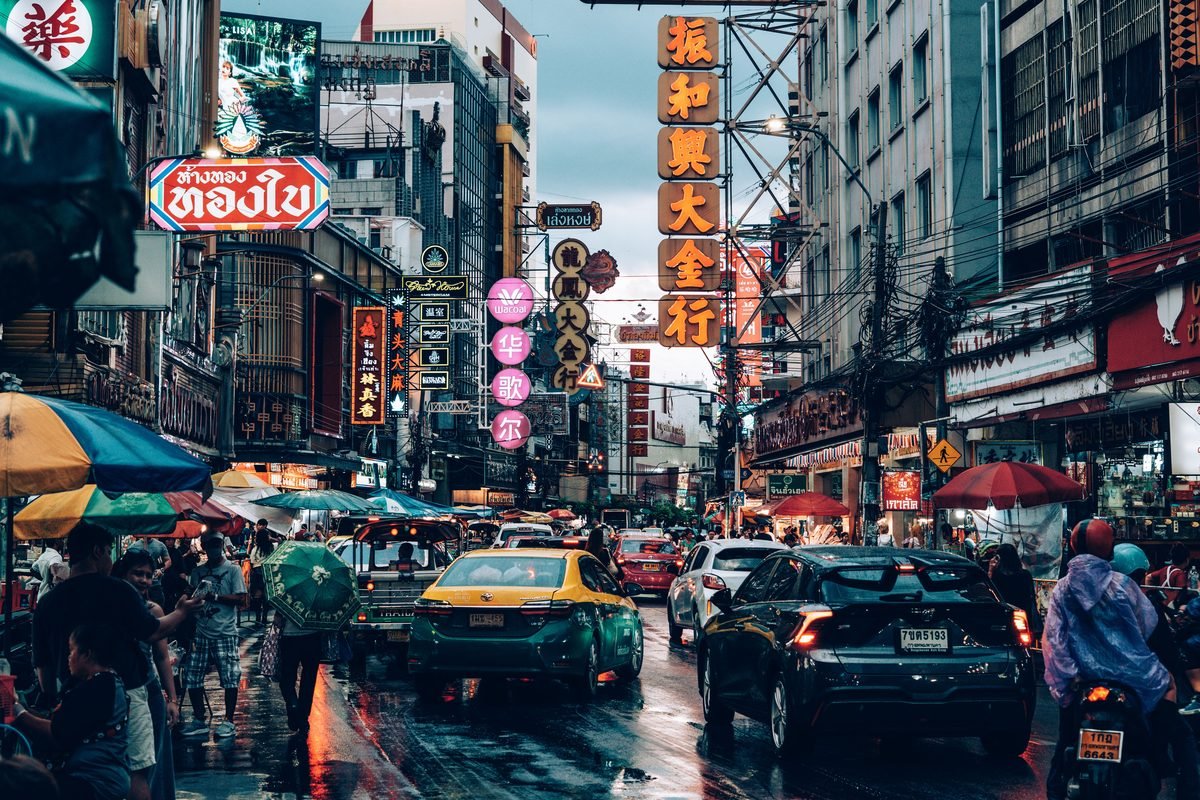
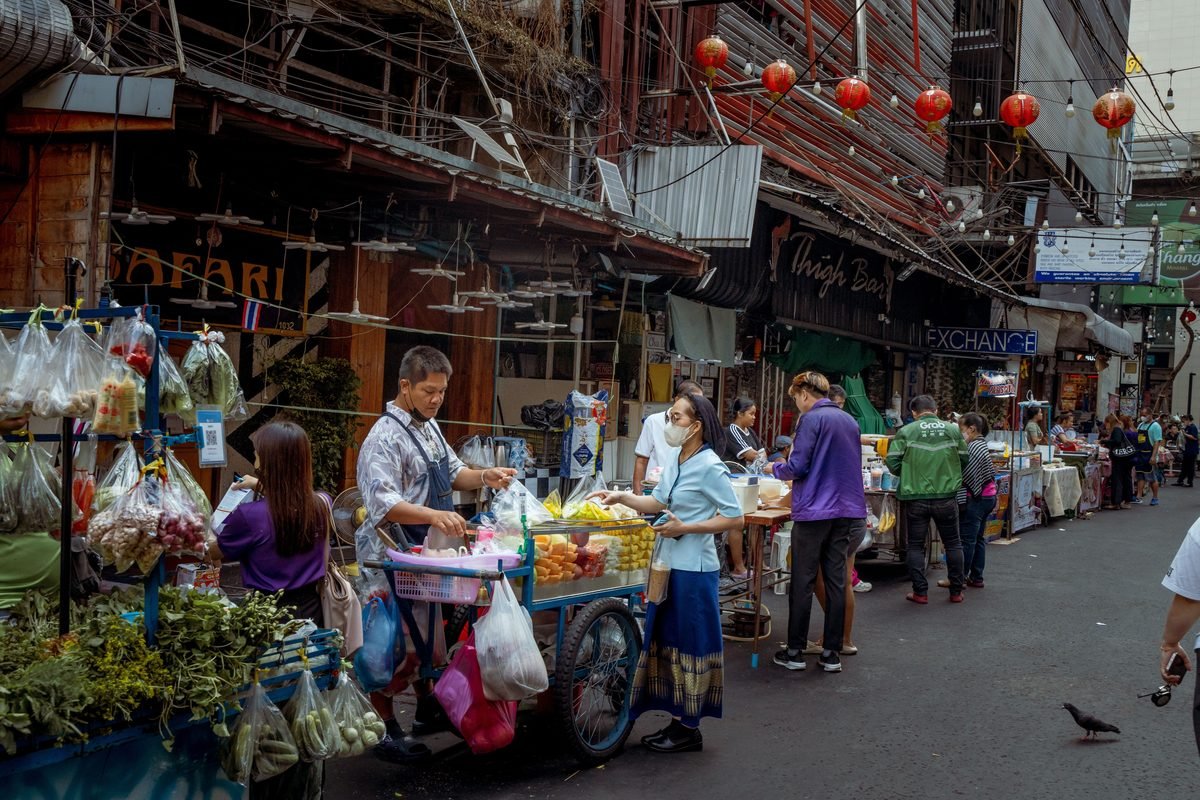
Street food in Bangkok runs on a strict schedule. Vendors rotate spaces depending on the time of day. If you show up to Yaowarat at 10:00 AM, you will find shuttered gold shops, hardware vendors, and empty sidewalks. The road transforms only after 5:30 PM, when the heavy cooking carts roll into position and stay open past midnight. Peak dining energy hits between 7:00 PM and 10:00 PM.
Morning food requires early rising. In neighborhoods like Banglamphu, Silom Soi 20, and Talat Phlu, the best cooks start firing their burners at 6:30 AM. They cater to office workers and neighborhood residents grabbing breakfast before work. By 10:30 AM, giant pots of savory rice porridge (jok), fresh soy milk, and skewered grilled pork (moo ping) have completely sold out. The sidewalks clear quickly.
Weather shapes your appetite too. September falls during the tail end of the rainy season, bringing brief afternoon downpours. These storms rarely last longer than an hour, but they can temporarily scatter uncovered sidewalk tables. The dry, cooler window runs from November through February. March through May brings intense midday heat. Always plan your heavy walking feeds for early mornings or breezy evenings.
From a local: Monday Street Cleaning
City authorities designate Mondays as official sidewalk cleaning days, meaning street cart numbers drop significantly across residential districts.
The five dishes you must order on the sidewalk
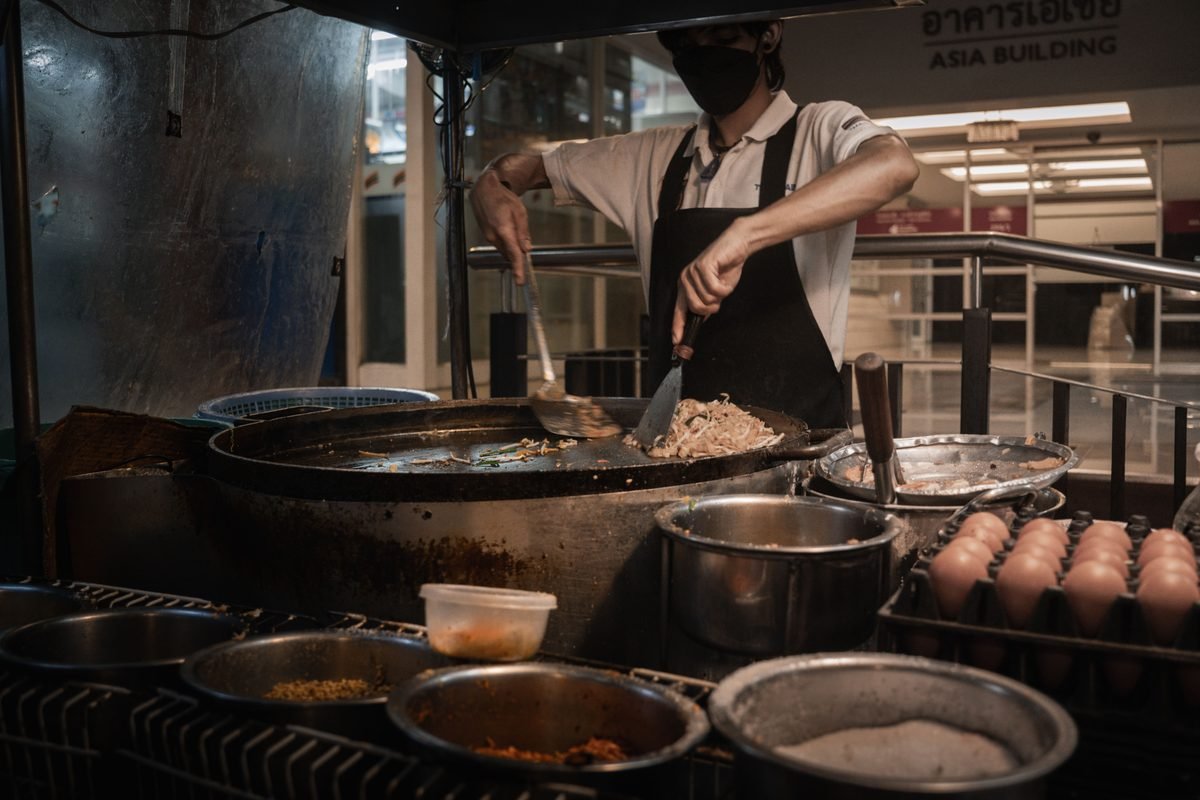
Eating your way across the city means looking beyond standard pad thai. While pad thai is easy to find, locals prioritize dishes with deeper regional roots and wok mastery. Here are five dishes that define the Bangkok street eating tradition:
- Kuay Jab: Rolled wide rice noodle sheets served in an intensely peppery pork bone broth, loaded with crispy pork belly, tender offal, and a soft-boiled egg. A bowl costs roughly ฿60 to ฿80 (about $1.80 to $2.40).
- Boat Noodles (Kuay Teow Reua): Small, punchy bowls of dark broth simmered with star anise, cinnamon, morning glory, and cow or pig blood. They cost about ฿18 to ฿22 (about $0.55 to $0.65) per bowl. Plan to eat four or five.
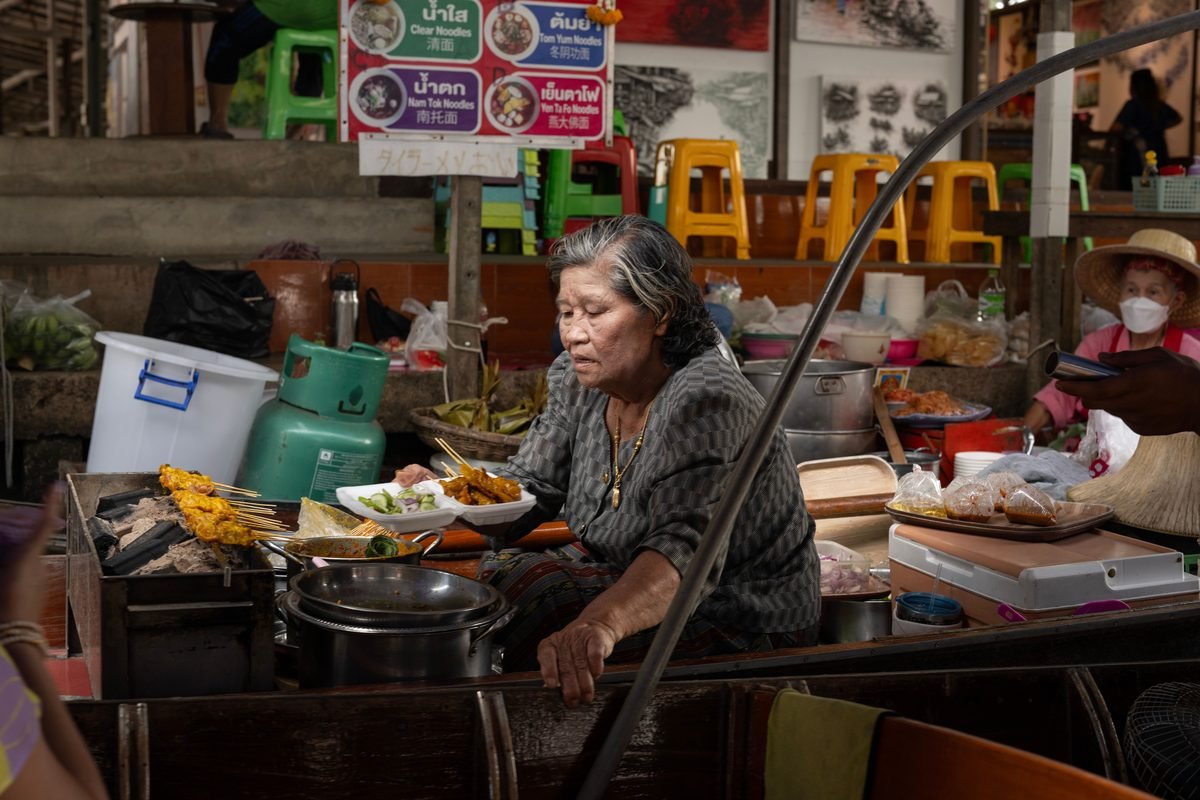
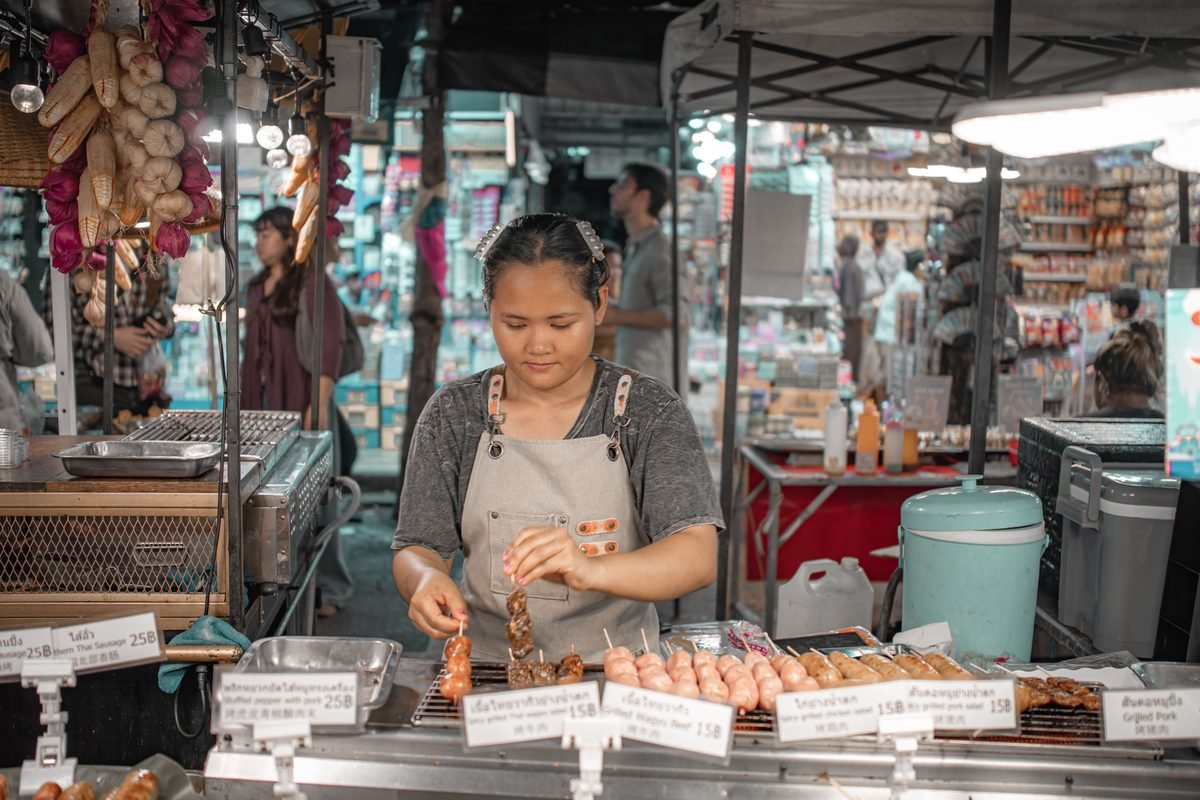
- Moo Ping with Sticky Rice: Marinated pork skewers grilled over real charcoal, brushed with coconut cream and fish sauce. Three skewers and a warm bag of sticky rice run about ฿40 (about $1.20).
- Khao Mok Gai: Thai-style chicken biryani cooked with fragrant yellow spices, topped with deep-fried shallots and served with a tangy sweet-sour mint dipping sauce for about ฿60 (about $1.80).
- Mango Sticky Rice (Khao Niew Mamuang): Ripe Nam Dok Mai mango slices over warm glutinous rice soaked in rich coconut cream, priced around ฿100 to ฿150 (about $3.00 to $4.50).
Each dish showcases a different corner of Thai culinary heritage. Order with confidence.
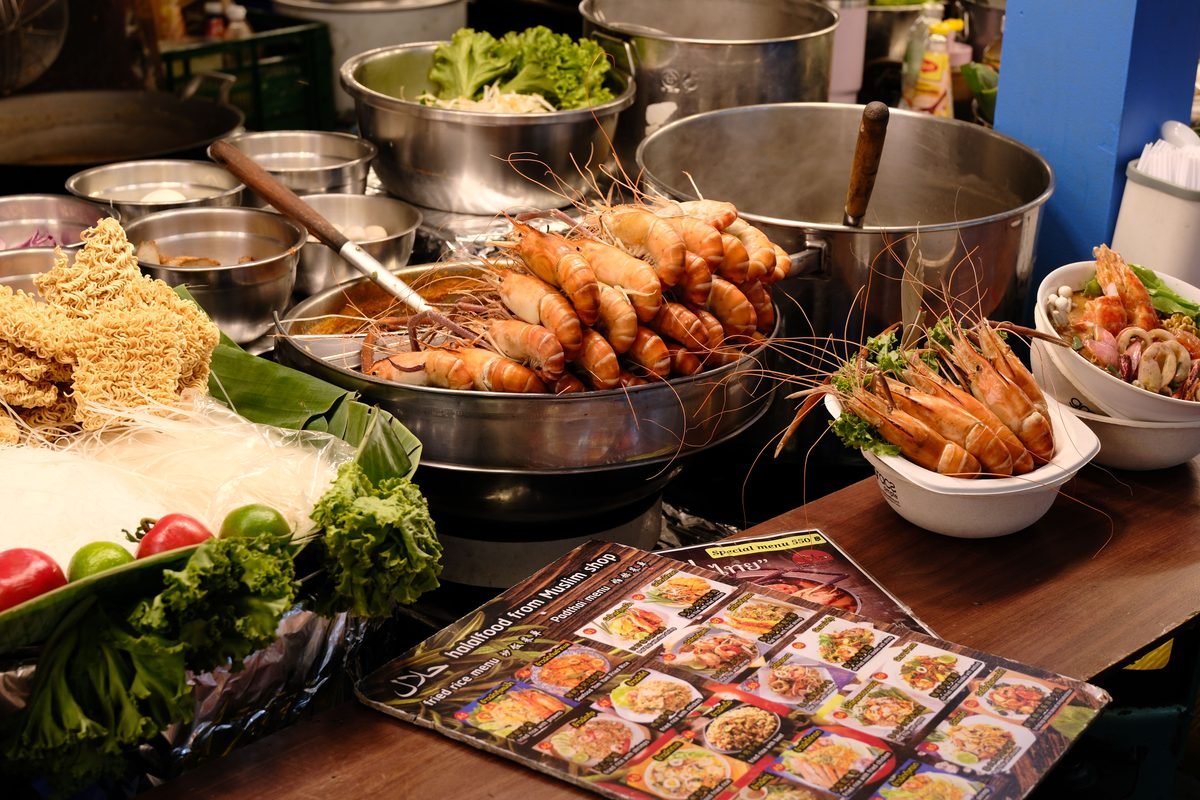
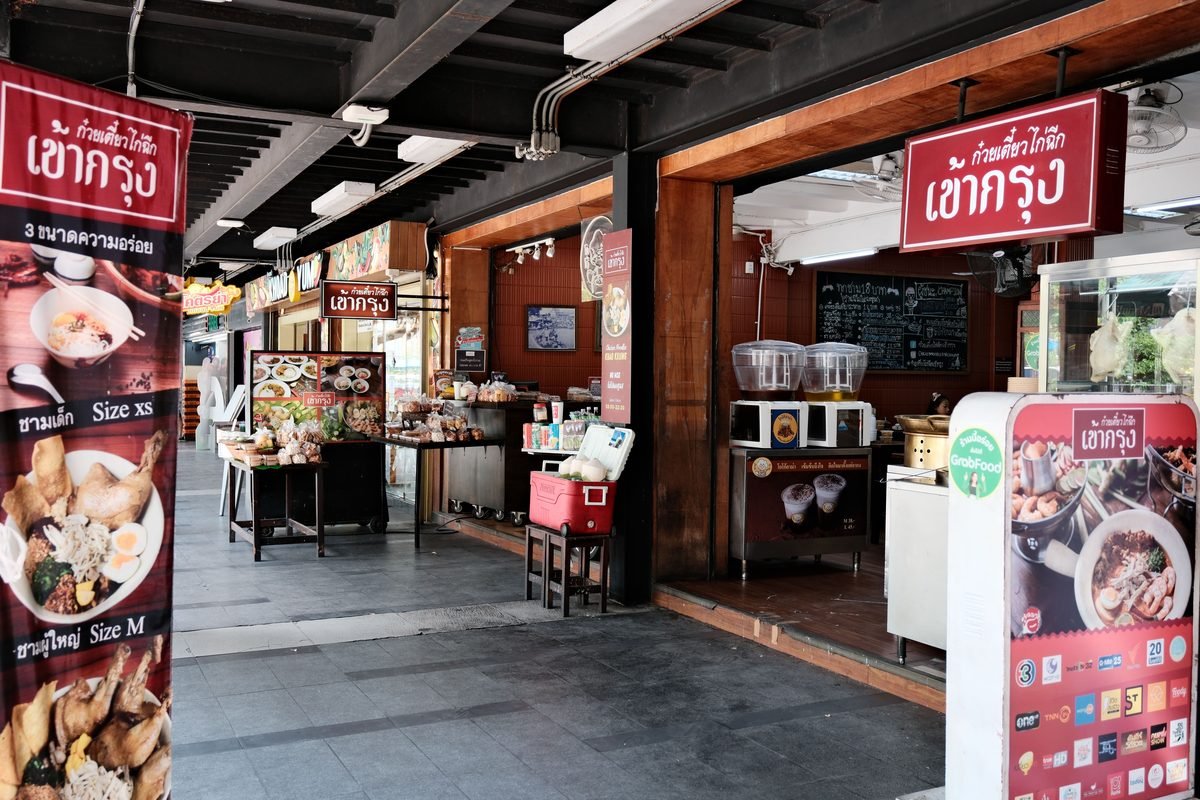
Where to eat: Yaowarat night stalls and Banglamphu mornings
For an electric night crawl, begin on Yaowarat Road just as the neon signs switch on. Start your evening at Guay Jub Ouan Pochana, situated right in front of the old Chinatown cinema. Their signature peppery broth delivers an incredible bite. Walk two minutes down the main strip to find Nai Ek Roll Noodles for braised pork trotters. Save room for dessert at the famous sweet toasted bun cart near Soi Texas. Soft buns filled with sweetened egg custard or rich roasted chili paste cost roughly ฿25 (about $0.75) each.
Banglamphu provides the perfect morning contrast. This quiet neighborhood north of the Grand Palace offers shady shophouses and historic street stalls. Head along Phra Sumen Road to sample duck noodles with springy egg noodles and rich five-spice gravy. Stop by the modest corner stalls around the Banglamphu Market junction for freshly fried crispy roti drizzled with sweetened condensed milk for ฿30 (about $0.90).
For dedicated noodle hunting, take the BTS north to the canal stalls along Khlong Sam Sen near Victory Monument. Multiple boat noodle shops line both sides of the narrow waterway. Staff in color-coded pink and orange shirts compete for your patronage. Sit canalside, order bowls in batches of three, and stack the empty bowls high on your table.
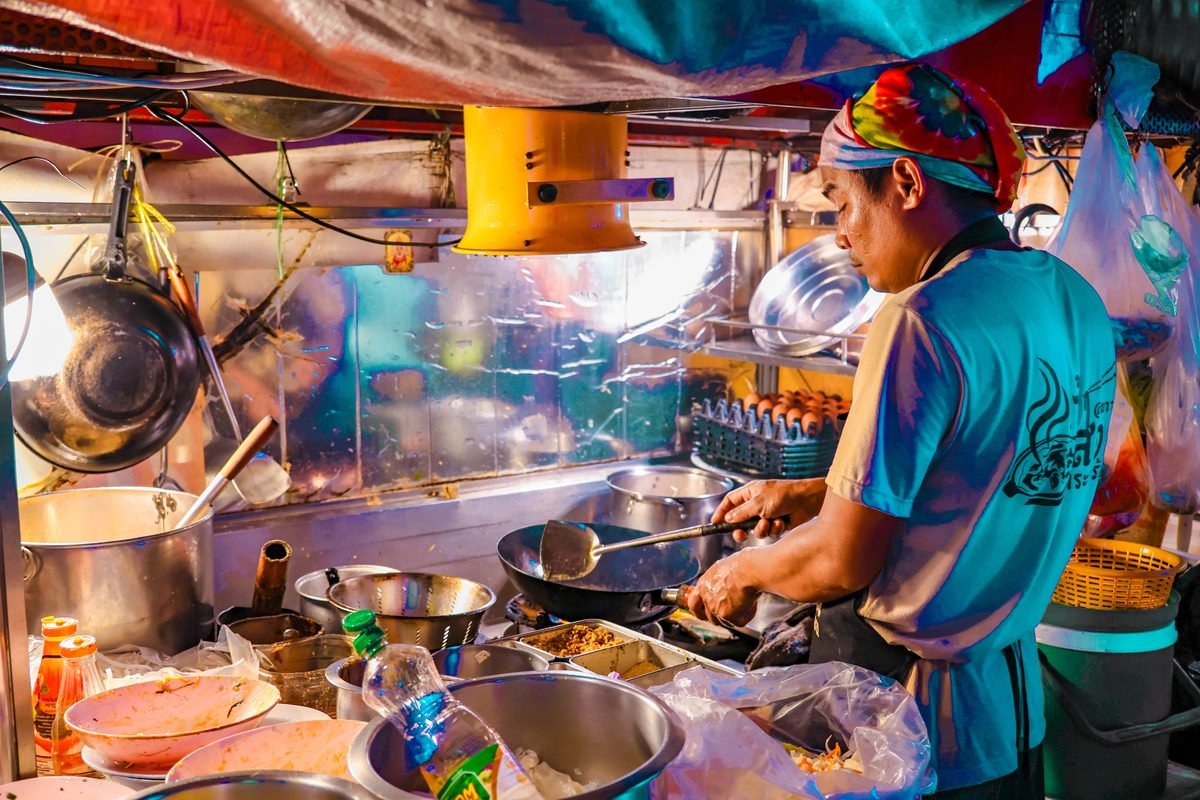
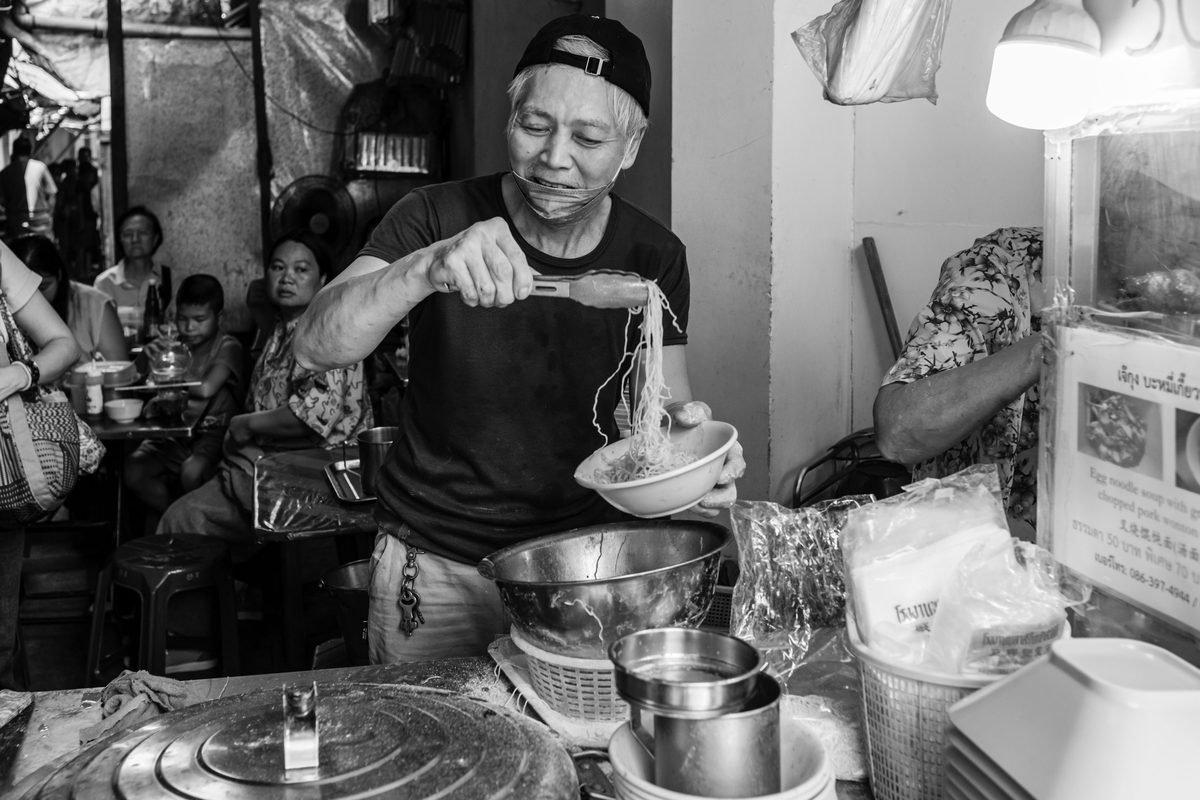
Tip: Cash is Essential
Nearly all sidewalk vendors only accept cash or local QR payments. Keep plenty of ฿20, ฿50, and ฿100 banknotes in your pocket.
Practical safety rules and how to pick safe street stalls
Getting sick while traveling ruins everything. Fortunately, Bangkok street food is remarkably clean when you understand how to choose your spots. You do not need to stick to indoor mall food courts to stay safe. Sidewalk cooks take real pride in their kitchens. They serve hundreds of discerning locals every single day. A few straightforward observations will keep your stomach happy throughout the journey.
First, judge foot traffic and high turnover. A busy stall with a constant queue of local office workers or families means raw ingredients move quickly. Meat does not sit out in humid air. Fresh batches hit the wok every few minutes. Look for boiling broths and sizzling woks. High cooking heat kills bacteria instantly. Avoid pre-cooked curries sitting lukewarm in metal trays without active heating burners underneath.
Second, inspect ice and drinking water. Ice with clean hollow cylinders or small, uniform cubes comes from commercial filtered water plants. It is completely safe to consume. Only avoid crushed, irregularly shaped block ice that might have been dragged across dirt during delivery. For dining utensils, use the paper napkins provided on the table to wipe metal spoons and forks clean before eating. Drink bottled water priced at ฿10 (about $0.30) from any corner cooler.
Heads up: Avoid Unrefrigerated Seafood
Skip raw cockles or prawns sitting on melting ice trays in hot outdoor markets if the stall has low customer turnover.
What a full day street food crawl costs
Bangkok remains one of the best value food destinations anywhere in the world. You can eat four generous meals, sample roadside fruits, and drink fresh cold coconuts all day for less than the price of a single casual entree in London or New York. The economics of Thai street kitchens allow independent travelers to feast generously on modest budgets.
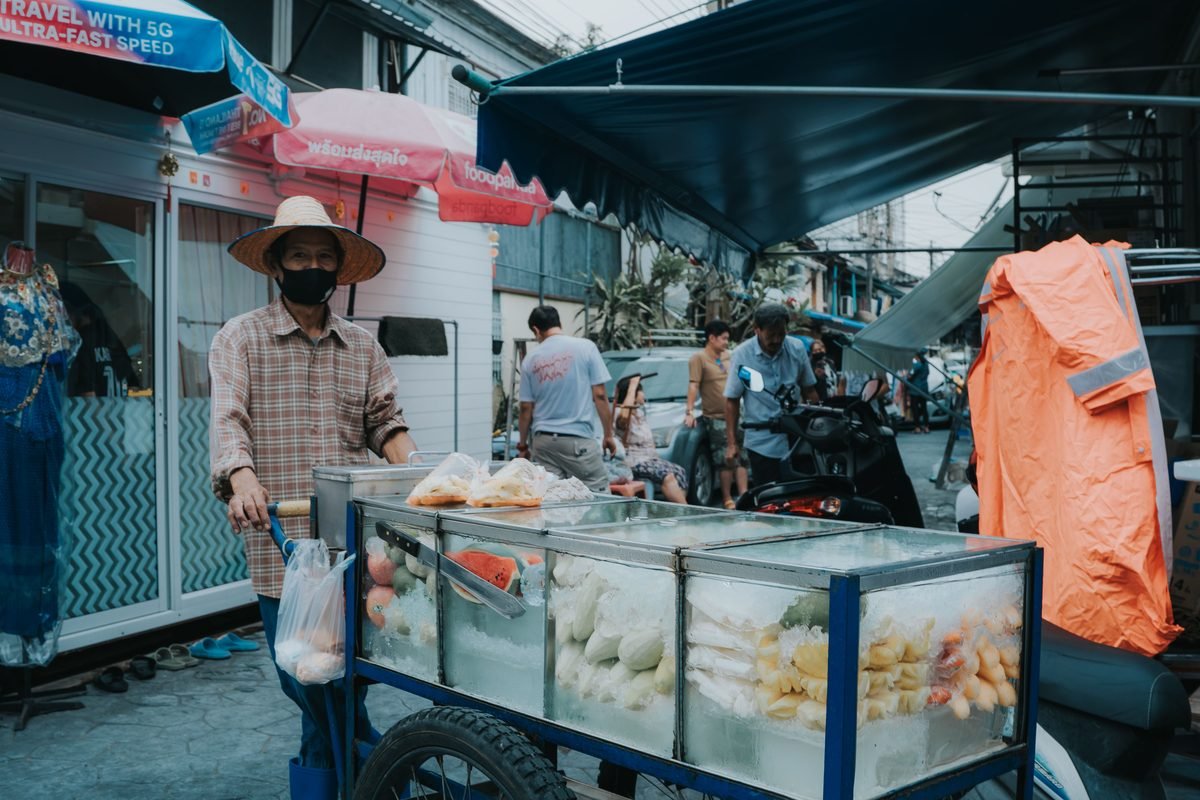
A typical morning starts with savory rice porridge and hot Thai tea for about ฿65 (about $1.95). Midday boat noodles with crispy pork rinds and a cold drinking water will set you back roughly ฿90 (about $2.70). An afternoon snack of fresh sliced papaya from an ice cart costs ฿30 (about $0.90). That keeps energy high between sights.
Evening is when spending expands, but costs remain modest. An ambitious dinner crawl across Yaowarat featuring rolled noodle soup, barbecue skewers, fresh oyster omelets, and mango sticky rice comes out to roughly ฿320 (about $9.60) per person. Add a couple of cold local Chang beers from a convenience store for ฿60 (about $1.80) each, and your entire day of dining costs under ฿600 (about $18.00). It is extraordinary value for world-class food.
What it costs in Bangkok
| Item | Local price | USD |
|---|---|---|
| MRT / BTS single train ride | ฿17 – ฿43 | $0.50 – $1.30 |
| Chao Phraya Express boat ride | ฿16 | $0.50 |
| Bowl of boat noodles (per small bowl) | ฿18 – ฿22 | $0.55 – $0.65 |
| Kuay Jab rolled noodle soup | ฿60 – ฿80 | $1.80 – $2.40 |
| Pork skewers with sticky rice (3 skewers) | ฿40 | $1.20 |
| Fresh mango sticky rice portion | ฿100 – ฿150 | $3.00 – $4.50 |
| Full daily street food budget | ฿500 – ฿650 | $15.00 – $19.50 |
Prices checked September 2026. Always confirm with the provider before you book.
Mistakes to avoid
- Arriving on Yaowarat Road before 5:00 PM expecting night market stalls to be open when it operates primarily as an automotive and gold trade district during daylight hours.
- Relying solely on credit cards or 1,000-baht large banknotes that street vendors cannot break during morning rush hours.
- Taking metered road taxis during weekday rush hours (4:30 PM to 7:30 PM) instead of using the MRT underground or Chao Phraya river boats.
FAQ
Is Bangkok street food safe for tourists?
Yes, street food in Bangkok is generally very safe provided you eat at busy stalls with high local turnover. Choose food that is cooked fresh to order in boiling broth or hot woks, and stick to bottled water and factory cylinder ice.
How much does a street food meal cost in Bangkok?
A standard street meal like a bowl of noodles or chicken rice costs between ฿50 and ฿80 (about $1.50 to $2.40). An elaborate evening food crawl with several courses and dessert rarely exceeds ฿350 (about $10.50).
What is the best area for a Bangkok street food guide tour?
Yaowarat (Chinatown) is unmatched for evening seafood, noodle soups, and sweet buns. For daytime and morning food, Banglamphu, Silom Soi 20, and Talat Phlu offer incredible authentic spreads.
Do Bangkok street food stalls take credit cards?
Almost no street vendors accept international credit cards. You must carry Thai Baht cash, ideally in small denominations like ฿20, ฿50, and ฿100 notes.
What days are best for street food in Bangkok?
Tuesday through Sunday offers full stall operations across the city. Mondays are official street cleaning days in many districts, meaning fewer sidewalk vendors set up.