
Gwangjang Market Food Guide: A Local’s Seoul Feast

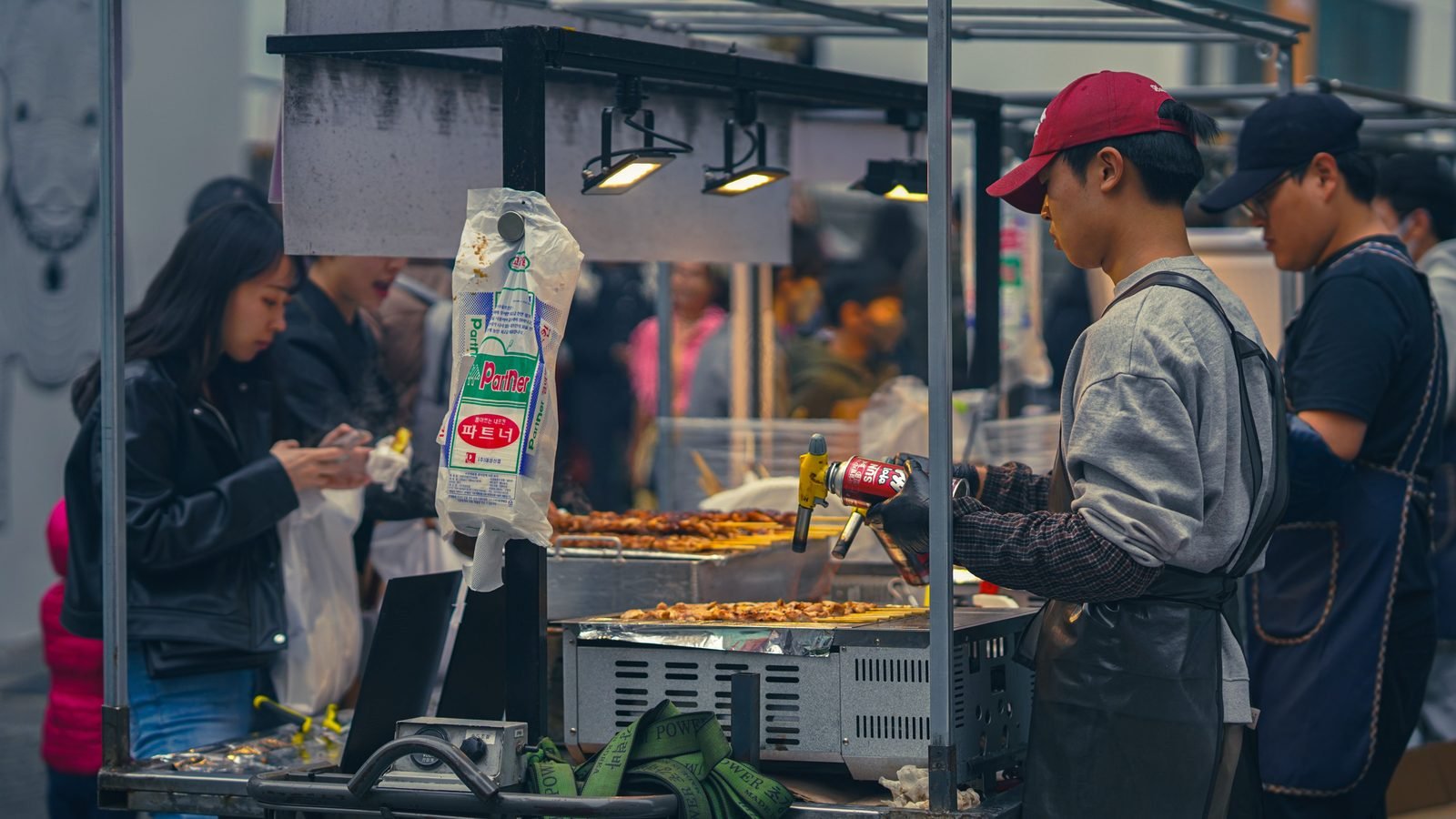
At 8:00 PM on a chilly autumn evening, the thick scent of sizzling mung bean pancakes and toasted sesame oil fills the air near Jongno 5-ga. Wisps of steam rise from massive metal griddles, catching the glow of bare yellow lightbulbs overhead. I live in Seoul. Even after years of navigating this city, this specific sensory overload never fails to draw me back to the wooden benches of Korea’s oldest continuously operating daily market.
This detailed Gwangjang market food guide is written for independent travelers who want to bypass the tourist traps and eat like a true local. I will show you exactly how to navigate the crowded alleys, which stalls deserve your patience, what to order first, and the crucial survival rules for seating and cash that will keep you from looking like a clueless tourist.
How to get to Gwangjang Market
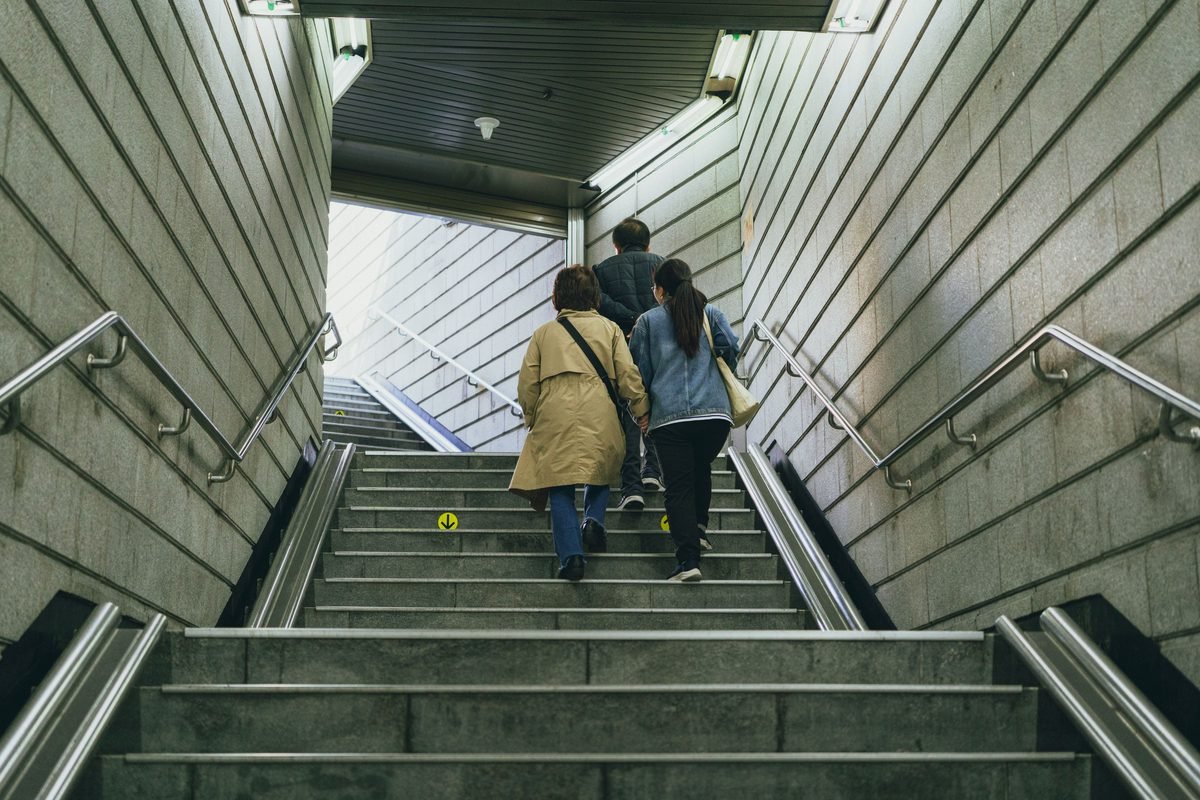
Navigating Seoul is incredibly easy once you understand the subway layout. To reach the market, your best option is to take Seoul Subway Line 1 and get off at Jongno 5-ga Station. Take Exit 8 and walk straight for about fifty meters; you will see the northern entrance of the market on your left. Alternatively, if you are coming from the southern side of the city or want a scenic walk, you can take Line 2 or Line 5 to Euljiro 4-ga Station. Use Exit 4, walk across the narrow Cheonggyecheon stream, and enter through the south gate. This walk takes about seven minutes.
Do not use Google Maps. It does not provide working walking directions in South Korea due to local mapping restrictions. Instead, download Naver Map or KakaoMap before you leave your hotel. These local apps will show you the exact subway exits and real-time train arrivals.
Before you tap into the subway, make sure you have a transit card. A blank T-money card costs about ₩4,000 (about $3) at any convenience store. You must load it with physical cash at a station kiosk. The base subway fare is ₩1,550 (about $1.15) for a single ride, which makes public transit the most affordable way to travel. If you prefer the bus, the city bus base fare is ₩1,500 (about $1.10). Taxis are also plentiful, but traffic around Jongno can be gridlocked during rush hour, making the subway the fastest choice.
Heads up: Avoid Google Maps
Google Maps will often show incorrect walking paths or freeze entirely in Seoul. Download Naver Map or KakaoMap to navigate the streets and market entrances accurately.
The best time to visit Gwangjang Market
Timing is everything when planning your food run. The market itself is technically open from 9:00 AM to 11:00 PM daily, but different sections operate on distinct schedules. The vintage clothing stalls on the second floor close early, while the food stalls in the central ground-floor corridors keep cooking until late at night. If you want to experience the full culinary energy, aim to arrive in the late afternoon or early evening.
I highly recommend arriving around 5:30 PM. At this hour, the afternoon shopping crowd is thinning out, and the evening dinner crowd has not yet fully descended. You will have a much easier time finding an open stool at the most popular stalls. By 7:00 PM, the market is packed. Local office workers from the nearby Jongno and Euljiro business districts arrive in large groups to unwind with savory pancakes and cold drinks. The noise level rises, steam fills the air, and lines for the famous stalls can stretch down the narrow corridors.
Keep in mind that while the food stalls are open seven days a week, many of the non-food retail stalls close on Sundays. If you want to browse the entire market, including the textile and bedding sections, plan your trip for a Thursday or Friday. Saturdays are incredibly busy with domestic tourists, so weekdays are always your best bet for a more relaxed dining experience.
Gwangjang market food guide classics: Mayak Gimbap and Bindaetteok
Your culinary journey must begin with the two absolute classics of the market. First up is mayak gimbap. The word “mayak” translates to narcotic, but do not worry; there are no drugs involved. They get this nickname because they are incredibly addictive. These are bite-sized rice rolls wrapped in crisp seaweed, filled simply with pickled radish, carrots, and spinach. What makes them special is the glaze of toasted sesame oil and the spicy hot mustard dipping sauce served on the side. A plate of these rolls costs about ₩3,500 (about $2.60) and makes the perfect starter.
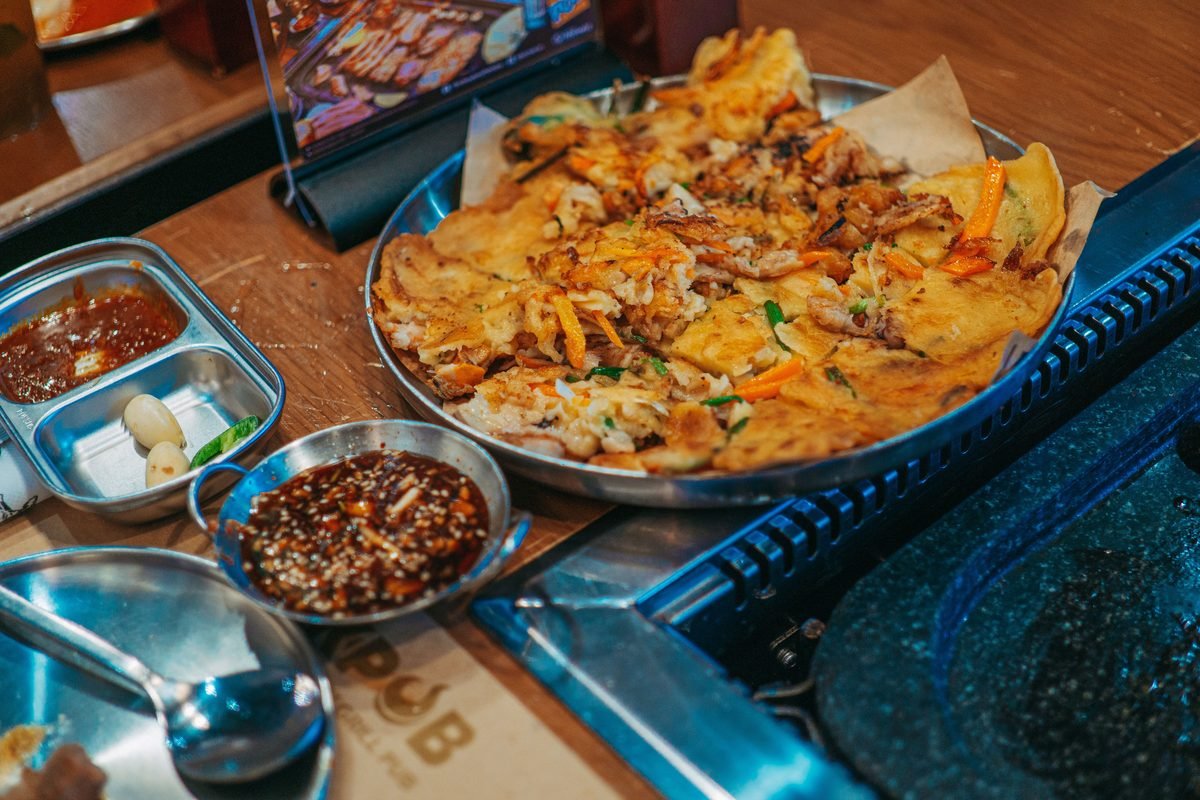
Next, follow the sound of sizzling oil to the nearest bindaetteok stall. These are thick, savory pancakes made from ground mung beans. You can watch the vendors grind the yellow beans using traditional stone mills right at the stall. The batter is mixed with fresh green onions, garlic, and crunchy mung bean sprouts, then shallow-fried in hot oil on a massive griddle until the exterior is deeply browned and crispy. A basic mung bean pancake costs about ₩5,000 (about $3.70).
To eat like a true Seoul local, you must pair your hot bindaetteok with a bowl of cold makgeolli. This lightly sparkling, milky rice wine cuts through the richness of the fried pancake perfectly. A bottle of local makgeolli costs around ₩4,000 (about $3). Grab a plastic stool. Dip the hot pancake into the soy-marinated onions provided on the side, take a bite, and follow it with a sip of cold rice wine.
From a local: The Soy Onion Trick
Do not skip the side dish of raw onions soaked in soy sauce. Spoon an onion chunk onto your bindaetteok before eating; the sharp acidity cuts through the oil perfectly.
How to find the legendary Yukhoe Alley
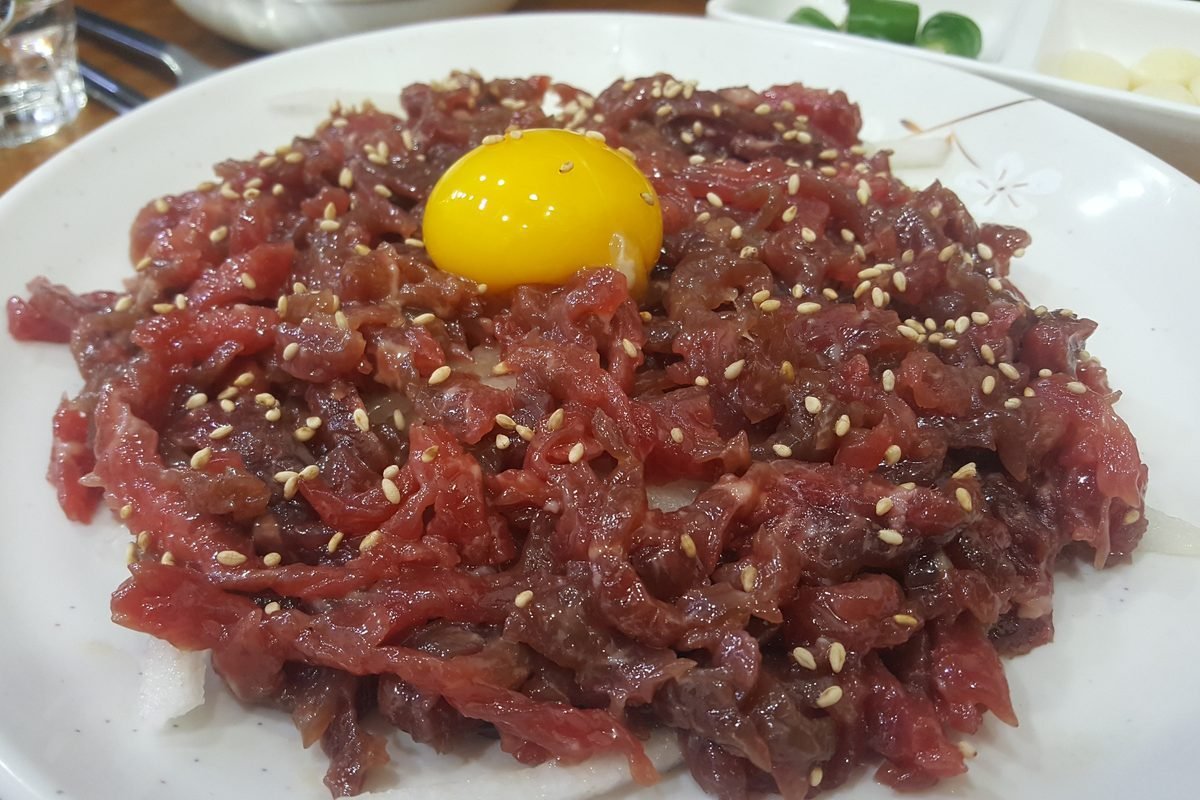
Once you have lined your stomach with pancakes, it is time to seek out the market’s worst-kept secret. Yukhoe Alley is a narrow, easily missed side corridor dedicated entirely to raw beef. Yukhoe is raw beef. This dish consists of high-quality, lean beef sliced into thin strips, seasoned lightly with sesame oil, salt, garlic, and sugar. It is served on a bed of sweet, crunchy julienned Korean pear and topped with a single raw egg yolk. You mix the yolk and pear into the beef right before eating.
If you are nervous about eating raw beef at a market, rest assured that the turnover here is incredibly high. The meat is delivered fresh daily and prepared under strict sanitary conditions. A standard plate of yukhoe costs about ₩21,000 (about $15.50). Every order comes with a complimentary bowl of hot, clear beef radish soup that is incredibly savory and comforting.
To find the alley, look for the small signs written in Korean (육회) near the center of the market. The most famous spot is Buchon Yukhoe, which has earned a Michelin Bib Gourmand recommendation for several consecutive years. The line here is always long, but it moves quickly. If you want an extra adventure, you can also order yukhoe tangtangi, which combines raw beef with live octopus tentacles that are still moving on the plate. This combo costs about ₩35,000 (about $26).
Book ahead: Buchon Yukhoe Queuing
You cannot book Buchon Yukhoe in advance. Arrive at the ticket machine outside the restaurant by 11:30 AM for lunch or 5:00 PM for dinner to avoid waiting over an hour.
Which Gwangjang market stalls are worth the wait
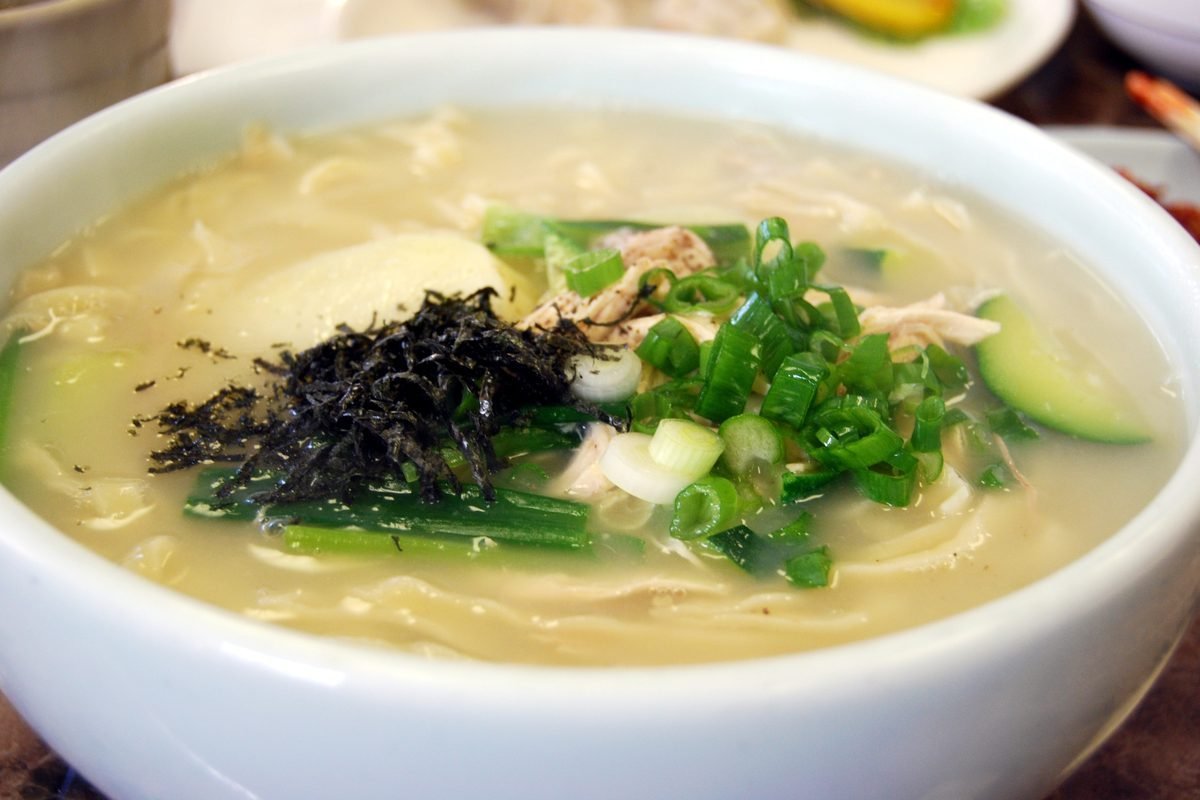
With hundreds of food stalls competing for your attention, it is easy to get overwhelmed. Some stalls have massive queues because of social media fame, while others are genuinely beloved by locals. One stall that lives up to the hype is Gohyang Kalguksu, run by a friendly vendor who was featured on a popular Netflix street food documentary. Here, you can watch her hand-roll and knife-cut wheat noodles right in front of you. A steaming bowl of kalguksu (knife-cut noodle soup) costs about ₩7,000 (about $5.20). The broth is light, anchovy-based, and deeply comforting, especially on a cold day. The pork and kimchi dumplings (mandu) are also handmade and worth adding to your bowl.
Another line that you absolutely must join is at the Gwangjang Sijang Kkwabaegi stall, located right at the north entrance of the market. They specialize in kkwabaegi, which are twisted Korean donuts made from glutinous rice flour. The bakers twist the dough, fry it to a perfect golden brown, and toss it immediately in a mix of sugar and cinnamon. A single hot donut costs ₩1,500 (about $1.10). The line often stretches down the street, but the staff work with military efficiency, meaning you will rarely wait more than fifteen minutes. The contrast between the hot, crispy exterior and the chewy, pillowy interior is worth every second of the wait.
Local market etiquette and cash tips
Eating at a traditional market requires a bit of street smarts. The most important rule to remember is about seating. The wooden benches and plastic stools belong to specific stalls. Do not sit down unless you intend to order food from that exact vendor. You cannot buy a pancake at one stall and sit at a noodle stall to eat it. If you are dining in a group, it is expected that everyone sitting down orders at least one dish. Space is incredibly tight, so keep your backpacks on your lap or tucked under your stool so you do not block the narrow walkways.
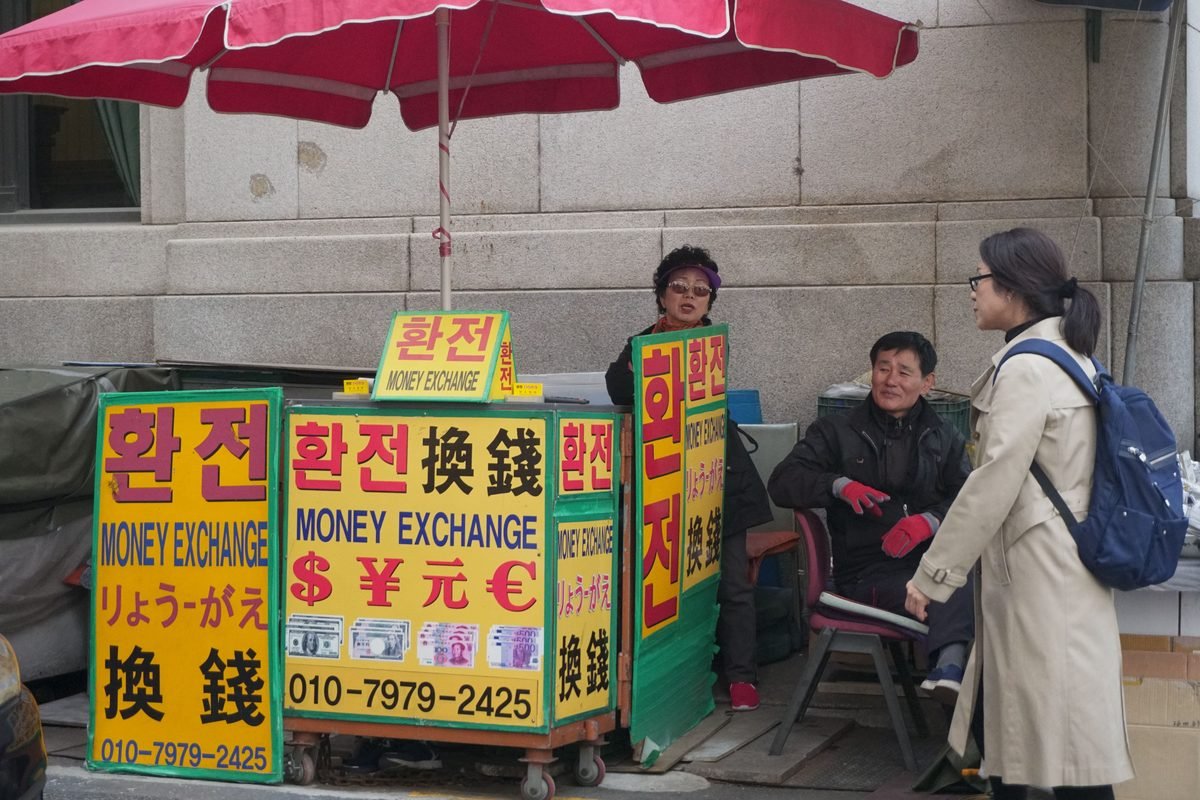
Cash is still king here. While South Korea is largely a cashless society and major restaurants accept international credit cards, many of the smaller, older stalls in Gwangjang Market only accept cash or local bank transfers. Always carry physical currency with you. I recommend bringing at least ₩30,000 (about $22) in cash per person to cover a full night of eating and drinking. If you run out, there are several ATMs located near the bank branches just outside the market exits.
Finally, be mindful of the pace. These stalls rely on high turnover to make a profit. Once you have finished your food, pay your bill, gather your belongings, and move along so the next hungry customer can take your seat. Water is almost always self-serve; look for the stainless steel water dispensers and small paper cups nearby. A polite “gamsahabnida” (thank you) to the cook as you leave goes a long way.
Tip: Keep Your Trash
Public trash cans are virtually nonexistent in Korean markets. Carry a small plastic bag in your pocket to store your wooden skewers and napkins until you return to your hotel.
What it costs in Seoul
| Item | Local price | USD |
|---|---|---|
| T-money Transit Card (Empty) | ₩4,000 | ($3.00) |
| Single Subway Ride (Base Fare) | ₩1,550 | ($1.15) |
| Mayak Gimbap (One Plate) | ₩3,500 | ($2.60) |
| Bindaetteok (Mung Bean Pancake) | ₩5,000 | ($3.70) |
| Makgeolli (One Bottle) | ₩4,000 | ($3.00) |
| Yukhoe (Raw Beef Plate) | ₩21,000 | ($15.50) |
| Kkwabaegi (Twisted Donut) | ₩1,500 | ($1.10) |
| Realistic Daily Food Budget | ₩35,000 | ($26.00) |
Prices checked September 2026. Always confirm with the provider before you book.
Mistakes to avoid
- Trying to use Google Maps to navigate the market alleys instead of downloading Naver Map.
- Sitting down at a food stall’s bench to eat food purchased from a different vendor.
- Forgetting to bring physical cash, assuming all small street food stalls accept foreign credit cards.
FAQ
Is Gwangjang market food guide safe for tourists?
Yes, Gwangjang Market is incredibly safe. The food stalls have massive daily turnover, meaning the ingredients like raw beef (yukhoe) and seafood are fresh and prepared daily under strict hygiene standards.
Do Gwangjang Market food stalls accept credit cards?
While some of the larger, permanent stalls accept international credit cards, many smaller stalls only accept cash or local bank transfers. Always carry at least ₩30,000 (about $22) in physical cash.
Is Gwangjang Market open on Sundays?
Yes, the food stalls are open on Sundays, but many of the textile, bedding, and vintage clothing shops on the second floor are closed. Go any day of the week for food, but stick to weekdays for general shopping.
What should I order first at Gwangjang Market?
Start with a plate of mayak gimbap (seaweed rice rolls) and a freshly fried bindaetteok (mung bean pancake). These are the most iconic dishes and are light enough to leave room for other stalls.
How do I find the Netflix noodle stall in Gwangjang Market?
The famous Gohyang Kalguksu stall is located near the central intersection of the market’s food alleys. Look for the stall with the Netflix logo displayed on the counter and a long line of eager diners.

One Comment