Korea Cherry Blossom Guide: Bloom Dates & Crowd Hacks

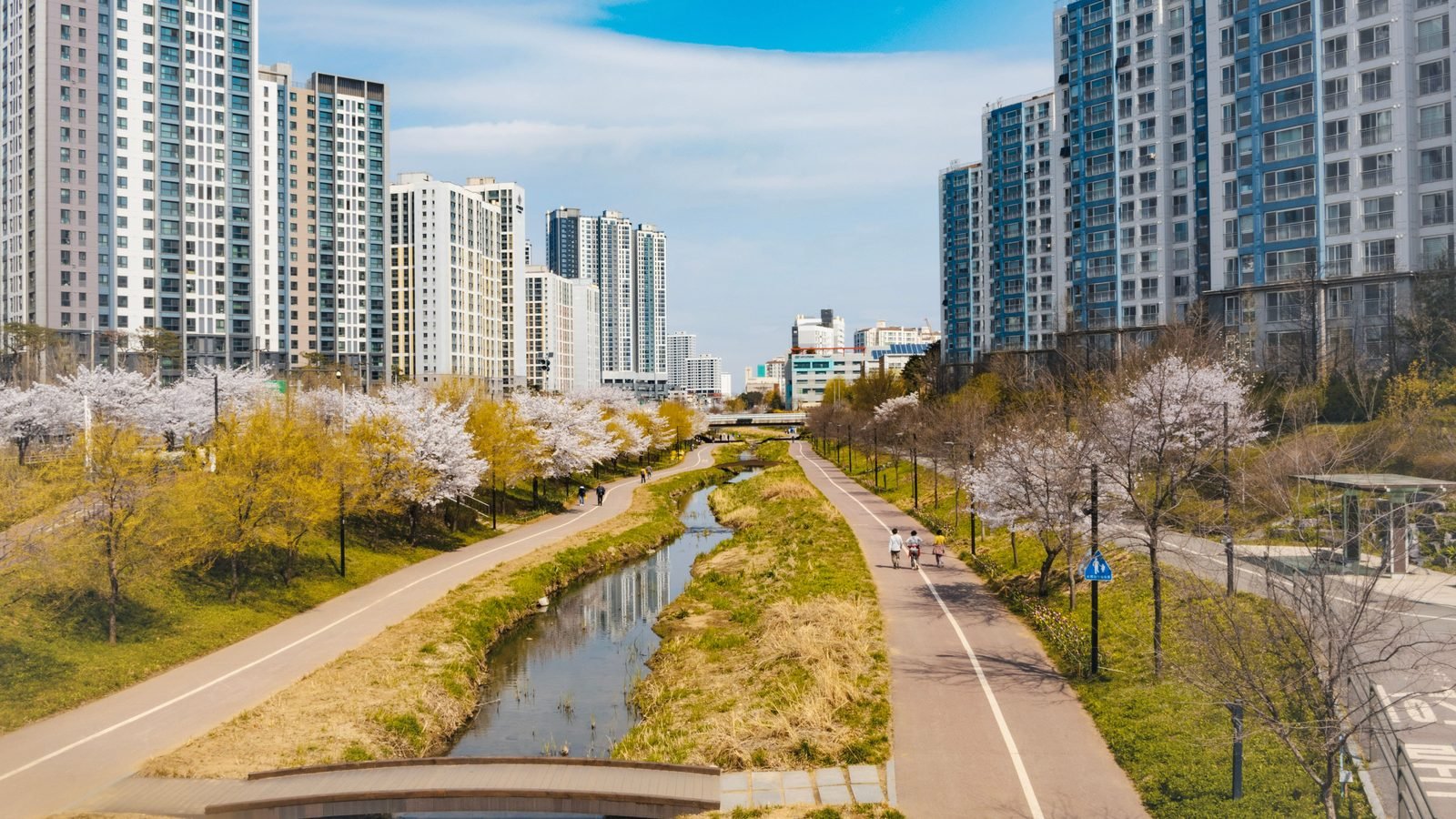
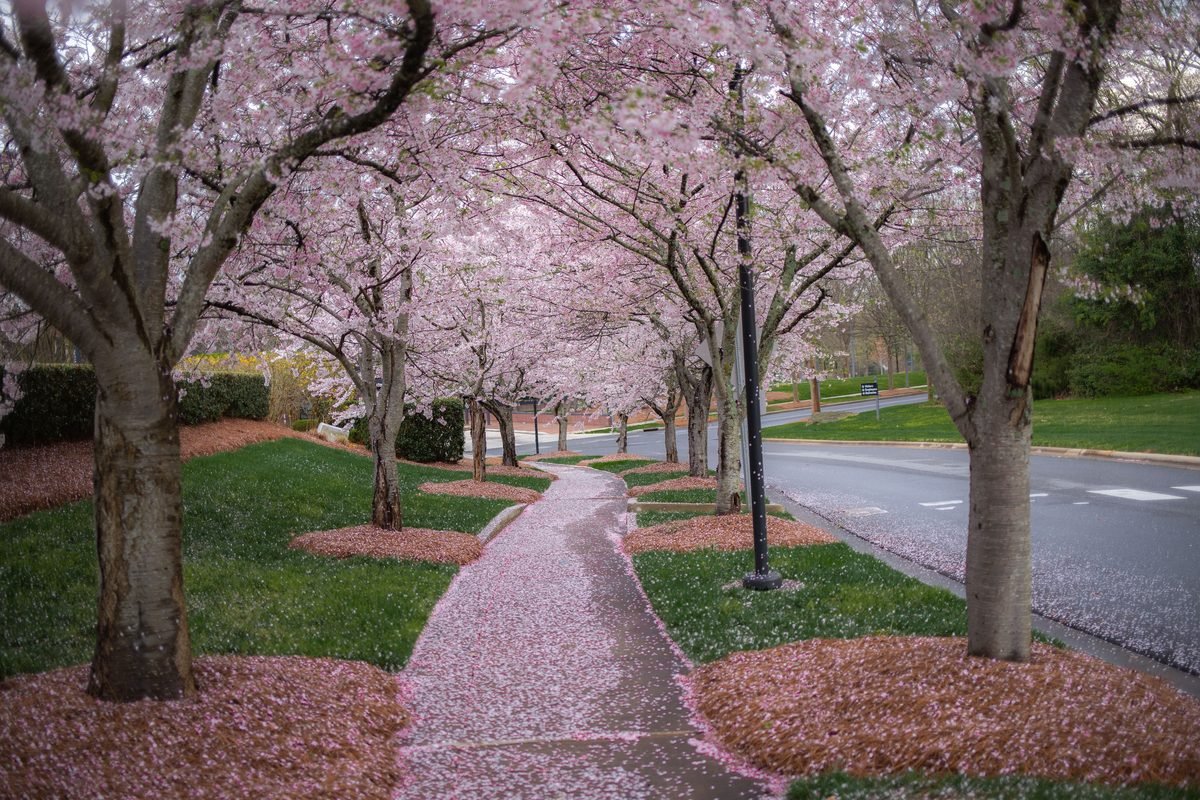
Morning air in late March in Seoul has a specific chill. You step out of a convenience store with a warm canned coffee, and there it is—the first pale pink petal drifting onto the asphalt of a side street in Mapo. Spring in my home city does not arrive gradually; it bursts open overnight, turning gray concrete into a canopy of soft white and pastel pink.
I wrote this Korea cherry blossom guide for independent travelers who want to see the blooms without getting lost in the logistics. We will cover exact bloom windows across the peninsula, how to navigate the massive Jinhae Gunhangje festival, crowd-free spots in Seoul, and what to do if your flights land a week too late.
When to visit using this Korea cherry blossom guide by city
The pink wave moves from south to north. Spring on the Korean peninsula behaves like a slow-moving tide, starting in the warm southern waters of Jeju Island and climbing up the mountain ridges to Seoul. If you want to catch the absolute peak, you must understand this geographic progression. The flowers do not wait. Jeju Island usually sees its first blossoms around March 20 to March 24. Within a few days, the southern coastal cities of Busan and Changwon follow, usually showing off full blooms between March 24 and March 28. If you are planning a multi-city trip, this is the perfect time to start in the south and work your way upward.
As the calendar edges toward late March, the historic city of Gyeongju and the inland valley of Daegu turn pink. This usually happens between March 26 and March 30. A standard KTX train ticket from Seoul to Singyeongju costs ₩49,300 (about $37), making it easy to zip down south to catch these early stages. Finally, Seoul and the surrounding Gyeonggi province join the show. The capital city typically begins its bloom around April 1 to April 3, with the peak canopy lasting until roughly April 10.
Do not trust old calendars from previous years blindly. Weather patterns fluctuate, and a warm week in early March can push the entire schedule forward by five days. I recommend keeping an eye on the official Korea Meteorological Administration forecasts, which release detailed city-by-city bloom predictions in mid-February. If your dates are locked, aim for the first week of April in Seoul as your safest bet for a single-destination trip.
How to navigate the Jinhae Gunhangje festival logistics
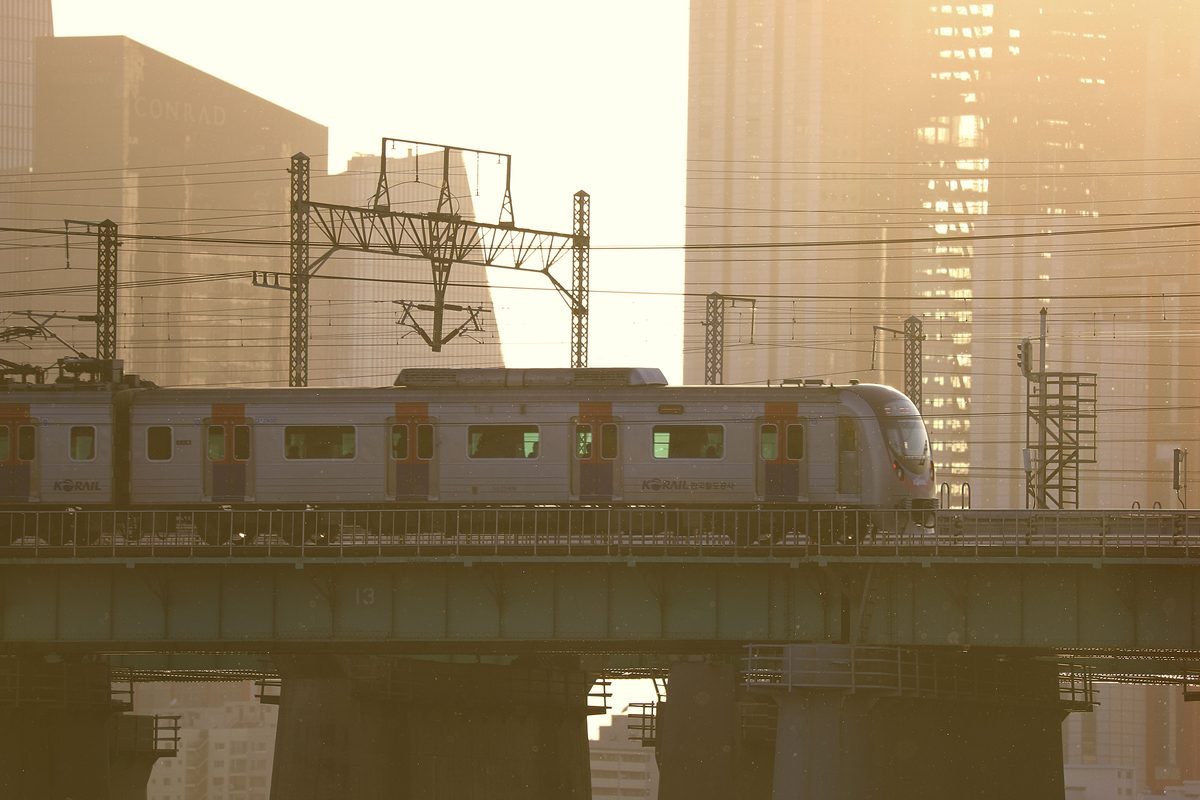
Jinhae is a quiet naval district in the city of Changwon that transforms entirely for ten days every spring. It hosts the Gunhangje, the largest cherry blossom festival in the country. Over three hundred thousand cherry trees bloom simultaneously, lining the streets, streams, and old railway tracks. To get here from Seoul, your best option is to take the high-speed KTX train to Changwon Station or Masan Station. A standard KTX ticket from Seoul to Changwon costs about ₩53,000 (about $40). From there, you can catch a local bus or take a taxi for about ₩15,000 (about $11) directly into Jinhae.
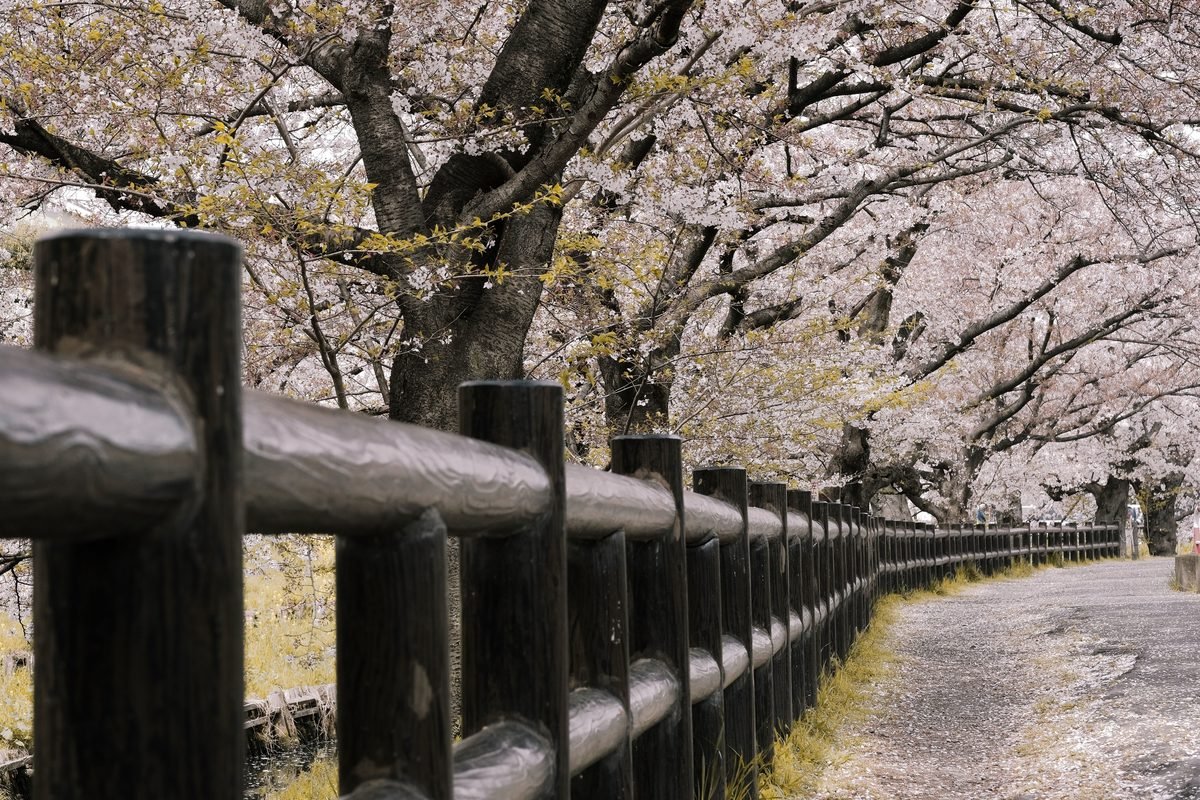
The two most famous spots in Jinhae are the Yeojwa Stream and the Gyeonghwa Station rail path. At Yeojwa Stream, yellow canola flowers carpet the ground while pink petals form a thick roof overhead. Gyeonghwa Station is no longer an active train stop, but the old tracks are preserved. Walking along the rails under the arching branches feels like stepping into a painting.
Because Jinhae is relatively small, the influx of millions of visitors over a single week creates massive traffic jams. The key to surviving Jinhae is simple: arrive early. If you can get to Yeojwa Stream by 07:30, you will walk in peace. By 10:00, the tour buses arrive, and the narrow boardwalks become incredibly crowded. Food stalls line the streets nearby, selling cherry-shaped cakes and local snacks. Try to visit on a Tuesday or Wednesday to avoid the worst of the weekend crowds.
Book ahead: Book your train tickets early
Book your KTX train tickets from Seoul to Changwon exactly one month in advance at 07:00 KST on the official Korail website. These tickets sell out within minutes during the festival peak.
Where to find the best Seoul cherry blossoms without the crowds
Yeouido Hangang Park is the place everyone recommends, but I suggest avoiding it. The crowded paths there during peak bloom can make walking feel like a chore. Instead, Seoul has several quieter alternatives that offer just as much color. One of my favorite spots is Yangjaecheon Stream in southern Seoul. This long waterway is lined with hundreds of mature cherry trees on both banks. It has separate paths for walkers and cyclists, meaning you can stroll comfortably without bumping into people.
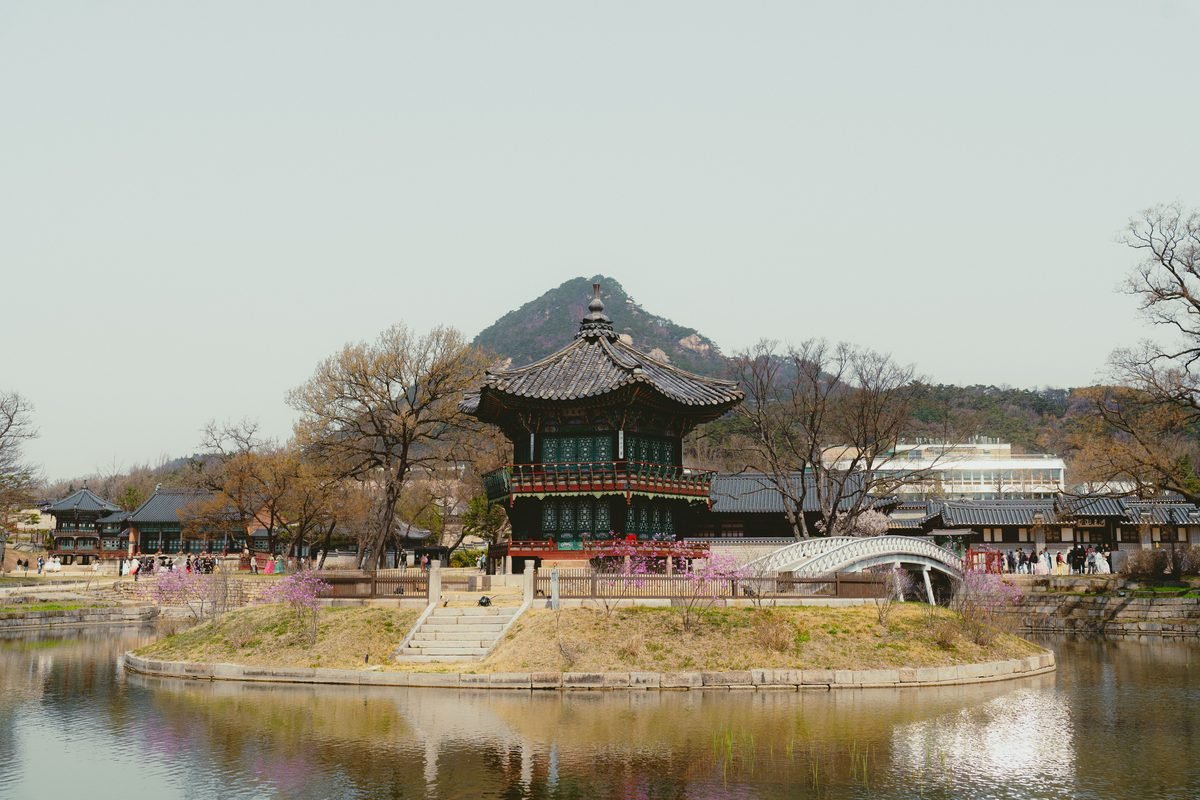
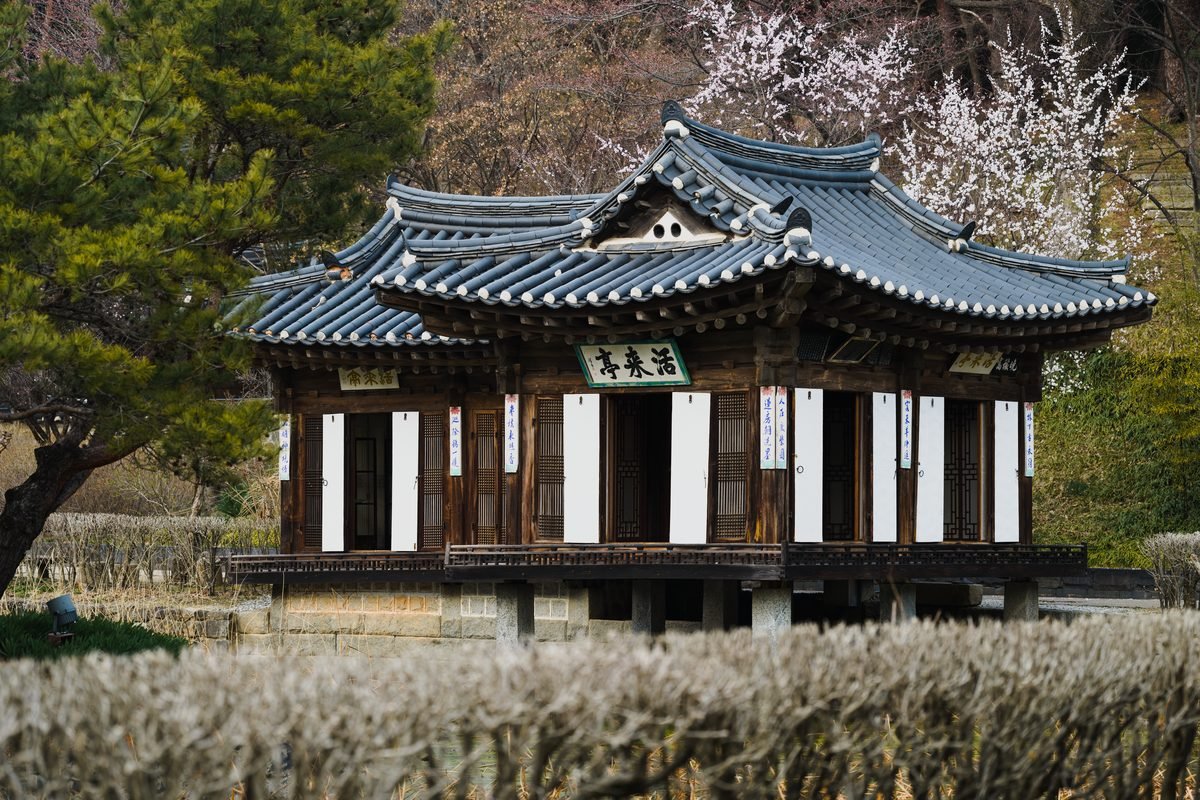
Another excellent option is Changgyeonggung Palace. While Gyeongbokgung gets the most attention, Changgyeonggung offers a much quieter atmosphere. The contrast of delicate pink blossoms against the painted wooden eaves of traditional Joseon-dynasty buildings is spectacular. Entry to the palace grounds is incredibly cheap at just ₩1,000 (about $0.75). Palace grounds offer quiet corners. You can easily spend two hours here wandering the stone paths.
If you want a light hike, head to Ansan Mountain in western Seoul. The Seodaemun-gu Office maintains a beautiful herb garden and a wooden boardwalk path that winds through a dense forest of cherry trees. This spot is highly popular with local neighborhood residents but remains largely ignored by international tour groups. You can combine this walk with a visit to the nearby Yeonnam-dong neighborhood for a coffee afterward. It makes for a perfect, relaxed spring morning. For those who want a classic lake view, Seokchon Lake in Jamsil is beautiful, but you must arrive at 07:00 to enjoy it. Seoul wakes up slowly. By 09:00, the lakeside path is packed with office workers and students.
From a local: The Deoksugung stone wall walk
Walk the stone wall road behind Deoksugung Palace (Jeongdong-gil) at 08:00. The early morning light hitting the stone walls and the falling petals is a view most tourists miss.
Why weekday timing is essential for your blossom itinerary
Weekdays are your secret weapon. The math of crowd dynamics in South Korea is simple: weekends belong to families, couples, and tour groups from across the country. If a sunny Saturday coincides with peak bloom in Seoul, transit stations near major parks become congested. A subway ride to Yeouinaru Station on Line 5 on a weekend afternoon can involve waiting in long queues just to exit the platform.
By shifting your primary blossom viewing to Monday through Thursday, you completely change your experience. You can walk at your own pace, take photos without strangers in every frame, and find open benches under the trees. Local cafes also have much shorter wait times. A latte at a trendy cafe near the Gyeongui Line Forest Park costs about ₩5,000 (about $3.75), and on a Tuesday afternoon, you can actually sit down and enjoy it.
If you must travel on weekends, use those days for indoor activities, museums, or neighborhoods that do not have famous flower spots. Save your park visits for early weekday mornings. The light at 08:00 is softer and much better for photography anyway. You will also find that local street food vendors are less rushed and have shorter lines. It is a much more pleasant way to experience the season.
What to do if you miss the peak bloom season
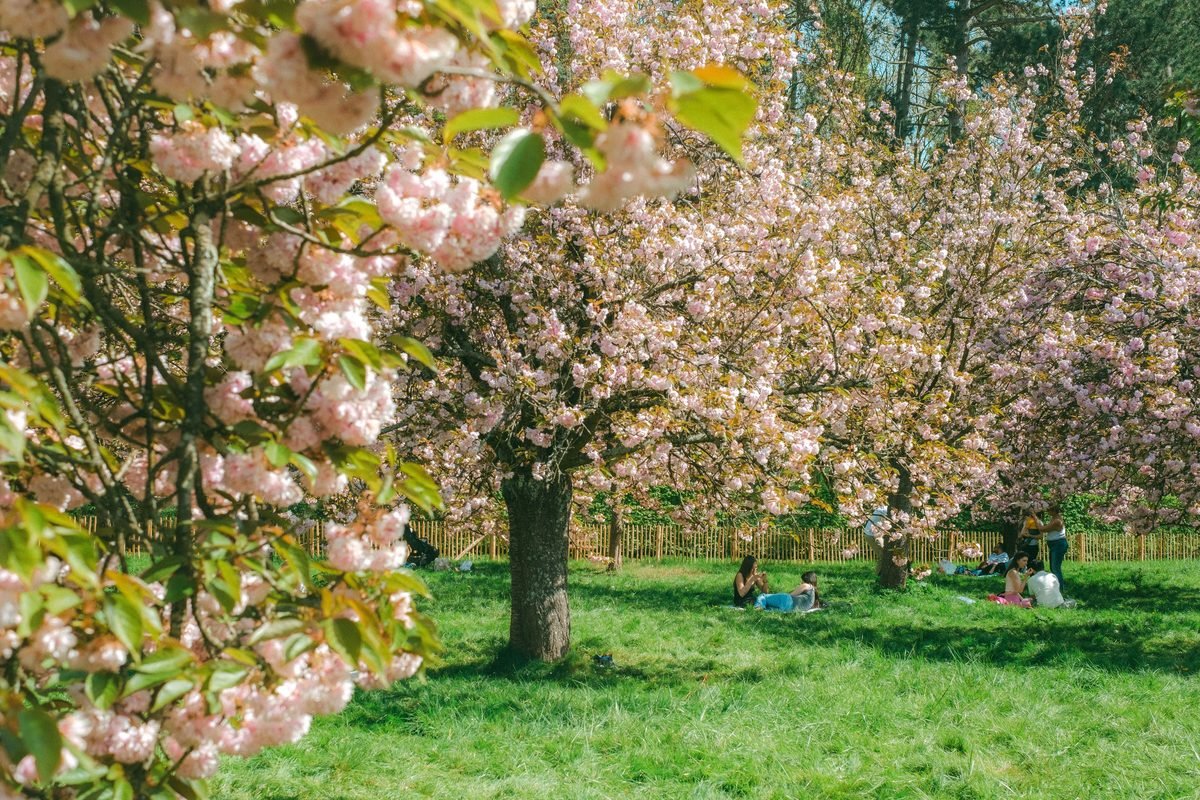
Do not panic. If your flights were booked late or an unseasonal rainstorm stripped the trees early, your spring trip is not ruined. South Korea has a second blossom season that many travelers do not know about. King cherry blossoms, known locally as wang-beotkkot, bloom roughly two weeks after the standard variety. These flowers are much larger, deeper pink, and grow in thick, heavy clusters that look like fluffy pom-poms.
The best place to see these late-blooming giants is the historic city of Gyeongju. Specifically, the grounds of Bulguksa Temple are famous for their groves of King cherry trees. Since May 2023, admission to Bulguksa Temple is completely free, making it an incredibly budget-friendly day trip. You can take a KTX train from Seoul to Singyeongju for ₩49,300 (about $37) and then catch a local bus to the temple. The sight of these deep pink blossoms hanging over the ancient stone terraces is spectacular.
Another option is to head north or go up in elevation. Because temperatures are cooler in the mountains, the blossoms in Bukhansan National Park on the northern edge of Seoul peak several days later than those in the city center. You can also visit Misari Speedboat Racing Park in Hanam, just east of Seoul, which features a long path of late-blooming pink trees. There are always options if you are willing to travel slightly outside the main city center.
How much does a Korea cherry blossom trip cost
Budgeting for a spring trip to South Korea is relatively straightforward because many of the best flower-viewing activities are completely free. Walking along streams, hiking up mountains, and visiting public parks costs nothing. Your primary expenses will be transportation, food, and lodging. To get around the cities efficiently, you will need a T-money transit card, which costs about ₩4,000 (about $3) for a blank card at any convenience store.
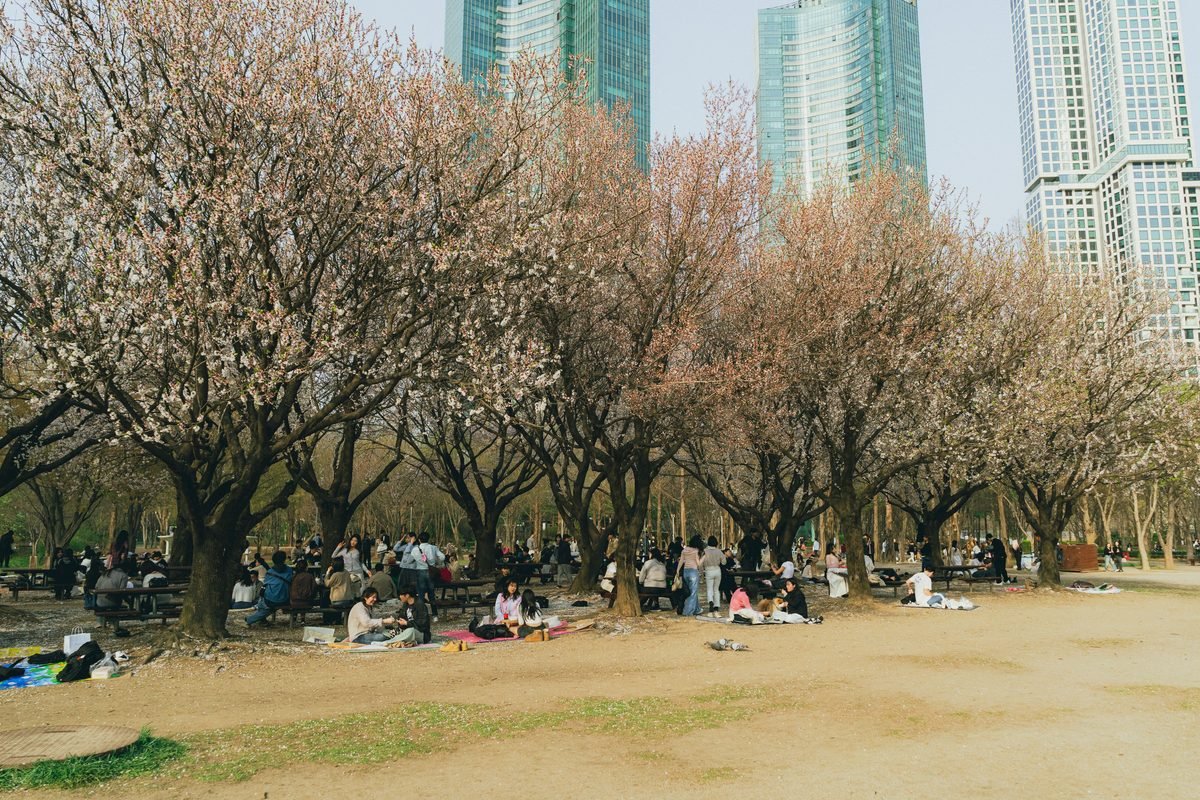
Once you load your transit card, the base fare for the Seoul subway is ₩1,550 (about $1.15) per ride, making it very affordable to hop between different parks. If you plan to travel between cities to follow the bloom, high-speed rail will be your largest transport cost. For food, you can keep costs low by purchasing picnic supplies. A picnic mat from Daiso costs just ₩3,000 (about $2.25). You can pair this with convenience store snacks or street food like tteokbokki for about ₩4,000 (about $3) per portion.
A mid-range hotel in a central neighborhood like Jongno will cost around ₩120,000 (about $90) per night. When you add up transport, meals, palace entry fees, and occasional cafe stops, a realistic daily budget for an independent traveler is around ₩90,000 (about $68) excluding accommodation. This allows you to experience the best of the season without feeling restricted. For ideas on what to eat during your park picnics, our Korean street food guide covers all the best portable options.
What it costs in South Korea
| Item | Local price | USD |
|---|---|---|
| Blank T-money transit card | ₩4,000 | about $3.00 |
| Seoul subway base fare | ₩1,550 | about $1.15 |
| KTX train ticket (Seoul to Changwon, one way) | ₩53,000 | about $40.00 |
| Changgyeonggung Palace admission | ₩1,000 | about $0.75 |
| Picnic mat from Daiso | ₩3,000 | about $2.25 |
| Local cafe latte | ₩5,000 | about $3.75 |
| Estimated daily budget (excluding lodging) | ₩90,000 | about $68.00 |
Prices checked September 2026. Always confirm with the provider before you book.
Where to stay in South Korea
Budget
Hongdae, for hostels within five minutes of Line 2
This area is perfect for solo travelers who want cheap food and easy airport access via the All-Stop train. You can reach the cherry blossoms along the Gyeongui Line Forest Park in just a short walk, with clean dorm beds costing roughly ₩45,000 (about $34) per night.
Mid-range
Jongno, for traditional Hanok stays near palaces
Staying here puts you within walking distance of Changdeokgung and Changgyeonggung palaces. It is a quiet, historic neighborhood with excellent bus connections to northern Seoul scenic spots, costing about ₩120,000 (about $90) per night.
Splurge
Jamsil, for luxury hotels overlooking Seokchon Lake
This southern district is ideal if you want to wake up and look directly down at a ring of pink blossoms surrounding a lake. You can beat the crowds to the lakeside path by simply stepping out of your lobby at dawn, with rooms costing around ₩350,000 (about $263) per night.
Mistakes to avoid
- Relying on Google Maps for walking directions, which does not work well in South Korea; you should download Naver Map or KakaoMap instead.
- Traveling to the Jinhae Gunhangje festival on a weekend without booking your KTX train tickets exactly one month in advance.
- Assuming all cherry blossoms disappear after the first spring rain, which ignores the late-blooming King cherry blossoms that peak two weeks later.
FAQ
What is the best week to use this Korea cherry blossom guide?
For a single-destination trip to Seoul, the first week of April is generally the safest bet. If you want to see the southern cities like Busan and Jinhae, aim for the last week of March.
How do I get from Seoul to Jinhae?
Take the high-speed KTX train from Seoul Station to Changwon or Masan Station, which costs about ₩53,000 (about $40). From there, take a local bus or a short taxi ride directly into Jinhae.
Is Jinhae Gunhangje worth a day trip?
Yes, it is worth it if you can travel on a weekday and arrive before 08:00. The sheer volume of cherry blossoms is unmatched, but weekend crowds and traffic can make the journey exhausting.
What should I wear during spring in Korea?
Spring weather in Korea is highly variable, with warm afternoons but chilly mornings and evenings. I recommend dressing in layers, including a light windbreaker or denim jacket, and wearing comfortable walking shoes.
Can I see cherry blossoms in Seoul without booking tours?
Absolutely. Most of the best viewing spots in Seoul, such as Yangjaecheon Stream, Seokchon Lake, and the royal palaces, are easily accessible using the public subway system for a base fare of just ₩1,550 (about $1.15).