A Practical Marrakech First Time Guide for Independent Trips

A taxi from Marrakech Menara Airport (RAK) to the edge of the old city usually costs between 100 MAD (about $10) and 150 MAD (about $15), depending on your negotiation skills before you get in. This short drive deposits you at the gates of a medieval walled city where GPS often fails and the streets are narrow enough to touch both walls at once. It is a place of high sensory input, where the smell of grilled meat mixes with motorcycle exhaust and the sound of the call to prayer.
This Marrakech first time guide is designed for travelers who prefer to manage their own itineraries rather than joining a bus tour. We will cover the logistics of navigating the medina, the cultural nuances of staying in a traditional riad, how to handle the intensity of the souks, and where to find a quiet escape when the city becomes too much. By understanding the local rhythm and common pitfalls, you can focus on the history and architecture of the Red City.
How to get to the city and when to visit
Marrakech Menara Airport is the primary gateway, located about 6 kilometers southwest of the city center. For a fixed price of 30 MAD (about $3), the L19 Express Bus runs every 20 minutes and stops at major points including Jemaa el-Fnaa and the Gueliz district. If you choose a taxi, always agree on the price before the driver pulls away. Many drivers will claim the meter is broken; in this case, 100 MAD is a fair daytime rate for a standard car. If you arrive late at night, expect to pay closer to 150 MAD (about $15). Many riads offer airport pickups for 200 MAD (about $20). While more expensive, this is often worth the cost for your first arrival because the driver will walk you through the maze of the medina directly to your door.
The best months for a visit
Timing is everything in North Africa. September and October offer warm days and manageable evenings, though the city remains crowded. Spring, specifically March through May, is widely considered the peak window because the Atlas Mountains are still capped with snow while the city gardens are in full bloom. Avoid the summer months of July and August if possible. Temperatures frequently exceed 40°C (104°F), making the narrow streets of the medina feel like an oven. If you must visit in summer, plan your outdoor activities for the early morning and retreat to a shaded courtyard or a pool between 13:00 and 17:00.
Winter is surprisingly pleasant for sightseeing, with daytime highs around 19°C (66°F). However, the desert air cools rapidly at sunset. Most traditional buildings lack central heating, so you will need layers for the chilly nights. Rain is infrequent but can turn the dusty medina streets into slick mud, so bring shoes with good grip.
Tip: Download Offline Maps
Google Maps is notoriously unreliable in the medina. Download the organic maps or Maps.me app for better offline navigation in the narrow alleys.
Navigating the Medina in your Marrakech first time guide
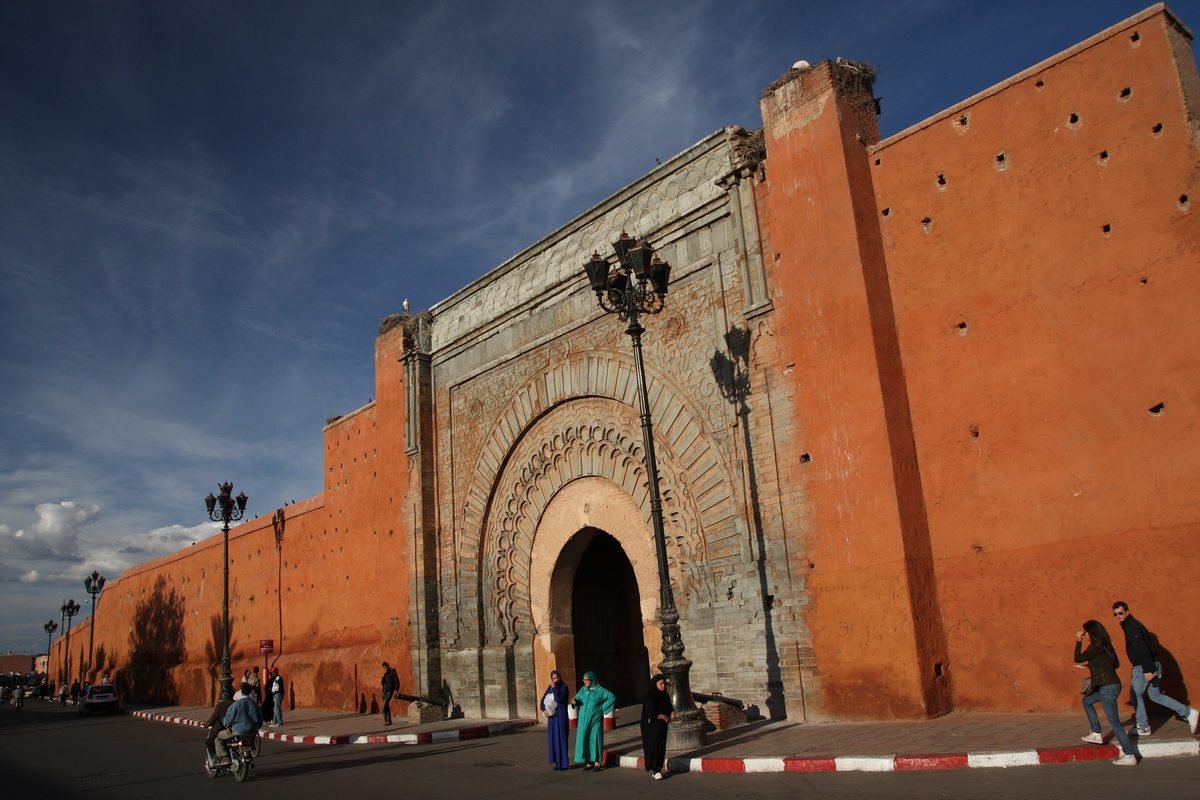
The medina is the historic heart of Marrakech, a UNESCO World Heritage site enclosed by 12th-century ramparts. Navigating this area is the most challenging part of any Marrakech first time guide. The streets are not laid out on a grid; they are a web of organic paths that frequently end in private residential courtyards. You will share these paths with donkeys pulling carts, porters with hand-trucks, and teenagers on motorbikes. Always keep to the right and listen for the shout of “Balak!” which means “Clear the way!”
Understanding Jemaa el-Fnaa
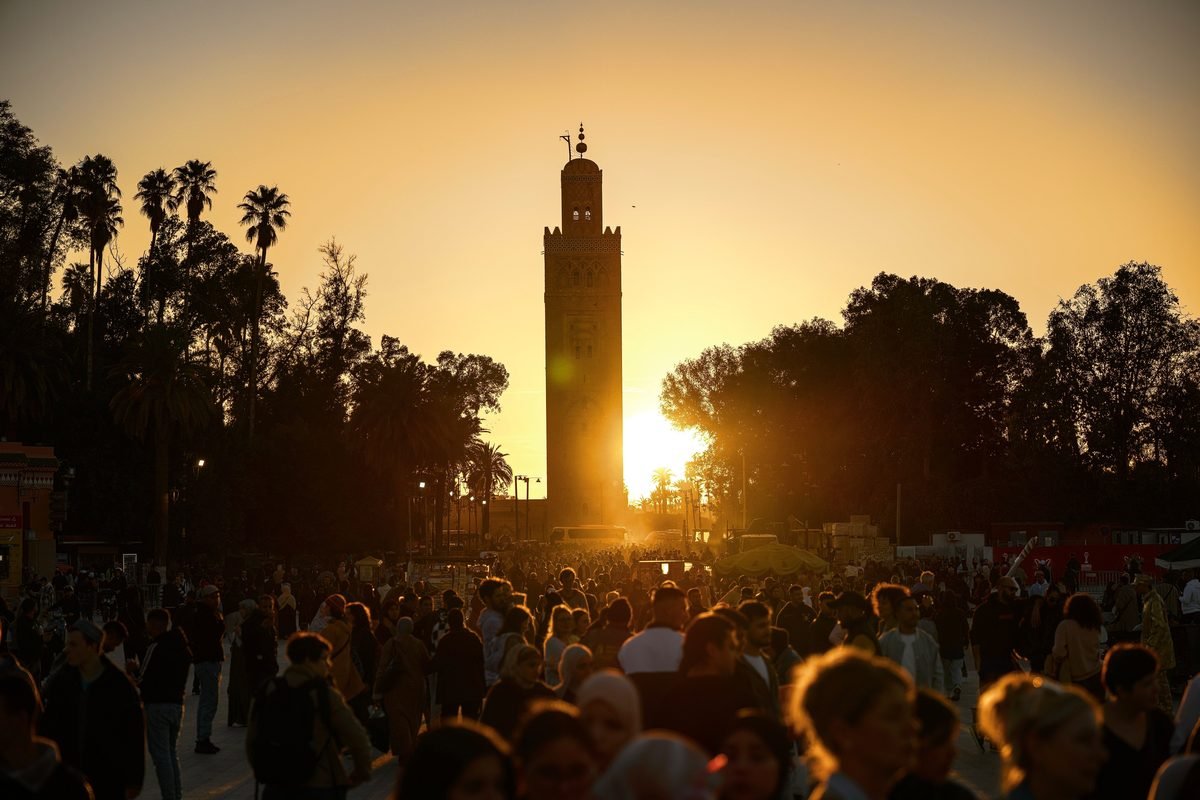
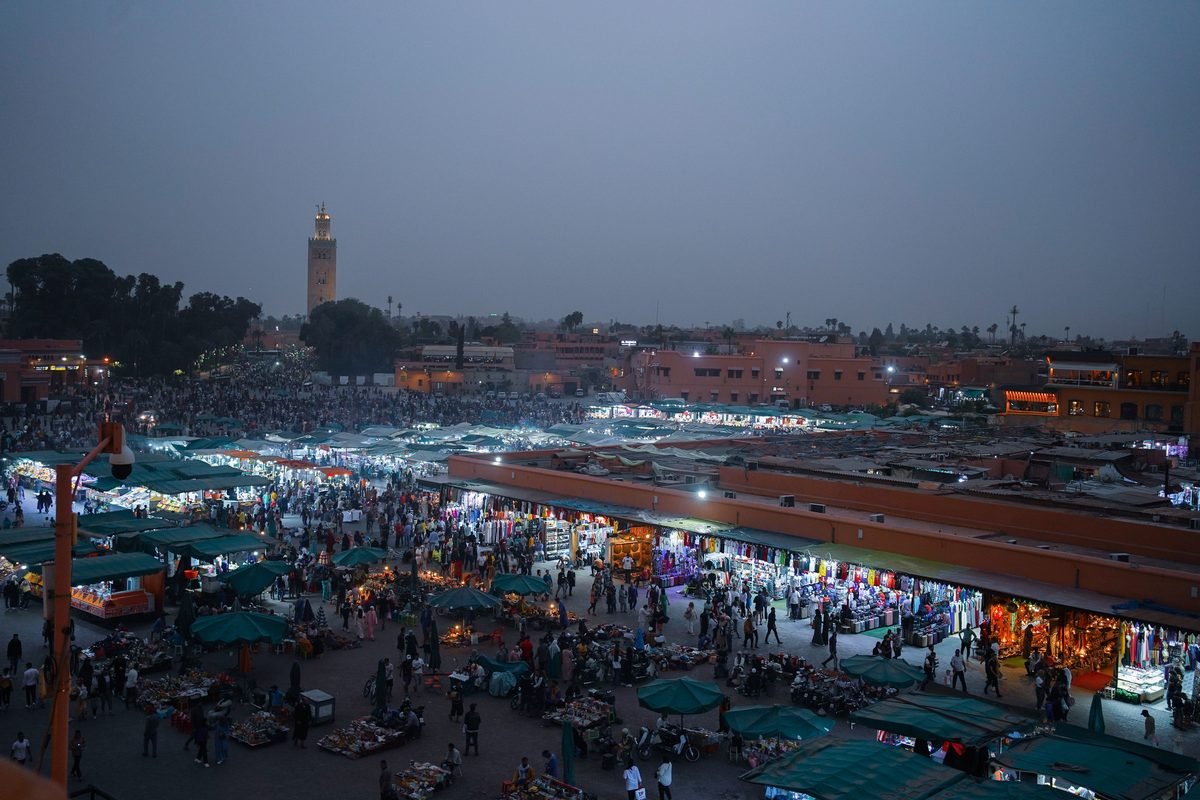
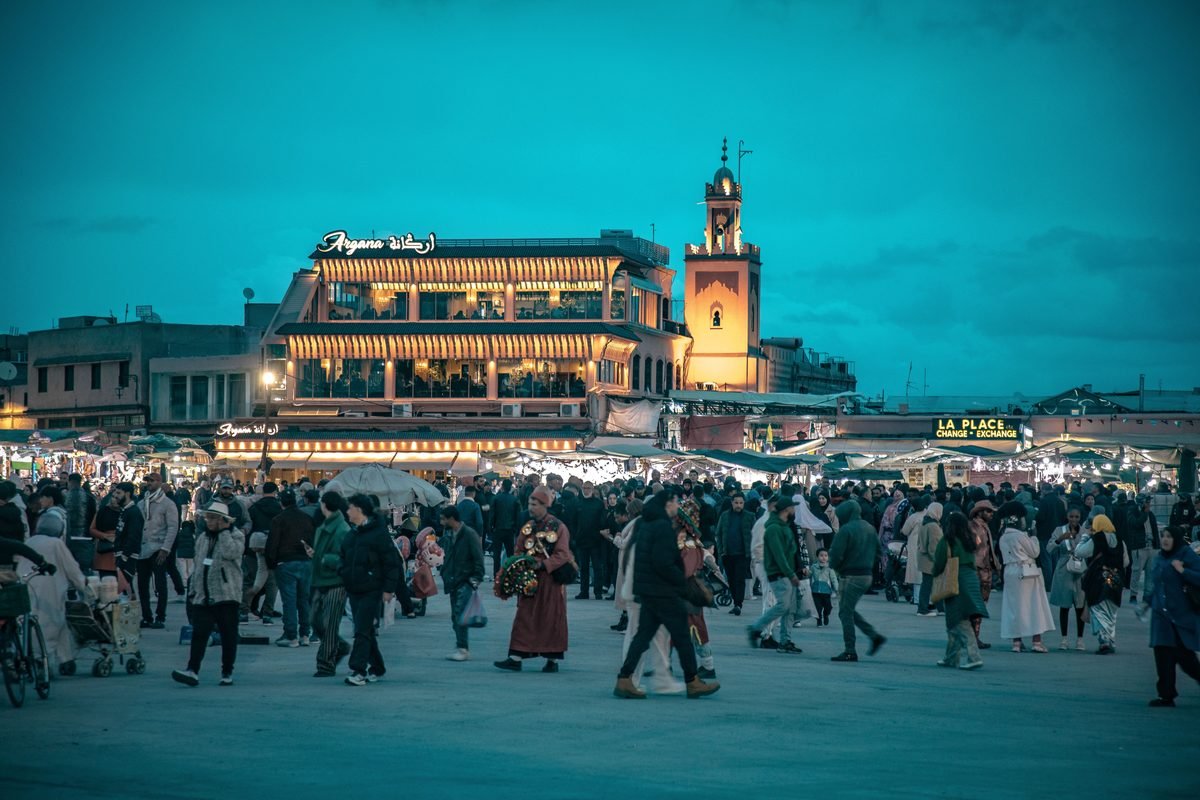
Everything in the medina eventually leads back to Jemaa el-Fnaa, the massive central square. During the day, it is a wide, dusty space filled with orange juice stalls and henna artists. As the sun sets, the square undergoes a dramatic transformation. Portable kitchens are assembled in minutes, and the air fills with smoke from hundreds of grills. This is the city’s social hub. You will find circles of people listening to storytellers, watching acrobats, or listening to Gnaoua musicians. It is loud, crowded, and intense. While it may feel overwhelming, it is the best place to observe the local life of the city. For a calmer perspective, head to one of the many “Grand Balcon” cafes surrounding the square. A mint tea here costs about 20 MAD (about $2) and buys you a front-row seat to the chaos from a safe distance.
When walking the medina, be wary of anyone who offers unsolicited directions. A common tactic is to tell you that the road you are on is “closed” or that there is a “big market today only” in the opposite direction. These individuals are usually trying to lead you toward a specific shop or a dead end where they will demand a tip to show you the way out. Politely say “No thank you” or “Non, merci” and keep walking with confidence.
Heads up: Avoid the Animal Handlers
Do not take photos of the monkeys or snakes in the square unless you are prepared to pay a significant fee. They will often try to place the animal on your shoulder without asking.
Riad vs Hotel: Choosing your accommodation
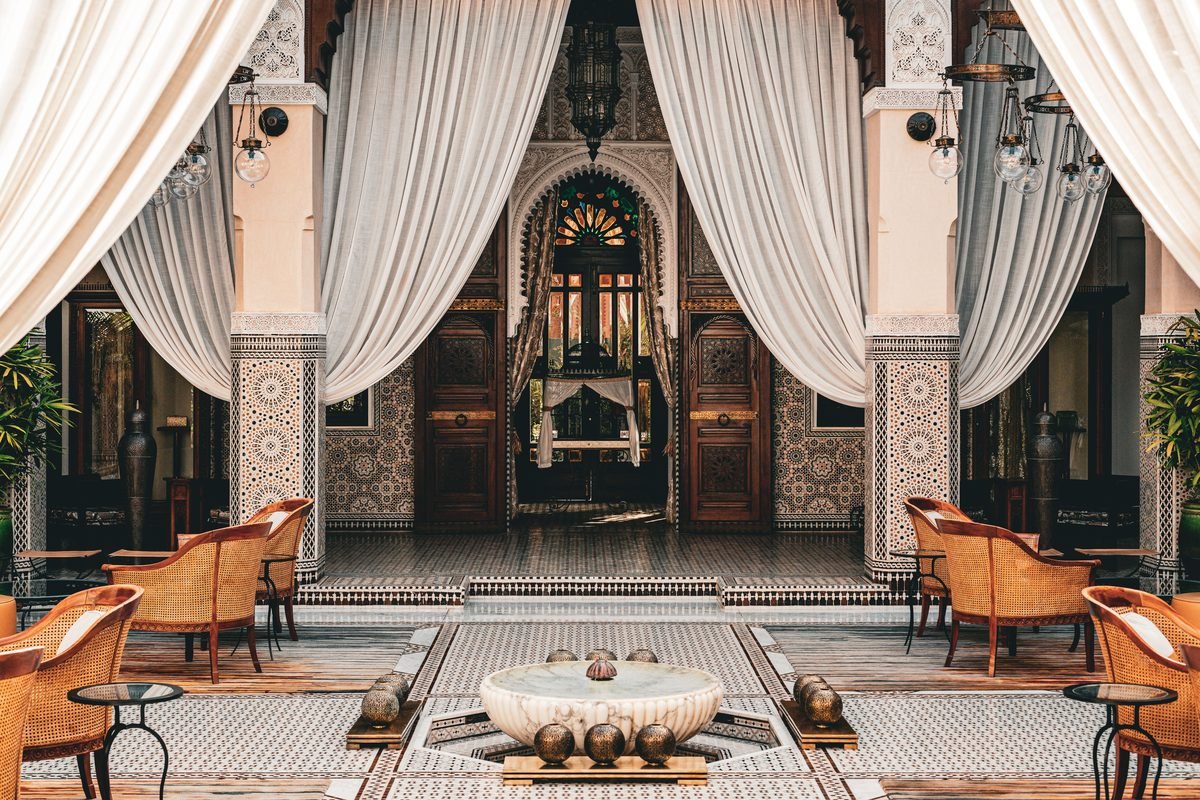
One of the most important decisions for a first-time visitor is where to sleep. A riad is a traditional Moroccan house or palace with an interior courtyard or garden. From the outside, a riad looks like a plain, windowless mud-brick wall with a heavy wooden door. This design ensures privacy and keeps the interior cool. Once you step inside, you are often greeted by intricate tilework (zellij), carved plaster, and a central fountain. Staying in a riad offers an intimate look at Moroccan architecture and hospitality that you cannot get in a standard hotel. Most riads have only five to ten rooms, meaning the service is highly personalized. Breakfast is usually served on the rooftop terrace, offering views over the city’s satellite dishes and laundry lines toward the Atlas Mountains.
The trade-offs of the Medina
While riads are beautiful, they come with logistical hurdles. Most are located in pedestrian-only zones. This means you will have to walk your luggage from the nearest taxi drop-off point. The thick stone walls are excellent for soundproofing against the street, but noise travels easily within the courtyard. If you are a light sleeper, a riad might feel too noisy when other guests are checking in or out. Prices for a mid-range riad typically fall between 800 MAD (about $80) and 1,500 MAD (about $150) per night.
If you prefer modern comforts, look to the Gueliz or Hivernage districts outside the old walls. These areas were built during the French protectorate and feature wide boulevards, traffic lights, and international hotel chains. Here, you will find elevators, large swimming pools, and gyms. It is a much calmer environment and easier to navigate by taxi. However, you will lose the immediate access to the historic sites. Many travelers choose to split their stay: three nights in a medina riad for the atmosphere, followed by two nights in a Gueliz hotel to relax before flying home.
From a local: A Hidden Oasis
The plain exterior of a riad is intentional. In local culture, it is considered modest to keep wealth hidden from the street, showing it only to invited guests.
How to haggle in the Souks without stress
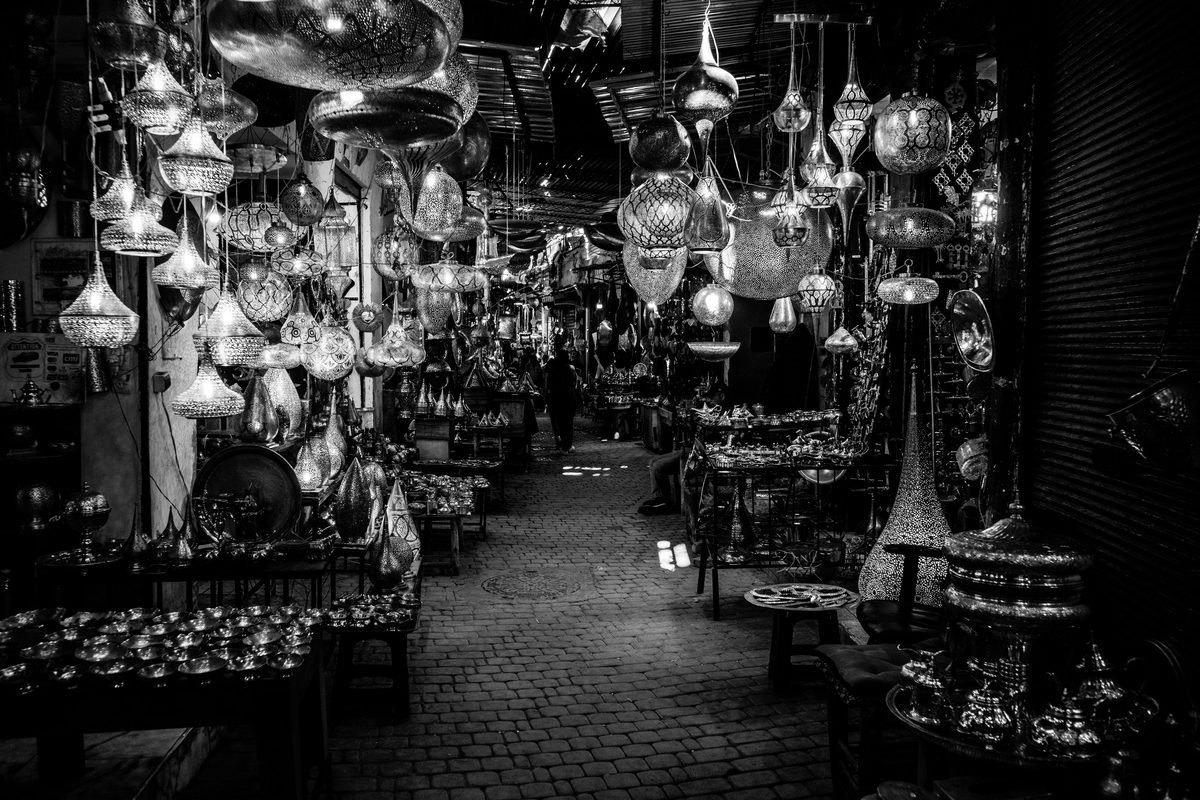
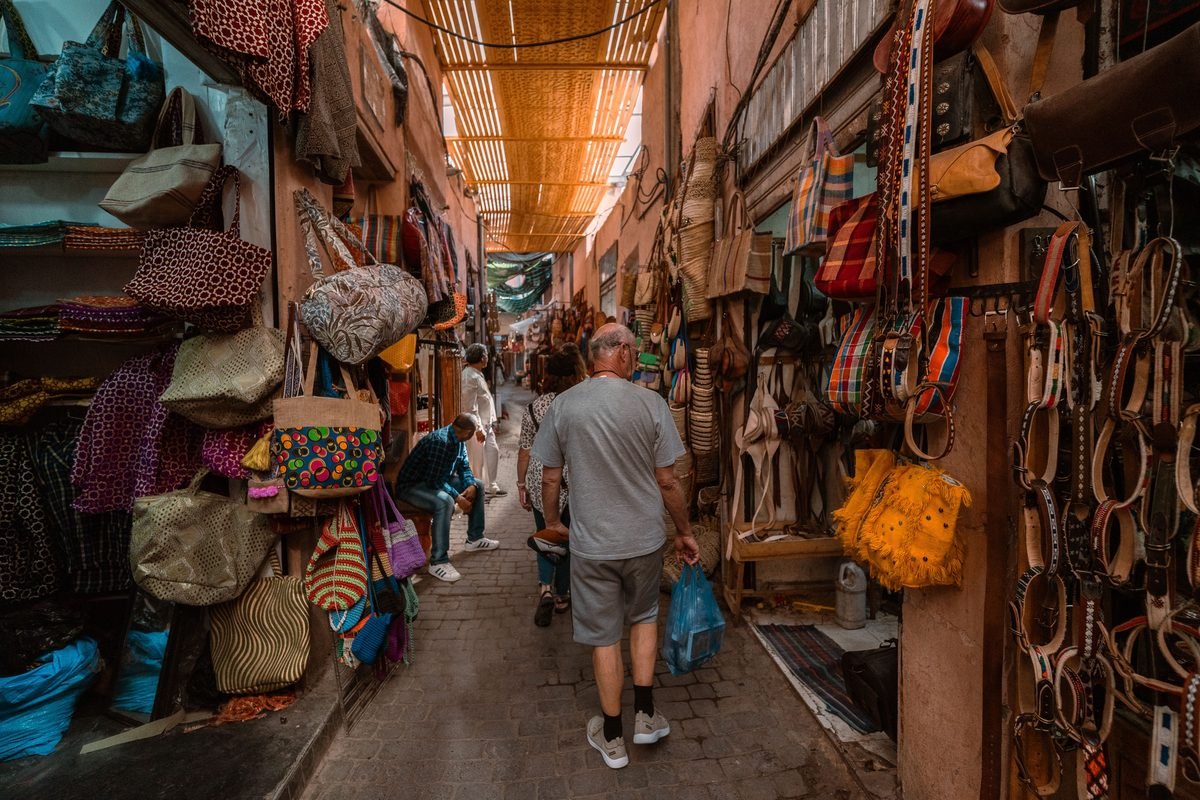
The souks of Marrakech are a massive marketplace where you can find everything from hand-woven carpets and leather bags to spices and wrought-iron lanterns. Haggling is not just common; it is expected. For many visitors, this is the most stressful part of the trip, but it helps to view it as a social interaction rather than a confrontation. Most shopkeepers will start the process by offering you mint tea. Accepting the tea does not obligate you to buy anything, but it does signal that you are willing to spend time talking.
The rules of the game
Never ask the price of an item unless you are genuinely interested in buying it. Once the seller gives you a price, your first counter-offer should be roughly 40% to 50% of that number. You will then meet somewhere in the middle, usually around 60% to 70% of the original asking price. If you cannot reach an agreement, the most effective tool you have is the “walk away.” Often, as you begin to leave, the seller will suddenly find a way to meet your price. If they don’t, you have found their absolute limit. Keep the tone light and friendly. A smile and a joke go much further than aggressive bargaining.
Be aware of common quality issues. For leather goods, smell the item; if it has a strong, pungent odor, it may have been cured using older, less clean methods. For carpets, ask about the material. Real wool will not burn easily, while synthetic fibers will melt. If you are buying high-value items like large rugs or antique furniture, most shops can arrange international shipping, but get a written receipt and a tracking number. For smaller items like a pair of leather babouche slippers, expect to pay around 150 MAD (about $15). A medium-sized ceramic bowl should cost roughly 80 MAD (about $8). Carrying small bills is essential, as many vendors will claim they have no change for a 200 MAD note.
Book ahead: Book a Shopping Tour
If you feel intimidated, consider booking a licensed shopping guide for your first morning. They can help you understand quality markers and fair pricing for about 300 MAD.
Planning a day trip to the High Atlas Mountains
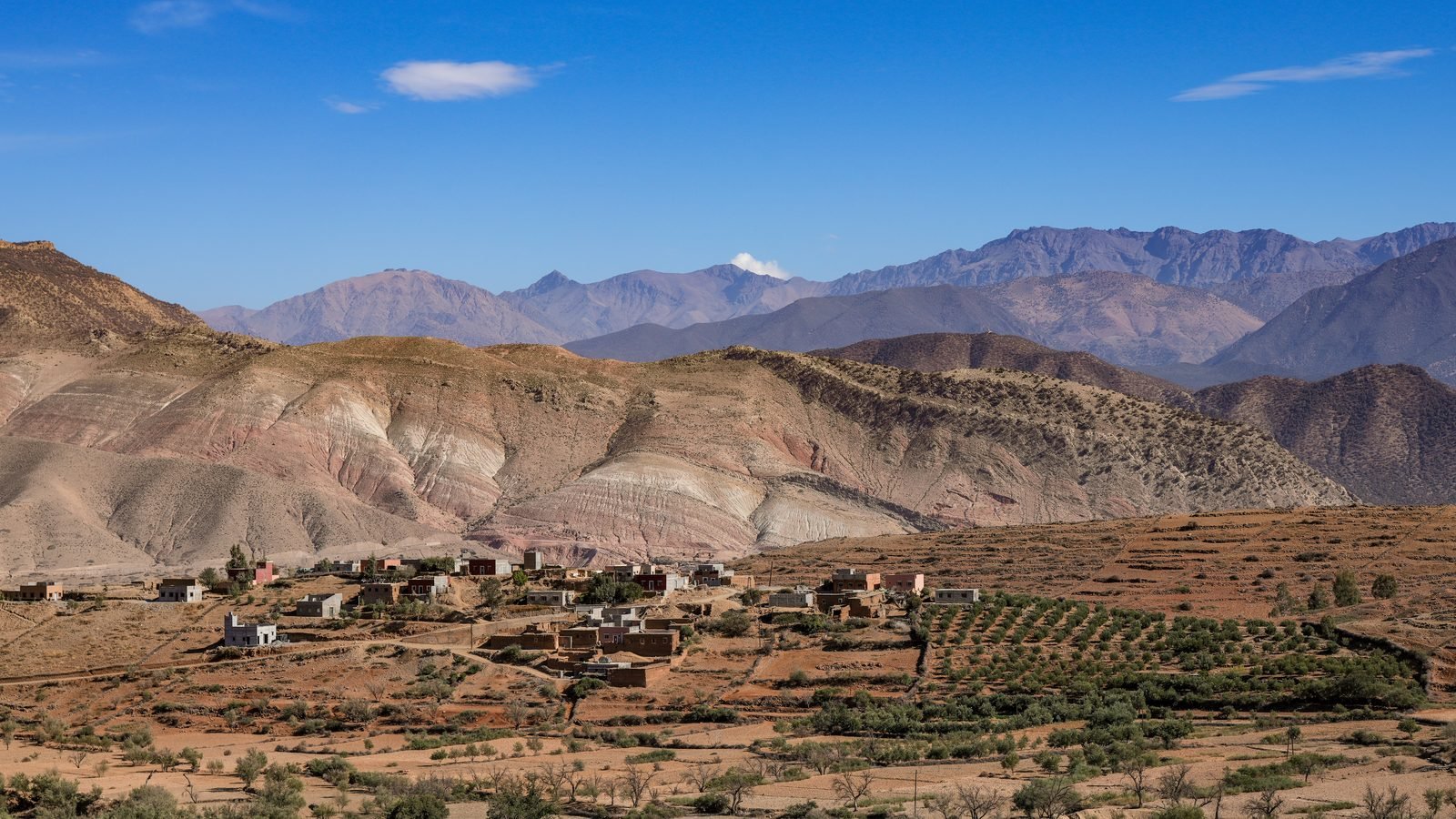
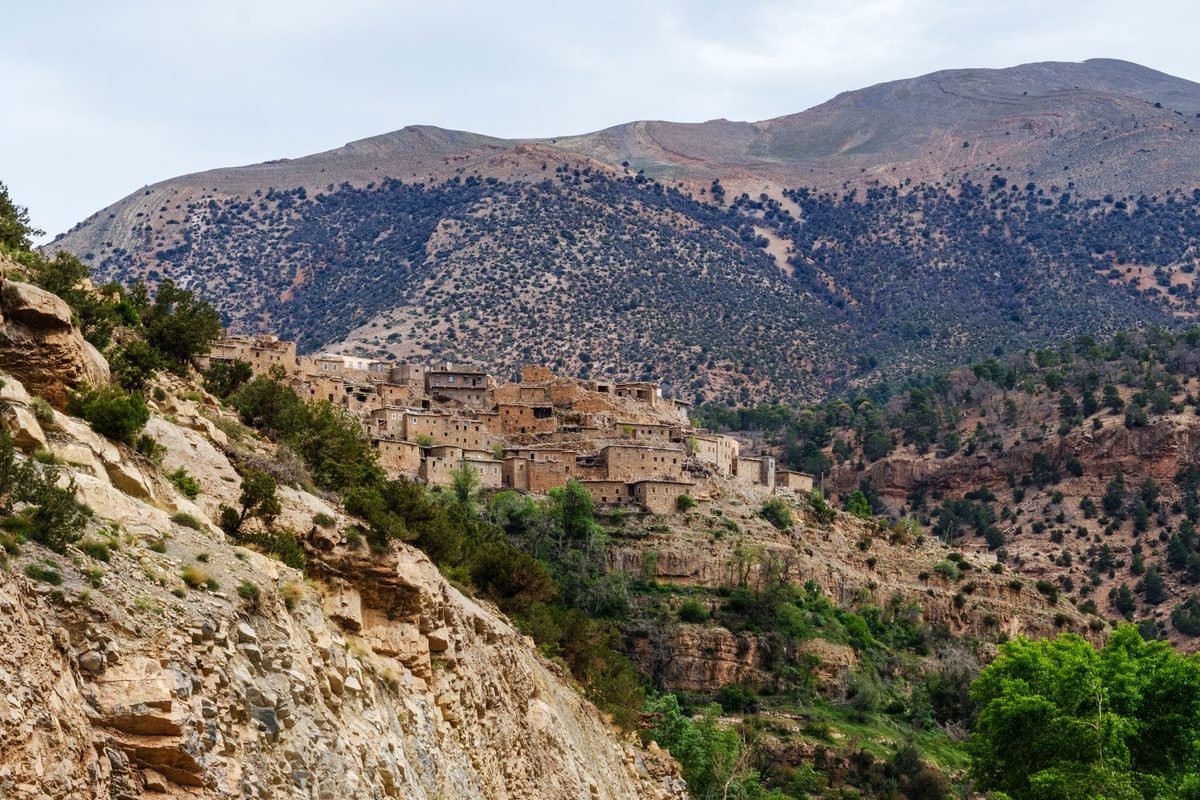
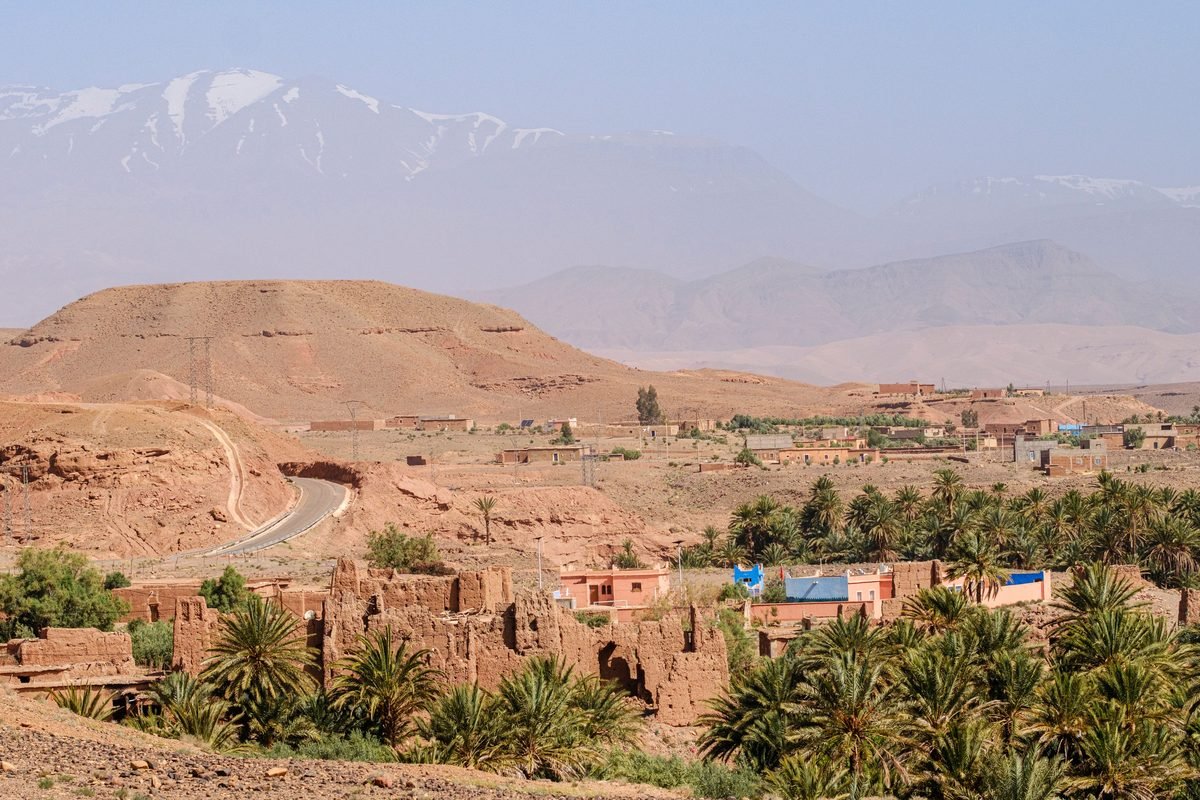
Marrakech can be exhausting, and the best remedy is a day trip to the High Atlas Mountains, which loom over the city. The most accessible destination is the village of Imlil, the starting point for treks up Mount Toubkal. The drive takes about 90 minutes. You can hire a private driver for the day for approximately 800 MAD (about $80), or take a shared “Grand Taxi” from the station near Bab Er Robb for about 50 MAD (about $5) per seat. The landscape changes rapidly from the flat, dusty plains of the city to lush green valleys and terraced mountainsides.
Hiking and local culture
In Imlil, you can hire a local guide for around 250 MAD (about $25) to lead you on a two-hour hike to the village of Aroumd. The trails are rocky but well-defined, passing through walnut groves and past small waterfalls. You will see a different side of Morocco here—the Berber (Amazigh) culture. Life in the mountains moves at a slower pace. Many families offer traditional lunches in their homes, consisting of fresh bread, olive oil, and a slow-cooked vegetable tagine. These meals usually cost around 120 MAD (about $12) per person and offer some of the best food you will find in the country.
Another popular option is the Ourika Valley. It is closer to Marrakech and famous for its seven waterfalls near the village of Setti Fatma. This area is very popular with local families on weekends, so it can get crowded. If you prefer a quieter experience, visit on a Tuesday when the local market at Tnine l’Ourika is in full swing. Regardless of where you go in the mountains, remember that the temperature will be at least 10 degrees cooler than in the city. Even in September, a light jacket is necessary. Wear sturdy walking shoes or sneakers; the terrain is not suitable for sandals or flip-flops.
Finding the best local food in the city
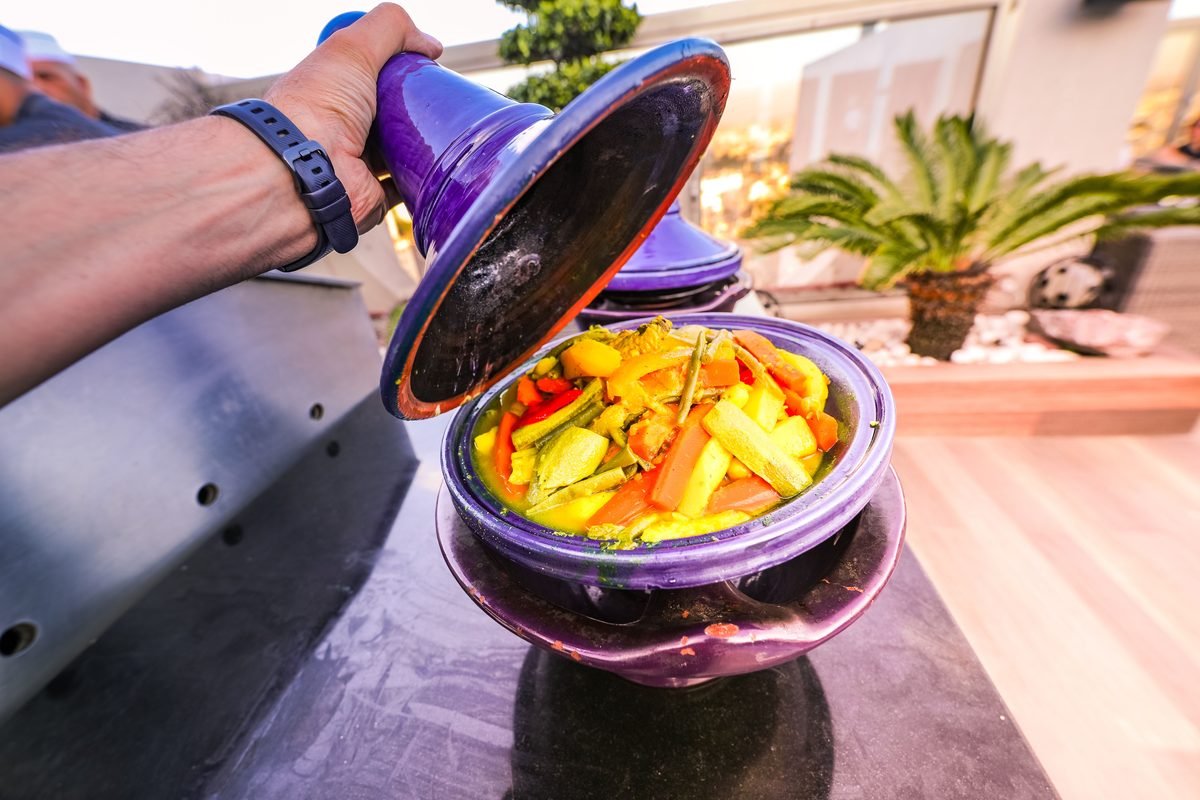
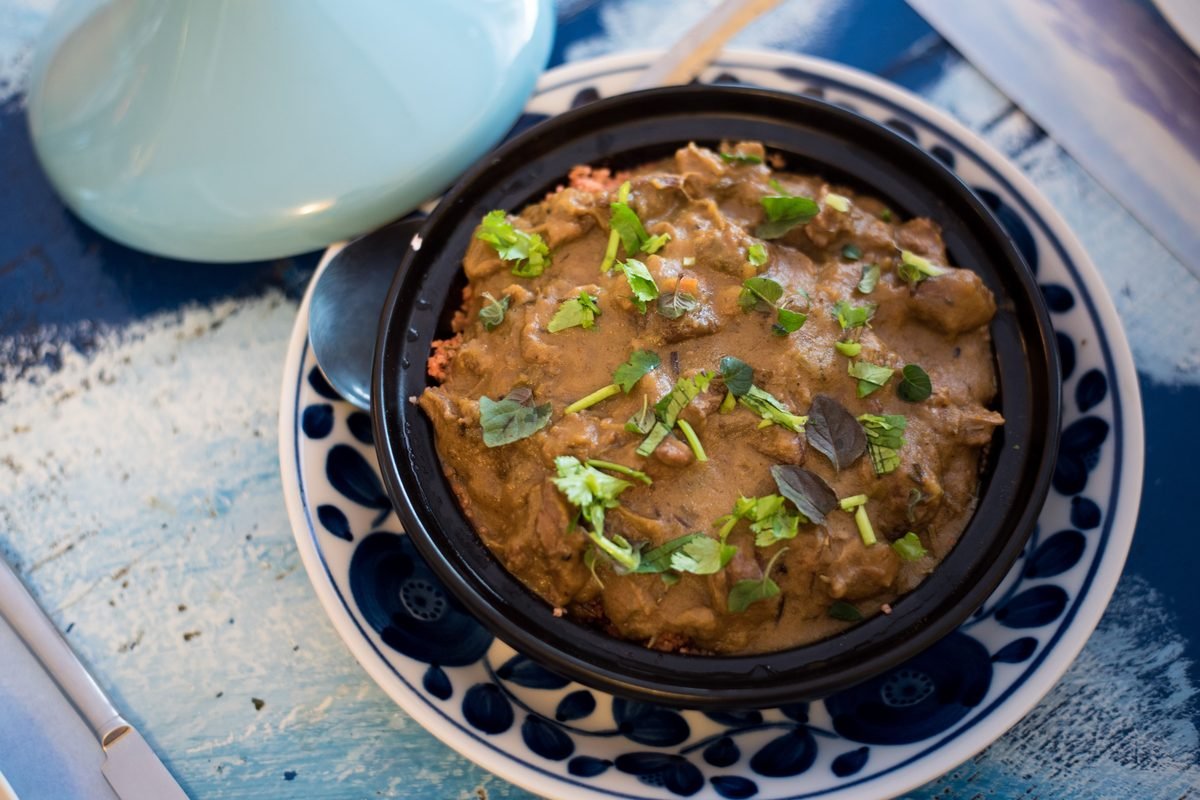
Moroccan cuisine is famous for its balance of sweet and savory flavors. The staple dish is the tagine, a slow-cooked stew named after the conical clay pot it is cooked in. You will find variations with lamb and prunes, chicken with preserved lemons and olives, or purely seasonal vegetables. A tagine at a local restaurant in the medina should cost between 60 MAD (about $6) and 90 MAD (about $9). For a more unique Marrakech specialty, try Tanjia. This is a meat dish (usually lamb or beef) seasoned with cumin and saffron, sealed in a clay jug, and cooked in the embers of the local hammam’s furnace. It is incredibly tender and usually served with crusty khobz bread.
Where to eat safely
While the food stalls at Jemaa el-Fnaa are iconic, they are not always the best value or quality. If you do eat there, look for stalls that are crowded with locals rather than just tourists. Stall 14 is famous for its fried fish, and Stall 1 is known for its spiced tea and cake. For a more reliable sit-down meal, look for restaurants on the side streets. Many offer a “formule” or set menu for about 120 MAD (about $12) that includes a starter like Moroccan salad (finely chopped tomatoes, cucumbers, and onions), a main dish, and fruit for dessert.
Street food is generally safe if you follow a few rules. Only eat at stalls with high turnover. Avoid tap water and ice; stick to bottled water which costs about 10 MAD (about $1) for a large bottle. For a snack, look for MSemmen, a square, flaky pancake cooked on a griddle, often served with honey or cheese for about 5 MAD (about $0.50). Moroccan mint tea is served everywhere and is very sweet. If you prefer it without sugar, ask for it “sans sucre,” though be prepared for it to taste quite bitter, as the sugar is usually brewed with the leaves.
From a local: The Best Orange Juice
The orange juice stalls in the square are legitimate. A glass of fresh-pressed juice costs 4 MAD to 10 MAD. Ask for it without added water or sugar.
What it costs in Marrakech
| Item | Local price | USD |
|---|---|---|
| Airport Taxi | 100 – 150 MAD | $10 – $15 |
| Mid-range Riad (per night) | 1,000 MAD | $100 |
| Traditional Tagine Lunch | 80 MAD | $8 |
| Entry to Bahia Palace | 70 MAD | $7 |
| Mint Tea on a Terrace | 20 MAD | $2 |
| L19 Airport Bus | 30 MAD | $3 |
| Daily Total (Per Person) | 1,350 MAD | $135 |
Prices checked September 2026. Always confirm with the provider before you book.
Where to stay in Marrakech
Budget
Kennaria, near the southern edge of Jemaa el-Fnaa
This area is perfect for those who want to be steps away from the main square without the highest prices. You can find clean, simple hostels and guesthouses for 300-500 MAD per night.
Mid-range
Mouassine, for boutique riads and better shopping
This is one of the oldest and most atmospheric parts of the medina, home to some of the city's best riads. Expect to pay 900-1,600 MAD for a room with beautiful tilework and a pool.
Splurge
Hivernage, for luxury hotels and wide boulevards
Located outside the old city walls, this district is home to five-star resorts with massive gardens and world-class spas. Nightly rates start around 3,000 MAD and go much higher.
Mistakes to avoid
- Accepting ‘free’ gifts like a sprig of mint or a henna tattoo, which are always followed by a demand for money.
- Trying to use a large suitcase in the medina; the cobblestones and crowds make it nearly impossible to roll.
- Not carrying enough small change for tips, public toilets, and small market purchases.
FAQ
Is Marrakech safe for solo travelers?
Yes, Marrakech is generally safe, but solo travelers may experience frequent verbal attention or ‘helpful’ strangers offering directions. Staying in a well-reviewed riad and dressing modestly can help minimize unwanted interactions.
What should I wear in Marrakech?
Morocco is a conservative country. Both men and women should keep their shoulders and knees covered to show respect and avoid unnecessary attention, especially in the medina.
Can I drink the tap water?
It is not recommended for visitors to drink the tap water in Marrakech. Use bottled water for drinking and brushing your teeth to avoid stomach issues.
How many days are enough for a Marrakech first time guide?
Three to four days is usually enough to see the main sights of the city. If you want to include a day trip to the Atlas Mountains or the desert, plan for at least five to six days.
When is the best time to visit the souks?
The souks are best visited in the morning around 10:00 when they first open and the air is cooler, or in the late afternoon. Many shops close for a few hours in the middle of the day.