Incheon Chinatown and Songdo Day Trip: A Complete Guide

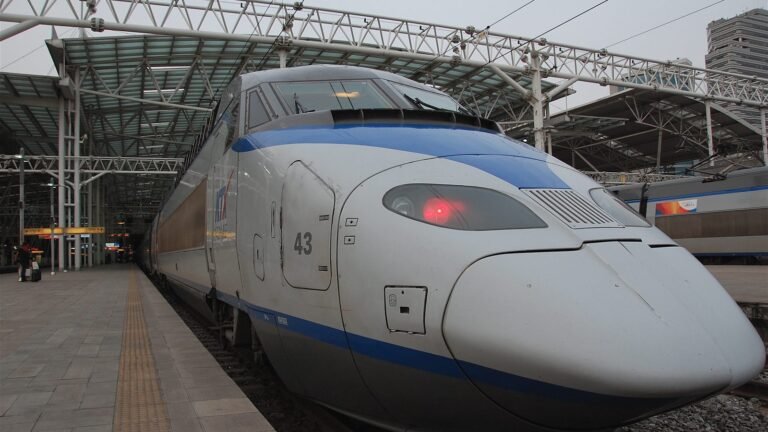
The blue train of Seoul Subway Line 1 eventually rolls out of the dark tunnels and into the open air of Gyeonggi Province. For many travelers, Incheon is just a place where the airport lives, a transit point to be cleared as quickly as possible. But if you stay on that blue line until the very last stop, you find a city that feels entirely different from the glass-and-steel density of central Seoul. Incheon is where Korea first opened its doors to the world in 1883, and that history is still visible in the red-brick warehouses and steep, lantern-lined streets of the old port.
This guide is for independent travelers who want to see two sides of Korea in a single afternoon. We will cover the historic roots of the Incheon Chinatown and Songdo day trip, from the origin of Korea’s favorite noodle dish to the man-made islands of the futuristic Songdo district. Whether you are coming from Seoul for a weekend break or looking to kill eight hours on an airport layover, this itinerary balances the old-world charm of the harbor with the high-tech ambition of the modern city.
How to get to Incheon from Seoul
Getting to the coast is straightforward, though it requires a bit of patience. The most common way to start your Incheon Chinatown and Songdo day trip is by taking Seoul Subway Line 1. You must ensure the train is bound for Incheon Station, not Seodongtan or Sinchang, as the line forks at Guro. It is a long ride. From Seoul Station, the journey takes about 70 minutes and costs roughly ₩1,950 (about $1.50) depending on your starting point. Use a T-money card for the easiest experience.
If you want to save time, look for the ‘Gup-haeng’ or Express trains. These skip several smaller stations between Yongsan and Dong-Incheon. Once you reach Dong-Incheon, you can switch to a local train for the final stop or simply walk fifteen minutes through the shopping district to reach the Chinatown entrance. The express train can shave nearly twenty minutes off your travel time, which is helpful if you are trying to fit both Chinatown and Songdo into a single day. The trains are frequent, running every 10 to 15 minutes throughout the day.
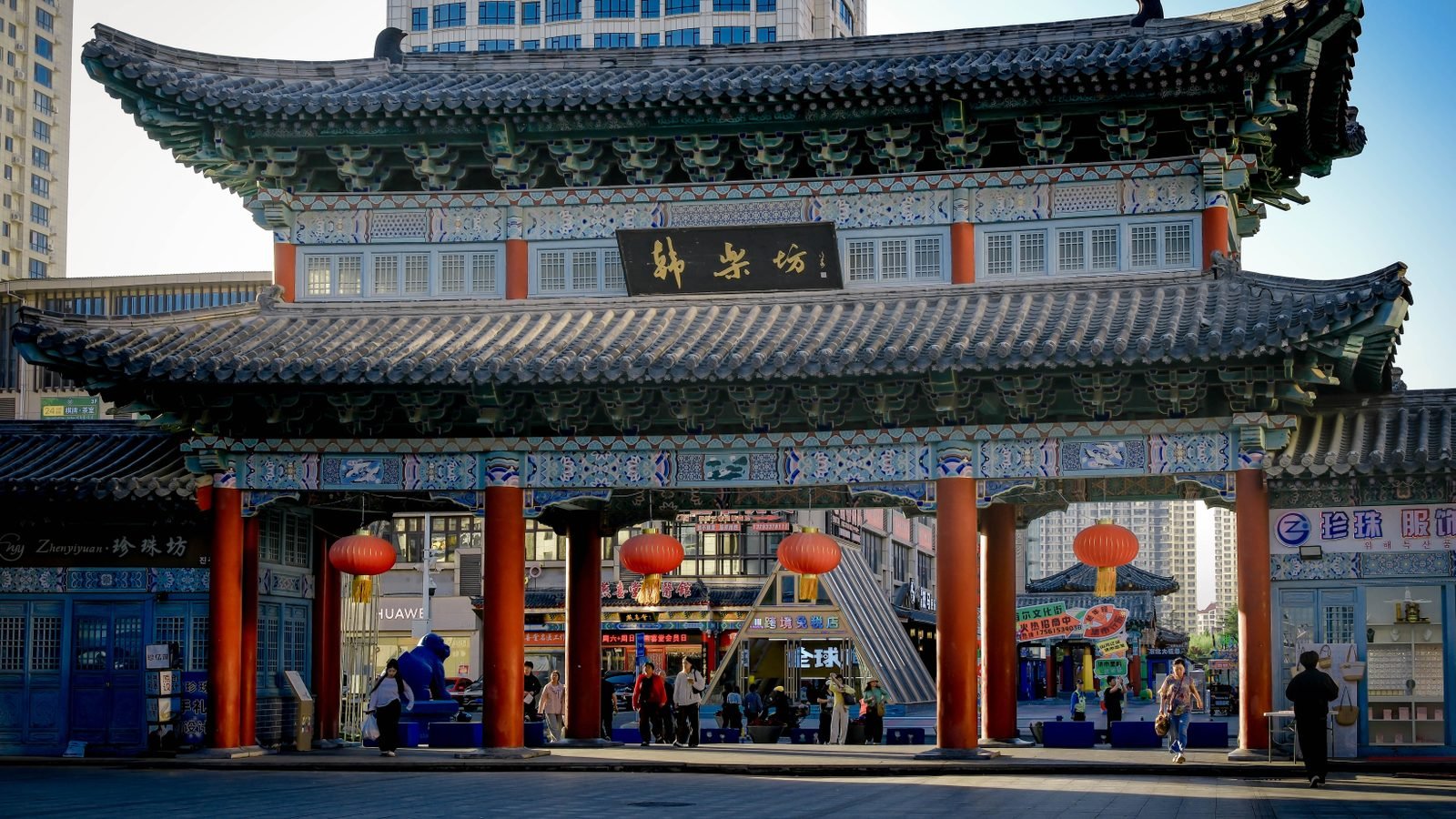
Another option for those staying in southern Seoul or near Suwon is the Suin-Bundang Line. This yellow line connects directly to Incheon Station from places like Suwon and Ansan. It is often less crowded than Line 1 but may take longer depending on where you board. Regardless of the line, Incheon Station is the terminus. When you walk out of Exit 1, the massive red Chinese gate, or paeru, is directly across the street. You cannot miss it. The transition from the train station to the heart of the historic district is immediate and impressive.
Tip: Take the Express
Look for the green ‘Express’ signs on the Line 1 platform at Seoul Station or Yongsan. These trains skip the local stops and will save you about 20 minutes on the journey to Incheon.
Exploring Incheon Chinatown and the Open Port
Incheon Chinatown is the only official Chinatown in South Korea. It was established following the opening of the Incheon Port in 1883, serving as a residential and commercial hub for Chinese merchants. Today, the area is a maze of steep hills, red-and-gold decorations, and some of the best street food in the country. Start your walk at the Jjajangmyeon Museum, located in the former Gonghwachun restaurant building. The museum is small. For an entry fee of ₩1,000 (about $0.75), you can see dioramas of how Chinese workers first created the black bean noodle dish that became a Korean staple.
After the museum, climb the stairs toward Jayu Park. The hills are steep. As you ascend, you will pass murals depicting the Three Kingdoms period and various historical scenes. Jayu Park, or Freedom Park, was the first Western-style park in Korea. It offers a clear view over the industrial port and the sea beyond. It is a quiet place to catch your breath before heading back down into the busy market streets. Look for the statue of General MacArthur, which commemorates the Incheon Landing during the Korean War.
Directly adjacent to Chinatown is the Open Port area, or Gaehang-jang. This district preserves the Japanese influence of the late 19th century. You will notice the architecture shifts from red Chinese lanterns to muted wooden frames and heavy stone buildings. Many of these former banks and shipping offices have been converted into cafes and small history museums. It is a stark contrast that highlights Incheon’s role as a meeting point of different cultures. Walking between these two zones takes less than five minutes but feels like crossing a border.
Songwol-dong Fairy Tale Village and murals
Just a short walk from the heart of Chinatown is the Songwol-dong Fairy Tale Village. This neighborhood was once a declining residential area, but a massive renovation project turned it into a colorful outdoor gallery. Every wall, fence, and utility pole is painted with scenes from classic stories like Peter Pan, Cinderella, and The Wizard of Oz. It is a popular spot for photos, especially on weekends when families and couples fill the narrow alleys. The murals are bright and well-maintained, creating a whimsical atmosphere that contrasts with the industrial port nearby.
While it might feel a bit touristy, the village is a great example of Korea’s ‘mural village’ trend used to revitalize older districts. There is no admission fee to walk through the streets. You can find hidden details like 3D sculptures of animals or characters popping out of the walls. It is best to visit earlier in the morning to avoid the largest crowds. If you are hungry, the village is famous for its creative snacks, including dolphin-shaped bread filled with custard and oversized cotton candy shaped like flowers or characters.
As you exit the Fairy Tale Village, you can loop back toward the Open Port. This area is home to several ‘concept’ cafes that lean into the retro aesthetic of the early 1900s. Some shops allow you to rent period costumes, including 19th-century dresses and suits, which people wear to take photos against the backdrop of the old Japanese consulate buildings. It is a slow-paced area compared to the busy food stalls of Chinatown. Take your time to explore the side streets, where you might find small independent bookstores or craft shops hidden in renovated warehouses.
From a local: Avoid the Main Stairs
The main stairs in Fairy Tale Village get very crowded. If you take the smaller side alleys to the left, you will find equally impressive murals and much more peace for your photos.
The futuristic side of Songdo Central Park
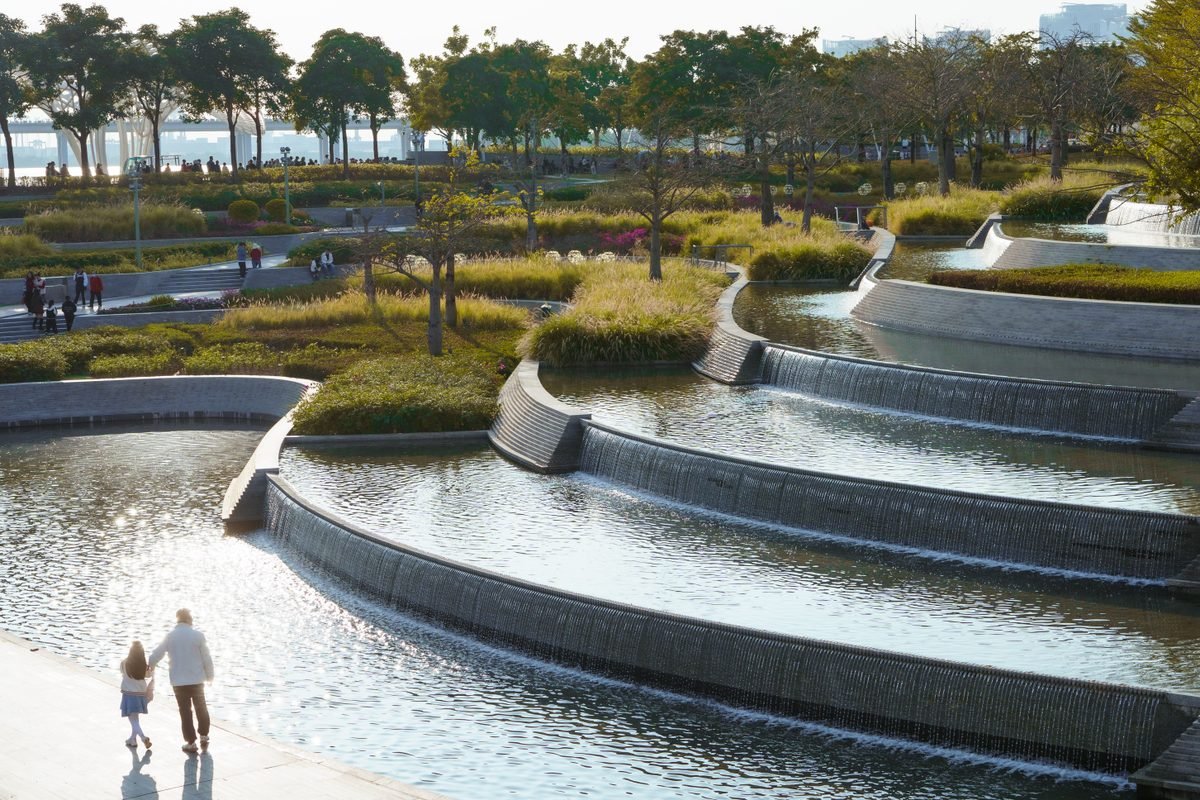
To see the second half of your Incheon Chinatown and Songdo day trip, you must leave the old port behind. Songdo is a ‘smart city’ built entirely on reclaimed land. To get there from Chinatown, take a taxi for about ₩15,000 (about $11) or use the Suin-Bundang Line and transfer to the Incheon Line 1 at Woninjae Station. The travel time is about 30 to 40 minutes. The park is large. Songdo Central Park is the centerpiece of this district, featuring a man-made seawater canal that runs through the middle of high-rise apartment blocks and office towers.
The contrast here is total. While Chinatown is about history and narrow alleys, Songdo is about wide-open spaces and glass architecture. You can rent a ‘Moon Boat’ or a kayak to paddle along the canal for about ₩30,000 to ₩38,000 (about $22 to $28) per boat. If you prefer to stay on land, a water taxi circulates the canal every 30 minutes, costing ₩4,000 (about $3) for adults. It provides a great perspective of the Tri-Bowl, a striking building that looks like three bowls floating on water, which serves as a cultural exhibition space.
For the best view of the city, head to the G-Tower. The 33rd floor houses the IFEZ (Incheon Free Economic Zone) PR Center, which is free to enter. From the observation deck, you can see the entire layout of Songdo, the Incheon Bridge stretching across the sea, and even North Korea on a very clear day. It is one of the best free views in the country. The park also features a small ‘rabbit island’ and a deer enclosure, which are popular with local residents. It is a peaceful place to spend the late afternoon as the sun begins to set behind the skyscrapers.
From a local: Free Observation Deck
The G-Tower observation deck is free and offers better views than many paid towers in Seoul. It is closed on Mondays, so plan your trip accordingly.
Where to eat in Incheon
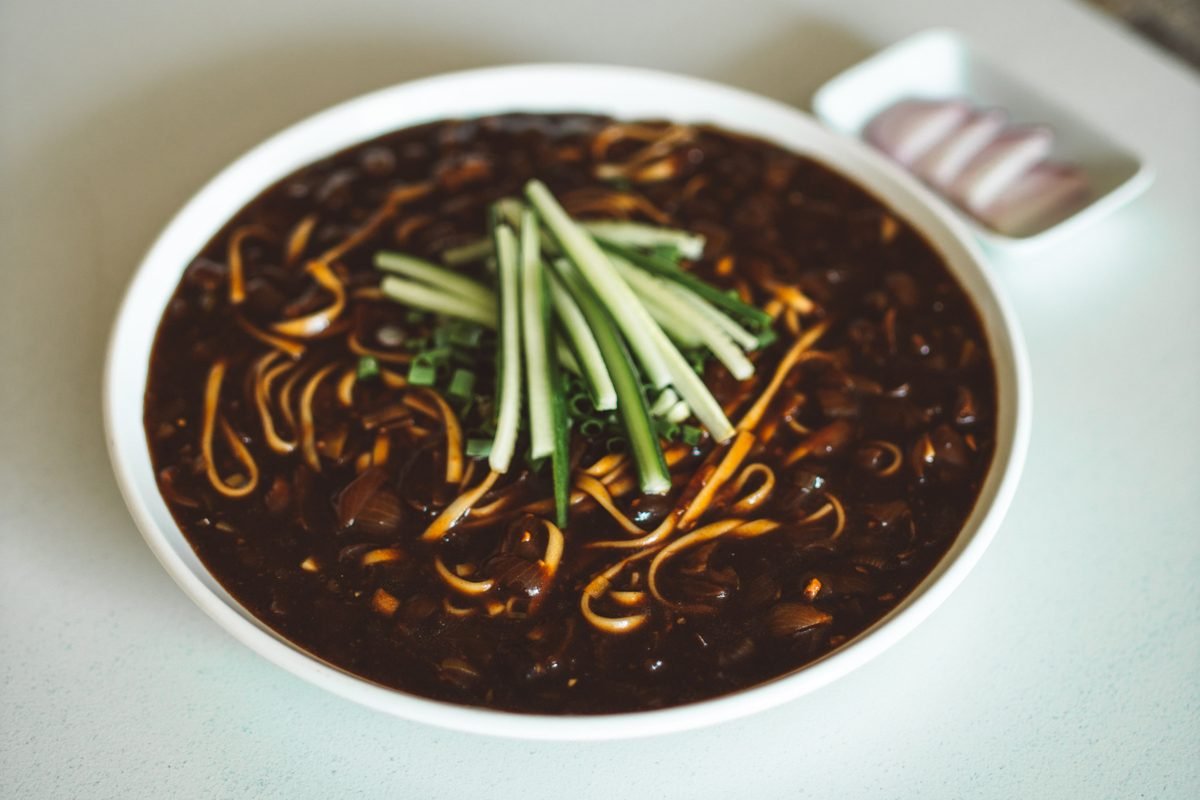
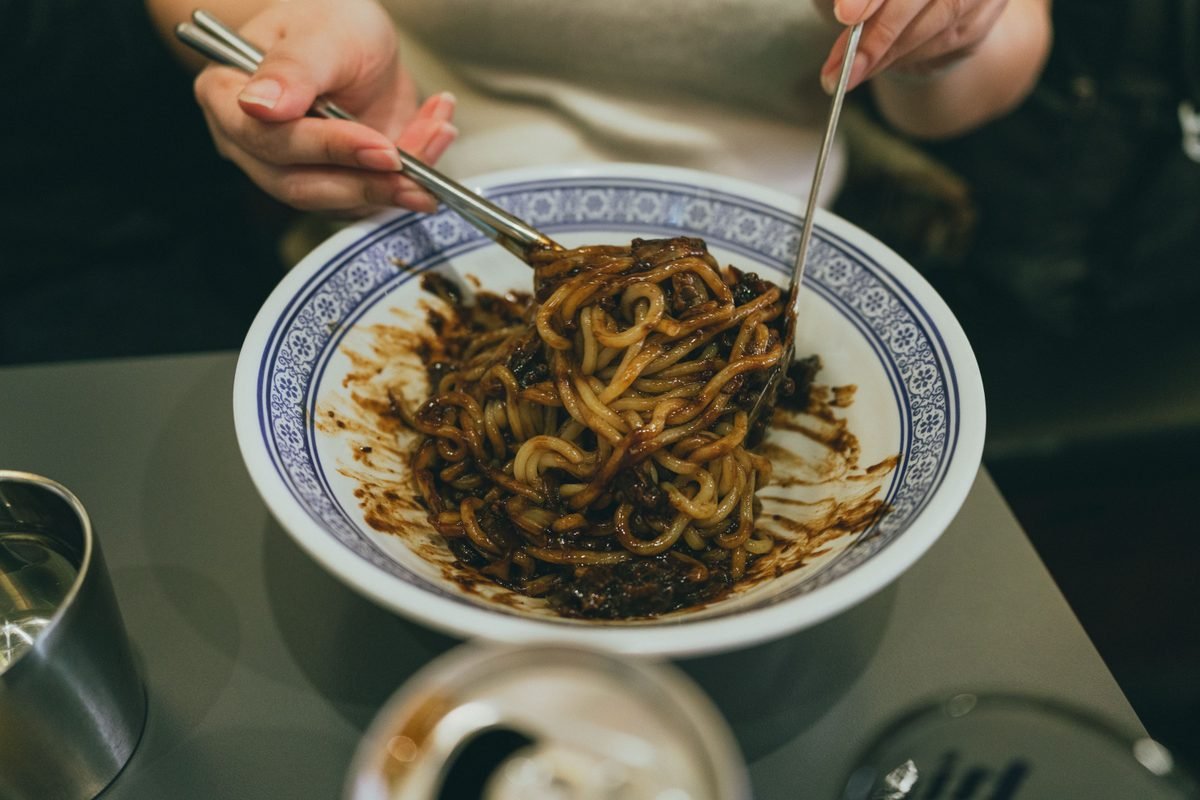
Food is the primary reason many Koreans visit Incheon. The star of the show is jjajangmyeon, the thick noodles in black bean sauce. While there are dozens of restaurants in Chinatown, Mandabok is a local favorite known for its ‘white jjajangmyeon.’ This version uses a different fermentation process and has a lighter, more savory flavor than the standard dark sauce. A bowl usually costs around ₩8,000 to ₩10,000 (about $6 to $7.50). The sauce is thick. Expect a queue at the more famous spots during lunch hours, especially on weekends.
Beyond noodles, Chinatown is famous for its street snacks. Look for gonggal-ppang, which translates to ‘lie bread.’ It is a large, hollow, crispy cracker glazed with honey on the inside. You crack it open to eat the sweet shards. Another popular treat is hongdu-byeong, a thick pancake filled with red bean, cream cheese, or chocolate. These are often made fresh in the window of the shops, and watching the vendors flip them is part of the experience.
If you prefer a more modern dining experience, Songdo has a wide range of international options. Near the Central Park station, you will find NC Cube Canal Walk, an outdoor shopping mall divided into four seasonal sections. It features many cafes, bakeries, and restaurants ranging from Italian to Japanese fusion. For a local specialty in Songdo, look for restaurants serving fresh seafood caught in the nearby Yellow Sea. Many high-end hotels in Songdo also offer buffet lunches with views over the park, which can be a nice splurge if you want to escape the heat or cold for an hour.
Doing Incheon on an airport layover
If you have a layover at Incheon International Airport (ICN) of at least six hours, an Incheon Chinatown and Songdo day trip is an excellent way to see the country without heading all the way into Seoul. From Terminal 1, you can take bus 303 or 306, which will get you to the Chinatown area in about an hour for roughly ₩2,500 (about $1.85). A taxi is much faster, taking about 30 minutes and costing around ₩25,000 (about $18.50).
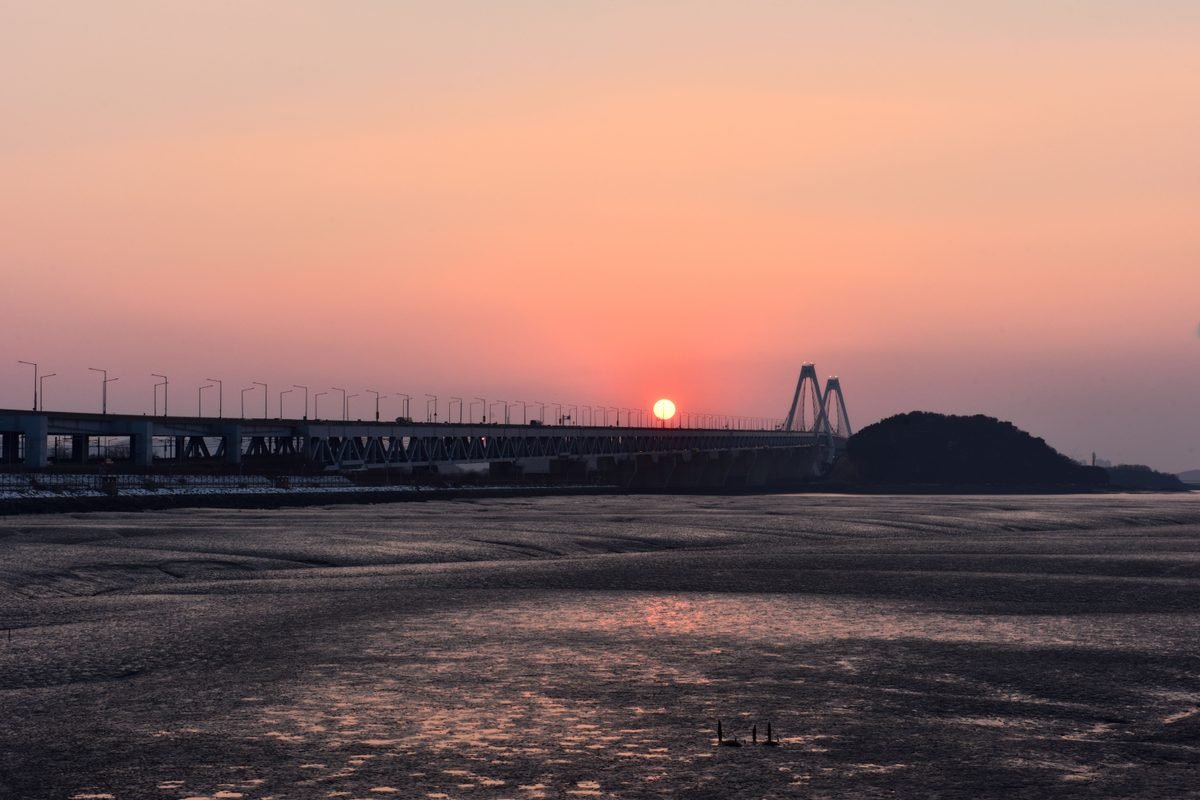
Songdo is even closer to the airport than Chinatown. A taxi from ICN to Songdo Central Park takes only 20 minutes across the impressive Incheon Bridge. This makes it a perfect destination if you only have a four-hour window. You can walk through the park, grab a coffee at one of the high-rise cafes, and be back at the terminal with plenty of time for security. Most travelers do not realize how close these futuristic views are to their departure gate. It is a much better alternative than sitting in a terminal lounge.
If you choose to do both, start with Chinatown for lunch and then take a taxi to Songdo for the afternoon. This keeps you moving toward the airport as the day progresses. Just be mindful of the time required for security and immigration back at ICN, especially during peak travel months like September. Most people find that five to seven hours is the ‘sweet spot’ for a relaxed visit to both areas. If you have less than four hours, I would recommend sticking only to Songdo or staying within the airport’s own entertainment zones.
Heads up: Check Your Terminal
Incheon Airport has two terminals that are quite far apart. Ensure you know which one you are returning to, as the bus and taxi routes differ slightly between Terminal 1 and Terminal 2.
Practical tips for your Incheon visit
The most important thing to remember for an Incheon day trip is that Google Maps does not work for walking or transit directions in Korea. You must download Naver Map or KakaoMap before you arrive. These apps are highly accurate and will show you exactly which bus to take and where to turn in the winding alleys of Chinatown. Most of the signage in Chinatown and Songdo is available in English, but having a local map app is essential for navigating the subway transfers and bus stops.
Wear comfortable walking shoes. While Songdo is flat and paved, Chinatown and the Fairy Tale Village are built on the side of a steep hill. You will be doing a lot of climbing if you want to see the murals and reach Jayu Park. Also, keep in mind that many of the smaller museums and the G-Tower observation deck are closed on Mondays. If your trip falls on a Monday, you can still enjoy the street food and the park, but you will miss out on some of the indoor exhibits.
Finally, consider the weather. September is a beautiful time to visit as the humidity of summer begins to fade, but it can still be quite warm in the direct sun. Songdo Central Park has very little shade, so bring a hat or an umbrella if you plan to walk the full length of the canal. In Chinatown, the streets are narrow and provide some shade, but the climb to the park will still be a workout. Carrying a refillable water bottle is a good idea, though convenience stores are easy to find near every major landmark.

What it costs in Incheon
| Item | Local price | USD |
|---|---|---|
| Subway Seoul to Incheon (Round trip) | ₩3,900 | ($2.90) |
| Jjajangmyeon Museum entry | ₩1,000 | ($0.75) |
| Lunch (Jjajangmyeon and tea) | ₩12,000 | ($8.90) |
| Taxi Chinatown to Songdo | ₩15,000 | ($11.10) |
| Songdo Water Taxi | ₩4,000 | ($3.00) |
| Dinner in Songdo | ₩18,000 | ($13.35) |
| Total per person | ₩53,900 | ($39.90) |
Prices checked September 2026. Always confirm with the provider before you book.
Where to stay in Incheon
Budget
Incheon Station, for guesthouses near the old port
This area is perfect for those who want to be steps away from Chinatown's food and the historic Open Port. You can find traditional-style guesthouses for ₩40,000 to ₩60,000 per night.
Mid-range
Songdo Central Park, for modern business hotels
Staying here puts you in the heart of the futuristic city with easy access to the canal and high-end shopping. Prices typically range from ₩120,000 to ₩180,000 per night.
Splurge
Songdo Waterfront, for luxury high-rises
These hotels offer floor-to-ceiling windows with views of the Incheon Bridge and the Yellow Sea. Expect to pay ₩250,000 or more for premium service and rooftop pools.
Mistakes to avoid
- Taking only the local Line 1 train instead of the Express (Gup-haeng) which saves significant time.
- Skipping the G-Tower in Songdo, which is one of the few places to get a high-altitude view for free.
- Trying to walk from Chinatown to Songdo; the distance is much further than it looks on a map and requires a taxi or train.
FAQ
How long does an Incheon Chinatown and Songdo day trip take?
A full trip usually takes 8 to 10 hours including travel time from Seoul. You can spend 3-4 hours in Chinatown and another 3-4 hours in Songdo comfortably.
Is it worth visiting Incheon Chinatown on a Monday?
While the street food and scenery are still available, many museums and the G-Tower observation deck are closed on Mondays. If possible, try to visit Tuesday through Sunday.
Can I do this trip during an Incheon Airport layover?
Yes, if you have at least 6 hours. Songdo is only 20 minutes from the airport by taxi, while Chinatown is about 30-40 minutes away.
What is the most famous food in Incheon?
Jjajangmyeon (black bean sauce noodles) is the most famous dish. It was invented in Incheon Chinatown by Chinese immigrants in the late 19th century.
How do I get from Chinatown to Songdo?
The easiest way is a taxi, which takes 20 minutes and costs about ₩15,000. Alternatively, take the Suin-Bundang Line and transfer at Woninjae Station to the Incheon Line 1.