How to Rent a Car in South Korea as a Foreigner

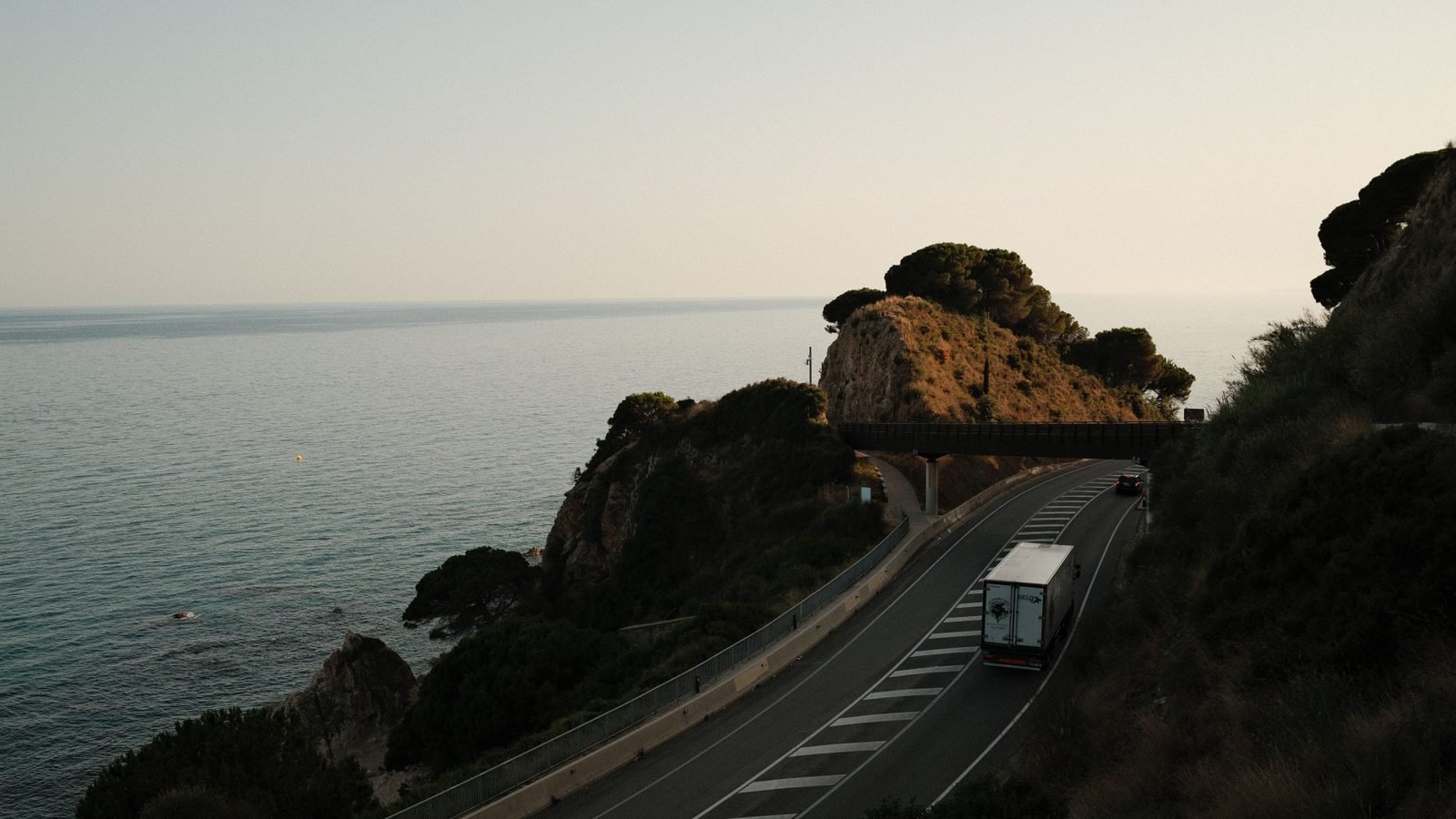
Stepping out of the terminal at Gimpo Airport at 8:00 AM, you are met with an easy choice: join the crowds dragging luggage onto the subway, or grab keys at a rental desk and head straight into the mountains. Learning how to rent a car in South Korea as a foreigner unlocks rural Gangwon coastal roads, tea fields in Boseong, and the winding mountain passes of Jirisan that public transit rarely reaches. While Seoul itself is best explored by train, rural South Korea was built for road trips.
This practical guide covers everything you need to drive legally and comfortably in Korea. We will walk through the exact paperwork you need before landing, age limits, major rental agencies, CDW insurance pitfalls, English navigation setups, and how automatic expressway tolling works.
How to Rent a Car in South Korea as a Foreigner: Required Documents and Age Limits
Driving legally in South Korea requires preparation before your flight departs. South Korea is a signatory to the 1949 Geneva Convention on Road Traffic. To pick up a rental car, you must carry three physical items to the counter: your valid domestic driver’s license from your home country, an unexpired International Driving Permit (IDP), and your physical passport. Rental agents inspect the physical paper booklet thoroughly. Digital copies, scans on your phone, or photocopies are universally rejected without exception.
Check your IDP booklet before traveling. The permit must explicitly reference the 1949 Convention on Road Traffic. Permits issued exclusively under the 1968 Vienna Convention are technically not recognized by Korean law, though motorists from the UK, US, Canada, and Australia receive 1949-compliant booklets from their standard motoring associations (such as AAA in the United States, the Post Office or AA in the UK, and CAA in Canada). Your home country license must have been held for at least one full year prior to your rental date.
Age restrictions depend on vehicle class and the specific company policy. The legal minimum driving age in Korea is 18, but major car hire agencies require foreign drivers to be at least 21 years old. If you want to rent a compact or mid-size sedan, 21 is typically sufficient. However, for full-size sedans, SUVs, or nine-seater passenger vans like the Kia Carnival, companies like Lotte Rent-a-Car and SK Rent-a-Car require drivers to be at least 26 years old with two or more years of driving history. Violating these age tiers means your reservation will be canceled at the counter with no refund on deposits.
Heads up: Strict Paperwork Rule
You must present the original, physical cardboard International Driving Permit booklet at the counter. Rental staff cannot hand over keys with a digital PDF or photo on your phone.
Choosing a Rental Company and Booking Ahead
The South Korean domestic car hire market is dominated by two massive corporations: Lotte Rent-a-Car and SK Rent-a-Car. Both operators run smooth, English-language booking websites, maintain large fleets of modern vehicles, and have staffed counters at Incheon International Airport, Gimpo Airport, Busan Gimhae Airport, and Jeju Airport. Third-party aggregators such as Rentalcars.com or Kayak often list competitive baseline rates for local providers, but booking directly with Lotte or SK generally includes perks like zero-deductible insurance packages and straightforward English customer support.
Daily rental costs depend heavily on the season and location. For an entry-level compact car such as an Avante (Hyundai Elantra) or a Kia K3, expect to pay around ₩65,000 to ₩90,000 (about $49 to $68) per day in the shoulder season. In peak holiday months such as October during autumn foliage or July through August, daily rates for the same compact vehicle jump to ₩120,000 to ₩160,000 (about $90 to $120). Mid-size crossovers and SUVs like the Kia Sorento or Hyundai Tucson average ₩110,000 to ₩180,000 (about $83 to $135) per day.
Always verify pickup depot locations before confirming your voucher. While picking up directly at Incheon Terminal 1 or Terminal 2 is convenient, driving into central Seoul traffic right off a fourteen-hour transpacific flight is exhausting. If your road trip explores eastern Gangwon-do or southern Jeolla province, consider taking the airport train into the city or taking a fast KTX bullet train directly to regional hubs like Gangneung, Gyeongju, or Yeosu, picking up your vehicle at a provincial station counter instead. Comparing these logistics against your general Korea Travel Budget Per Day will keep transport costs balanced.
Insurance Coverage Options and Avoiding Hidden Costs
Rental car insurance in South Korea is straightforward once you decode the terminology. By law, all registered rental cars include Mandatory Basic Insurance. This baseline policy covers Third Party Liability (bodily injury to others), Property Damage Liability (damage to other cars or structures up to a set cap), and Personal Injury Protection (medical coverage for you and your passengers). However, Mandatory Basic Insurance does not cover damage to the rental car itself if you cause an accident, scrape a pillar in a tight underground lot, or experience a parking lot hit-and-run.
To protect the vehicle you are driving, you must select a Collision Damage Waiver (CDW), known locally as CDW or Self-Car Damage Insurance (자차보험). Korean agencies offer this in two formats: General CDW and Super CDW (sometimes marketed as Full Cover or Zero Excess). Under General CDW, you remain liable for a deductible payment (excess) ranging between ₩100,000 and ₩500,000 (about $75 to $375) per incident, plus a “loss of use” fee (휴차보상료) equal to 50% of the daily rental rate while the vehicle is being repaired in the shop.
We strongly recommend purchasing Super CDW. It adds ₩15,000 to ₩25,000 (about $11 to $19) per day to your total invoice, but it reduces your repair deductible to zero won and covers loss of use charges entirely. Be aware that standard insurance rarely covers tire punctures, wheel rim scuffs, or lost keys. Check the tires carefully during your initial vehicle inspection. Take a detailed walkaround video of the exterior panels, bumpers, and alloy wheels on your phone before driving off the rental lot.
Tip: Always Buy Zero-Deductible CDW
Opt for the Super CDW tier. Tight underground hotel ramps in Korea feature sharp concrete turns, and repair fees plus vehicle downtime bills quickly outweigh minor insurance savings.
GPS Navigation Systems in English and Phone App Setup
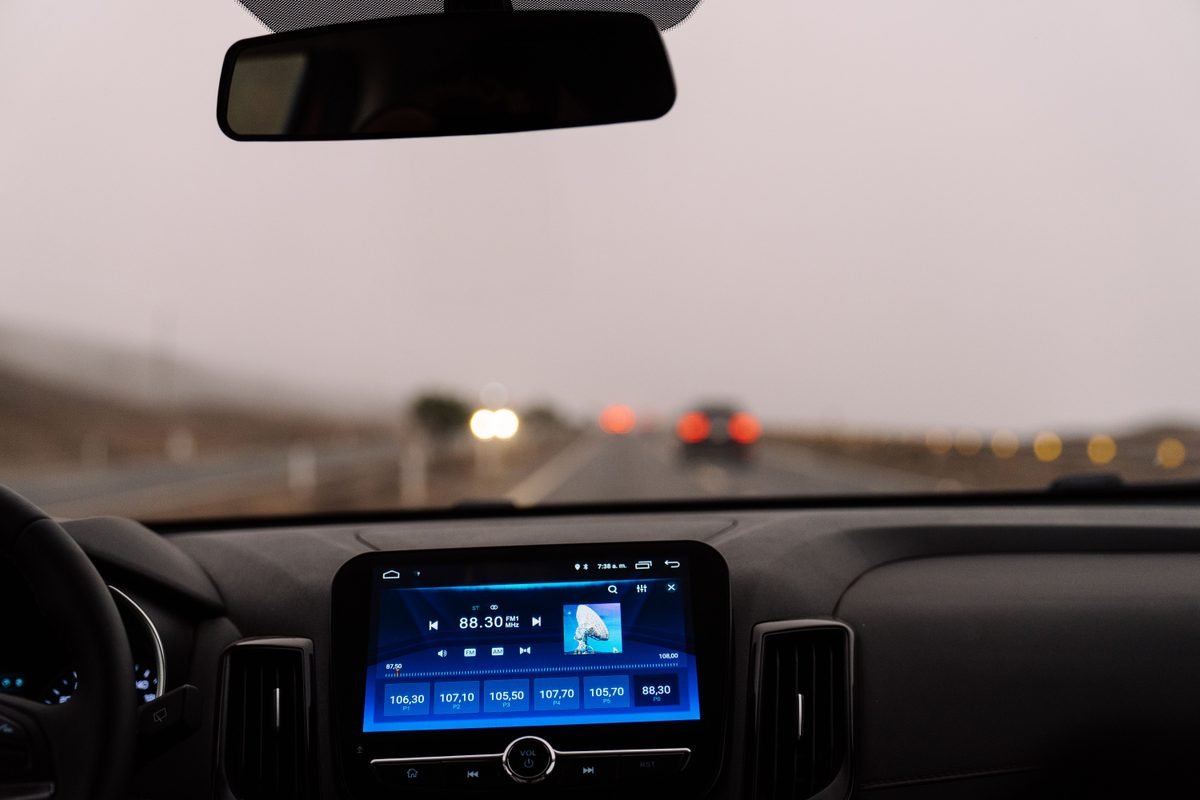
Navigating roads in South Korea comes with a unique technological quirk: Google Maps does not provide turn-by-turn driving directions in the country due to national security map-data restrictions. Relying solely on Google Maps while driving will leave you stranded. Fortunately, almost all modern rental cars from Lotte and SK come equipped with a built-in dashboard navigation unit featuring an English interface and voice prompts. Make sure the rental agent switches the dashboard system to English before you leave the parking lot.
Korean built-in navigation relies heavily on phone numbers. Searching for a rural cafe, guesthouse, or temple by its Korean name or English romanization can be frustrating on an in-car screen. Entering the destination’s nine-digit or ten-digit landline phone number into the GPS search bar instantly brings up the exact route. Always pull up your hotel or attraction’s local phone number ahead of time.
For mobile navigation, pair your smartphone with local navigation apps. Naver Map and KakaoMap are the premier road mapping tools in Korea, and both offer robust English user interfaces. To compare features between the two, read our comprehensive breakdown of Naver Map vs Kakao Map for Tourists. KakaoMap and Naver Map provide real-time alerts for speed cameras, upcoming speed bumps, bus-only lane operating hours, and live traffic bottlenecks. Mount your phone on an air vent using a portable car mount and ensure you have an active data connection via an eSIM or physical SIM. Our guide to choosing a Korea SIM card vs eSIM for tourists covers fast local data setups that ensure uninterrupted navigation.
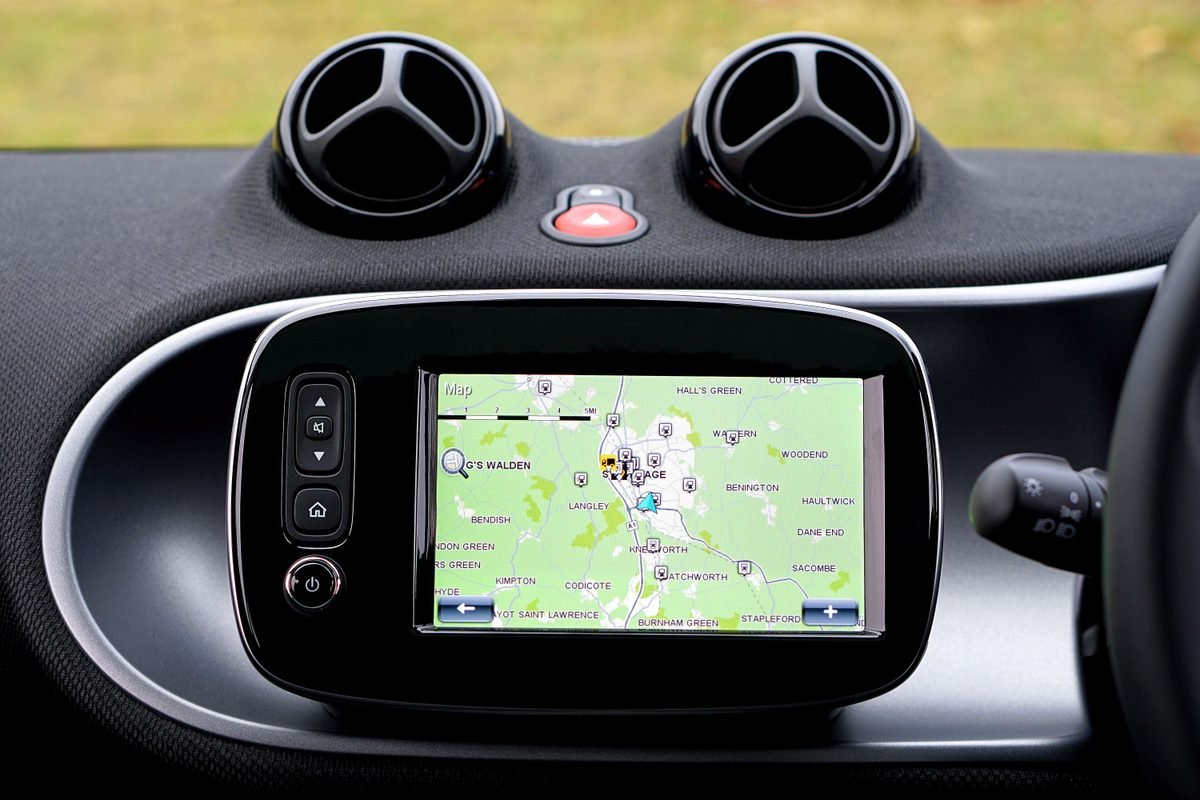
From a local: The Landline Search Trick
Typing Korean destination names on an in-dash GPS can be clumsy. Type the destination’s local 9-digit or 10-digit telephone number directly into the search bar to locate it instantly.
Expressway Driving and Paying Tolls with Hi-Pass
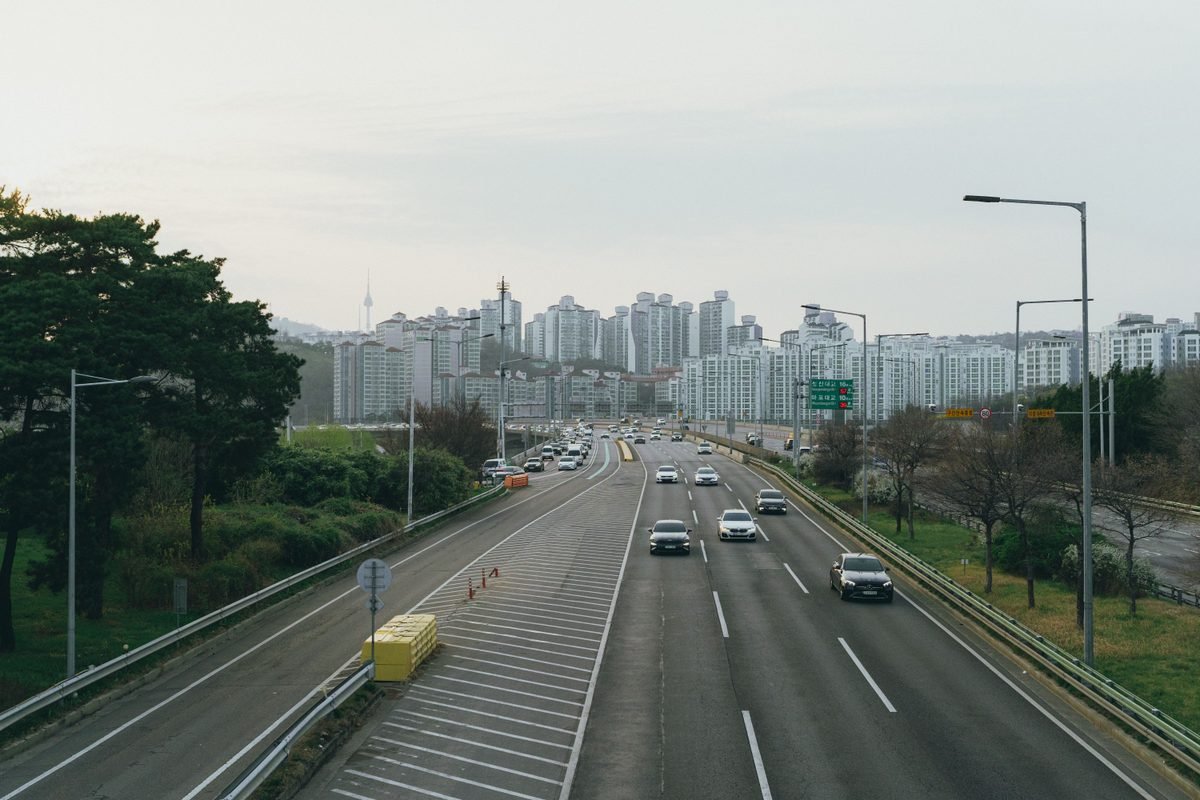
South Korea possesses one of the best expressway systems in the world, managed by Korea Expressway Corporation. Expressways are well-paved, multi-lane, and meticulously signposted in both Korean hangul and clear English. Speed limits on expressways are strictly enforced, generally set at 100 km/h or 110 km/h. Korea uses both fixed gantry radar cameras and average-speed enforcement zones stretching over ten to twenty kilometers. Your GPS will beep insistently whenever your speed exceeds the limit within one kilometer of a camera. Pay attention to blue-painted lanes: on major routes like the Gyeongbu Expressway, the far left lane is reserved exclusively for buses during peak hours.
Toll plazas feature two distinct lanes: blue-marked Hi-Pass lanes and standard cash or credit card lanes. Hi-Pass is South Korea’s automated wireless electronic toll collection system. Almost every rental car comes equipped with a Hi-Pass transponder box mounted behind the rearview mirror. When booking, ask the counter agent to insert a rental Hi-Pass card into the transponder. When passing through toll gates, simply drive through the blue lane at 30 to 50 km/h without stopping. The system chimes, reads the card, and records the fee. When you return the vehicle, the rental desk reads the card’s electronic tally, and you pay your accrued tolls via credit card.
If your car does not have an active Hi-Pass card, you must steer into the standard toll booth lanes (labeled in white with Korean characters for general vehicles). At the entry gate, pull a paper ticket from the machine. At your highway exit booth, hand the ticket and your international credit card or cash to the attendant. An average toll between Incheon Airport and eastern Gangwon costs roughly ₩12,000 to ₩18,000 (about $9 to $13.50).
Fueling Up, Parking Rules, and Navigating Rural Roads
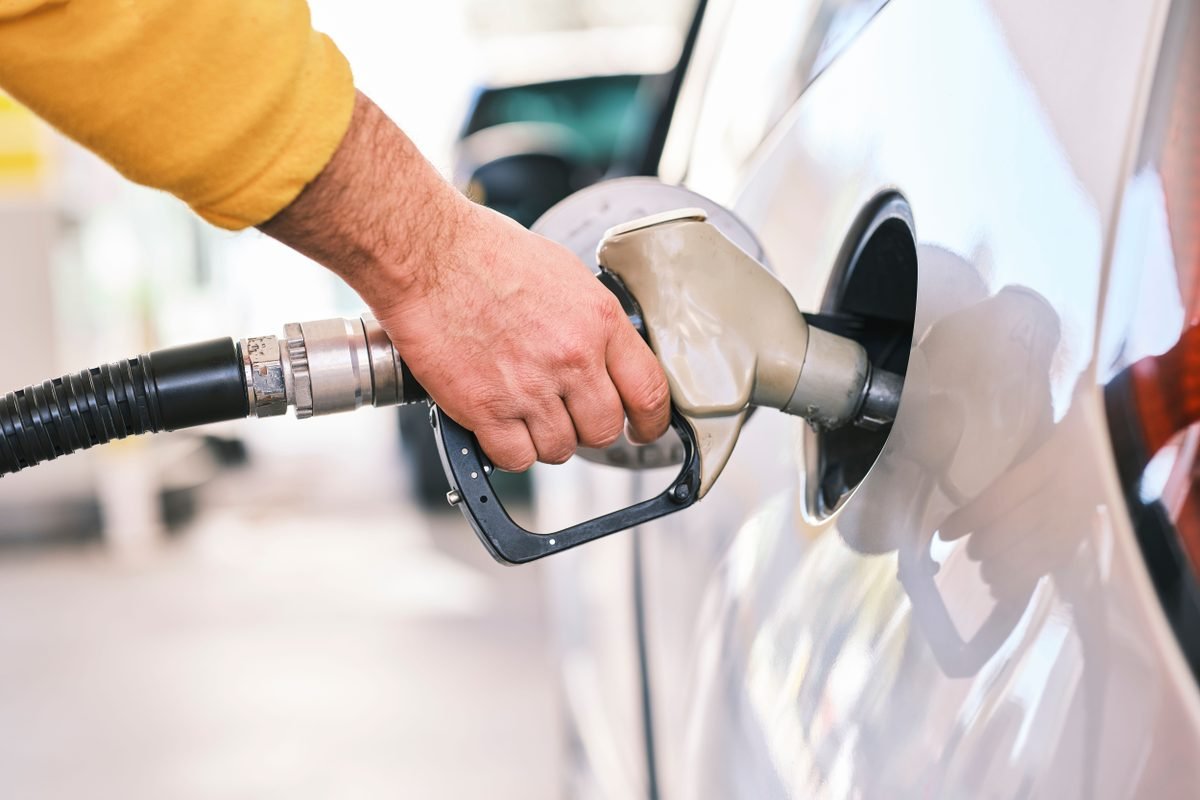
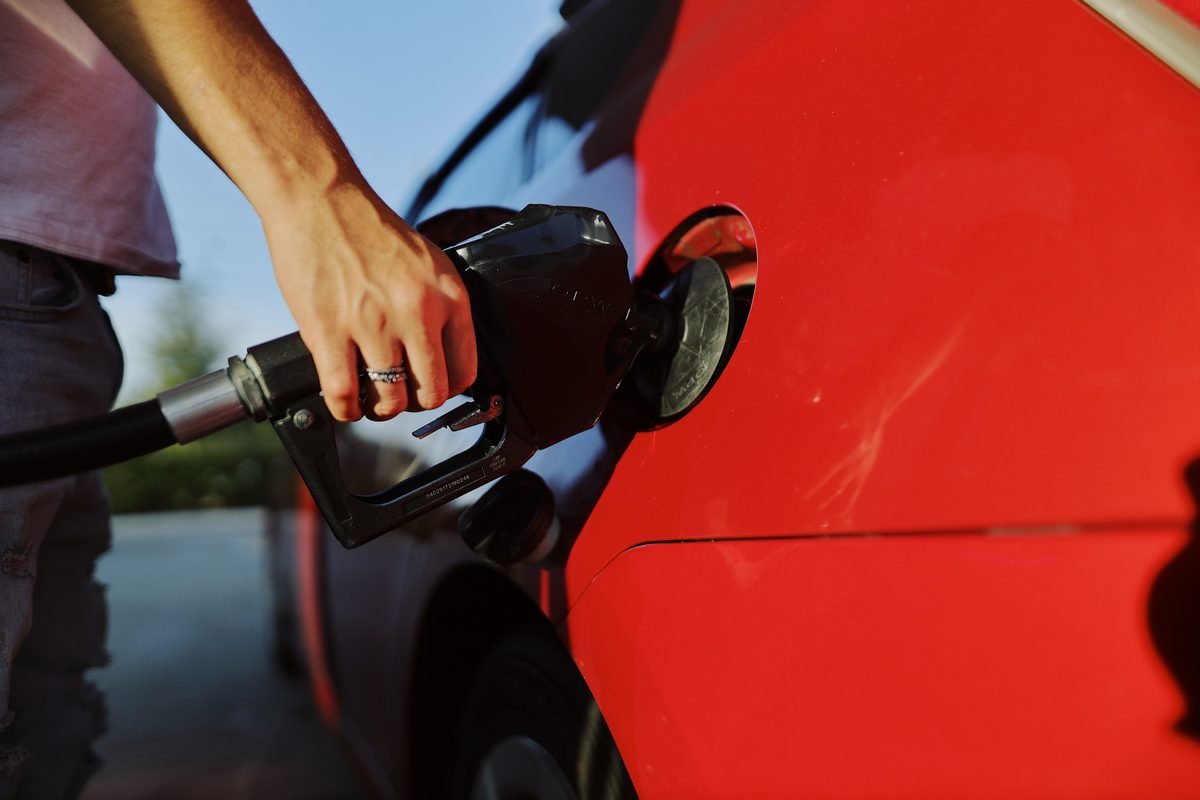
Gas stations across South Korea are plentiful and operate efficiently. Korea offers two main fuel types for consumer passenger cars: regular unleaded gasoline, labeled as Hwiballyu (휘발유), and automotive diesel, labeled as Gyeong-yu (경유). Gasoline pumps feature yellow nozzles, while diesel nozzles are blue or black. Many modern rental cars are hybrid or fully electric (EV); if you rent an EV, the rental agency will supply an RFID charging card that works across nationwide public charging networks.
Most highway rest stops (hyugeso) and town gas stations are self-service (셀프, pronounced “sel-peu”). Touchscreens at self-service pumps provide an English language option on the welcome screen. You simply insert your credit card, select the fuel amount—either a specific monetary value like ₩50,000 or full tank (가득, ga-deuk)—and fill up. Fuel is not cheap: the national average for regular gasoline was ₩1,857 (about $1.39) per liter in mid-October 2026, with Seoul the most expensive region at ₩1,903 (about $1.43) and Daegu the cheapest at ₩1,830 (about $1.37). Highway rest stops are cultural hubs serving walnut cakes, udon, and fresh coffee. Take regular breaks there.
Parking requires diligence. In cities and provincial towns, roadside curbs painted with solid white lines permit parking. Single yellow lines indicate restricted parking during certain hours, while double yellow lines mean parking and stopping are strictly prohibited. Illegal parking is monitored by automated patrol vehicles and rooftop CCTV cameras. Municipal pay-parking lots (공영주차장) are cheap, typically costing ₩1,000 to ₩3,000 (about $0.75 to $2.25) per hour. Rural two-lane roads can be narrow, often bordered by deep concrete drainage ditches without guardrails. Maintain conservative speeds around blind farm bends.
What it costs in Seoul
| Item | Local price | USD |
|---|---|---|
| Compact Car Daily Rental (Avante / K3) | ₩75,000 | $56.25 |
| Super CDW Zero-Deductible Insurance (per day) | ₩20,000 | $15.00 |
| Gasoline (per liter, national average) | ₩1,857 | $1.39 |
| Hi-Pass Expressway Toll (Seoul to Gangneung one-way) | ₩14,200 | $10.65 |
| Municipal Parking (per hour) | ₩2,000 | $1.50 |
| International Driving Permit (issued in home country) | ₩25,000 | $18.75 |
| Average 3-Day Road Trip Total (Rental, Insurance, Gas, Tolls) | ₩390,000 | $292.93 |
Prices checked October 2026. Always confirm with the provider before you book.
Mistakes to avoid
- Bringing only a digital photo or phone scan of your International Driving Permit instead of the physical cardboard booklet.
- Attempting to use Google Maps for turn-by-turn driving directions instead of Naver Map, KakaoMap, or the car’s native GPS.
- Driving through the blue Hi-Pass expressway toll lane without checking if the electronic transponder actually contains a valid toll card.
- Failing to inspect and record preexisting wheel rim scratches and bumper abrasions with video before exiting the rental depot.
- Driving into the left-hand blue bus-only lane on the Gyeongbu Expressway during weekend operational hours.
FAQ
Can I drive in South Korea with a US or UK driver's license alone?
No, you cannot. You must carry your original domestic driver’s license alongside a valid, physical 1949 Geneva Convention International Driving Permit (IDP) and your passport. Rental desks will decline reservations without both documents present.
Which side of the road do they drive on in South Korea?
Vehicles drive on the right side of the road in South Korea, with the steering wheel situated on the left side of the vehicle. This layout matches driving standards in the United States, Canada, and mainland Europe.
What is the minimum age to hire a car in Korea?
Most major rental providers require foreign drivers to be at least 21 years old with a minimum of one full year of licensed driving experience for compact cars. Larger SUVs and nine-passenger vans often mandate a minimum age of 26.
How does expressway toll payment work for foreigners?
Most rental cars have a Hi-Pass electronic transponder behind the rearview mirror. Request a Hi-Pass card at pickup, cruise through the blue expressway lanes at reduced speed, and settle the accumulated toll balance on your credit card when returning the vehicle.