The Ultimate Pohang and Guryongpo Day Trip Guide

The 5:30 AM chill at Seoul Station is always sharp. I clutched a hot paper cup of convenience store coffee, waiting for the KTX train to glide onto the platform. Two and a half hours later, I was watching the East Sea waves crash against the rocky coastline of Gyeongsangbuk-do. If you want to escape the capital for a day of dramatic coastlines, industrial marvels, and deep historical pockets, a Pohang and Guryongpo day trip is the perfect solution.
This guide is for independent travelers who want to tackle this coastal escape on their own. I will show you how to navigate the local transit, where to find the best seafood, and how to structure your day so you do not miss the surreal Space Walk or the historic streets of Guryongpo.
How to plan a Pohang and Guryongpo day trip from Seoul
Getting to the Steel City
Pohang is a sprawling industrial giant, home to the massive POSCO steelworks. The sights are spread out, meaning your routing needs to be precise. Homigot sits on the easternmost tail of the Korean peninsula, while the Space Walk is in the north. I always recommend heading straight to Guryongpo and Homigot first, then working your way back to the city center and the Space Walk by late afternoon. To start your day, head to Seoul Station for the KTX. The standard seat is about ₩53,600 (about $40) one way. There are frequent departures starting around 5:00 AM. I recommend taking the 6:00 AM train to maximize your daylight. The journey takes about two and a half hours. You can book tickets up to a month in advance on the official Korail website. Do not use third-party resellers who charge extra fees. Once you arrive at Pohang Station, you are on the northern edge of the city. If you prefer a faster journey, you can fly into Pohang-Gyeongju Airport, but flights are less frequent and KTX is far more reliable. The train drops you right into the local transport network. This makes it incredibly easy to start your coastal adventure immediately upon arrival. From the station lobby, follow the exit signs to the bus stop. You will find taxis lined up as well, but the public bus is highly efficient if you know which one to board. Planning this transit leg ahead of time ensures you do not waste precious morning hours wondering which direction to head.
Book ahead: Book KTX tickets early
Weekend trains to Pohang sell out fast, especially during autumn. Book your Korail tickets 30 days in advance.
How to navigate Pohang bus logistics
Mastering Pohang Transit
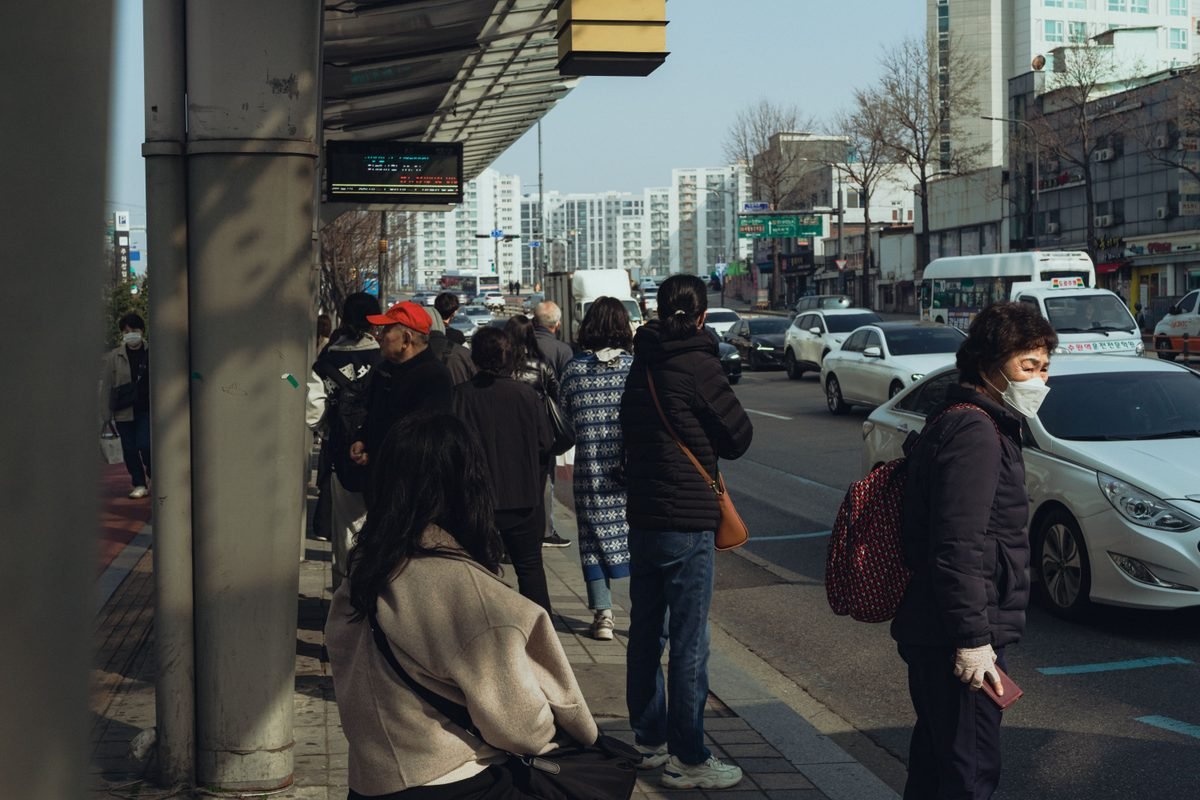
Pohang does not have a subway system. You will rely entirely on local buses and taxis. This is where many foreign travelers get stuck. First, forget about Google Maps here. It does not work for transit or walking directions in South Korea. Instead, download Naver Map or KakaoMap before you leave Seoul. Both apps are highly accurate and show real-time bus arrivals in English. Your primary lifeline for this trip is Bus 9000. This express bus connects Pohang Station directly to Guryongpo and Homigot. The fare is ₩1,500 (about $1.10) if you tap a standard T-money card, which you can load at any convenience store before departing Seoul. A single ride on Bus 9000 takes about an hour and ten minutes from the station to Guryongpo, and another twenty-five minutes to Homigot. Buses run roughly every 30 to 40 minutes. Because of these intervals, missing a bus can throw off your entire day. Keep a close eye on the live arrival screens at the bus shelters. If you are traveling in a group of three or four, taking a taxi can save you significant time. A taxi from Guryongpo to Homigot costs about ₩15,000 (about $11) and takes only fifteen minutes, compared to waiting for the bus. Taxis are widely available near the main bus stops and the harbor. Just make sure the driver turns on the taximeter before you start the journey.
From a local: Tap off every time
Always tap your T-money card on the reader near the rear door when exiting the bus. This secures your free transfer to local feeder buses within 40 minutes.
What to see at Homigot Sunrise Square
The Easternmost Point of the Peninsula
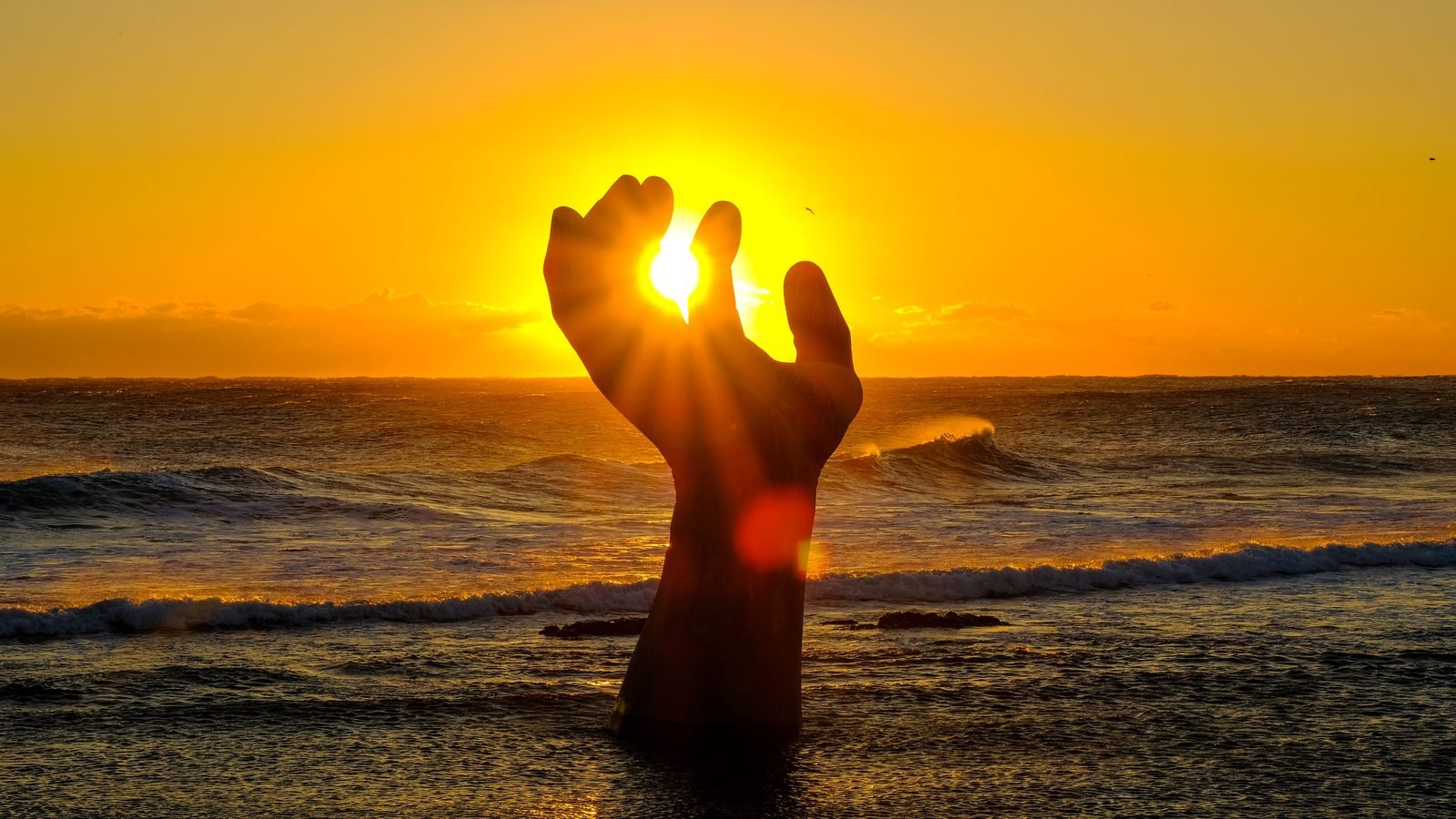
Homigot is the easternmost point of the Korean peninsula. Geographically, it represents the tail of the tiger, which is how Koreans historically visualize the shape of the peninsula. The main draw here is Homigot Sunrise Square, a wide, wind-swept concrete plaza that faces the vast blue of the East Sea. The defining feature of the square is Sangsaeng’s Hand, a pair of giant bronze hands built in 1999 to commemorate the new millennium. One hand rises from the granite plaza, while the other emerges directly from the ocean waves. The design symbolizes harmony and coexistence. Watching the sea foam swirl around the bronze fingers is mesmerizing. If you arrive early enough, you can see the sun rise directly between the ocean-bound fingers, which is one of the most famous sights in Korea. The square is entirely free to enter. Right next to the plaza, you will find the Homigot Lighthouse, a historic brick structure built in 1908 that still stands tall. There is also the National Lighthouse Museum, which is free to enter and offers a warm escape on windy days. Take a walk along the wooden boardwalk that juts out over the rocky shore. The wind here is relentless. Bring a windbreaker, even in the milder autumn months. There are several small convenience stores and coffee shops nearby where you can grab a warm drink to shield yourself from the ocean breeze before heading back to Guryongpo.
Exploring the Guryongpo Japanese House Street
Step Back in Time in Guryongpo
A short bus ride back from Homigot brings you to Guryongpo, a busy fishing port. Behind the main harbor road lies a quiet, narrow alleyway that feels like a step back in time. This is the Guryongpo Japanese House Street, a preserved residential area dating back to the Japanese colonial occupation in the early 20th century. Over eighty wooden houses still stand here, built by Japanese fishermen who settled in this rich fishing port in the 1920s. Today, many of these buildings have been restored into tea houses, cafes, and small museums. The Guryongpo Modern History Museum, housed in a well-preserved two-story wooden home built by a wealthy Japanese merchant, is free to enter. Inside, you can walk on tatami mats and view historical photos of the neighborhood. The street gained massive popularity recently as the primary filming location for the Korean television drama When the Camellia Blooms. Fans of the show will recognize the main character’s cafe, Camellia, which is now a real cafe serving hot drinks and sweet pastries. Climb the steep stone staircase at the center of the street to reach Guryongpo Park. From the top, you get a clear view of the harbor, the fishing boats, and the tiled roofs of the historic street below. This viewpoint is the perfect spot to sit for a moment and appreciate how the modern industrial city of Pohang sits right alongside these deeply preserved pockets of history.
Tip: Avoid the midday crowds
The famous stairs from the drama get very crowded on weekends. Visit before 11:00 AM to get a clear photo of the harbor view without the queues.
Where to eat mulhoe and snow crab in Pohang
Feasting on Mulhoe and Snow Crab
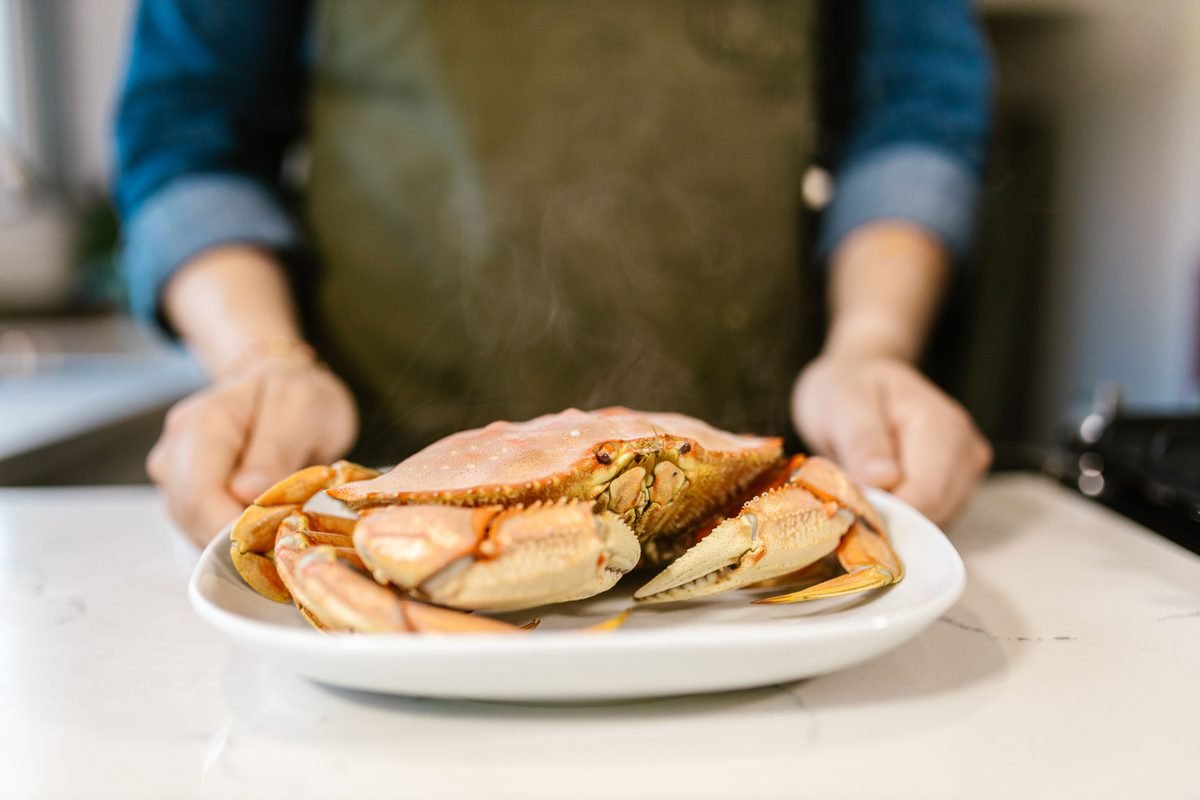
Pohang is famous throughout Korea for its seafood. You cannot leave without trying mulhoe, a cold raw fish soup that is the city’s culinary signature. Unlike the sweet, watery versions found elsewhere, traditional Pohang mulhoe is served with fresh, thinly sliced white fish, cucumber, pear, and a spoonful of spicy gochujang paste. You mix it all together first, letting the ice melt naturally to create a thick, savory broth. A bowl of mulhoe at a local joint like Guryongpo Halmae Shikdang costs about ₩17,000 (about $13) and comes with a side of warm rice and a bubbling bowl of spicy fish stew (maeuntang). If you are visiting in late autumn or winter, Guryongpo snow crab (daege) is the ultimate feast. The harbor is lined with restaurants featuring massive steaming metal pots outside. You select your crab from the live tanks, and they steam it on the spot. Expect to pay roughly ₩60,000 (about $45) per kilogram for local crab. The meat is incredibly sweet and tender. Once you finish the legs, the restaurant will take the crab shell and mix the rich, green innards with warm rice, sesame oil, and seaweed to serve inside the shell. It is the best part of the meal. Do not be afraid to ask the staff for help cracking open the claws. They are experts and will show you the exact technique to slide the meat out in one perfect piece.

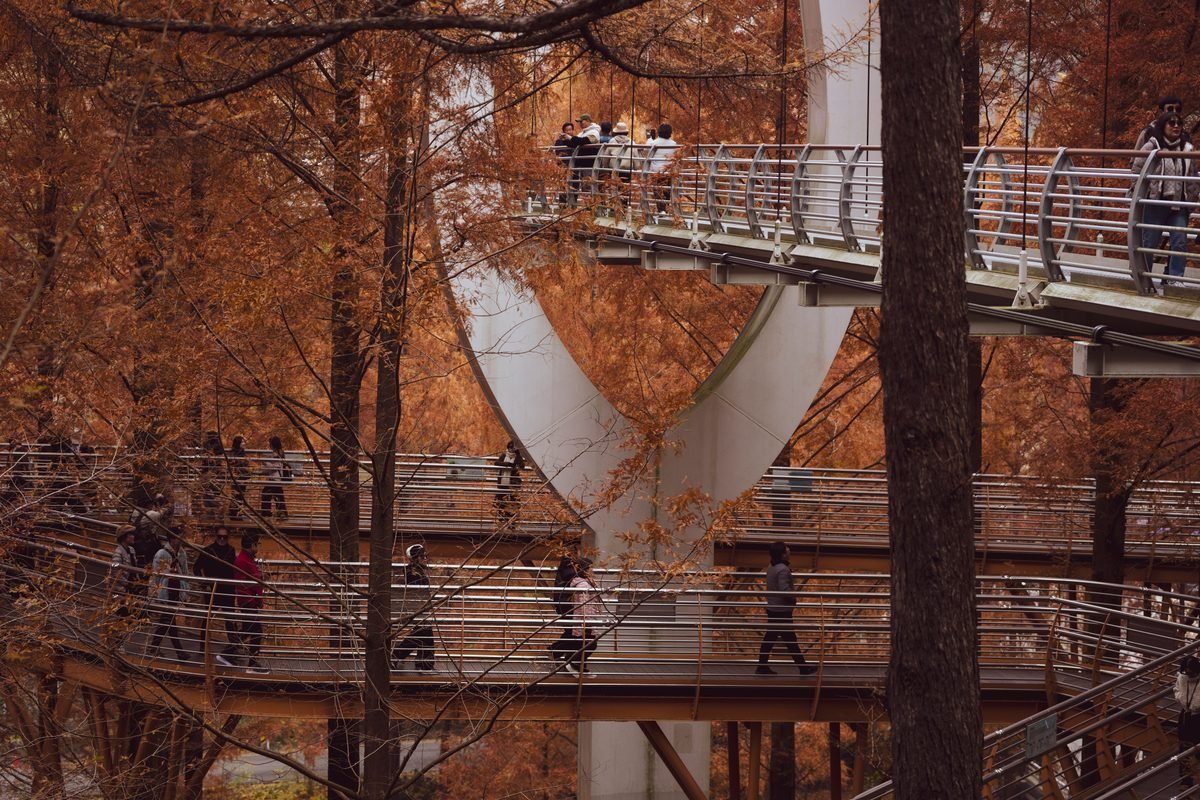
Walking the futuristic Space Walk in Hwanho Park
Walking the Sky at the Space Walk
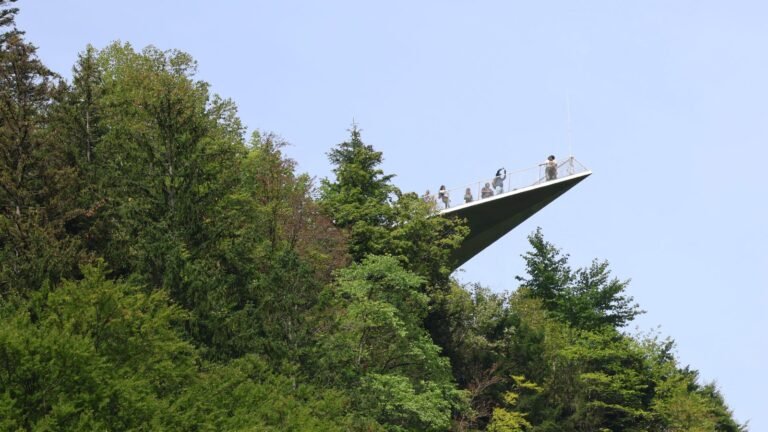
After lunch in Guryongpo, take Bus 9000 back toward the city center to visit Hwanho Park. This is where you will find the Space Walk, one of Korea’s most unusual modern landmarks. Designed by German artists Heike Mutter and Ulrich Genth, this massive steel sculpture looks exactly like a winding roller coaster. The twist? You walk on it. The structure is 333 meters long and rises 25 meters above the park. It is made from high-grade local POSCO steel. As you climb the curved steps, the path splits into two directions. One side leads to a steep loop that is blocked off for safety, while the other takes you high into the air, offering panoramic views of Yeongildae Beach and the massive steelworks across the bay. The Space Walk is free to enter, but they limit the number of walkers on the structure at any one time to 150 people. On windy days or during light rain, the structure will close for safety reasons. It gently sways in the wind, which can be terrifying if you are afraid of heights. If you can, time your visit for late afternoon. The sunset over the harbor is spectacular, and the entire structure lights up with bright LED strips as dusk falls. It is an incredible way to end your day before heading back to the KTX station for your return train to Seoul.
Heads up: Check the wind forecast
The Space Walk closes automatically if wind speeds exceed 8 meters per second. Check the local weather before making the trek up the hill.
What it costs in Pohang
| Item | Local price | USD |
|---|---|---|
| KTX Seoul to Pohang (one-way) | ₩53,600 | $40.00 |
| Local Bus Fare (T-money, per ride) | ₩1,500 | $1.10 |
| Taxi (Guryongpo to Homigot, one-way) | ₩15,000 | $11.00 |
| Pohang Mulhoe (Lunch) | ₩17,000 | $13.00 |
| Guryongpo Snow Crab (1kg) | ₩60,000 | $45.00 |
| Space Walk Entry | ₩0 | $0.00 |
| Approximate Total Budget | ₩200,700 | $150.20 |
Prices checked October 2026. Always confirm with the provider before you book.
Where to stay in Pohang
Budget
Yeongildae Beach, for local guesthouses
Ideal for solo travelers who want to be near the beach nightlife. You can find simple, clean rooms within walking distance of the Space Walk for roughly ₩45,000 (about $34) per night.
Mid-range
Jukdo Market area, for modern business hotels
Perfect for those who want easy transit connections and access to the city's best food markets. Expect to pay roughly ₩80,000 (about $60) per night for a comfortable room with city views.
Splurge
Nam-gu seafront, for upscale boutique hotels
Great for travelers seeking quiet ocean views and premium amenities away from the industrial zones. These modern properties offer floor-to-ceiling windows overlooking the East Sea for roughly ₩180,000 (about $135) per night.
Mistakes to avoid
- Using Google Maps for walking or transit directions instead of Naver Map or KakaoMap.
- Visiting the Space Walk on a windy afternoon without checking the weather forecast first.
- Missing the last KTX train back to Seoul, which departs Pohang Station around 9:30 PM.
FAQ
Is a Pohang and Guryongpo day trip doable from Seoul?
Yes, it is highly doable if you start early. Taking the 6:00 AM KTX from Seoul Station gets you to Pohang by 8:25 AM, leaving plenty of time to explore Homigot, Guryongpo, and the Space Walk before an evening return.
How much does it cost to visit the Space Walk?
Entry to the Space Walk is completely free. You only need to pay for your transportation to Hwanho Park, though you should expect a short wait during busy weekend afternoons.
What is the best way to get around Pohang?
The most efficient way is a mix of local buses and taxis. Bus 9000 runs between the KTX station, Guryongpo, and Homigot, while taxis are highly affordable for short hops.
When is the best season to visit Pohang?
Autumn is the ideal season to visit. The skies are clear, the temperatures are cool enough for walking, and the famous Guryongpo snow crab season begins to pick up.
Do I need to book KTX tickets in advance?
Yes, you should book your KTX tickets exactly 30 days in advance. Weekend trains between Seoul and Pohang sell out incredibly fast, especially during peak travel seasons.