Suwon Galbi and Traditional Market Guide: A Local’s Trip

The smoke from the charcoal grills drifts across the streets of Suwon long before you see the restaurants themselves. This city, located just south of Seoul, earned its reputation for beef during the Joseon Dynasty when it hosted one of the largest cattle markets in the country. Today, that history lives on through its famous king-sized beef ribs, which are cut much larger than the standard portions you find in the capital.
This Suwon galbi and traditional market guide is designed for independent travelers who want to experience the authentic culinary side of the city. We will cover how to navigate the massive Paldalmun market complex, where to find the most famous rib houses, and the specific techniques local staff use to grill your meat to perfection. Whether you are coming for a day trip or staying overnight, this is how you eat like a local in Suwon.
How to get to Suwon from Seoul
Getting to Suwon is one of the easiest excursions you can make from the capital. The most efficient way is by taking the Mugunghwa train from Seoul Station. It costs exactly ₩2,700 (about $2) and takes about 35 minutes to reach Suwon Station. These trains run frequently, and you can book a seat in the Korail+ app, which our Seoul to Busan KTX Guide walks through screen by screen. If you prefer a cheaper route, Seoul Subway Line 1 also runs to Suwon, though the journey takes closer to an hour. Metropolitan subway fares start at ₩1,550 (about $1.15) with a transit card and add ₩100 for every 5 km beyond the first 10 km, so riding in from central Seoul costs a few hundred won more than the base fare.
Navigating from the Station
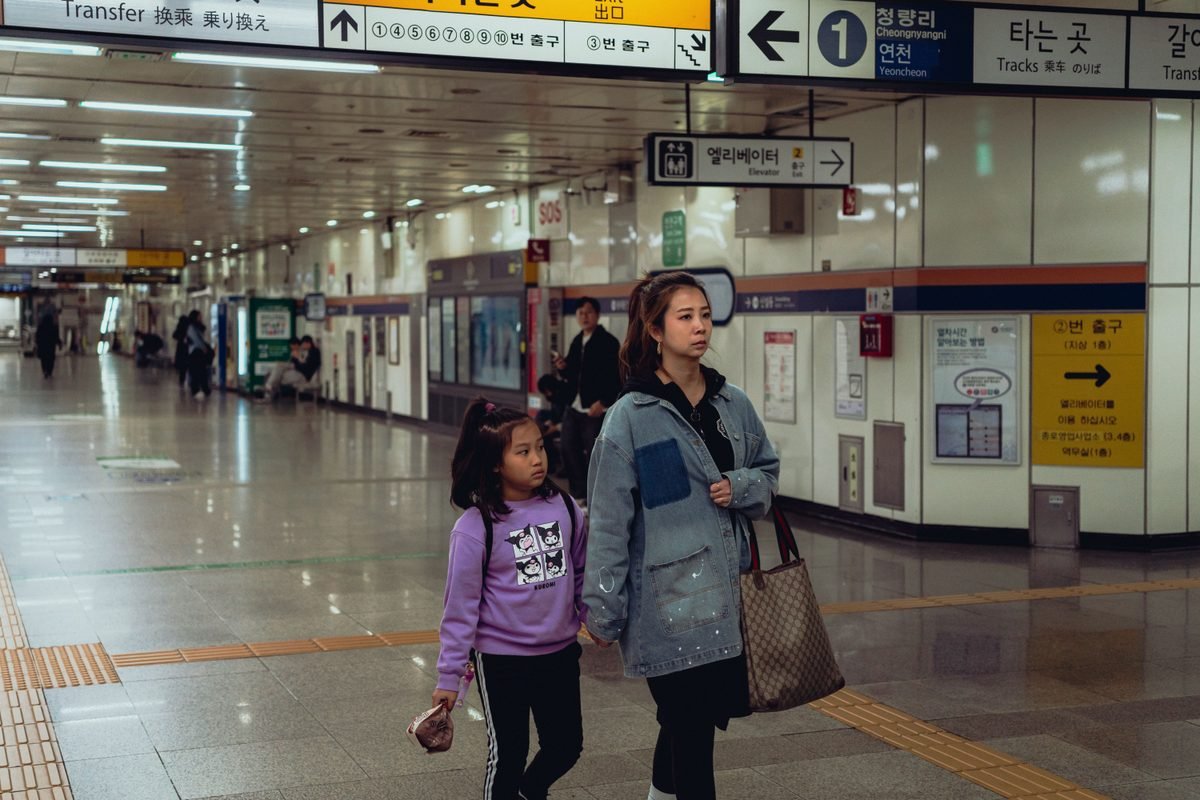
Once you arrive at Suwon Station, do not make the mistake of thinking the historic center is right outside. The main fortress area and the galbi restaurants are about 2.5 kilometers away. You can take a taxi for the base fare of ₩4,800 (about $3.60) or hop on one of the many city buses like the 11, 13, or 60. These buses accept the T-money card, and the fare is ₩1,650 (about $1.25) — Gyeonggi Province raised its standard city bus fare in October 2025, so a Suwon bus now costs a little more than a Seoul one. If you are navigating with Naver Map or Kakao Map — our comparison of the two explains which to pick — you will see that bus 66 or 66-4 also drops you directly at the Paldalmun Gate stop, which is the perfect starting point for your food tour. Walking is an option if the weather is cool, but save your energy for the fortress walls later.
Regional Bus Options
For those staying in southern Seoul, red express buses are often more convenient than the train. Bus 7770 departs from Sadang Station (Exit 4) every few minutes and takes you straight to the Suwon area. It is a favorite for commuters and locals alike. The fare is ₩3,200 (about $2.40) with a transit card, or ₩3,300 (about $2.50) in cash. Regardless of how you arrive, ensure your transit card is topped up at a convenience store before you leave Seoul to avoid fumbling for cash at the station.
Tip: Train Booking Tip
On weekends, Mugunghwa trains often sell out. Book your return ticket to Seoul a few hours in advance using the Korail+ app to ensure you have a seat.
When to visit Suwon for the best experience
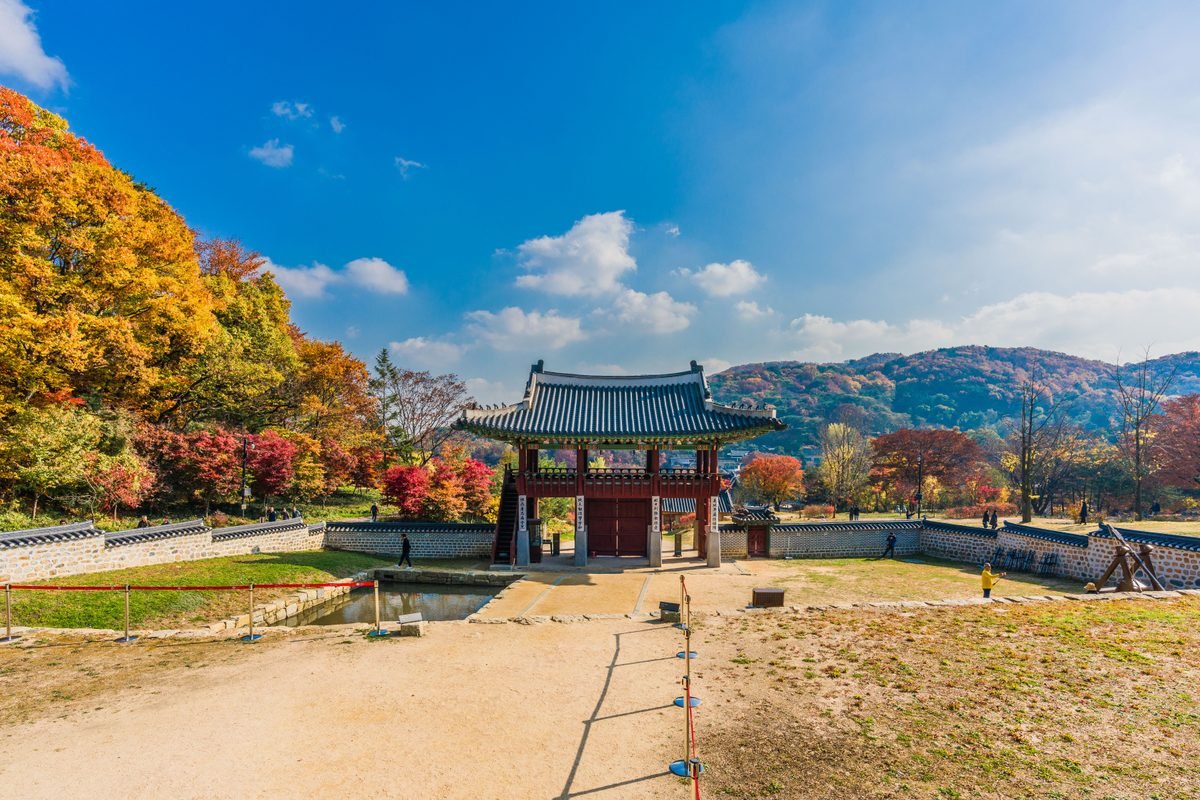
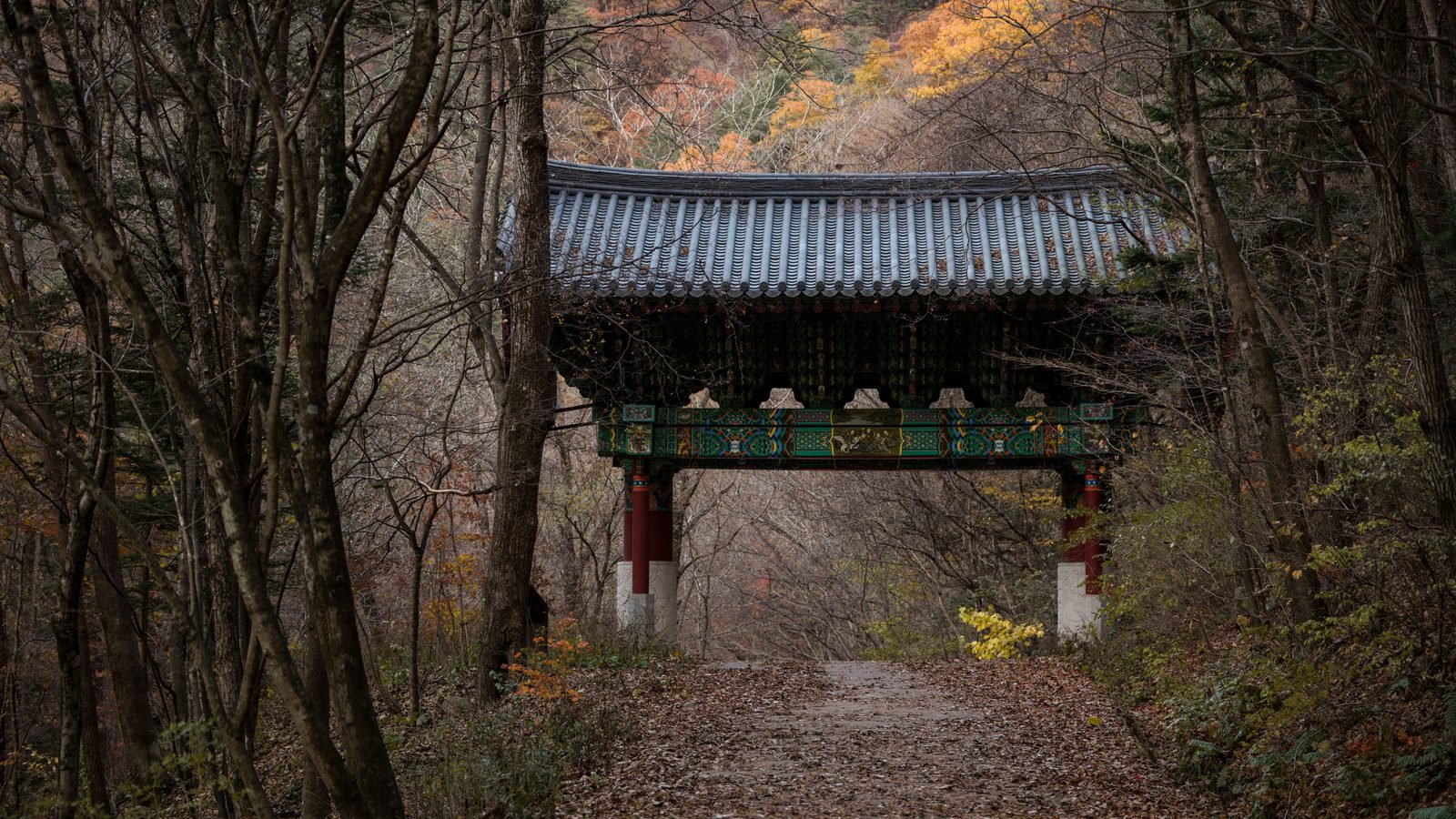
October is arguably the best month for a Suwon food trip. The air is crisp, the humidity of summer has vanished, and the autumn leaves begin to turn shades of deep red and orange along the Hwaseong Fortress walls. This is also when the city hosts the Suwon Hwaseong Cultural Festival. During this time, the streets around the markets are filled with traditional performances, and you might even see a reenactment of King Jeongjo’s royal procession. The temperature usually hovers around 18 degrees Celsius (64 Fahrenheit), which is ideal for walking between markets.
Avoiding the Crowds
If you want to avoid the biggest crowds at the galbi restaurants, try to visit on a Tuesday or Wednesday. Many of the most famous beef houses see two-hour wait times on Saturdays and Sundays. If you must visit on a weekend, aim for a late lunch around 2:00 PM or an early dinner at 5:00 PM. Most traditional markets like Paldalmun and Motgol are most active in the late afternoon when locals do their grocery shopping. The light during this time is also perfect for photography, as the sun sits low over the tiled roofs of the market gates.
Seasonal Food Considerations
While galbi is a year-round staple, the side dishes change with the seasons. In the cooler months of late autumn and winter, the Dongchimi (radish water kimchi) served with your ribs is particularly sharp and refreshing. In the spring, you might find more wild mountain greens among the banchan. If you visit in mid-summer, be prepared for the heat; the charcoal grills inside the restaurants can make the dining rooms quite warm, even with air conditioning. October remains the sweet spot for balancing outdoor exploration with a heavy, hot meal.
Exploring Paldalmun and the traditional markets
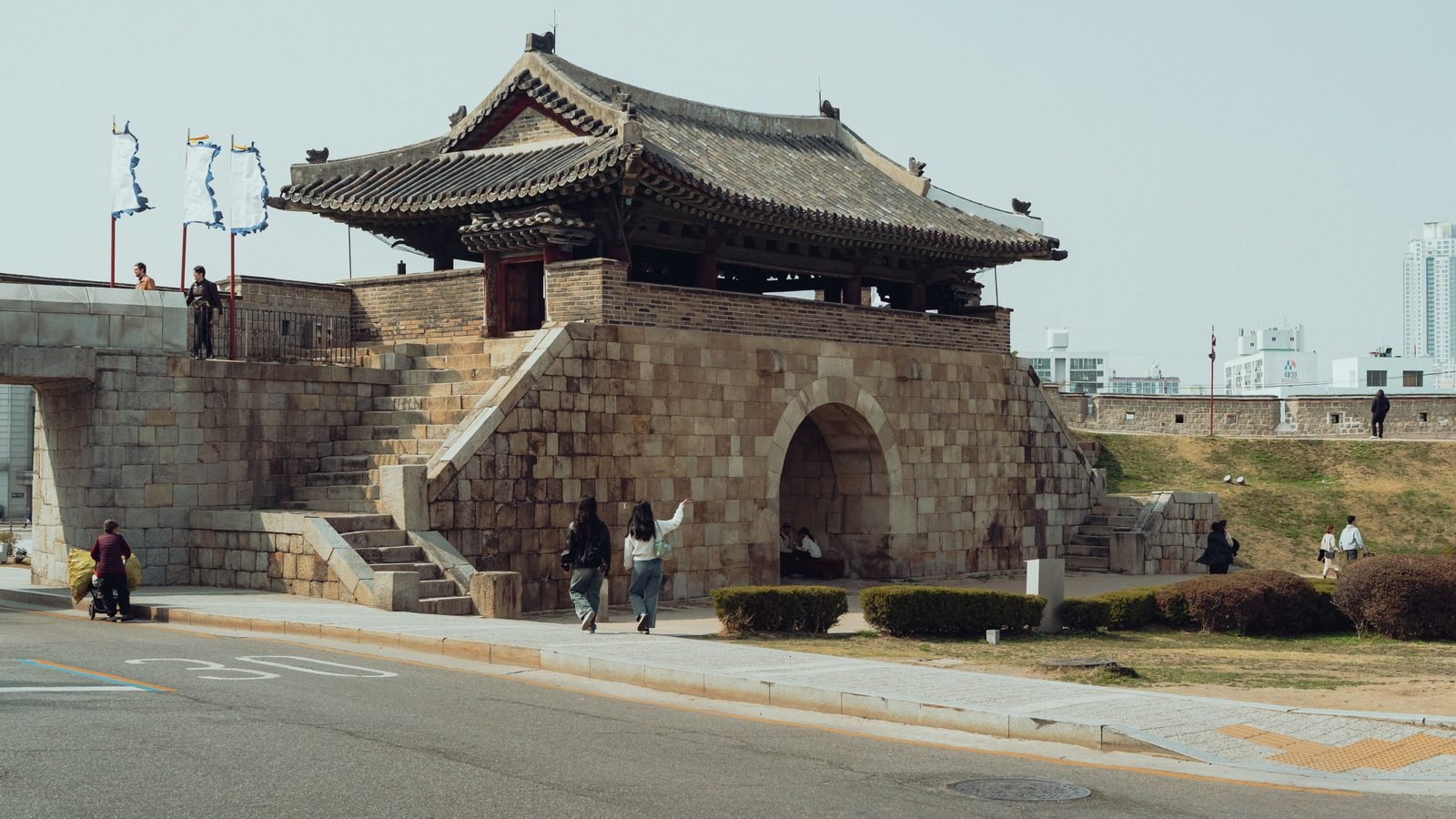
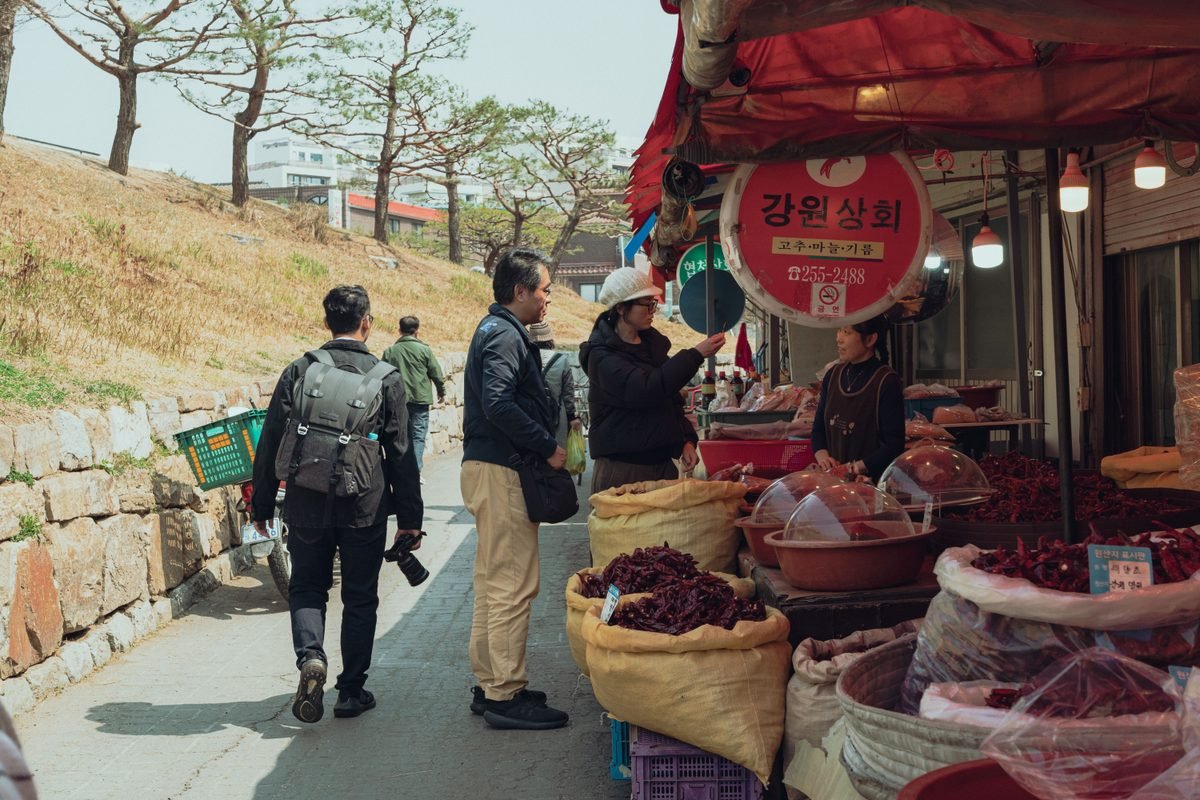
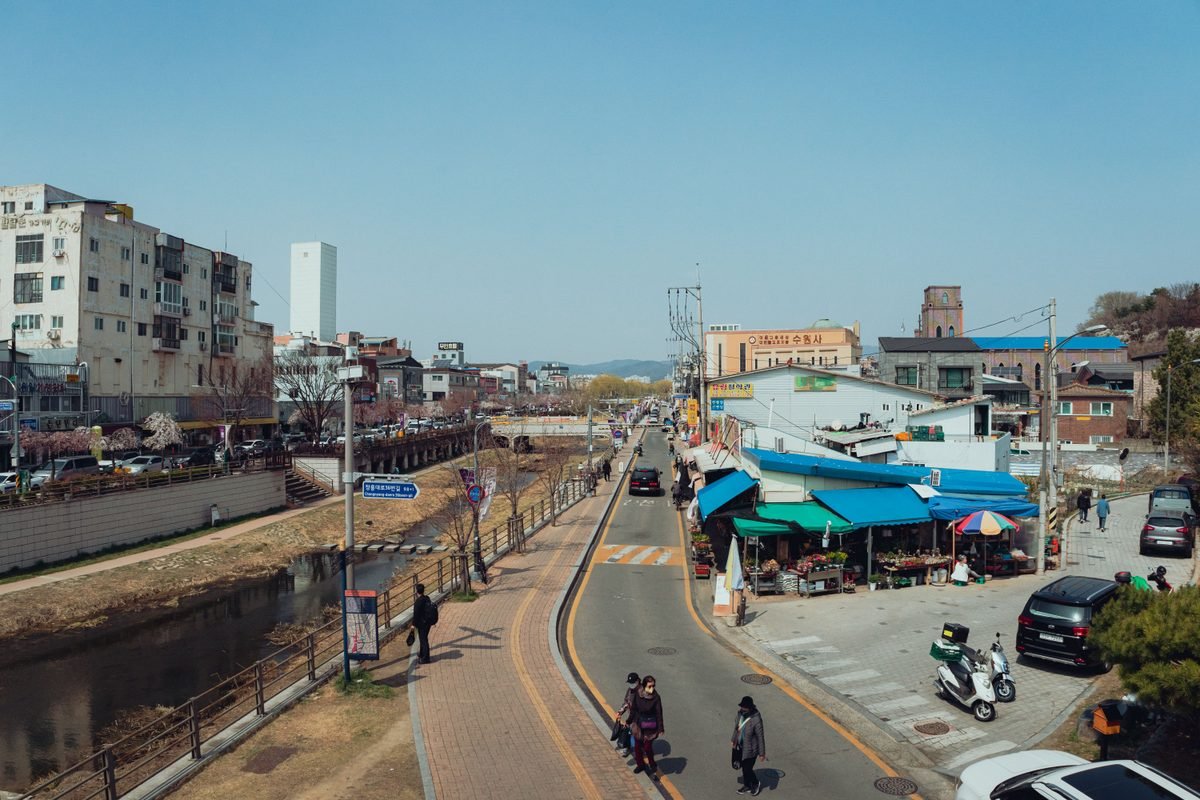
The market district in Suwon is a massive network of interconnected sections, each with its own specialty. At the center stands Paldalmun Gate, a circular stone treasure that serves as a landmark. To the east of the gate lies Paldalmun Market, which is famous for its clothing and general goods. However, food lovers should head straight for Motgol Market and Jidong Market. Motgol is a narrow, covered alleyway where the scent of frying oil and fermented spices is constant. Here, you can find legendary snacks like hand-cut noodles and mung bean pancakes for under ₩6,000 (about $4.50).
The Specialty Markets
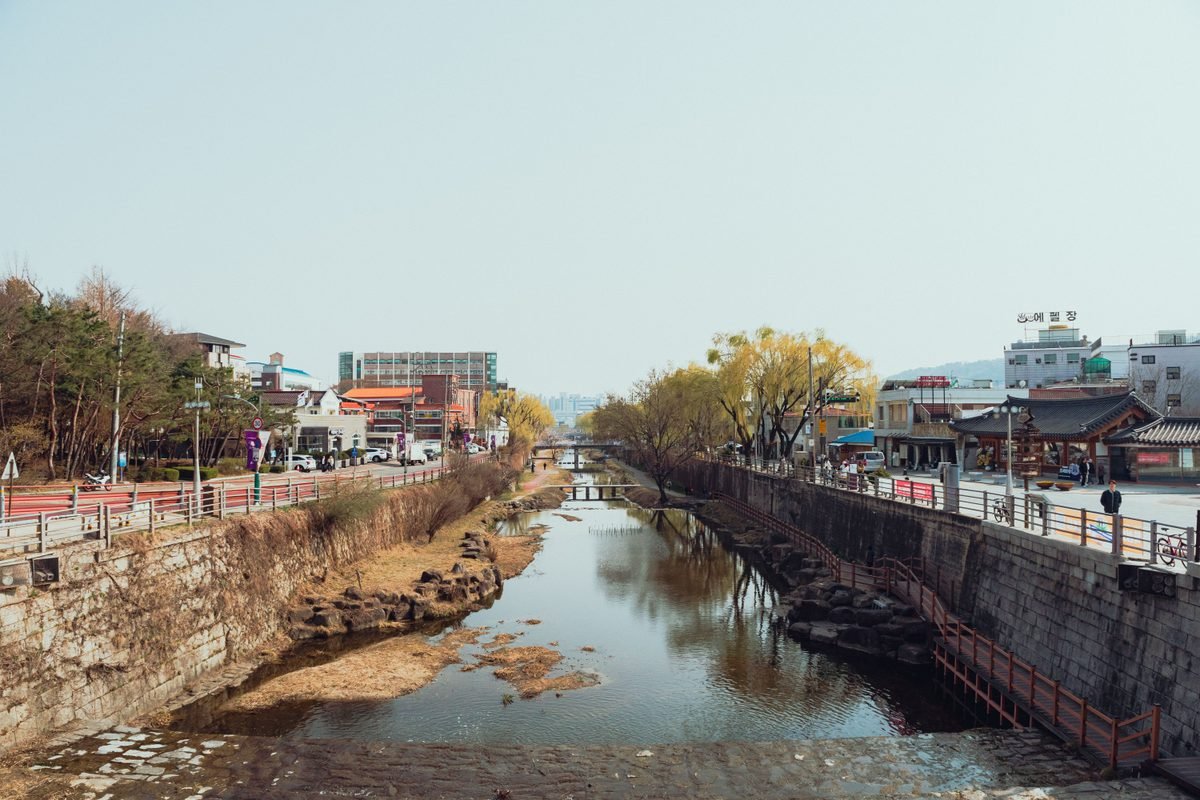
Jidong Market is located right next to the canal and is the go-to spot for Sundae (Korean blood sausage). There is an entire section dedicated to Sundae-bokkeum, a spicy stir-fry of sausage, vegetables, and glass noodles. A large portion for two people usually costs around ₩25,000 (about $18.50). Even if you are saving space for galbi, walking through this section is a sensory experience. You will see vendors expertly slicing steamed sausages and giant vats of broth simmering for hours. The atmosphere is loud, friendly, and very local.
The Fried Chicken Street
Just a short walk from the traditional market stalls is the Suwon Tongdak-geori, or Fried Chicken Street. While it might seem strange to have a chicken street in a city famous for beef, Suwon-style fried chicken is a local obsession. These shops use large cauldrons to fry whole chickens, resulting in a thin, extremely crispy skin. A whole chicken costs about ₩20,000 (about $15). It became even more famous after a popular Korean movie featured “Suwon Galbi Chicken,” which uses the same sweet and salty sauce as the ribs. It is a great alternative if you want a more casual meal than a full BBQ spread.
From a local: The Best Market Snack
Look for the stall in Motgol Market selling ‘hotteok’ (sweet pancakes). They use a mix of seeds and brown sugar that is less oily than the versions in Seoul.
The art of eating Suwon galbi
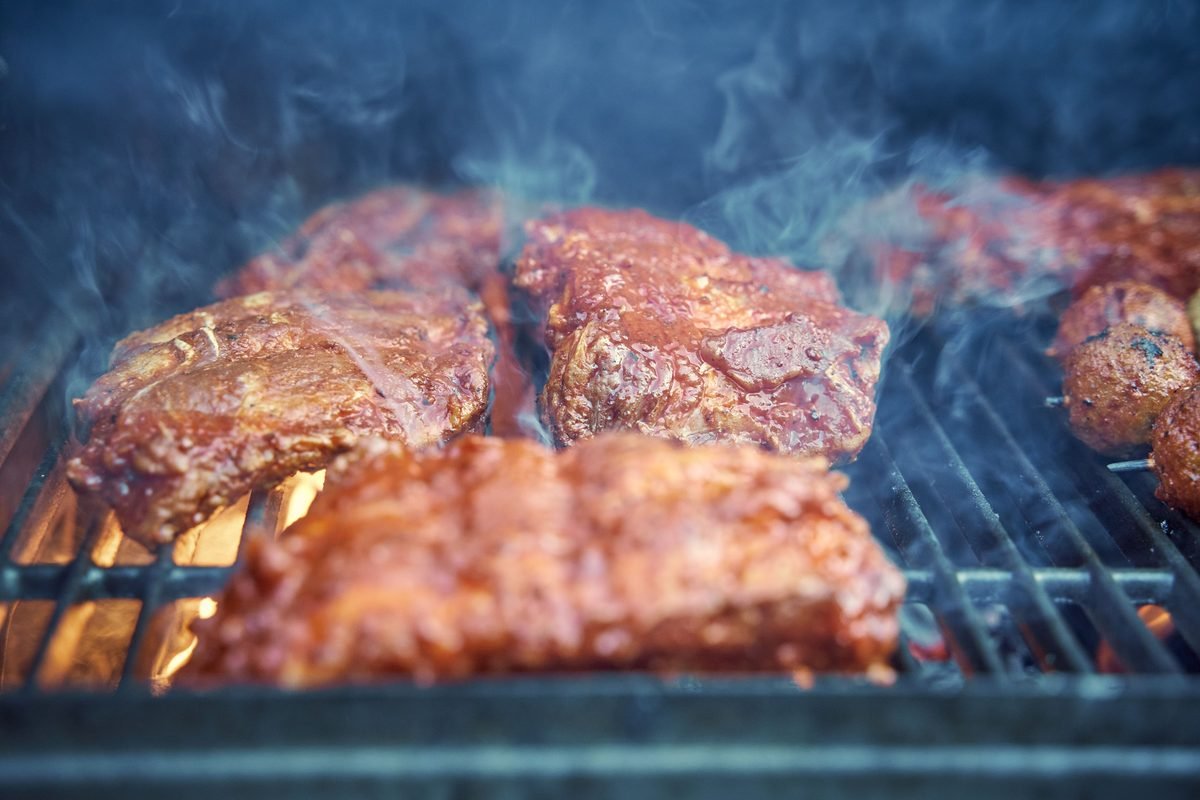
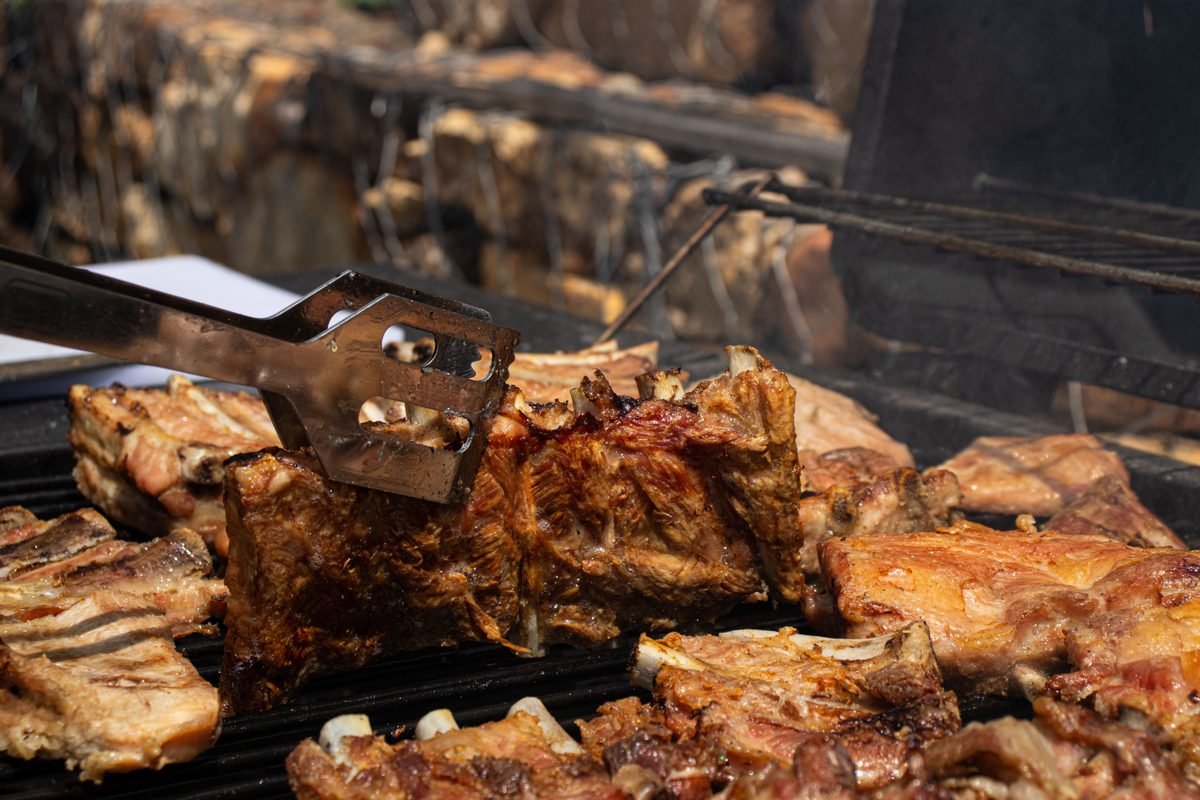
What makes Suwon galbi different from the BBQ you find in a Korean BBQ guide for Seoul is the seasoning and the size. In Suwon, the ribs are known as “Wang-galbi” or king ribs. Each piece is typically 10 to 12 centimeters long. Unlike the soy-sauce-heavy marinades common elsewhere, Suwon-style galbi traditionally uses salt as the primary seasoning. This technique, called sogeum-yangnyeom, allows the natural flavor of the high-quality beef to shine through without being masked by heavy sugar or soy. The result is a cleaner, more savory taste that locals swear by.
Grilling Techniques
When you sit down, a mound of glowing hardwood charcoal is brought to the table. You do not grill the meat yourself here; the staff are experts who handle the process for you. They use long metal tongs and heavy-duty scissors to snip the meat away from the massive bone. The goal is to sear the outside quickly while keeping the inside tender. Watch closely as they flip the meat at just the right moment. They will often move the cooked pieces to the edge of the grill so they stay warm without overcooking. It is polite to wait until the server tells you the meat is ready before you start eating.
The Perfect Pairing
The most important side dish on a Suwon galbi table is the Dongchimi. This cold, clear radish water kimchi acts as a palate cleanser. The acidity and cold temperature of the broth cut through the richness of the beef fat. Another local tip is to order a bowl of Naengmyeon (cold buckwheat noodles) at the end of the meal. Many locals save a few pieces of grilled galbi to wrap around the cold noodles for the final bite. If you prefer something warm, ask the server to take the large rib bones back to the kitchen to make a Doenjang-jjigae (soybean paste stew). The marrow from the bones adds an incredible depth to the soup.
Where to find the best galbi restaurants
There are three major names that dominate the Suwon galbi scene: Kabojung, Bonsuwon, and Silla Galbi. Kabojung is perhaps the most famous and is a massive operation consisting of three large buildings across from each other. Despite its size, the quality remains remarkably consistent. A portion of marinated American beef galbi here costs about ₩65,000 (about $48), while the premium Korean Hanwoo beef can exceed ₩100,000 (about $74). The banchan (side dishes) at Kabojung are legendary, often including raw crab, pumpkin salad, and various fermented greens that could almost be a meal on their own.
The Old School Choice
Bonsuwon Galbi offers a slightly more traditional, no-frills atmosphere. It is located a bit further from the main tourist gates but is often the top choice for Suwon residents. The portions here are known for being very generous. One serving is usually enough for one person, but keep in mind that most BBQ restaurants in Korea require a minimum order of two portions to start. The charcoal they use at Bonsuwon is exceptionally high quality, which gives the meat a distinct smoky aroma that is hard to replicate. Expect to pay around ₩60,000 (about $44) per person for a standard meal including drinks.
Lunch Specials and Budgeting
If the prices for dinner seem steep, many of these top-tier restaurants offer lunch specials on weekdays. These sets usually include a slightly smaller portion of galbi along with rice and soup for about ₩35,000 to ₩45,000 (about $26 to $33). This is an excellent way to experience the high-end beef without breaking your budget. For a more casual experience, you can find smaller galbi shops near the Paldalmun Market that serve “Galbitang” (beef rib soup) for around ₩15,000 (about $11). It uses the same quality of meat but in a hearty, clear broth that is perfect for a quick lunch.
Book ahead: Weekend Reservations
For Kabojung or Bonsuwon on a weekend, call ahead or arrive by 11:30 AM. They do not use international apps, so asking your hotel to call is the best move.
Practical tips for a Suwon food trip
Navigating Suwon for a food-focused trip requires a little bit of planning beyond just knowing where to eat. First, download either Naver Map or KakaoMap. These are essential because international map apps often have outdated business hours or incorrect locations for smaller market stalls. When searching for restaurants, use the Korean names if possible: 가보정 (Kabojung) or 본수원갈비 (Bonsuwon). The apps will also show you real-time bus arrivals, which is helpful because the traffic around Paldalmun can be heavy in the late afternoon.
Walking the Walls
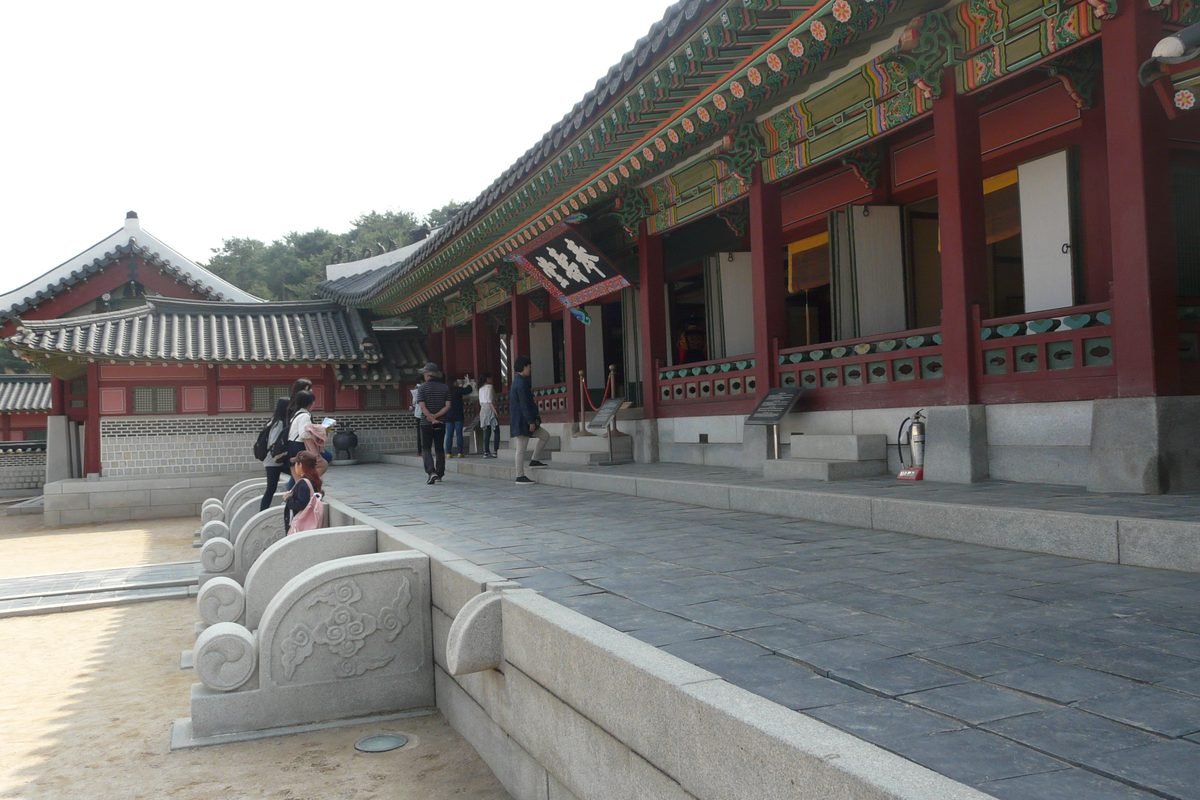
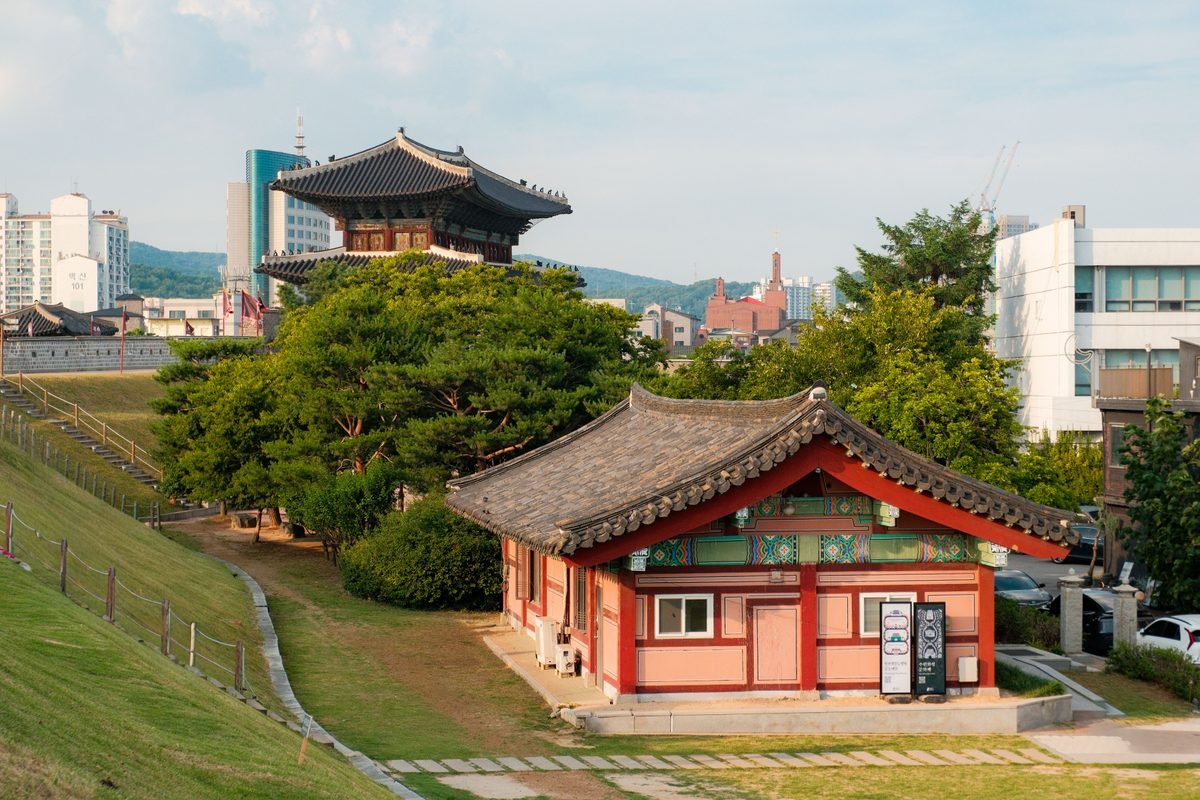
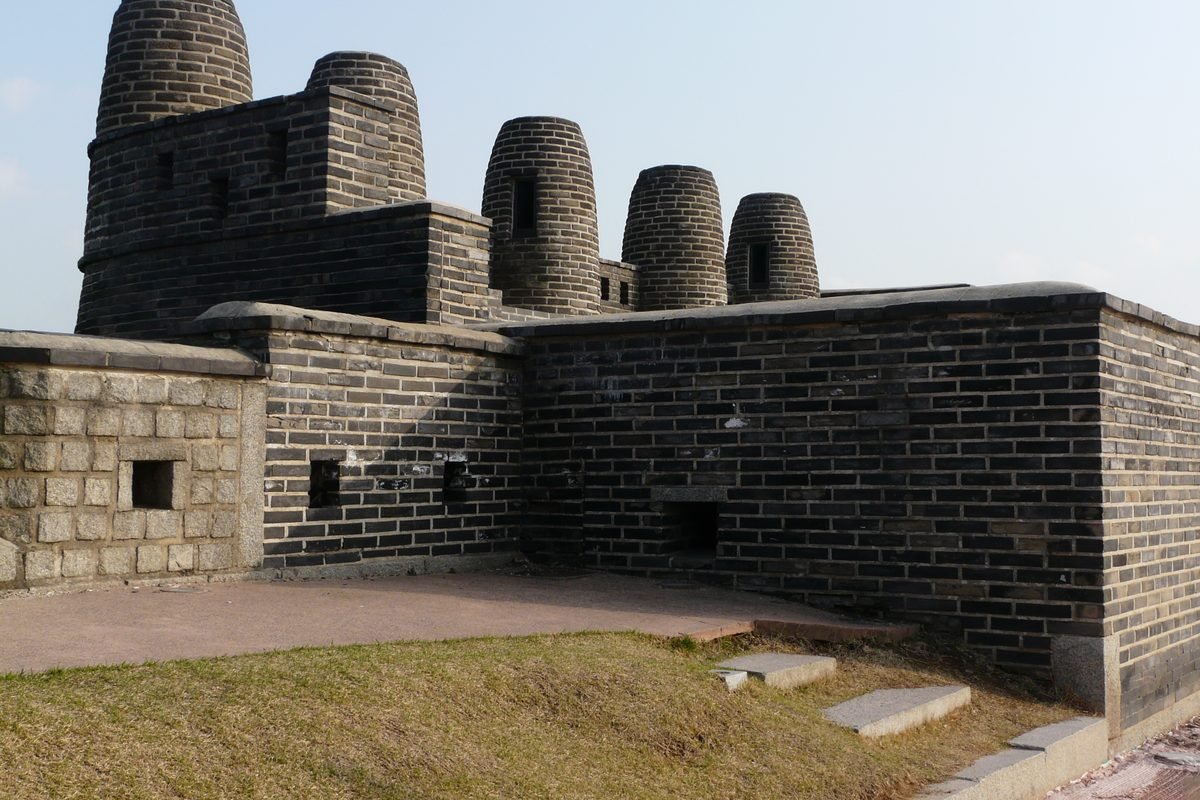
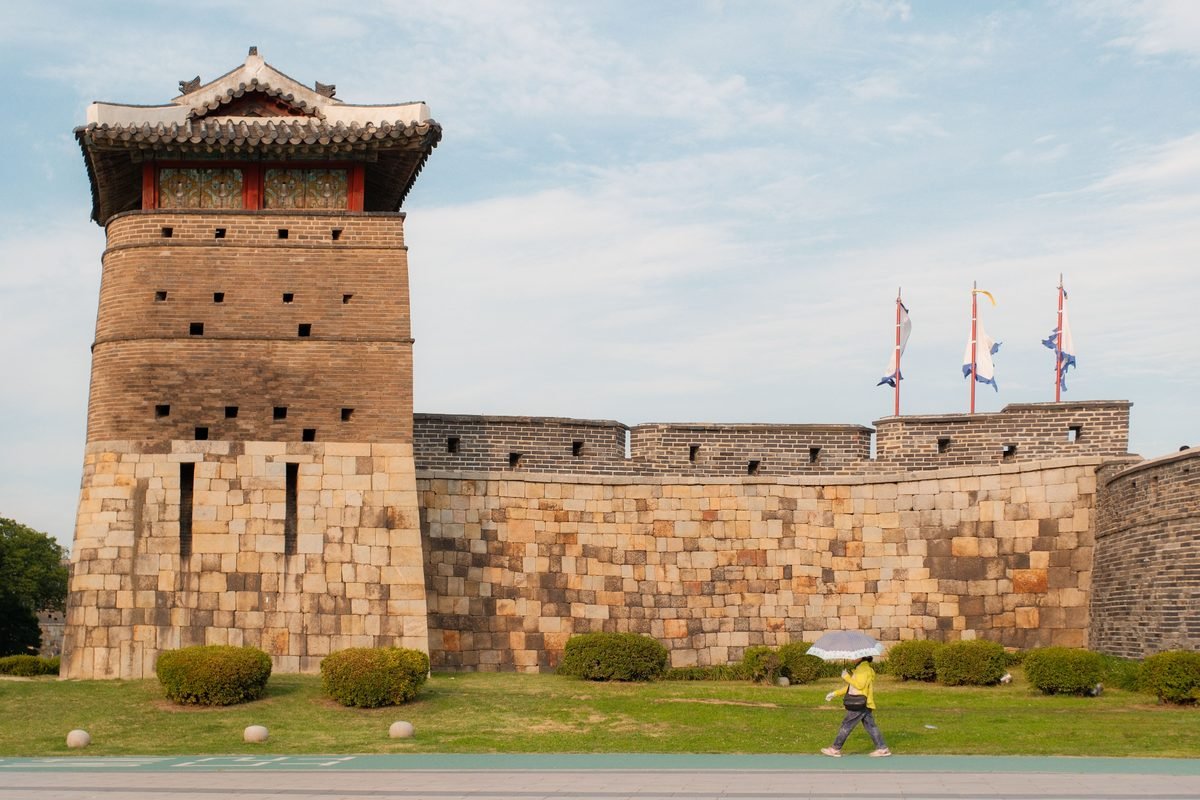
To build up an appetite, I recommend walking a section of the Hwaseong Fortress wall before your meal. The stretch from Hwaseomun Gate to Paldalmun Gate offers some of the best views of the city and takes about 45 minutes. The wall is free to walk, but if you want to enter the Hwaseong Haenggung (the temporary palace), the admission is ₩2,000 (about $1.50). This palace was where the King stayed during his visits to his father’s tomb, and it is a beautiful example of Joseon architecture. It is located right between the fortress and the galbi restaurants, making it a perfect cultural stop.
Language and Payment
While the large galbi houses are used to tourists and often have English menus, the smaller stalls in Motgol and Jidong markets may not. Learning basic food words like “Igeot” (this one) and “Olmayeyo?” (how much?) will go a long way. Most vendors in the traditional markets now accept credit cards, but it is always a good idea to carry ₩20,000 in cash for very small purchases like a single piece of hotteok or a bottle of water. For a full breakdown of costs, check our Korea Travel Budget Per Day guide to see how Suwon fits into your overall trip spending.
Heads up: Market Rest Days
Some stalls in the traditional markets close on the first and third Sunday of the month. Check the schedule if you are planning a Sunday visit.
What it costs in Suwon
| Item | Local price | USD |
|---|---|---|
| Mugunghwa Train (Seoul to Suwon) | ₩2,700 | ($2.00) |
| Suwon Wang-galbi (1 portion) | ₩65,000 | ($48.00) |
| Market Snacks (Mandu/Hotteok) | ₩6,000 | ($4.50) |
| Hwaseong Haenggung Entry | ₩2,000 | ($1.50) |
| Local Bus Fare (T-money) | ₩1,650 | ($1.25) |
| Mid-range Hotel (Per Night) | ₩110,000 | ($82.00) |
| Total Estimated Daily Spend | ₩187,350 | ($139.25) |
Prices checked October 2026. Always confirm with the provider before you book.
Where to stay in Suwon
Budget
Paldal-gu, near the Traditional Markets
This area has several affordable guesthouses and motels within walking distance of the food streets. Expect to pay ₩50,000 to ₩70,000 per night for a clean, basic room.
Mid-range
Haenggung-dong, for boutique hanoks
Stay in a renovated traditional house near the palace for a more atmospheric experience. These boutique stays usually range from ₩120,000 to ₩180,000 and are surrounded by trendy cafes.
Splurge
Suwon Station, for international hotels
The area around the station features higher-end business hotels like the Novotel Ambassador. Prices range from ₩180,000 to ₩250,000, offering easy access to the trains back to Seoul.
Mistakes to avoid
- Thinking the ‘Galbi Street’ is the only place to eat; the best restaurants are often a 10-minute taxi ride away.
- Ordering only one portion of BBQ; most places have a two-portion minimum for the grill.
- Walking from Suwon Station to the fortress; it is a long, uninteresting walk through heavy traffic.
- Arriving at the traditional markets after 7 PM; many food stalls start closing early compared to Seoul night markets.
FAQ
Is it worth going to Suwon just for the food?
Absolutely, especially if you seek out the salt-seasoned ‘Wang-galbi’ which is a distinct regional specialty. The combination of the massive rib portions and the unique market snacks like cauldron-fried chicken makes it a top culinary destination.
How much should I budget for a galbi dinner?
A high-quality beef rib dinner for two people, including side dishes and a couple of drinks, will typically cost between ₩130,000 and ₩160,000. You can save money by visiting during lunch for the special set menus.
Can I find vegetarian options in Suwon?
While Suwon is famous for beef, the traditional markets like Motgol offer many vegetarian snacks such as mung bean pancakes (bindaetteok) and vegetable kimbap. However, the famous galbi restaurants are very meat-focused.