
Busan 3 Day Itinerary: Local Guide to South Korea’s Coast

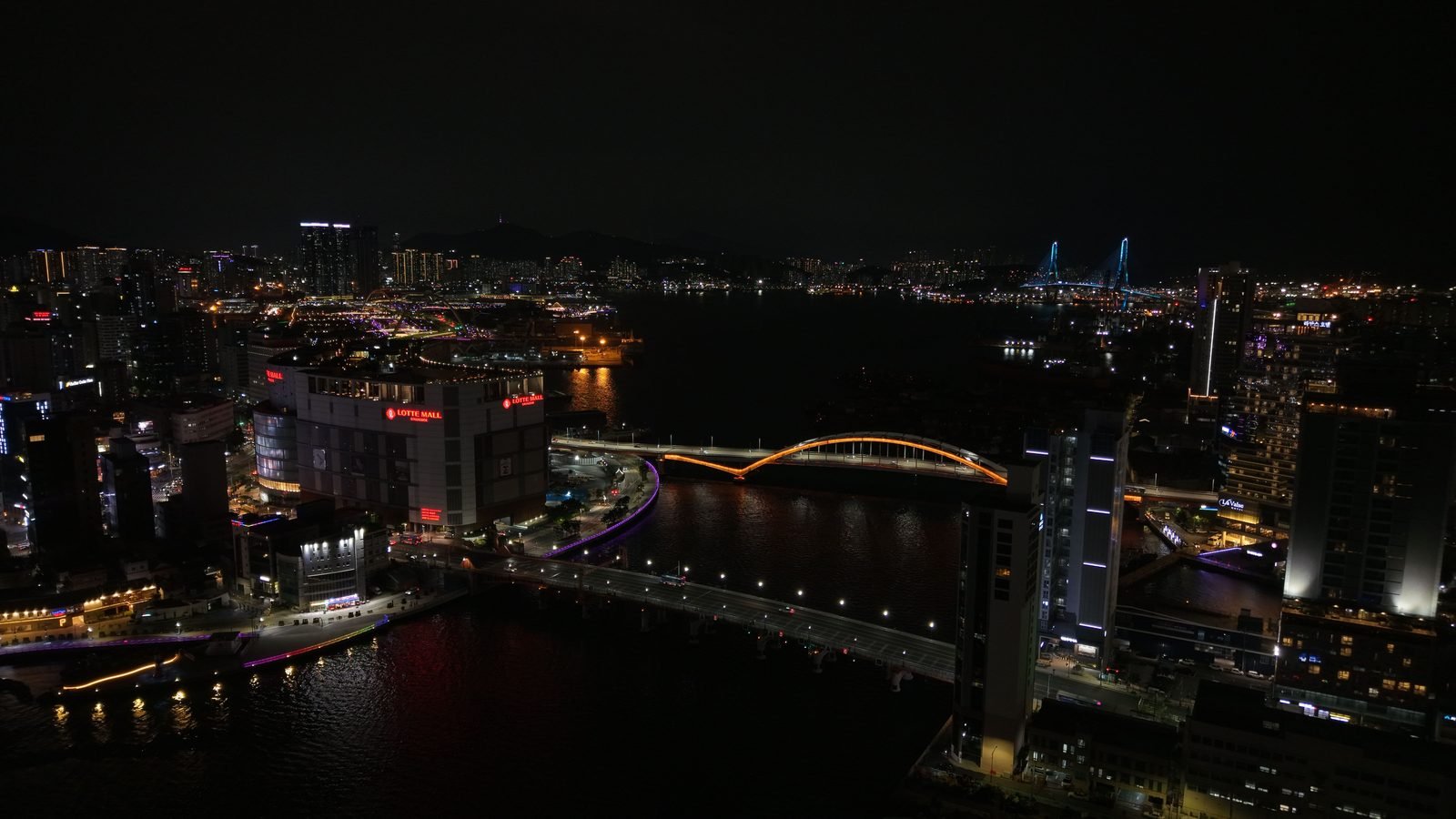
The KTX bullet train from Seoul pulls into Busan Station in just under two hours and forty minutes, dropping you right at the edge of the Korean Straits for roughly ₩59,800 (about $44). The air smells instantly different when you step onto the platform: salt water, grilled seafood, and humid sea breezes replace the dry concrete air of the capital. Busan moves slower than Seoul. It spreads wide along steep hillsides and jagged coastline, mixing urban grit with long stretches of sandy shoreline.
As someone living in Seoul who takes the train down to the coast every few months, I built this complete Busan 3 day itinerary to save you from spending half your trip trapped on city buses. We will cover whether to base yourself in Haeundae or Gwangalli, how to beat the morning crowds at Gamcheon, navigating transit easily, and where to eat real local pork soup without falling into tourist traps.
Planning your Busan 3 day itinerary: where to stay and base yourself
Choosing where to sleep in Busan determines how much time you spend riding public transit. Busan is not a compact city like Kyoto or Florence. It stretches nearly thirty kilometers along the coast from the historic port in the west to the upscale beach developments in the east. The main dilemma for first-time visitors comes down to picking between Haeundae Beach and Gwangalli Beach, or settling near Busan Station in the old center.
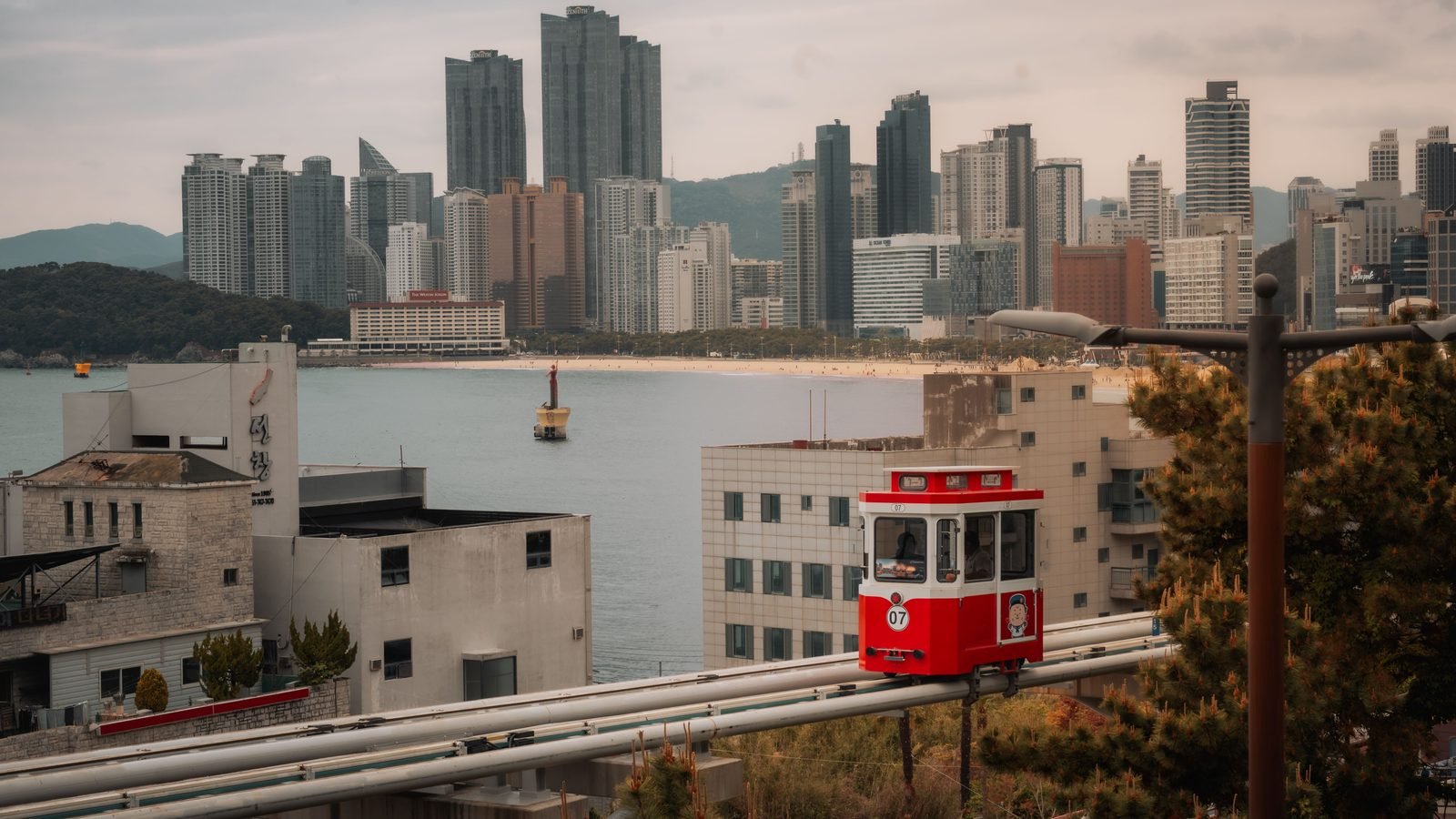
Haeundae suits travelers who want high-rise modern hotels, wide sandy beaches, and direct access to the Haeundae Blueline Park coastal trains. It sits on Metro Line 2, making it easy to travel westward toward the center, though getting to Gamcheon or Taejongdae from here takes around 60 minutes on transit. Rooms here skew slightly pricier, especially during summer weekends and the autumn movie festival.
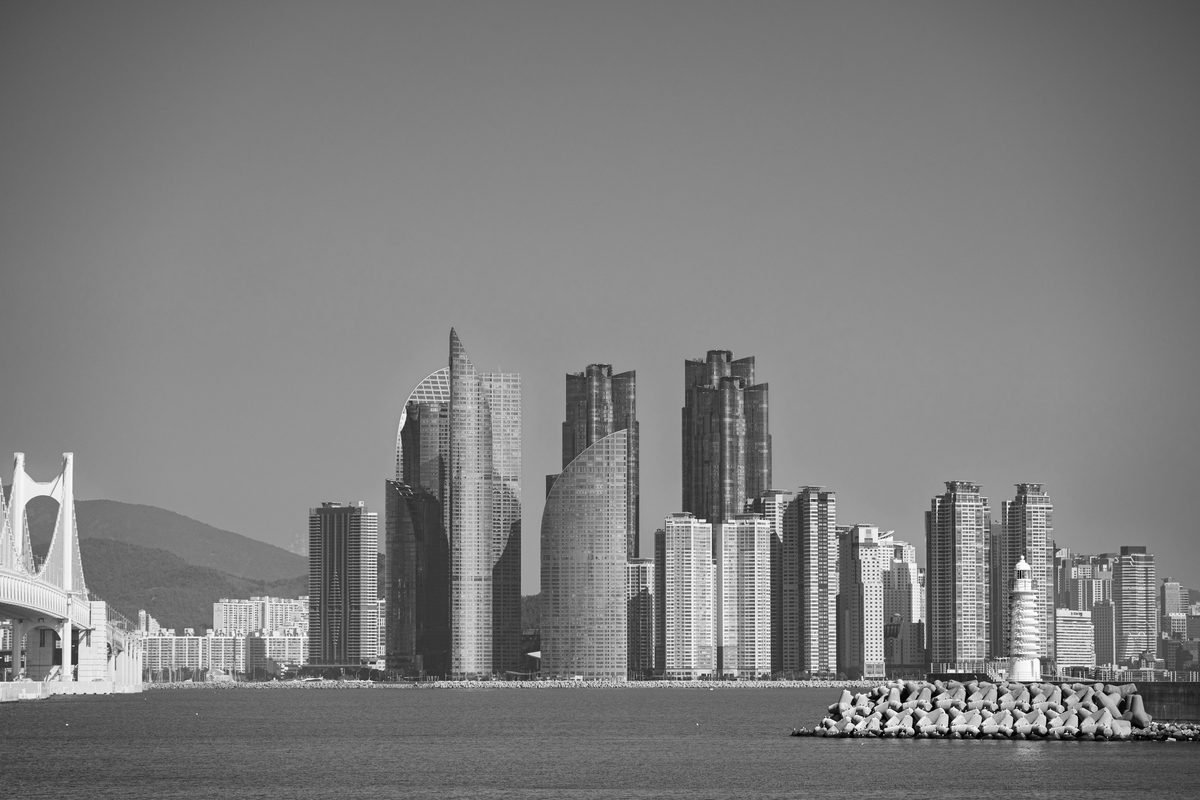
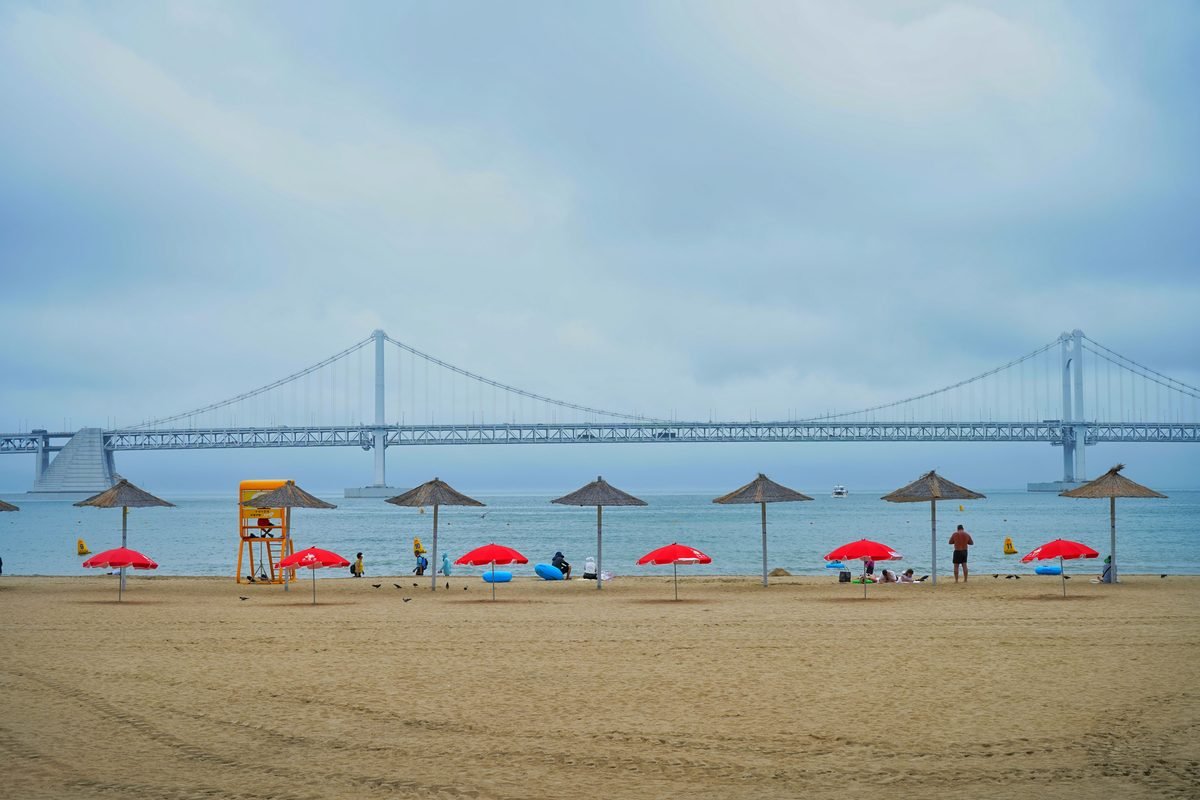
Gwangalli offers a younger, more energetic vibe centered around the iconic Gwangan Bridge. The night views across the water are unmatched, and the strip behind the beach is packed with craft beer bars, shellfish restaurants, and independent coffee shops. Gwangalli is centrally positioned along Line 2, cutting down travel times to both eastern coastal spots and western historical neighborhoods. If you prefer neighborhood atmosphere over resort towers, Gwangalli is your best choice.
For budget travelers or those taking early trains back to Seoul, the area surrounding Busan Station or Seomyeon is unbeatable for convenience. Seomyeon acts as the main transit interchange where Metro Line 1 and Line 2 cross, allowing you to reach almost any landmark within 35 minutes without transfers.
From a local: Local Insight
If you plan to stay in Gwangalli, book a hotel room with an explicit ‘Gwangan Bridge View’ high above the third floor; lower rooms are often blocked by street signs and seaside light poles.
When to visit Busan and seasonal travel tips
Busan experiences four distinct seasons, but its coastal position keeps winters milder and summers slightly cooler than inland Seoul. Timing your trip right makes a major difference in how comfortable your outdoor sightseeing will be, as much of this itinerary relies on cliffside walks, cable car rides, and open-air village exploration.
Autumn, running from late September through November, is hands-down the best period to visit. Temperatures hover between 15°C and 22°C (59°F to 72°F) with clear skies and low humidity. Early October brings the Busan International Film Festival (BIFF), turning Haeundae and Nampo-dong into lively outdoor screening hubs. Room rates spike during BIFF dates, so lock in accommodation well in advance if traveling in October.
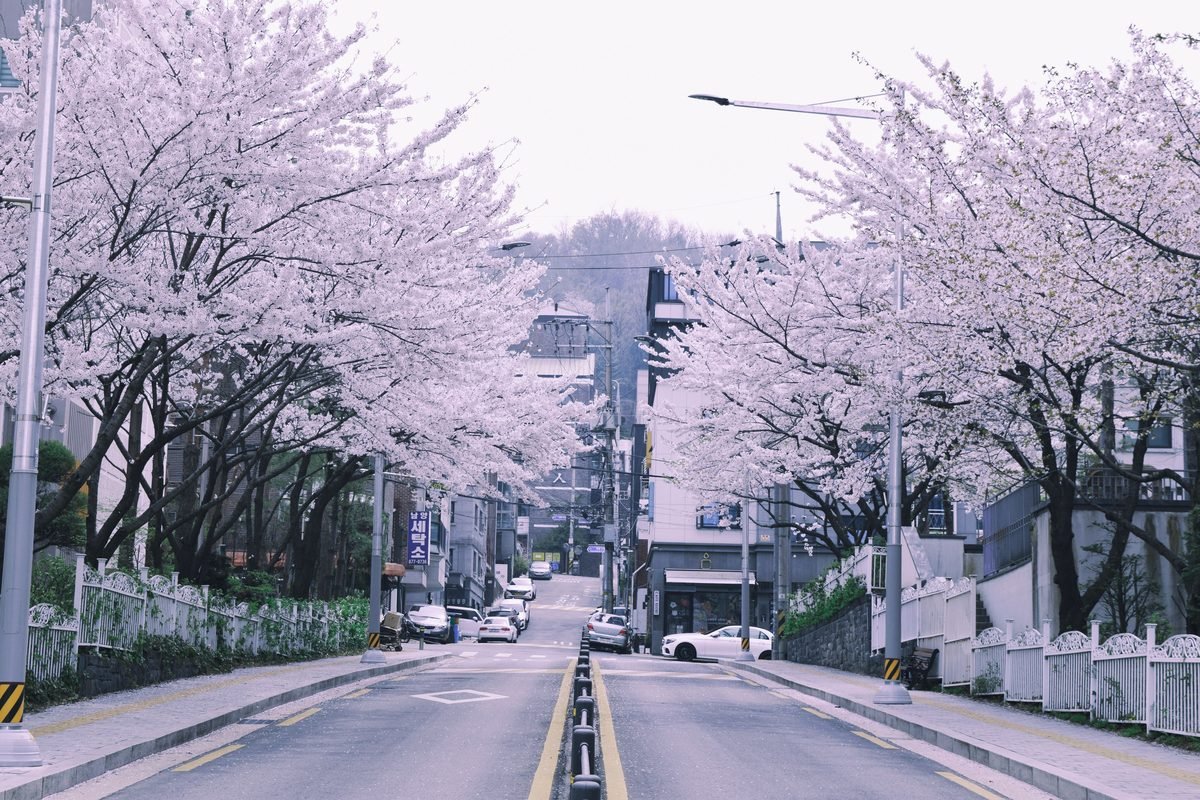
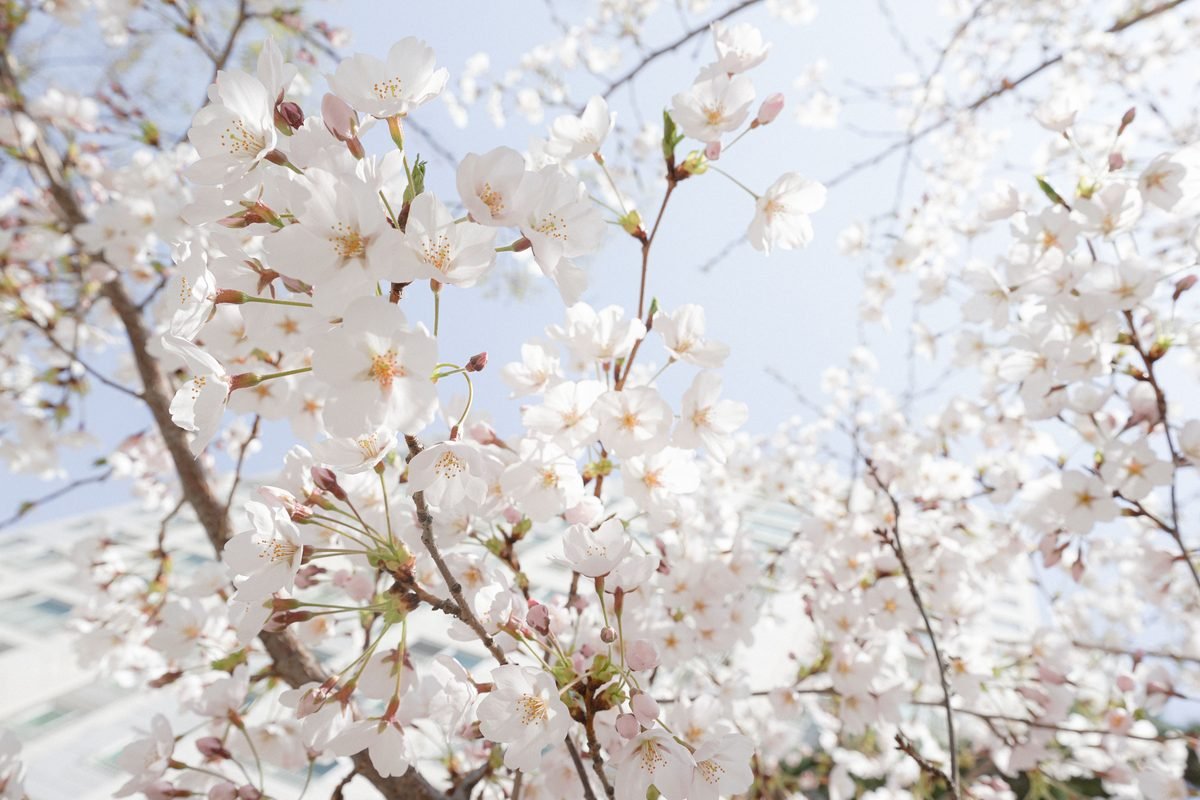
Spring brings cherry blossoms along Dalmaji-gil road near Haeundae starting in late March, lasting into early April. Temperatures are pleasant, though sea fogs can occasionally roll in during late morning. Summer (July and August) is peak domestic holiday season. The beaches get extremely crowded, and humidity stays high. August also brings typhoon risk to the southern coast, which can temporarily halt coastal trains and cable cars.
Winter from December through February stays dry and clear, with daytime highs around 5°C to 10°C (41°F to 50°F). While ocean swimming is out of the question, clear winter skies yield sharp ocean views, and winter hotel rates drop significantly across all districts.
Day 1: Gamcheon early, Songdo cable car, and Jagalchi dinner
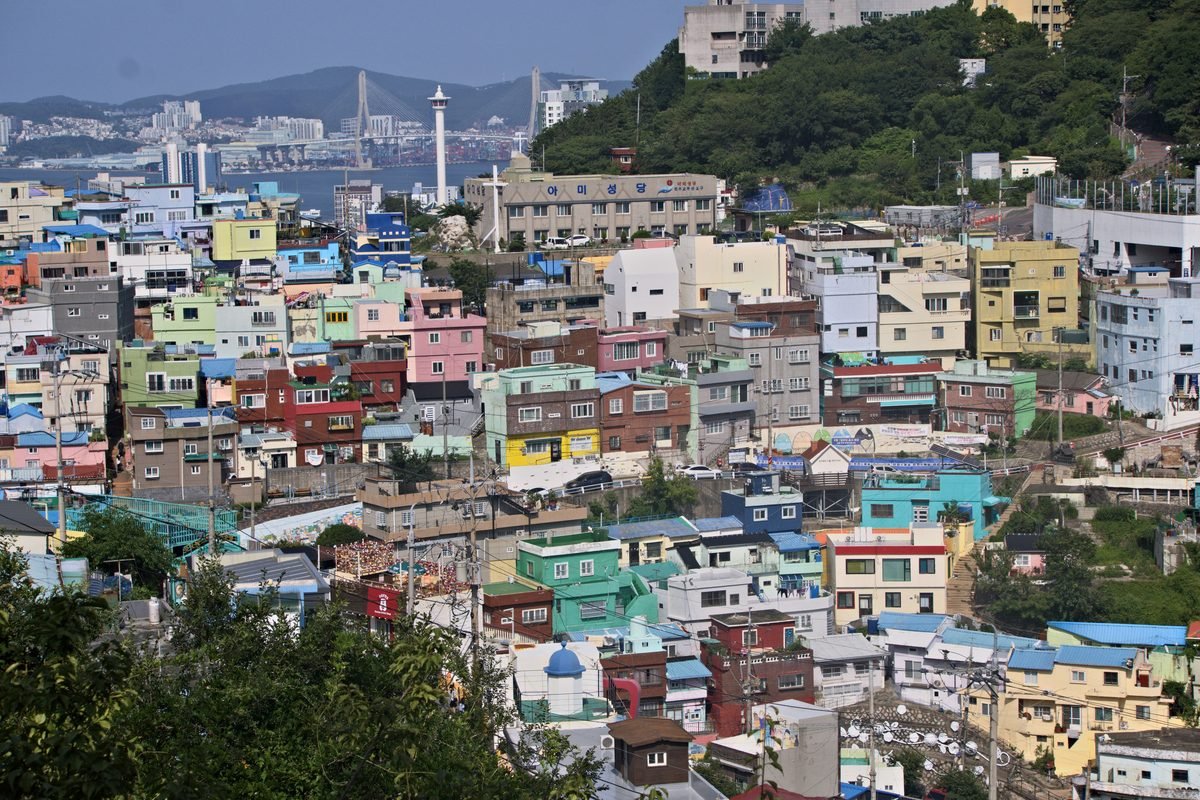
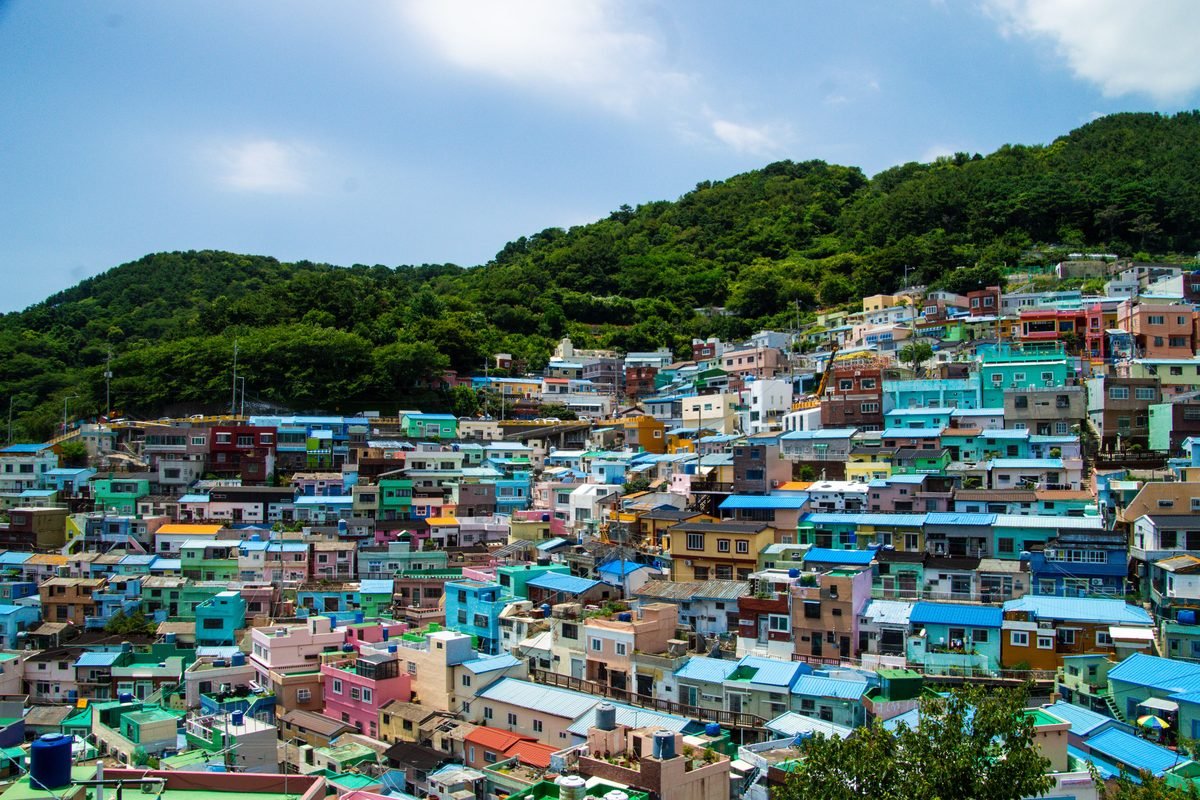
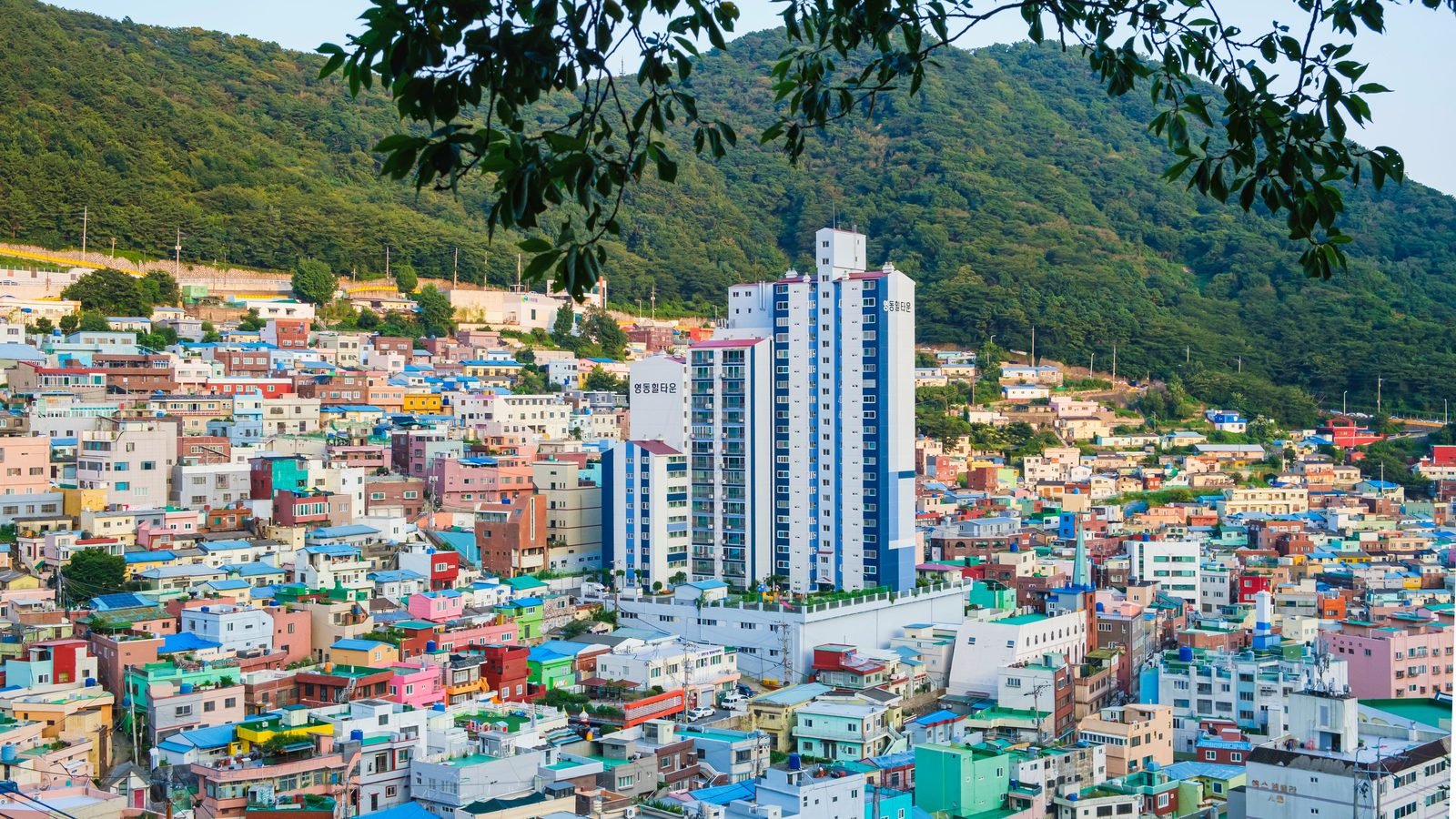
Start your first morning early to beat the tour buses at Gamcheon Culture Village. Take Metro Line 1 to Toseong Station (Exit 6), turn right around the corner, and ride local minibus Saha 1-1 or Seo-gu 2 up the steep grade to Gamcheon. Get there before nine. At 8:30 AM, the narrow staircases and pastel-colored houses are quiet, and local residents are just opening up their small shops.
Originally built as a refuge for fleeing families during the Korean War, Gamcheon was transformed into an art community in 2009. Pick up a map for ₩2,000 (about $1.50) at the main entry center to trace the stamp trail through winding alleys. Pack good walking shoes. The stone steps are uneven and surprisingly steep in sections.
By mid-day, catch a quick taxi for about ₩6,000 ($4.50) down to Songdo Beach. Here, board the Songdo Marine Cable Car (₩17,000 or $13 return for standard floor; ₩22,000 or $16.50 for glass crystal cabin). The cable car floats 86 meters above the water over a 1.6-kilometer stretch, connecting the beach to Amnam Park. Walk across the Songdo Yonggung Suspension Bridge at the top station for ₩1,000 ($0.75) to look directly down onto rocky islets.
End your day at Jagalchi Fish Market, South Korea’s largest seafood hub. Browse the ground floor tanks filled with live octopus, sea squirts, and king crabs. Head upstairs to the market restaurants or venture into the surrounding street market stalls. Order a plate of seasonal grilled fish or raw flounder served with spicy chili paste and fresh sesame leaves for roughly ₩25,000 ($19) per person.
Heads up: Respecting Residents
Gamcheon is a living neighborhood. Keep noise levels down, refrain from pointing cameras into open residential windows, and stay on designated public stairways.
Day 2: Taejongdae coastal cliffs, Yeongdo cafes, and Gwangalli lights
Morning of your second day takes you south to Yeongdo Island. Board bus 8, 30, or 88 from Nampo Station directly to the entrance of Taejongdae Resort Park. Entry to the park grounds is free. To save your legs on the hilly loop circuit, hop on the Danubi Train for ₩4,000 (about $3). The train loops through dense pine forests stopping at key viewpoints.
Hop off at the Yeongdo Lighthouse stop. Walk down the paved wooden staircases to the rocky coastal platforms where local grandmothers (haenyeo female divers) set up makeshift tents selling fresh sea cucumber and sea urchin sliced right out of the ocean. The view out across the Korea Strait toward Tsushima Island on clear days is spectacular.
After Taejongdae, take bus 82 or a ten-minute taxi ride to the Huinnyeoul Culture Village on the western cliff face of Yeongdo. This quiet seaside neighborhood features narrow alleyways perched directly over the sea wall, filled with independent roasteries and craft stores. Grab a seat early at one of the ocean-facing cafe balconies and enjoy a drip coffee for roughly ₩6,000 ($4.50).
As sunset approaches, cross the harbor back to Gwangalli Beach via Metro Line 2. Dine on fresh grilled clams (jogae gu-i) at one of the upper-floor restaurants along the beach promenade for about ₩50,000 ($38) for two people. Every Saturday night, Gwangalli hosts a spectacular drone light show over the water at 8:00 PM and 10:00 PM (winter times move an hour earlier). Night views here are fantastic.
Day 3: Haeundae Blueline Park, Cheongsapo, and Haedong Yonggungsa
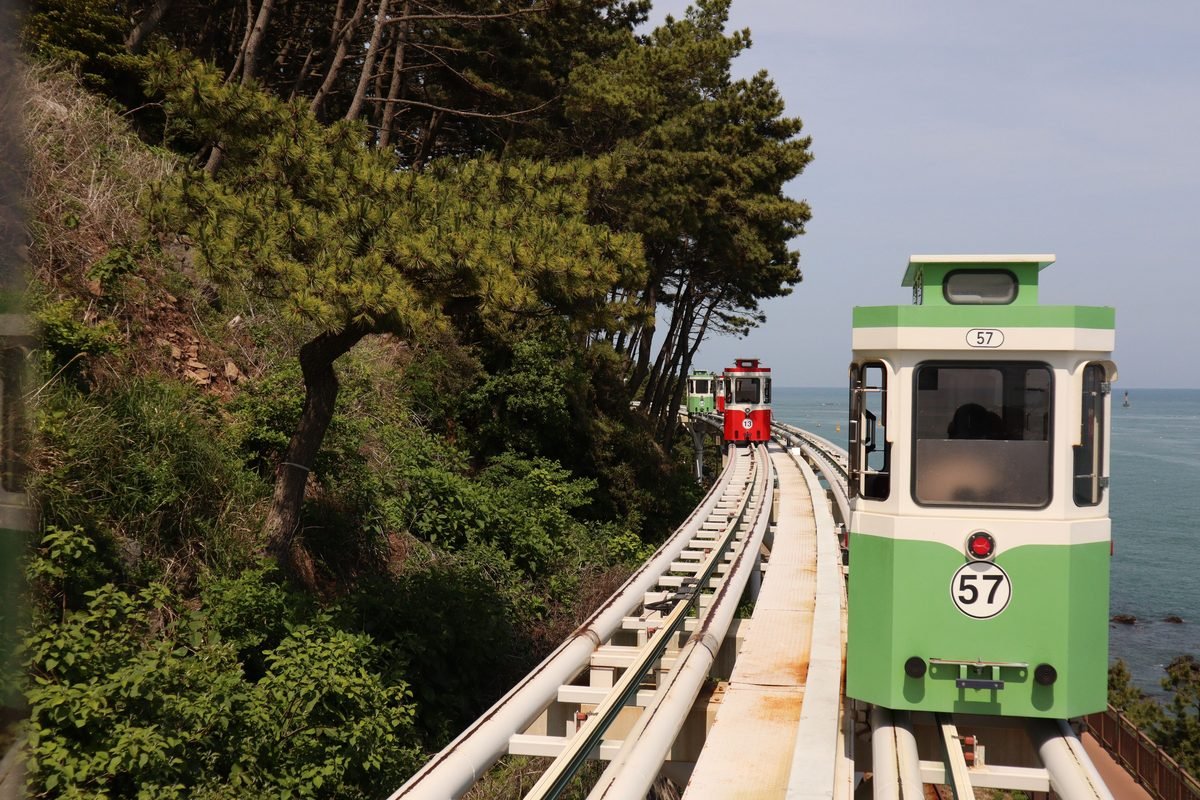
Dedicate your final day to Busan’s eastern coastline. Start at Haeundae Blueline Park (Mipo Station). The park operates two historic rail conversions: the ground-level Beach Train and the colorful elevated Sky Capsules running between Mipo and Songjeong. The coast train fills quickly. Take the Sky Capsule from Mipo to Cheongsapo (₩35,000 or $26 for two passengers one-way).
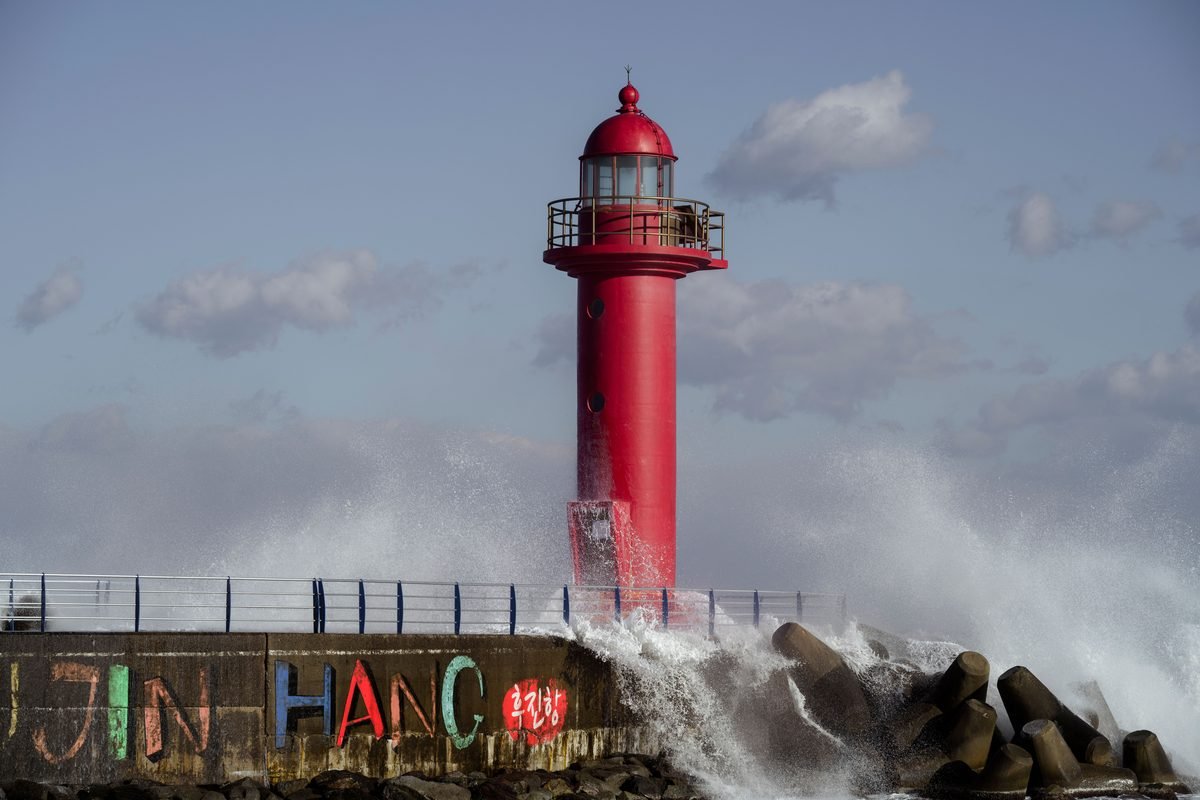
The Sky Capsule moves at a leisurely pace along the tree-lined coastline, offering uninterrupted views of the sea. At Cheongsapo, step out to explore the twin red and white lighthouses guarding the fishing harbor. Walk out onto the Cheongsapo Daritdol Skywalk, a glass-bottom deck extending 73 meters over the crashing surf (free admission, shoe covers provided).
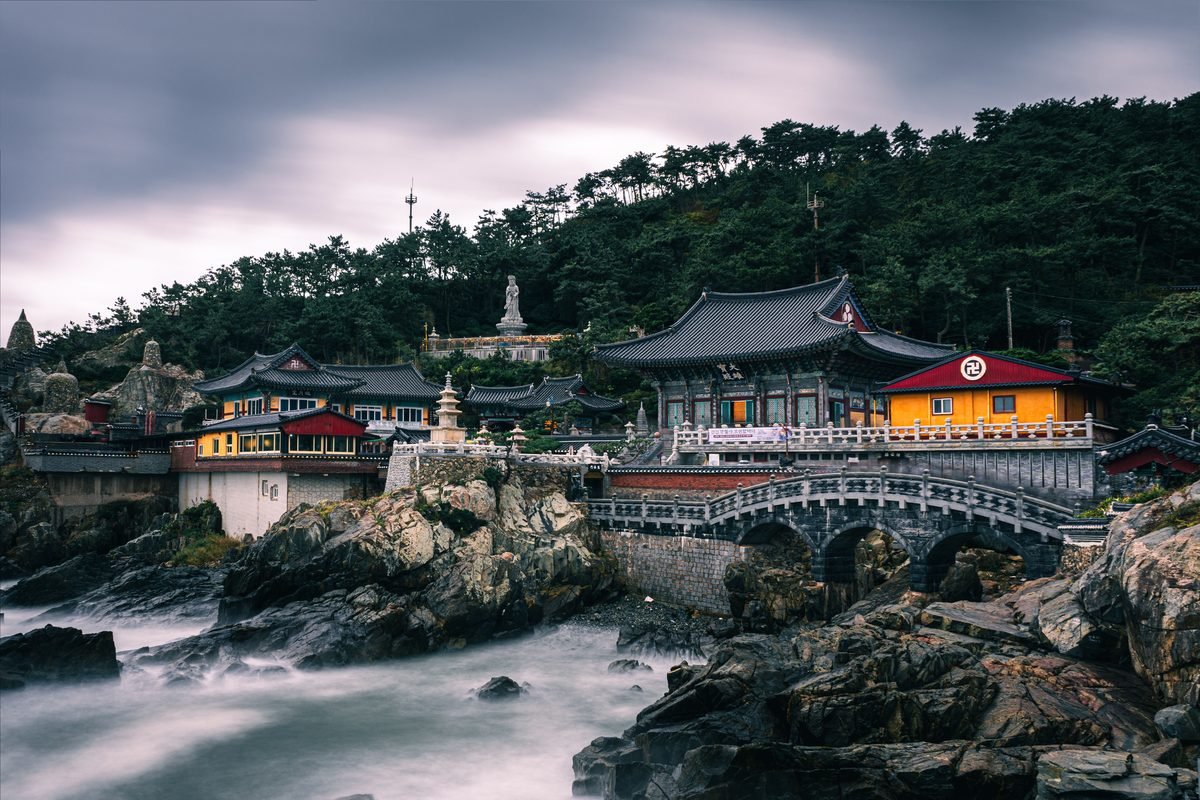
From Cheongsapo, take a 15-minute taxi (roughly ₩8,000 or $6) north to Haedong Yonggungsa Temple. Unlike most Korean temples hidden deep in mountain ranges, Yonggungsa was constructed directly on rugged granite ocean cliffs in 1376. Admission is free. Walk down the 108 stone steps flanked by stone lanterns to reach the main hall overlooking the water.
Wrap up your afternoon back at Haeundae Beach. Walk around Dongbaekseom Island’s coastal boardwalk path to see the Nurimaru APEC House and views of Haeundae’s high-rise skyline, before heading into the Haeundae Traditional Market for evening street foods.
Book ahead: Advance Tickets Essential
Reserve your Haeundae Sky Capsule online 2 to 3 weeks ahead via the official Blueline Park website; walk-up tickets for morning slots routinely sell out by 9:00 AM.
Where to eat in Busan: local pork soup and market specialties
Busan food is hearty, rustic, and distinct from Seoul cuisine. The city’s signature dish is dwaeji gukbap (pork soup), a rich broth simmered for hours from pork bones, served with tender sliced pork, salted shrimp, chives, and rice. Head to Seomyeon Food Alley or Sinchang Gukbap near Jagalchi to try a authentic bowl for roughly ₩9,000 to ₩10,000 ($6.75 to $7.50). Stir in fermented shrimp and fresh chives right into the boiling broth before taking your first bite.
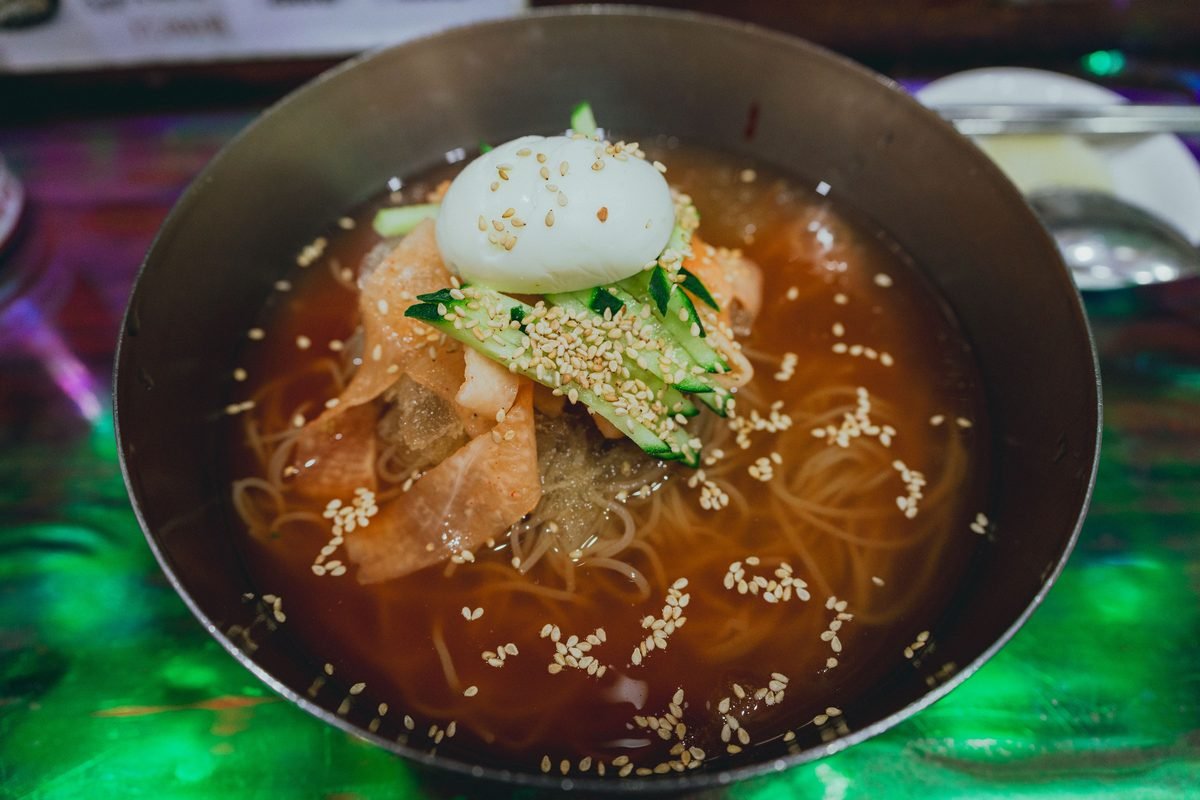
Another Busan original born during wartime food shortages is milmyeon (wheat cold noodles). Made with wheat flour instead of traditional buckwheat, these springy noodles are served in an ice-cold beef broth infused with Korean medicinal herbs and topped with spicy cucumber, boiled egg, and sliced pork. A bowl costs about ₩8,500 ($6.40) at famous spots like Gaegeum Milmyeon.
For evening street snacks, head to BIFF Square in Nampo-dong. Look for the yellow stalls selling ssiat hotteok (seed-stuffed pan-fried sweet pancakes). Unlike Seoul’s flat sugar hotteok, Busan cooks cut the fried dough open and stuff it full of toasted sunflower, pumpkin, and sesame seeds with brown sugar syrup for ₩2,000 ($1.50). Taxis are cheap here, so hopping between market neighborhoods is quick and stress-free.
Busan logistics: transit cards, taxis, and essential apps
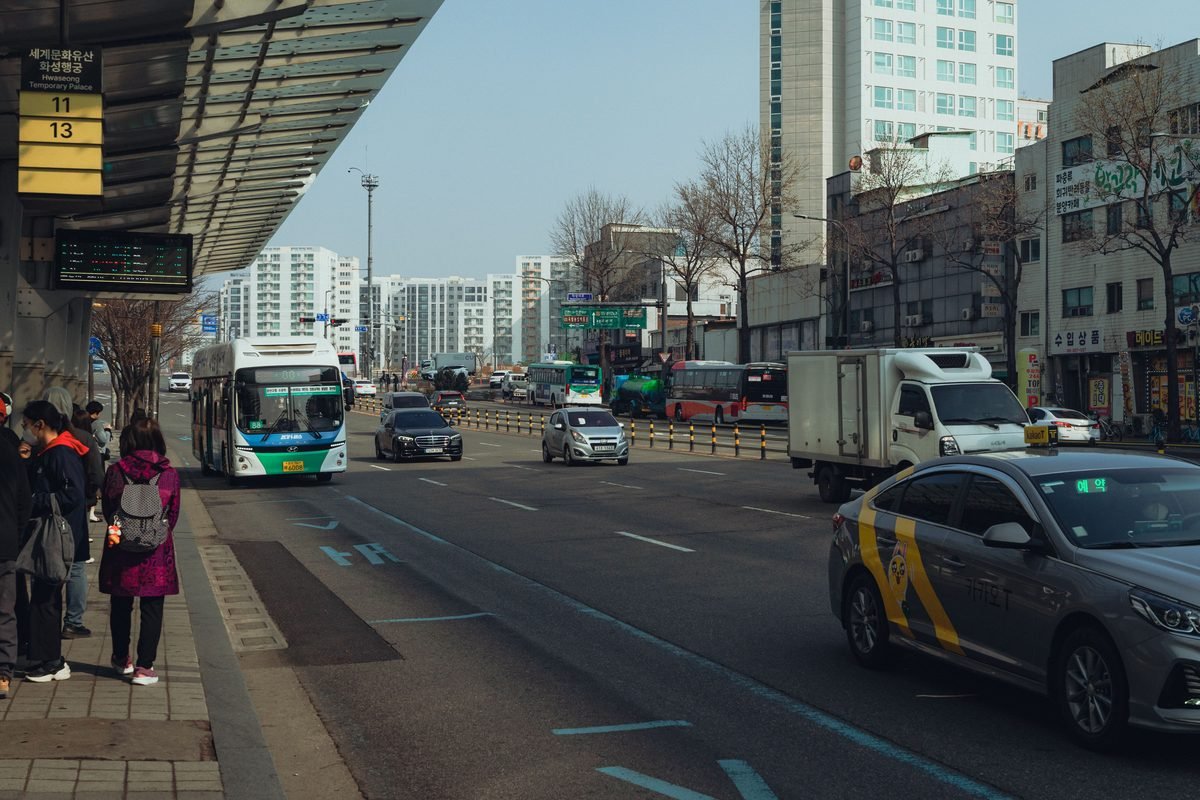
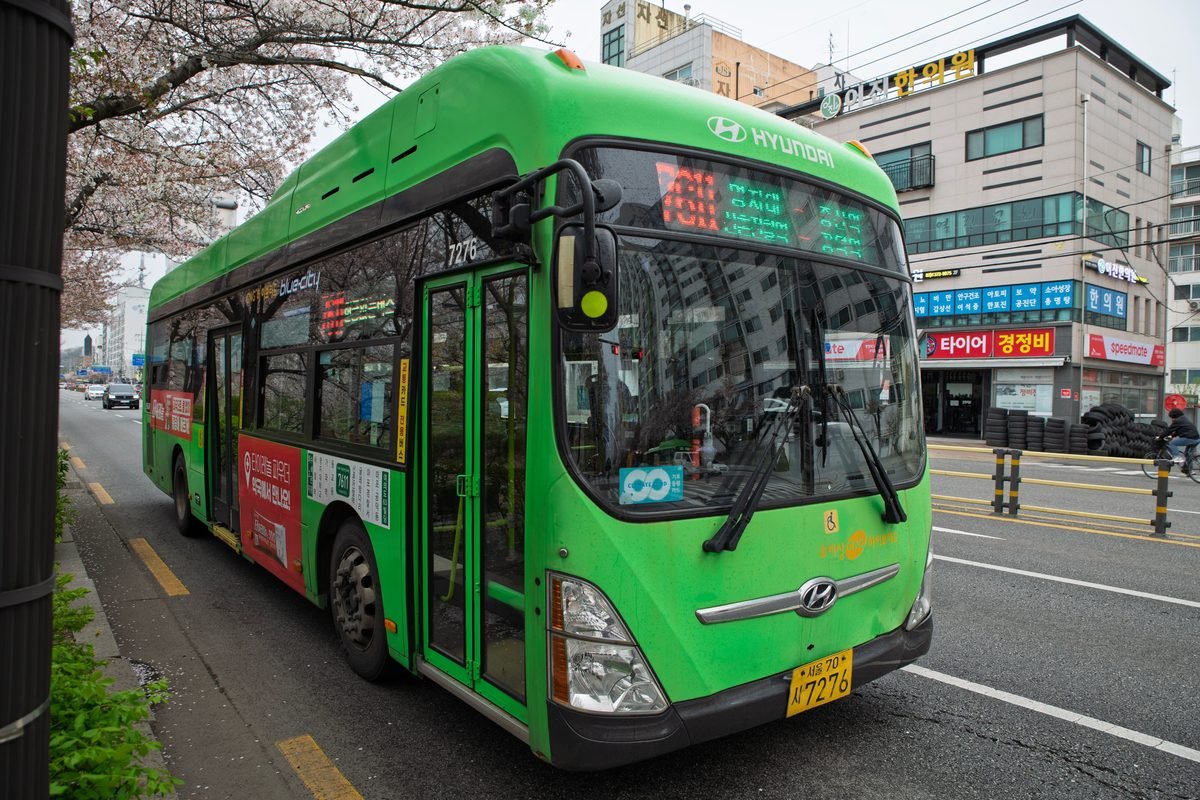
Navigating Busan requires an understanding of local transit options. The Busan Metro system consists of four main lines plus the Light Rail connecting Gimhae International Airport to Line 2 at Sasang Station. A blank T-money card purchased at any 7-Eleven or convenience store for ₩4,000 (about $3) works seamlessly across Busan subway gates and buses. The base fare for Busan subway is ₩1,600 (about $1.20) using a card.
Avoid relying on Google Maps for walking or public transit routes in South Korea; map data is restricted by national security laws, leading to inaccurate walking routes and missing bus updates. Download Naver Map or KakaoMap instead. Both support full English text search, live bus arrivals, and exact subway exit numbers.
Taxis in Busan are affordable and easy to flag down. The base fare starts at ₩4,800 (about $3.60). Kakao T is the standard ride-hailing app in South Korea; select ‘Pay to Driver’ in the app to use your international physical credit card directly with the driver.
For entry paperwork into Korea, travelers exempt from visa requirements can submit an online e-Arrival Card at e-arrivalcard.go.kr within three days of arrival, or complete a simple paper arrival card at the airport. Check the current exemption list for the K-ETA program if traveling through late 2026, as 22 countries remain temporarily exempt from filing the fee.
Tip: Navigation Pro-Tip
In Naver Map, save your hotel and destination names in Korean characters (Hangul) alongside English; taxi drivers often prefer seeing the written destination in Korean on your phone screen.
What it costs in Busan
| Item | Local price | USD |
|---|---|---|
| KTX Train Seoul to Busan (One-way standard seat) | ₩59,800 | $44.00 |
| Busan Metro & Bus daily transit (T-money usage) | ₩6,000 | $4.50 |
| Songdo Marine Cable Car (Standard cabin return) | ₩17,000 | $13.00 |
| Haeundae Sky Capsule (One-way 2-person capsule) | ₩35,000 | $26.00 |
| Bowl of Dwaeji Gukbap (Pork soup) | ₩9,500 | $7.10 |
| Mid-range coastal hotel (per night) | ₩110,000 | $82.00 |
| Average Daily Total per person (excl. long train) | ₩85,000 | $64.00 |
Prices checked September 2026. Always confirm with the provider before you book.
Where to stay in Busan
Budget
A modern business hotel near Busan Station
Ideal for train travelers wanting instant KTX access and fast Metro Line 1 transit to Gamcheon and Jagalchi for ₩55,000–₩80,000 ($41–$60) per night.
Mid-range
A seaside hotel overlooking Gwangalli Beach
Perfect for couples and social travelers who want Gwangan Bridge night views and doorstep access to beach cafes for ₩100,000–₩150,000 ($75–$112) per night.
Splurge
A luxury high-rise hotel on Haeundae Beachfront
Suits travelers seeking ocean-facing infinity pools, full spa services, and direct access to Blueline Park for ₩280,000–₩450,000 ($210–$338) per night.
Mistakes to avoid
- Booking Haeundae Sky Capsule tickets on the day of travel instead of 2-3 weeks online in advance.
- Relying on Google Maps for walking routes or bus schedules instead of downloading Naver Map or KakaoMap.
- Visiting Gamcheon Culture Village after 11:00 AM when tour buses clog narrow footpaths.
FAQ
How many days do you need for a Busan 3 day itinerary?
Three days is the ideal timeframe to see Busan without feeling rushed. It gives you enough time to cover the historic west (Gamcheon and Jagalchi), the central coast (Yeongdo and Gwangalli), and the scenic east (Haeundae and Haedong Yonggungsa).
Is it better to stay in Haeundae or Gwangalli?
Stay in Gwangalli if you want great night views of the lit-up bridge, local craft breweries, and a central location along Metro Line 2. Choose Haeundae if you prefer upscale international hotels, wide open beaches, and immediate access to the Blueline Park trains.
How do I get from Seoul to Busan?
The fastest method is the KTX high-speed train from Seoul Station or Yongsan Station to Busan Station. It takes roughly 2 hours and 40 minutes and costs about ₩59,800 ($44) each way.
Can I use my Seoul T-money card in Busan?
Yes, T-money cards work nationwide across all subway lines, local buses, and taxis in Busan. You can top up your card at any convenience store or subway station ticket machine.
Is Busan walk-friendly?
Certain districts like Haeundae Promenade or Gwangalli Beach are very walkable, but Busan as a whole is too spread out to explore purely on foot. Combine subway rides, short taxi journeys, and local buses to cover ground efficiently.

One Comment