Tongyeong Jungang Market Dried Seafood Guide: What to Buy

The sharp scent of ocean brine and toasted sesame fills the air along Tongyeong’s harbor front at sunrise. Salted fish hang on twine lines above wooden bins filled with silver anchovies, while vendors call out daily prices in southern dialect. If you are planning a trip to South Korea’s southern coast, this Tongyeong Jungang Market dried seafood guide covers everything you need to navigate the harbor markets, sample honey bread, and head up Mireuksan peak.
As a Seoul local who regularly travels down to South Gyeongsang Province, I built this guide for independent travelers looking for authentic coastal food and clear logistics. We will look at bus routes, market etiquette, street snacks, cable car timing, and practical costs so you can plan your trip smoothly.
Inside the dried seafood alleys and the market layout
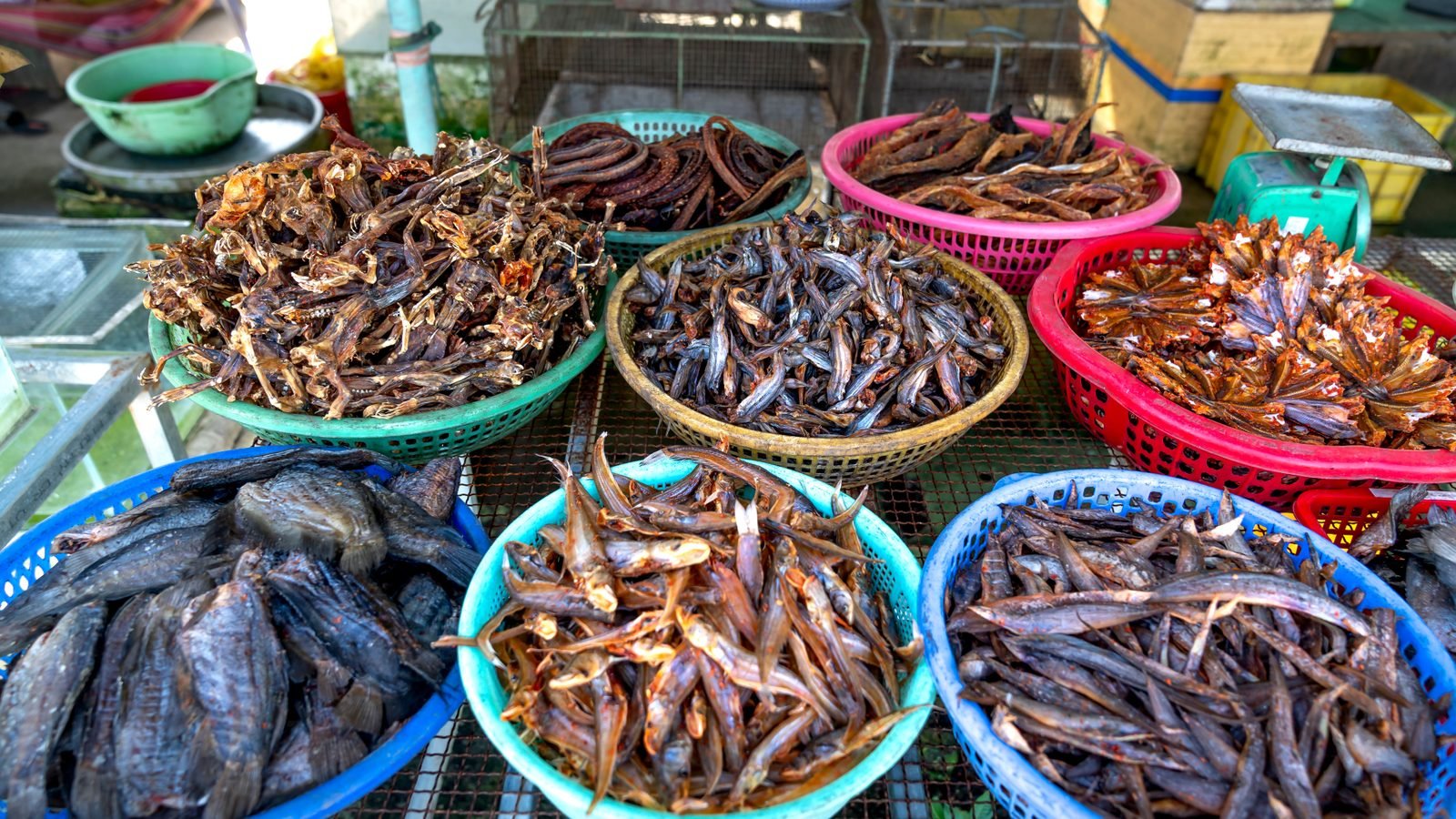
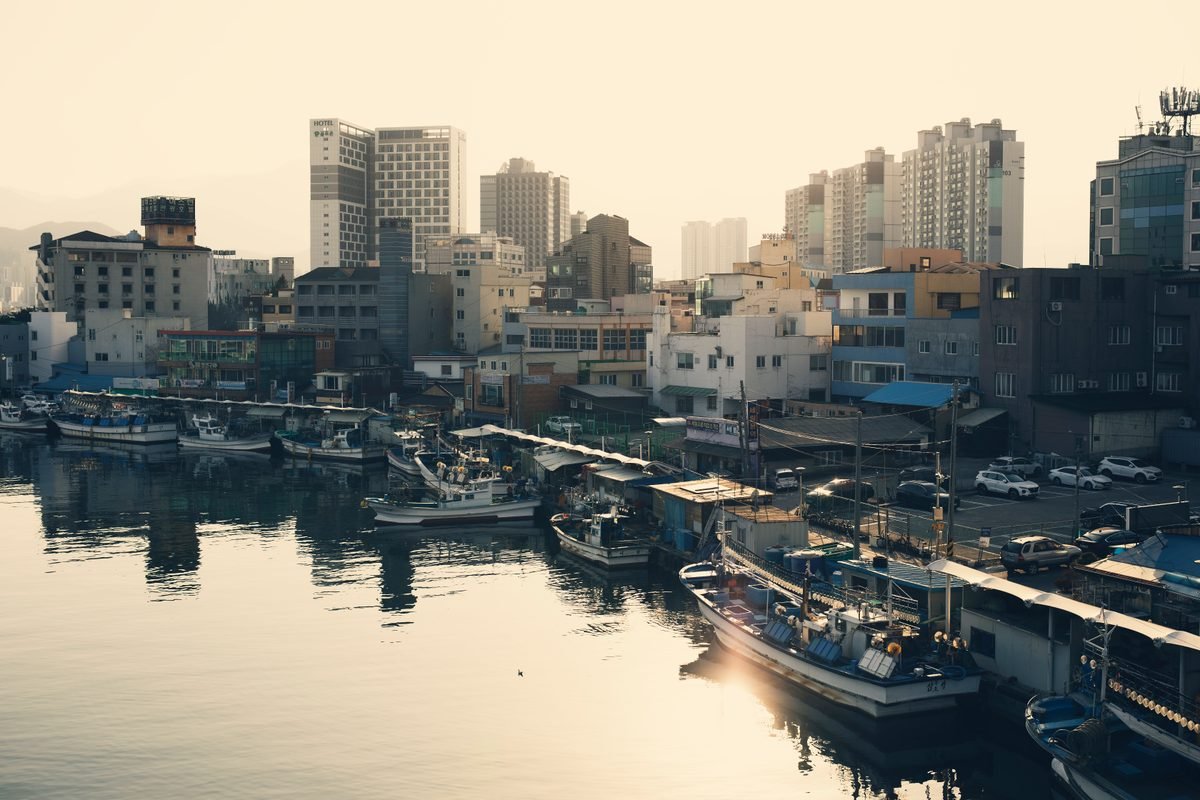
Tongyeong Jungang Traditional Market sits directly along the Donghoe-dong harbor front, serving as South Korea’s premier hub for ocean produce. The dry goods section forms the market’s commercial backbone, filled with dozens of specialized vendor stalls displaying wooden crates and mesh bags of dried seafood. Wandering through these lanes reveals why coastal South Gyeongsang Province is famed for marine harvesting.
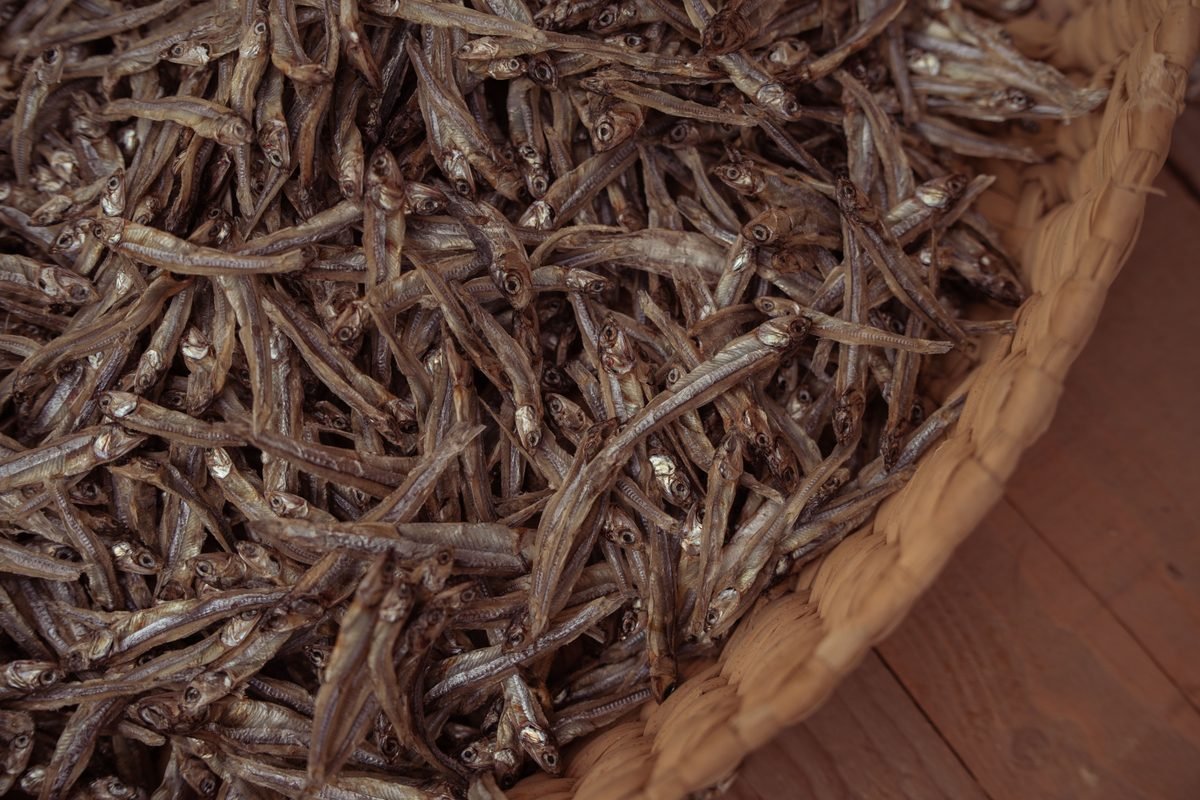
The star product here is dried anchovy (myeolchi), harvested from the clean coastal waters of the Hallyeohaesang archipelago. Anchovies are sorted strictly by size and intended culinary use. Large anchovies (Dae-myeol) are used for rich soup broths and cost roughly ₩15,000 to ₩25,000 (about $11-$18) for a standard 1kg box. Medium anchovies (Jung-myeol) serve as braising ingredients, while tiny fry-sized anchovies (Se-myeol) are stir-fried with honey and nuts for daily side dishes, priced around ₩20,000 to ₩30,000 (about $15-$22) per kilogram.
Quality indicators are easy to spot once you know what to look for. Freshly dried anchovies possess a clean silver sheen, intact heads, and a firm texture without excess powdery residue. Vendors regularly offer small handfuls to taste before buying. Alongside anchovies, stalls display dried squid, shredded pollock, dried sea squirts, and salted seaweed packets.
Shopping here is straightforward even for non-Korean speakers. Most vendors display prices clearly per weight box, and prices are fixed across stalls. When purchasing multiple boxes, vendors often throw in a small extra sample bag (known locally as deom) as a gesture of goodwill. Packets are vacuum-sealed upon request, making them clean and odor-free for long bus trips back to Seoul or Busan.
From a local: Selecting Anchovies like a Local
Look for silver sheen and intact heads when buying dried anchovies. Vendors will happily let you taste a sample before choosing a box size.
Navigating fresh fish stalls and local kkulppang
Beyond the dry seafood alleys lies the energetic wet market, where fishermen deliver daily catches directly to harbor dock stalls. Plastic tubs filled with circulating seawater display live flounder, rockfish, sea bream, octopus, and sea squirts. Watching market vendors skillfully process fish on wooden cutting boards is a core Tongyeong experience.
Dining on raw fish (hoe) at Jungang Market follows a traditional system. First, choose live fish from a wet market vendor, paying roughly ₩30,000 to ₩50,000 (about $22-$37) for a generous platter suitable for two people. Next, the vendor directs you to a nearby chojang-jib—an informal dining restaurant located upstairs or in adjacent alleys. For a small table service fee of roughly ₩5,000 (about $3.70) per person, the restaurant provides leafy wraps, garlic, dipping sauces, and rice. For an extra ₩10,000 (about $7.40), they will transform your leftover fish bones into a piping hot pot of spicy fish soup (maeuntang).
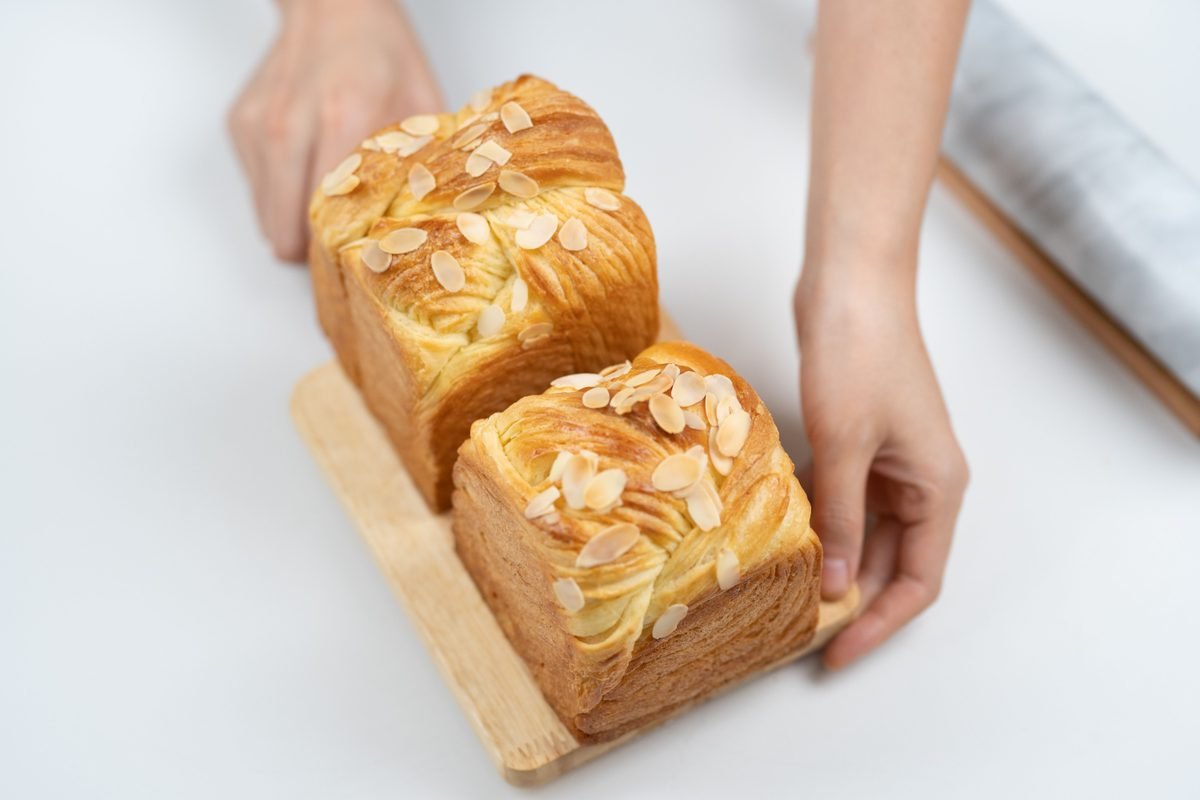
After finishing your seafood meal, step out onto Ganghan-gil along the harbor to find bakeries selling Tongyeong Kkulppang (honey bread). Created in the 1950s as a durable treat for sailors, these fried sweet dough balls are filled with sweetened red bean paste, sweet potato, or green tea filling. They are coated in sticky malt syrup and sprinkled with toasted sesame seeds. A box of ten costs between ₩12,000 and ₩15,000 (about $9-$11).
The dough remains chewy without absorbing too much syrup. Long queues form outside historic bakeries like Omi Sa Kkulppang and Myeongga Kkulppang throughout the afternoon. Sampling a hot, fresh honey bread right along the harbor embankment offers the perfect balance after a savory seafood lunch.
Tip: Chojang-jib Table Rules
When buying raw fish in the market, ask the vendor to guide you to their partner chojang-jib restaurant to ensure a table without waiting.
How to get to Tongyeong from Seoul and Busan
Tongyeong does not have a train station, so intercity express buses are the primary way to reach the city using public transit. Direct express buses depart frequently from Seoul Express Bus Terminal (located on Subway Lines 3, 7, and 9) bound for Tongyeong Intercity Bus Terminal. About fifteen departures run each day, the first at 07:00 and the last at 23:00, so plan on roughly one an hour rather than turning up on spec.
The highway trip from Seoul takes about 4 hours and 10 minutes. No plain standard-coach grade is left on this route: an udeung seat, three across instead of four, costs ₩38,600 (about $29), and premium coaches with wide reclining leather seats cost more again, with fares edging up on weekends and holidays. Booking tickets online via the KOBUS platform or purchasing at terminal vending machines with foreign credit cards is straightforward. If you are calculating overall trip expenses, reviewing a Korea travel budget per day helps factor in regional transit costs across South Korea.
Travelers coming from Busan have an even shorter journey. Direct buses leave every 15 to 20 minutes from Busan Seobu Terminal at Sasang Station. The direct run down the coastal expressway takes about 1 hour and 20 minutes and costs ₩13,900 (about $10) one way; services that call at towns along the route take closer to 2 hours at ₩14,900 (about $11), and an udeung seat is ₩18,000 (about $13).
Upon arrival at Tongyeong Intercity Bus Terminal in Gwangdo-myeon, local city buses run south toward the harbor every ten minutes for a flat fare of ₩1,650 (about $1.22) with a transit card or ₩1,700 (about $1.26) in cash, and one onward transfer is free if you tap again within the hour. Taxis wait outside the arrival terminal doors. A ride directly to Jungang Market takes around 15 minutes and costs approximately ₩9,000 to ₩11,000 (about $6.60-$8.10). Using ride-hailing apps makes getting around simple.
Riding the cable car to Mireuksan peak
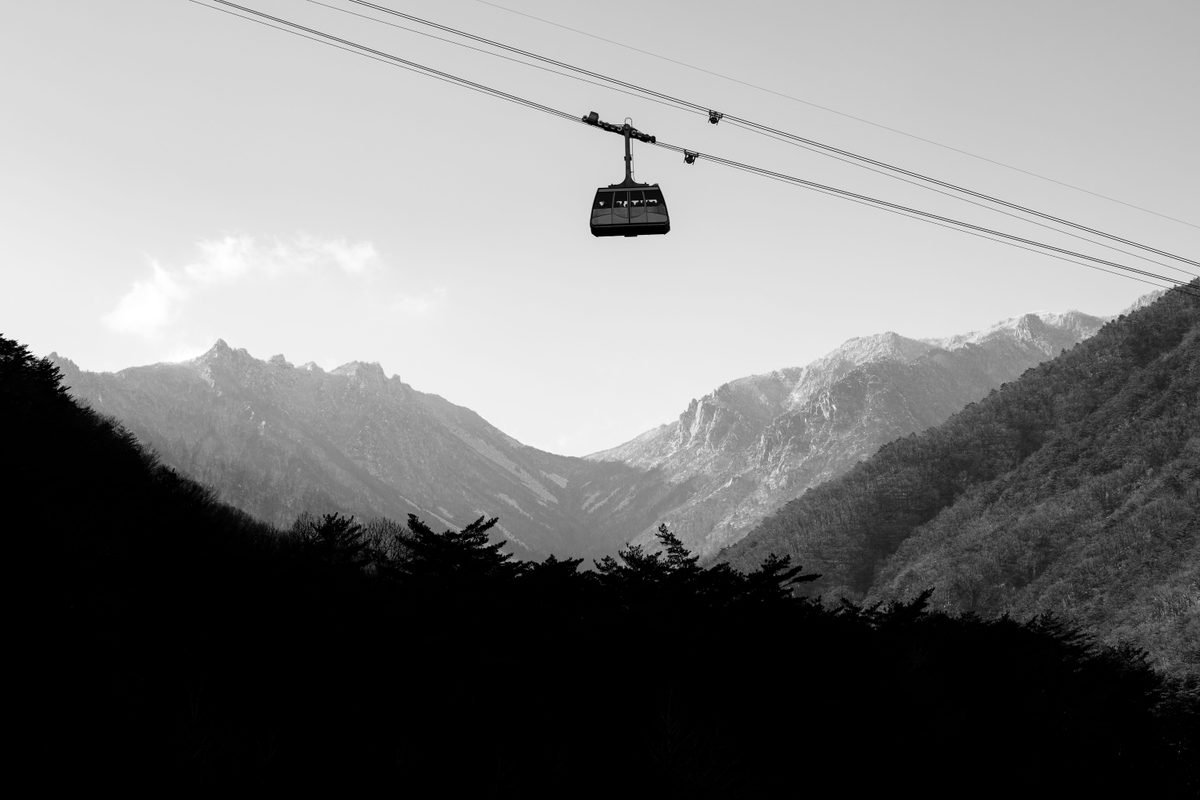
To appreciate Tongyeong’s dramatic coastal setting, head south across the harbor bridge to the Hallyeosudo Viewing Ropeway on Mireukdo Island. Spanning 1,975 meters, this continuous cable car system transports visitors up the slopes of Mireuksan Mountain in about ten minutes. A round-trip adult ticket costs ₩17,000 (about $12.60) and a child ticket ₩13,000 (about $9.60); one-way fares are ₩13,500 and ₩11,000. Travel pages still quoting ₩14,000 for an adult are out of date, because that is now the over-65 rate.
As the cabin glides over dense pine forest, panoramic views of the harbor and distant archipelago begin to unfold. Upon reaching the upper cable car station, clean wooden boardwalk stairs lead up toward the summit of Mireuksan Peak at 461 meters above sea level. The walk takes roughly 15 to 20 minutes of steady uphill climbing with multiple observation decks along the trail.
The summit views are exceptional. On clear days, you look out over dozens of forested islands scattered across the blue waters of Hallyeohaesang National Park. Historic signboards mark the spot where Admiral Yi Sun-sin commanded naval battles during the 16th century Imjin War.
To avoid long lines, plan your visit before 10:00 AM or late in the afternoon when tour groups disperse. High winds or thick coastal fog can lead to sudden operations suspensions, so checking weather forecasts before traveling south from the city center is smart. Combine your cable car trip with the nearby Skyline Luge Tongyeong located right at the base station for an active full-morning itinerary.
Heads up: Check Wind Conditions First
Mireuksan Cable Car stops operating during high coastal winds. Check daily operating status with your hotel or local tourist info before riding out.
Where to eat local specialties in Tongyeong
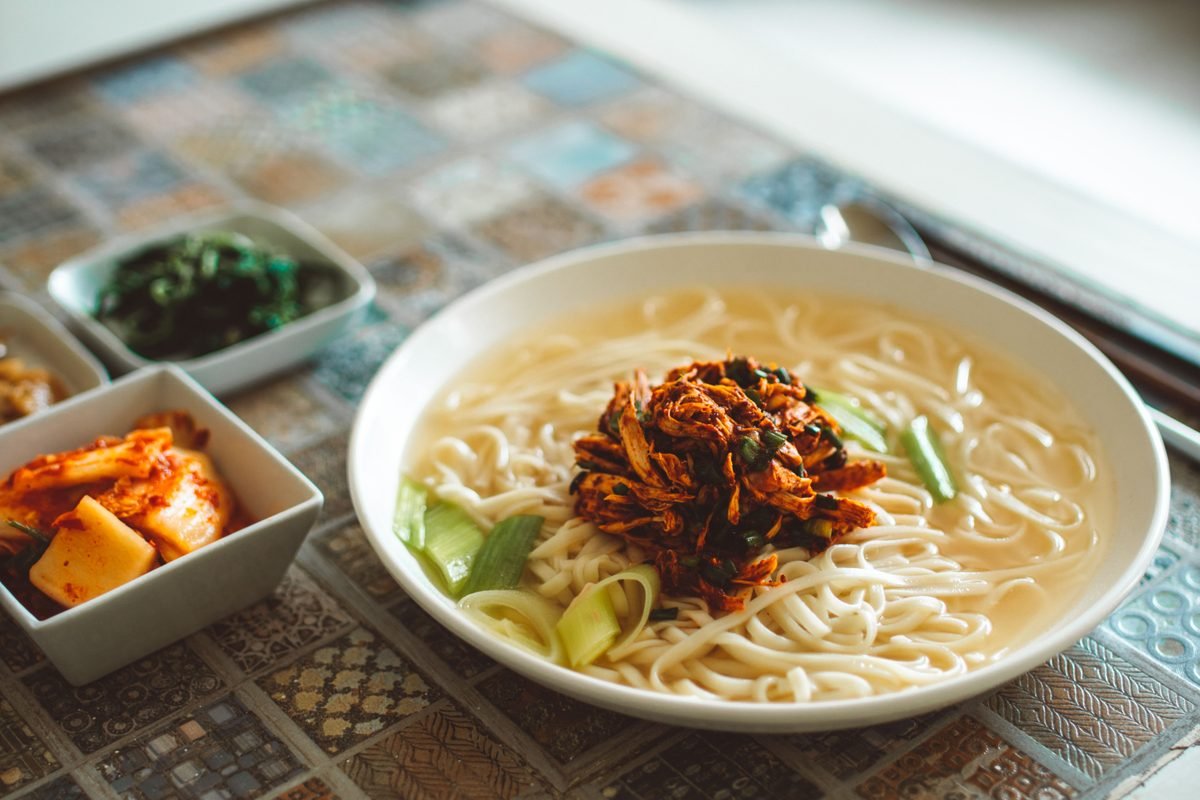
Tongyeong’s food culture extends well beyond fresh raw fish platters and honey bread. The city’s most famous everyday dish is Chungmu Gimbap, named after Chungmu, the historic name for Tongyeong. Unlike standard Korean gimbap rolls packed with pickled vegetables and meat, Chungmu Gimbap consists of bite-sized, plain rice rolls wrapped in crisp laver seaweed, served with spicy stir-fried baby squid and seasoned radish kimchi (kkakdugi).
This simple dish originated in the mid-20th century. Local fishermen’s wives crafted plain rice rolls paired with heavily spiced side dishes that would not spoil during long, hot days at sea. Today, a single portion costs around ₩6,000 to ₩7,000 (about $4.40-$5.20). Long-standing restaurants along Ganghan-gil harbor like Fat Grandma Gimbap (Tungbo Halmoni Gimbap) serve these traditional portions on classic paper-lined trays.
Another regional delicacy is Meongge Bibimbap (sea squirt bibimbap). Fresh sea squirt meat is chopped and lightly cured, then tossed over warm rice with sesame oil, seaweed flakes, and fresh greens for roughly ₩13,000 to ₩16,000 (about $9.60-$11.80). The dish carries a distinctive, aromatic iodine scent loved by seafood enthusiasts.
If you are visiting during spring, try Dodari Ssukguk, a seasonal soup made with tender flounder fish and freshly harvested mountain mugwort. The gentle herb broth highlights the fresh flavor of local fish without heavy spices. Tongyeong seafood is exceptionally fresh.
Practical tips for exploring coastal Tongyeong
Navigating Tongyeong efficiently requires basic ground preparations. Cash remains helpful when purchasing small bags of snacks or bargaining at minor dry seafood stalls, although almost all established fish vendors accept major credit cards for purchases over ₩10,000 (about $7.40).
Digital navigation is essential for smooth travel. Naver Map or KakaoMap should be downloaded prior to your departure for local navigation in South Korea. If you are deciding between mapping apps for transit schedules, our Naver Map vs Kakao Map guide covers exact setup steps for English interfaces.
Footwear choices matter greatly when exploring market harbors. Wet market lanes around Jungang Market are routinely washed down with ocean water, creating damp conditions underfoot. Wear closed-toe shoes with sturdy rubber grips to avoid slipping.
If you plan to explore the broader region, consider pairing Tongyeong with neighboring islands. Our comprehensive Tongyeong and Geoje Island guide details bus connections across the Geoje Bridge and coastal hiking trails. Luggage storage lockers are available at the Tongyeong Intercity Bus Terminal for ₩2,000 to ₩4,000 (about $1.50-$3.00), allowing you to explore the harbor hands-free before checking into your hotel.
What it costs in Tongyeong
| Item | Local price | USD |
|---|---|---|
| Seoul to Tongyeong express bus (udeung, one way) | ₩38,600 | ~$29 |
| Busan (Sasang) to Tongyeong bus | ₩13,900 | ~$10 |
| Tongyeong Cable Car round trip (adult) | ₩17,000 | ~$12.60 |
| Dried anchovies 1kg box (Jungang Market) | ₩15,000–₩30,000 | ~$11–$22 |
| Box of 10 Tongyeong Kkulppang (honey bread) | ₩12,000–₩15,000 | ~$9–$11 |
| Chungmu Gimbap portion | ₩6,000–₩7,000 | ~$4.40–$5.20 |
| Fresh raw fish dinner with chojang-jib cover | ₩35,000–₩55,000 | ~$26–$41 |
| Mid-range hotel near harbor (per night) | ₩80,000–₩130,000 | ~$59–$96 |
Prices checked October 2026. Always confirm with the provider before you book.
Where to stay in Tongyeong
Budget
Tongyeong Harbor and Jungang Market area, for budget guesthouses within walking distance of the fish market
Staying near Ganghan-gil harbor puts you steps away from early morning seafood stalls, Chungmu gimbap shops, and local city bus stops. Expect basic private rooms or guesthouse dorms ranging from ₩35,000 to ₩60,000 (about $26-$44) per night.
Mid-range
Donam-dong and Cable Car Plaza, for comfortable mid-range harbor view hotels near the Mireuksan ropeway
This waterfront district sits south of the main harbor, providing easy access to the cable car station and the coastline promenade. Nights run between ₩80,000 and ₩140,000 (about $59-$103) for modern rooms with ocean views.
Splurge
Mireukdo Island Resort zone, for upscale ocean-facing resort hotels near Kumho Tongyeong Marina
Located along the southern bay, this area suits travelers looking for spacious suites, seaside biking paths, and full resort amenities. Expect rates between ₩180,000 and ₩320,000 (about $133-$237) per night during peak season.
Mistakes to avoid
- Assuming Tongyeong has a KTX train station and failing to book intercity bus tickets in advance during Korean holidays.
- Visiting Mireuksan Cable Car on windy days without checking operational status beforehand.
- Expecting wet market vendors to prepare raw fish without taking it to a chojang-jib table.
- Buying unsealed dried seafood for long travel days instead of requesting vacuum sealing from vendors.
FAQ
How do I get to Tongyeong from Seoul without a car?
You can take a direct express bus from Seoul Express Bus Terminal directly to Tongyeong Intercity Bus Terminal. The ride takes about 4 hours and 10 minutes and costs ₩38,600 (about $29) for an udeung seat, or more for a premium coach.
What is dried seafood from Tongyeong best used for?
Tongyeong is famous across South Korea for dried anchovies, which come in various sizes for stock making, stir-fries, and side dishes. Medium and small anchovies are the ones to take home as gifts, and vendors will vacuum-seal them at the stall.
How much does a box of Tongyeong honey bread cost?
A traditional box of ten Tongyeong Kkulppang (honey bread) usually costs between ₩12,000 and ₩15,000 (about $9-$11) at harbor bakeries. They stay fresh at room temperature for two to three days.