Gyeongju Local Food and Hwangridan-gil Guide

At 09:30 on a crisp morning in Hwangnam-dong, the steam coming off the brass ovens smells like roasted barley and caramelized red bean paste. Across the asphalt, the rounded green mounds of Daereungwon rise above the rooflines, silent and enormous. Gyeongju was the capital of the Silla kingdom for nearly a thousand years, but today its historic quarter is one of the most exciting dining districts in South Korea, centered on the low-slung tile rooftops of Hwangridan-gil.
This gyeongju local food and hwangridan-gil guide is written for independent travelers who want to skip gimmick snacks, track down the authentic bakeries, and sit down to real banchan spreads. Whether you are coming in on a weekend day trip from Busan or spending several nights exploring the ancient capital, here is everything you need to know about the city’s signature pastries, sprawling ssambap feasts, courtyard cafes, and evening rice wine houses.
Gyeongju Local Food and Hwangridan-gil Guide: The Alley Layout
Hwangridan-gil runs along Poseok-ro in Hwangnam-dong, a quiet residential area that once sat frozen in time due to strict preservation laws surrounding the neighboring royal tumuli. Because residents could not build high-rise concrete apartments, hundreds of mid-century single-story hanok homes survived intact. Over the past decade, young chefs, baristas, and craft brewers moved into these courtyards, turning a sleepy neighborhood into Gyeongju’s main culinary corridor.
The main thoroughfare spans roughly one kilometer, running north from the edge of Hwangnam Elementary School up toward Daereungwon Tumuli Park. If you stay strictly on Poseok-ro, you will encounter the heaviest foot traffic and standard souvenir stalls. The real charm hides in the perpendicular residential lanes, particularly Sonhyo-ja-gil and the alleys branching west toward Sajong-dong. In these quiet residential corridors, stone walls draped in persimmon branches shield tranquil courtyard eateries from the weekend crowds.
Timing your walk is essential. Most cafes and dining rooms along Hwangridan-gil do not unlock their wooden gates before 11:00. Arriving at 09:00 means you get completely empty alleys for photography, but your food options will be limited to early-morning pastry counters. By 13:00 on Saturdays, the central lane packs tight with domestic travelers. If you are structuring a wider trip around our Gyeongju 2 Day Itinerary, plan your sit-down lunches between 11:30 and 12:15 to beat the tablet waitlist rushes.
Getting here from Singyeongju KTX Station takes about 20 minutes by taxi for roughly ₩15,000 (about $11), or 30 minutes on local buses 700, 50, or 51 for ₩1,450 (about $1.10) tapping your transit card, or ₩1,500 in cash. Drop off your luggage first. Narrow hanok alleys and roller bags do not mix well.
Tip: Use CatchTable for Waitlists
Popular eateries on Hwangnam-dong use CatchTable or paper tablet stands at the door. Register your Korean mobile number or select the email check-in option to wander the side alleys while holding your place in line.
Hwangnam bread buying guide: finding the real red bean pastry
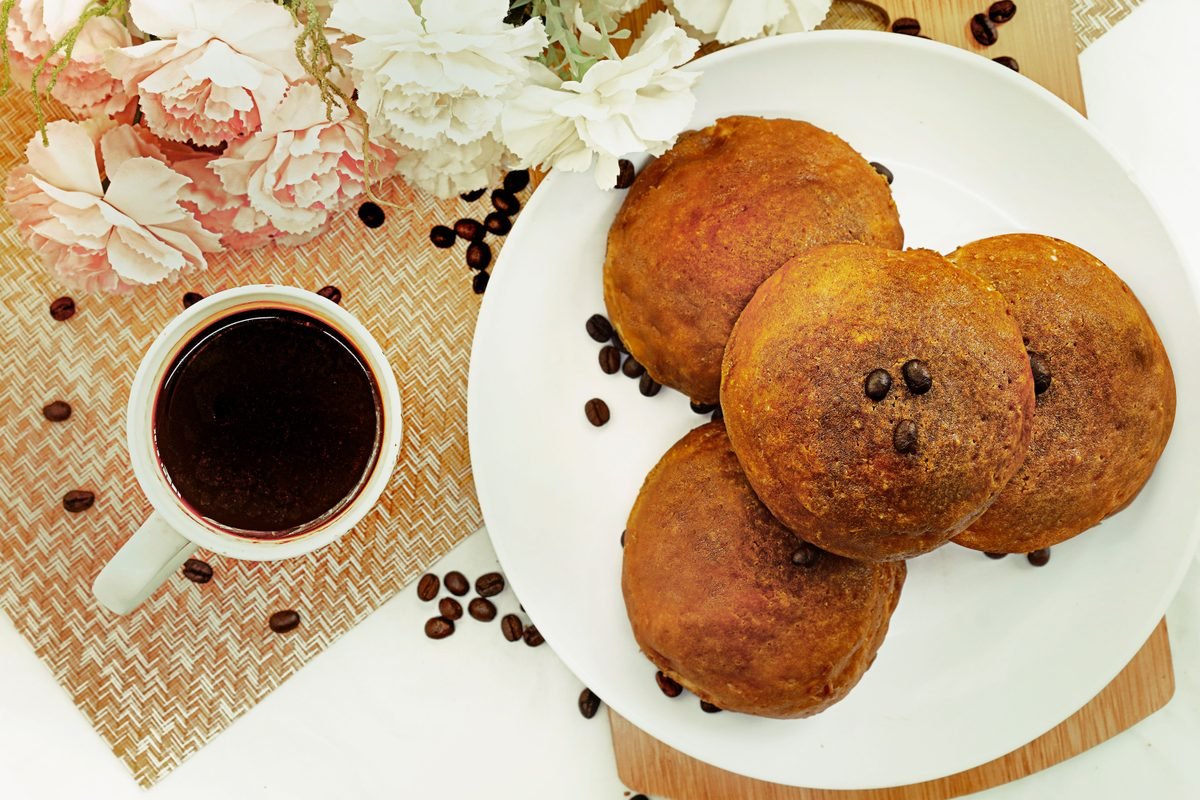
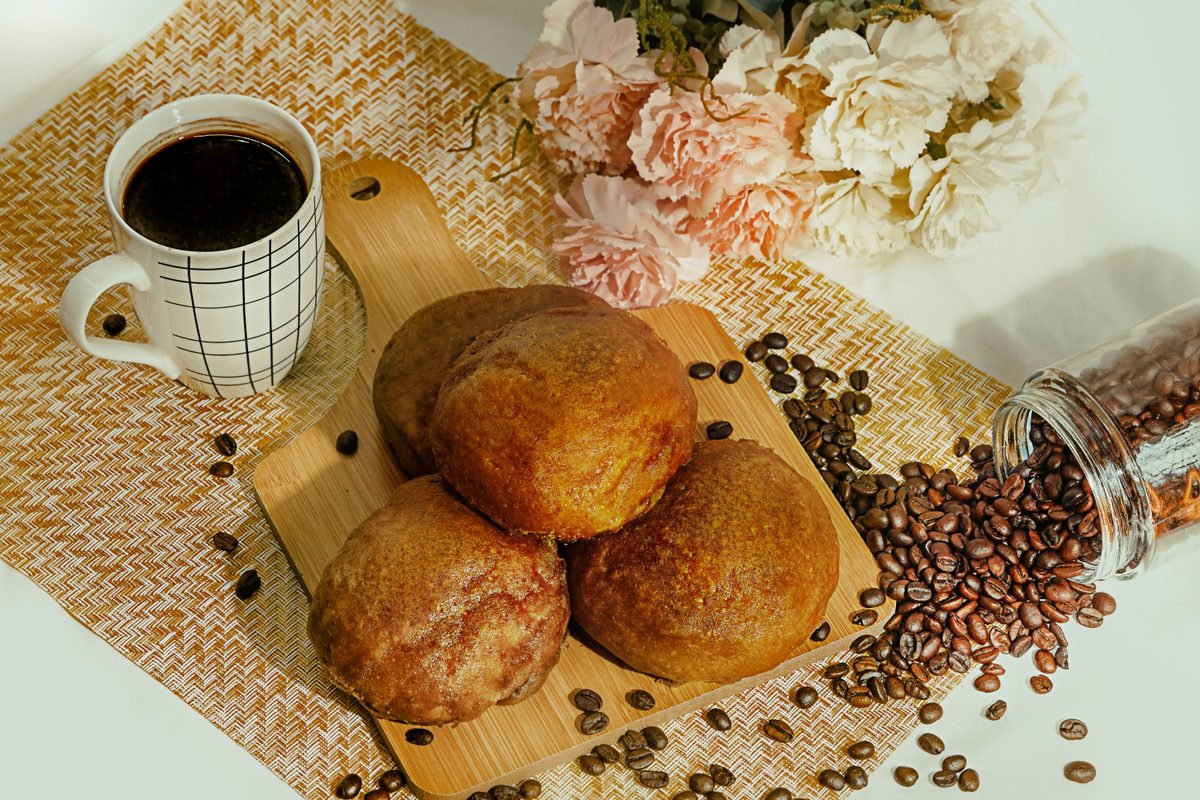
You cannot talk about Gyeongju food without understanding Hwangnam bread (Hwangnam-ppang). Created in 1939 by baker Choi Yeong-hwa, this palm-sized pastry is the city’s undisputed culinary symbol. It consists of a paper-thin pastry crust made from wheat flour and eggs wrapped around a massive sphere of dense, smooth red bean filling. The crust is paper thin. The filling is not cloyingly sweet, letting the earthy flavor of domestic adzuki beans lead.
Because the name became synonymous with the city, dozens of knock-off bakeries line the avenues. To taste the original lineage, you have two primary destinations. The flagship Hwangnam-ppang store sits at the junction of Taejong-ro and Wonhyo-ro, running an open-kitchen assembly line where dozens of bakers hand-crimp each pastry with a wooden chrysanthemum stamp. The second is Choi Yeong-hwa Bread, operated by the founder’s direct descendants on Bukbu-dong. Both use 100 percent Korean adzuki beans, which produce a noticeably smoother, less sugary paste than cheaper commercial bakeries that rely on imported beans.
A box of 20 pieces at the original bakery costs ₩20,000 (about $15), while a smaller 10-piece box sells for ₩10,000 (about $7.50). You can also buy single, piping-hot pastries straight from the oven for ₩1,000 (about $0.75) each at the counter. Eat at least one on the sidewalk while the outer shell retains its delicate, biscuit-like snap.
A related local specialty is chalboribbang (glutinous barley bread). Resembling miniature pancakes sandwiched with a light smear of red bean paste, these are made using locally grown barley from Gyeongju’s dry fields. They are moist, slightly chewy, and less dense than Hwangnam bread, making them an ideal afternoon coffee snack at roughly ₩1,000 (about $0.75) a piece.
From a local: Freezing Your Red Bean Pastries
Fresh Hwangnam bread lasts only three days at room temperature. Freeze extras immediately when you reach your room, then eat them semi-frozen straight from the freezer for a texture remarkably like red bean ice cream.
Ssambap set meals: the historic feast beside the burial mounds
After an active morning walking through ancient tombs, nothing satisfies like a proper table of ssambap (leaf wrap rice). Gyeongju’s Ssambap Alley, running along Poseok-ro and the western perimeter of Daereungwon, has fed hungry pilgrims and travelers for decades. This is not a fast meal. It is an expansive banquet that completely covers your table with small ceramic bowls.
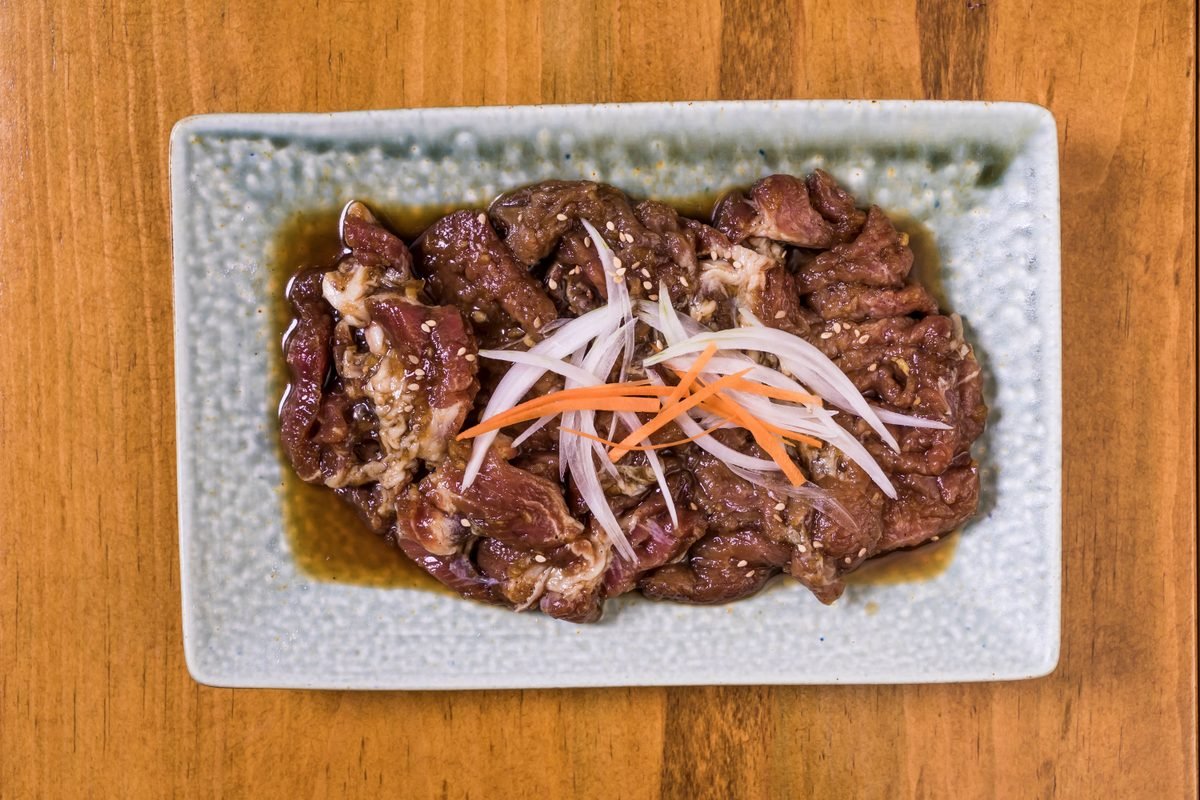
When you order a ssambap set, the server brings out a large wicker platter piled high with fresh and steamed leaves. You will find standard red leaf lettuce and perilla alongside steamed pumpkin leaves, blanched cabbage, kelp sheets, and wild chicory. Alongside the greenery comes a battery of 15 to 20 banchan dishes: savory braised lotus root, acorn jelly (dotorimuk), seasoned mountain herbs, rolled omelet, and bubbling doenjang jjigae. At the center sits your chosen protein, usually sweet marinated beef bulgogi or spicy stir-fried pork (jeyuk bokkeum).
The ritual of eating ssambap requires two hands. Lay a broad leaf in your palm, add a piece of steamed pumpkin leaf for moisture, spoon in a mouthful of warm short-grain rice, add a slice of grilled pork, and dab a generous smear of house-made ssamjang or fermented anchovy sauce (myeolchi-jeot). Fold the leaves into a tight parcel and eat it in a single bite. The bitterness of the greens balances the savory richness of the meat perfectly.
Standard ssambap sets generally cost between ₩15,000 and ₩20,000 (about $11 to $15) per person. Well-regarded institutions like Byeolchaeban Gyodong Ssambap offer refined regional spreads featuring local Hanwoo beef. Be aware that most traditional ssambap dining rooms enforce a strict two-person minimum order. If you travel solo, prepare to pay for two portions or seek out modernized casual diners deeper inside Hwangridan-gil.
Heads up: Strict Solo Dining Restrictions
Most ssambap houses do not accept single diners during peak lunch hours between 12:00 and 14:00 because table turnover is slow. If dining alone, visit right at 11:00 or after 14:30 and offer to pay for two set portions.
Hwangnam-gwan style hanok cafes: coffee and tea beneath timber rafters
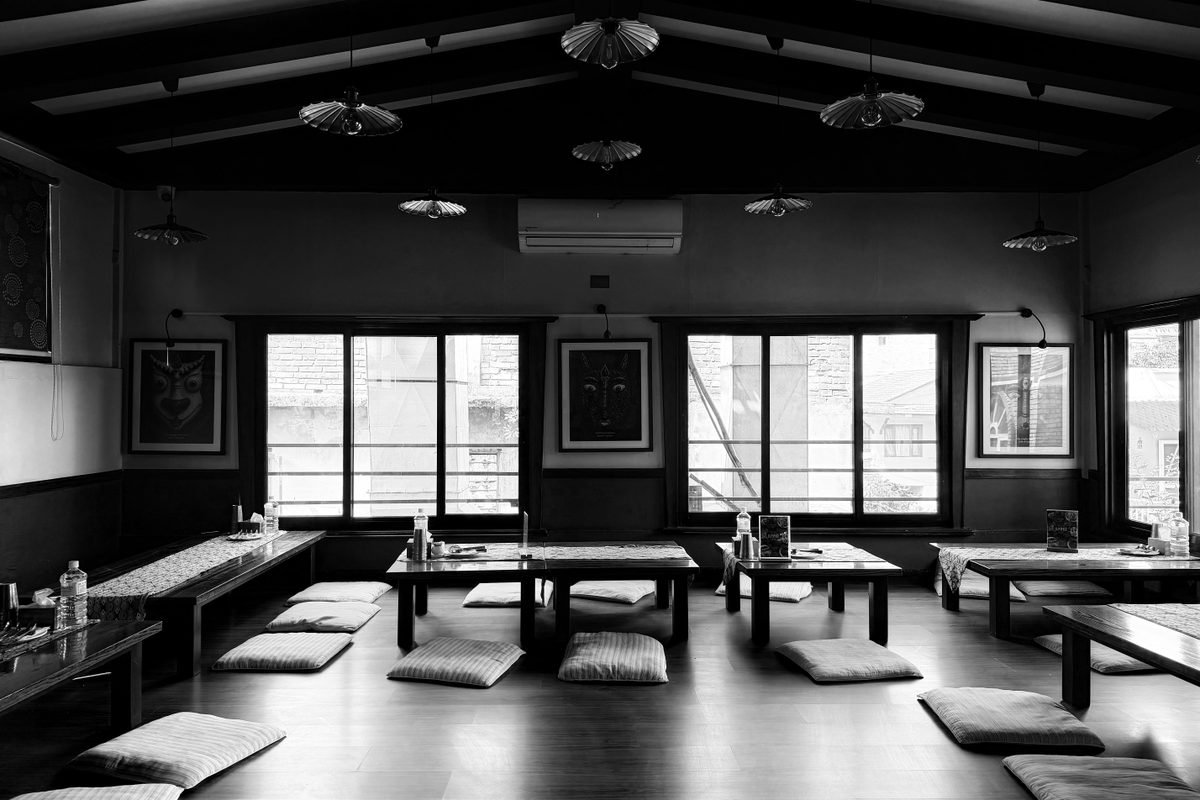
Coffee culture in Gyeongju has taken the classic hanok aesthetic to extraordinary heights. Rather than building modern concrete cafes, local entrepreneurs took inspiration from the large multi-courtyard layout of historic estates like Hwangnam-gwan. Walking into these spaces means stepping across raked gravel courtyards, ducking beneath heavy pine rafters, and sitting on heated wooden ondol floors while looking out through rice-paper screens.
The standard drink menu in Hwangridan-gil goes far beyond an ordinary Americano. Cafes here specialize in grain-infused signature drinks that echo Korea’s agricultural heritage. You will find rich black sesame lattes (heukimja latte) topped with salted sweet cream for around ₩6,500 (about $4.80), mugwort cream lattes (ssuk latte), and roasted soybean drinks. For dessert, order a freshly pressed injeolmi croffle—a croissant pressed in a waffle iron, smothered in chewy rice cakes, vanilla ice cream, and nutty roasted soybean powder, costing roughly ₩9,000 (about $6.70).
Take off your shoes. When you choose a traditional raised-floor seating area, step onto the stone block, slide off your footwear, and sit on the silk cushions provided. Several two-story hanok cafes along Poseok-ro feature open-air second-floor balconies. Grabbing a seat here around 17:00 lets you watch the orange twilight settle over the enormous grass tumuli across the street. The contrast between ancient burial grounds and modern espresso culture is pure Gyeongju.
Keep in mind that peak afternoon hours from 13:30 to 16:30 get noisy on weekends. If you want a quiet, reflective tea experience, head into the adjacent Gyochon Traditional Village, a ten-minute walk south. There, serene teahouses serve traditional leaf teas like wild persimmon and fermented green tea in quiet courtyard gardens where tourists rarely crowd.
Hwangridan-gil street food: ten-won bread, squid, and sweet snacks
Even if you plan to eat sit-down dinners, Hwangridan-gil’s snack stalls will lure you in between meals. The street food culture here is playful, inventive, and visually distinct from the hearty market stalls found in Seoul or Busan. As you explore our broader advice in The Ultimate Korean Street Food Guide, you will notice that Gyeongju puts its own historical spin on finger foods.
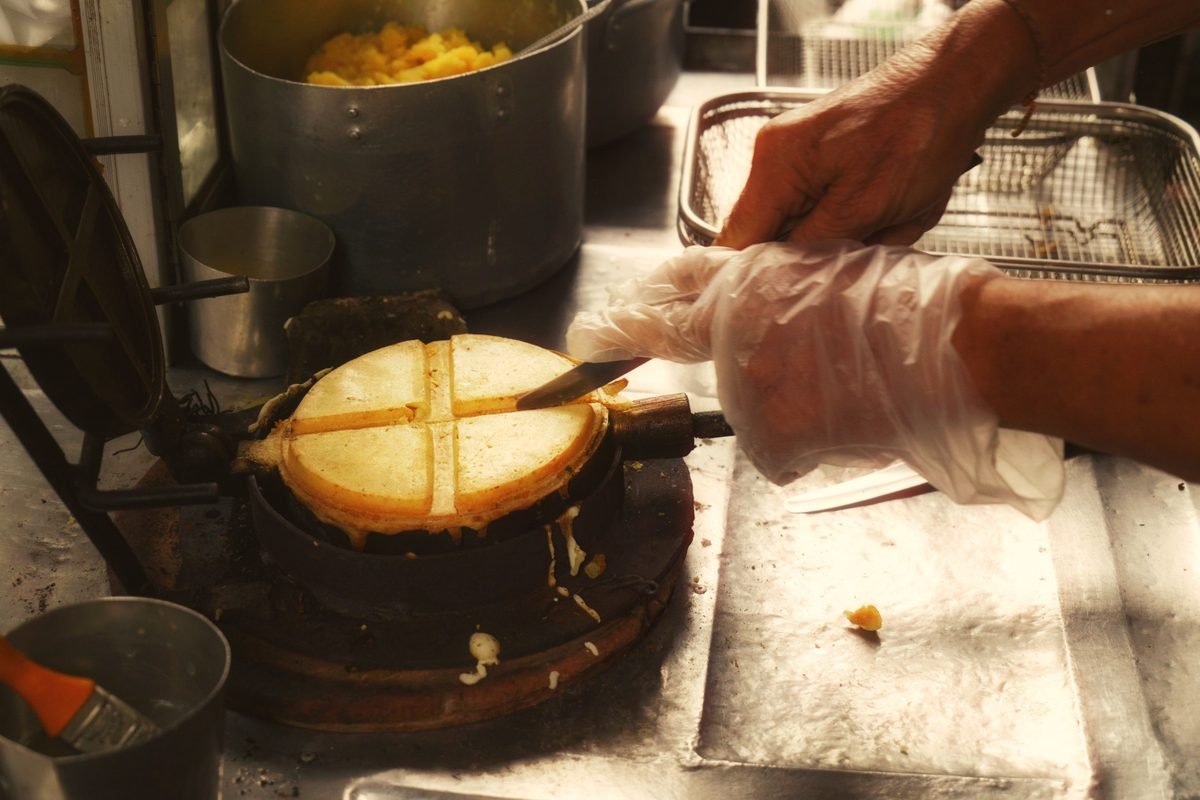
The king of snacks here is Sib-won-ppang, or Ten-Won Bread. This golden waffle cake is shaped exactly like South Korea’s classic 10-won coin, complete with an engraving of the historic Dabotap pagoda from Bulguksa Temple. Poured from a sweet pancake batter made with barley flour, the hollow mold is stuffed with a thick block of mozzarella cheese and cooked until golden brown. Pulling it apart creates an impressive three-foot cheese pull. At ₩3,500 (about $2.60) a pop, it is warm, salty-sweet, and ubiquitous along the main strip.
Another neighborhood favorite is Hwangnam Oksusu (Hwangnam Corn). Stalls fry loose kernels of sweet corn into crunchy fritter clusters, serve them in paper cups, and drench them in spicy chili powder or garlic mayonnaise for ₩3,000 (about $2.20). Pair that with Gyeongju Jjondeugi—chewy strips of grilled dried wheat snack tossed in spicy soup powder—and you have the quintessential youth snack combo for an afternoon stroll.
Carry small bills or use your credit card; almost every stall accepts foreign cards without issue. One practical warning: trash cans are virtually nonexistent along Hwangridan-gil. Carry a small plastic bag in your daypack to hold skewer sticks, paper cups, and napkins until you find a convenience store bin.
Traditional makgeolli pubs: evening drinks, jeon, and Silla spirits
When dusk settles over Gyeongju, Hwangridan-gil shifts gears. Fairy lights illuminate low stone walls, and the scent of sizzling scallion pancakes drifts through open wooden doorways. Gyeongju has an exceptional alcohol heritage rooted in Gyeongju Beopju, a traditional refined rice wine historically brewed for royal ancestral rites and aristocratic entertaining. Tasting local drinks in a quiet courtyard pub is the best way to close your evening.
Skip commercial green-bottle soju and order a brass kettle (jujeonja) of fresh unpasteurized Gyeongju Makgeolli or house-brewed dongdongju. Local rice wine here is crisp, slightly effervescent, and noticeably less sugary than mass-market brands. A 750ml bottle of fresh local brew generally runs between ₩4,000 and ₩6,000 (about $3 to $4.50) in casual dining taverns. If you want a more refined tasting, order a bottle of Gyeongju Beopju Choryeongju, an aromatic clear liquor served chilled in small ceramic cups.
You cannot drink rice wine without anju (drinking food). Understanding the social customs outlined in our Korean Drinking Culture Guide will make ordering effortless. The golden pairing for cloudy makgeolli is haemul pajeon, a thick pancake loaded with whole green scallions, baby octopus, and squid, fried crisp in pork lard or oil. A platter large enough for two costs roughly ₩16,000 to ₩18,000 (about $12 to $13.50). Another local pub staple is yukhoe (seasoned raw beef), prepared from fresh Gyeongju Hanwoo beef tossed with sesame oil, garlic, and crisp Asian pear slices.
For a lively, unpretentious nightcap, take a 15-minute walk north of Hwangridan-gil to Gyeongju Jungang Market. The night market section inside opens around 18:30, featuring food stalls organized around a central seating square. For ₩11,000 (about $8.20), you can buy a four-dish coupon tray that allows you to sample small portions of pork belly rolls, grilled intestines, and chicken skewers alongside cold beer.
From a local: Try Gyodong Beopju in Gyochon
Gyodong Beopju is designated as an Intangible Cultural Property, brewed by the Gyeongju Choe family for over 300 years using glutinous rice and well water. Visit the historic brewing estate in Gyochon during daytime hours to pick up a cold bottle directly from the family.
What it costs in Gyeongju
| Item | Local price | USD |
|---|---|---|
| Hwangnam Bread (single pastry warm from oven) | ₩1,000 | $0.75 |
| Hwangnam Bread box (20 pieces original) | ₩20,000 | $15.00 |
| Sib-won-ppang (10-Won cheese coin bread) | ₩3,500 | $2.60 |
| Ssambap set meal (per person, with pork/beef banchan) | ₩18,000 | $13.50 |
| Black sesame or mugwort cream latte in a hanok cafe | ₩6,500 | $4.80 |
| Haemul pajeon (crispy seafood scallion pancake) | ₩16,000 | $12.00 |
| Local fresh Gyeongju makgeolli (750ml bottle in a pub) | ₩5,000 | $3.75 |
| Jungang Market 4-dish night market coupon tray | ₩11,000 | $8.20 |
Prices checked October 2026. Always confirm with the provider before you book.
Where to stay in Gyeongju
Budget
Nodong-dong, for guesthouses within five minutes of the Express Bus Terminal
This area suits backpackers and transit-focused travelers who want easy bus connections across North Gyeongsang province. You can walk to the northern edge of Hwangridan-gil in ten minutes, with clean private rooms averaging ₩45,000 to ₩65,000 ($34 to $49) per night.
Mid-range
Hwangnam-dong, for renovated hanok stays inside the alley network
Staying right inside Hwangridan-gil puts dozens of bakeries and cafes on your doorstep the moment you wake up. You step directly into quiet stone lanes after daytime tourists clear out, with private timber hanok rooms running ₩110,000 to ₩180,000 ($82 to $135) per night.
Splurge
Bomun Lake Resort, for full-service lakeside hotels and traditional architecture estates
This district sits twenty minutes east of the city center by local bus 10 or 700, offering expansive parkland, lake walking trails, and premium on-site dining. It suits travelers looking for quiet luxury away from the crowds, with rooms typically ranging from ₩220,000 to ₩380,000 ($165 to $285) per night.
Mistakes to avoid
- Arriving on Hwangridan-gil before 11:00 expecting breakfast, as nearly all cafes and eateries remain closed until late morning.
- Attempting to eat ssambap solo during the peak 12:00 to 13:30 lunch rush, when almost all traditional houses enforce strict two-person minimums.
- Buying generic factory red bean pastries from souvenir kiosks instead of visiting the verified original bakeries in Hwangnam-dong or Bukbu-dong.
- Failing to carry a pocket plastic bag for trash disposal, which leaves you holding greasy skewers and cups for blocks.
- Waiting in massive midday queues on the main Poseok-ro strip instead of walking one block into Sonhyo-ja-gil to find equally good courtyard dining.
FAQ
What makes Hwangnam bread different from ordinary red bean pastries?
Original Hwangnam bread features an exceptionally thin, unleavened wheat skin encasing a dense core of domestic adzuki bean paste. It contains far less sugar than commercial red bean buns, highlighting the natural, nutty aroma of the beans.
How much should I budget daily using this gyeongju local food and hwangridan-gil guide?
A realistic daily food budget is roughly ₩45,000 to ₩60,000 (about $34 to $45) per person. That covers an afternoon hanok coffee and pastry, a full banchan-heavy ssambap lunch, evening street snacks, and a shared makgeolli and pancake dinner.
Is Hwangridan-gil walkable from Gyeongju's main historical sites?
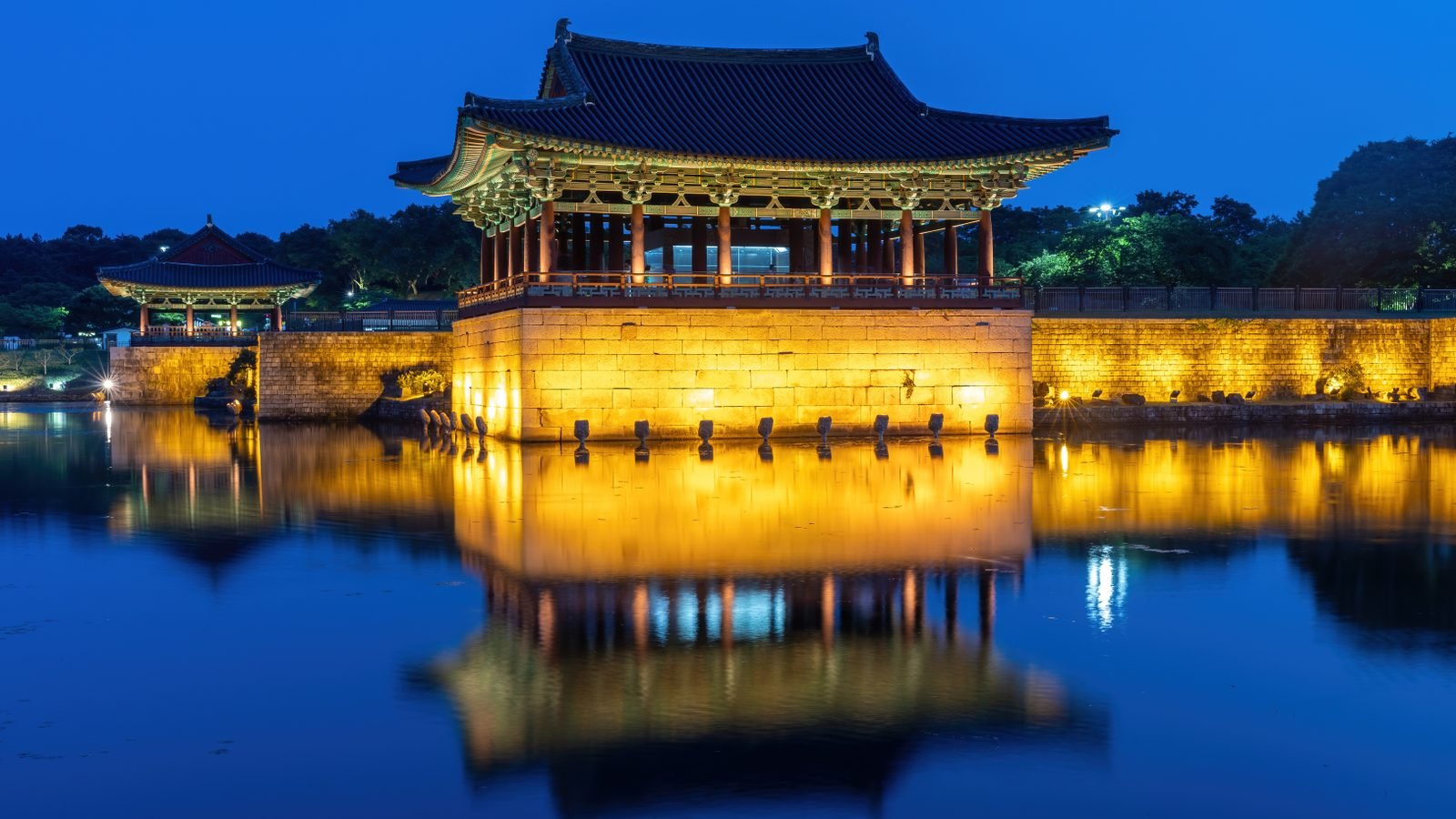
Yes, Hwangridan-gil directly borders the western stone wall of Daereungwon Tumuli Park. You can walk from the cafes to Cheomseongdae observatory in under ten minutes, and reach the lotus ponds of Donggung Palace and Wolji in roughly twenty minutes.