
Gyeongju 2 Day Itinerary: A Local Korea Travel Guide

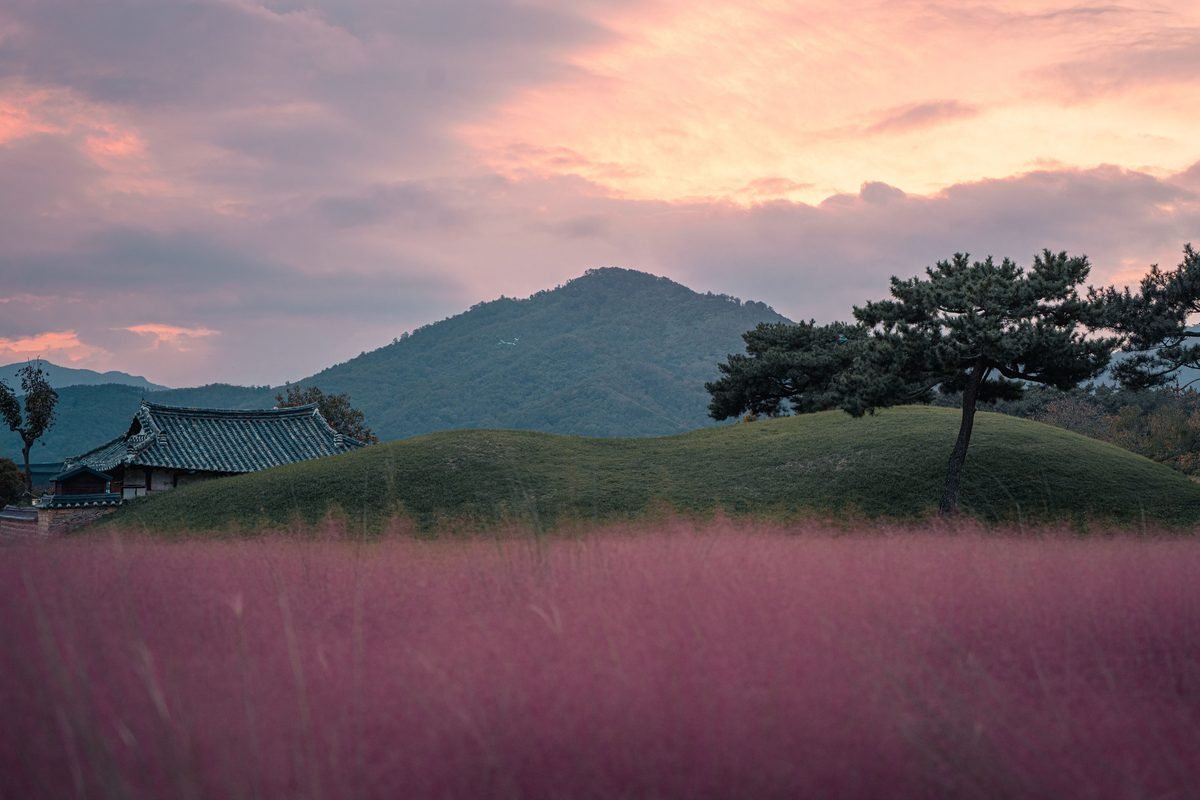
Morning mist often clings to the ancient grassy tumuli in central Gyeongju before vehicle traffic picks up along Poseok-ro. You can stand outside a neighborhood convenience store with a chilled coffee and look directly at a grassy royal mound that has stood untouched since the fifth century. Gyeongju served as the capital of the ancient Silla Kingdom for nearly one thousand years. Gyeongju feels different. Unlike Seoul, where royal history sits enclosed behind palace ticket gates, Gyeongju keeps its antiquity out in the open air, woven directly into quiet residential alleys and agricultural plains.
This Gyeongju 2 day itinerary is designed for independent travelers who want to explore South Korea’s historical core without boarding a rigid tour bus. It maps out a balanced route through imperial burial grounds, mountain temples, traditional dining spots, and renovated hanok streets. You will find clear transit advice for arriving from Seoul or Busan, realistic admission costs, and practical timing tips that let you experience the main sites before the midday crowds arrive.
How to get to Gyeongju from Seoul and Busan
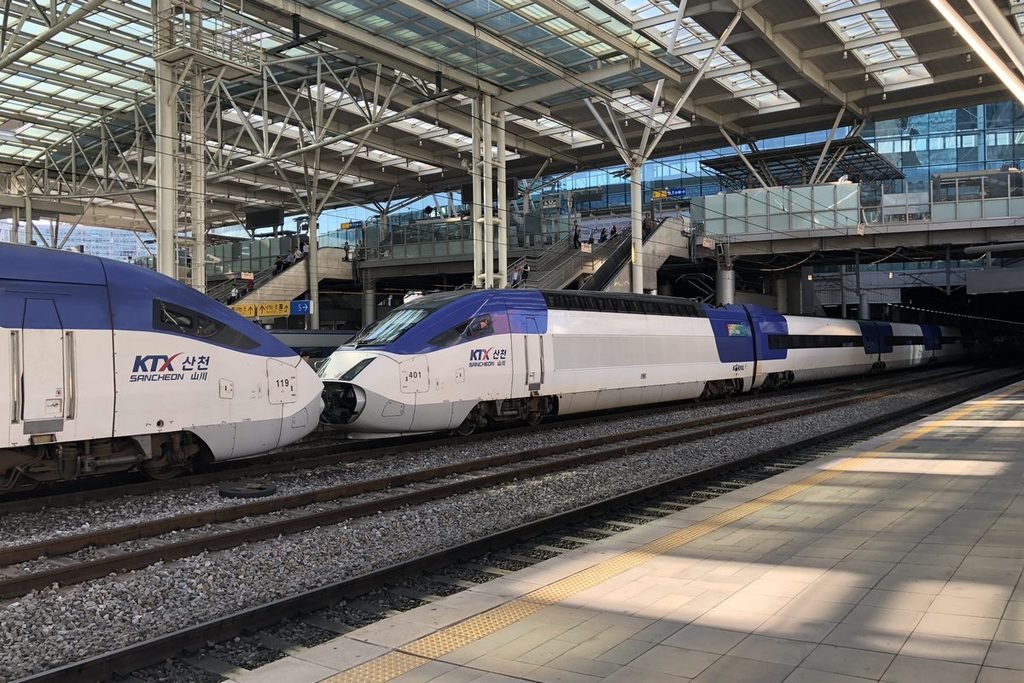
Reaching Gyeongju by public transit is straightforward once you understand how the regional rail and bus stations are positioned. From Seoul Station, the high-speed KTX train runs directly to Singyeongju Station in roughly two hours and five minutes, with standard one-way tickets costing ₩49,300 (about $37). The train is faster. However, Singyeongju Station sits about 12 kilometers south of the historic center. Once you walk out exit 1, you can board local city bus 700, 50, or 51 to reach the Daereungwon area in roughly 25 minutes for ₩1,400 (about $1.05), or hail a metered taxi for around ₩17,000 (about $13).
If you are traveling north from Busan, the express bus is often more convenient than the train. Buses depart Busan Central Bus Terminal at Nopo Station every 20 minutes throughout the day. The ride takes just 50 minutes and costs ₩5,800 (about $4.35). These express buses pull directly into Gyeongju Intercity Bus Terminal on Taejong-ro. This terminal is located within easy walking distance of downtown guesthouses and the Hwangnidan-gil neighborhood, saving you the extra transfer required from the KTX rail station.
For travelers coming from Daegu, frequent intercity buses depart Dongdaegu Terminal, taking roughly 50 minutes for ₩6,500 (about $4.90). You do not need to purchase bus tickets weeks in advance unless you are traveling during major national holidays like Chuseok or Seollal. Using a transit card makes boarding effortless across all regional bus operators.
Heads up: Watch your arrival station
Singyeongju KTX Station is located outside the downtown core. Remember to budget an extra 25 to 30 minutes for city bus transfers before planning lunch reservations.
Best seasons for a Gyeongju 2 day itinerary
Gyeongju changes character dramatically depending on when you visit, making seasonal timing an important part of your planning. Mid-spring and mid-autumn offer the most pleasant weather for walking between archaeological sites. Spring brings massive waves of cherry blossoms from late March through early April, particularly around Bomun Lake, Woljeonggyo Bridge, and along the perimeter walls of Daereungwon. While the blossoms are striking, weekend accommodation prices in April spike quickly, and narrow lanes in Hwangnam-dong become crowded with domestic visitors.
Autumn is arguably the finest period to complete this Gyeongju 2 day itinerary. From mid-October through mid-November, crisp mountain air arrives with daytime temperatures hovering around 18°C (64°F). The ancient ginkgo trees scattered around the tomb parks turn vibrant gold, while the forested slopes behind Bulguksa Temple turn deep shades of crimson and amber. Walking outdoors remains comfortable all afternoon without the intense humidity of the southern peninsula.
Summer brings high heat, heavy humidity, and monsoon rainfall throughout July and August. Exploring open plains with minimal shade during peak summer hours can drain your energy rapidly. Winter offers cold, dry days with temperatures frequently dipping near freezing. However, winter brings exceptionally clear skies and low visitor numbers. Having the burial mounds blanketed in light snow is a memorable sight that few international visitors get to witness.
Tip: Late October ginkgo peak
Plan your visit for the last week of October to see the ancient ginkgo trees around Wolseong Fortress drop carpets of golden leaves across the walking trails.
Day 1: Royal tombs, hanok cafes, and night reflections
Begin your first morning at Daereungwon Tumuli Park, which opens its gates at 9:00 AM. Entry to the park grounds is free, but paying ₩3,000 (about $2.25) to enter Cheonmachong Tomb allows you to walk inside an excavated fifth-century wooden burial chamber and see replicas of gold crowns and ornate horse-riding gear. The grassy mounds rise up to 20 meters high, shaded by old pine trees and neat gravel pathways. The walk is easy. Spend roughly 90 minutes circling the grounds before exiting toward the southern gate.
Cross over into Hwangnidan-gil along Poseok-ro for your afternoon meal and a coffee break. This neighborhood was once a quiet residential district of tiled hanok homes, but it has transformed into a lively walking district packed with independent roasteries, craft shops, and bakeries. Stop at a cafe with an elevated terrace to view the traditional slate rooftops against the backdrop of distant mountains. After lunch, take a relaxed stroll eastward across the open fields toward Cheomseongdae, a seventh-century stone bottle-shaped astronomical observatory that stands as the oldest surviving structure of its kind in East Asia.
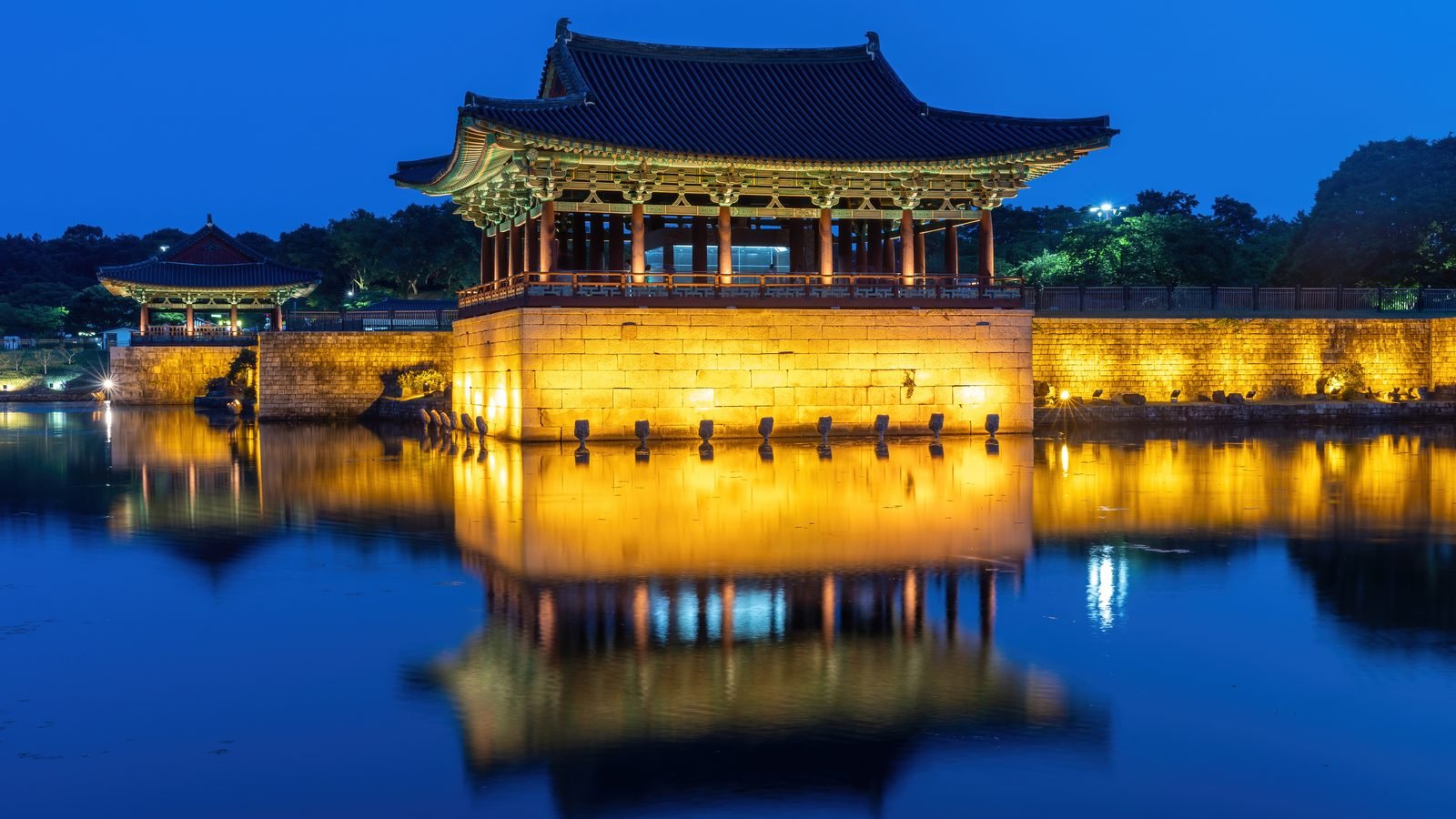
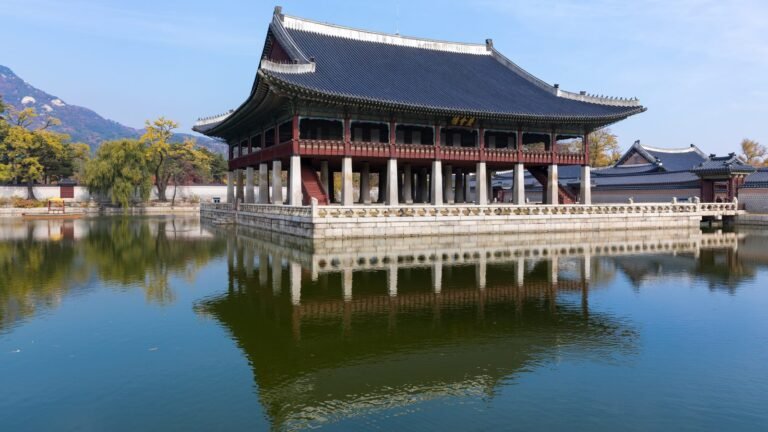
As twilight approaches, walk south toward Woljeonggyo, a reconstructed wooden covered bridge with double-decked pavilions spanning the Muncheon stream. After photographing the bridge, head directly to Donggung Palace and Wolji Pond for the evening. Formerly known as Anapji, this Silla royal secondary palace grounds cost ₩3,000 (about $2.25) to enter. When darkness falls, warm floodlights illuminate the wooden pavilions, casting perfect mirror reflections across the dark, lotus-filled water.
From a local: Dusk timing at Wolji Pond
Pass through the ticket gates fifteen minutes before official sunset. You can watch the architectural floodlights click on just as the evening sky turns deep navy blue.
Day 2: Morning at Bulguksa Temple and Silla treasures
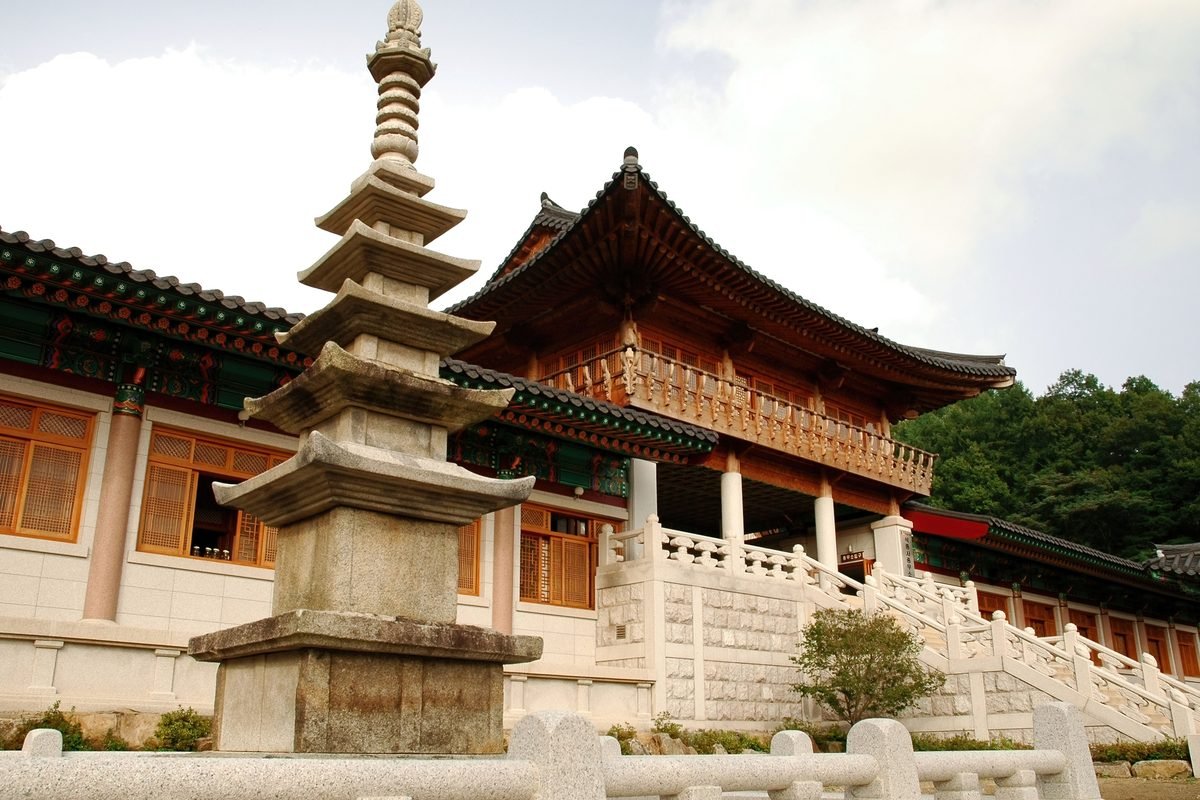
Start your second day early to beat the regional tour groups heading toward the eastern mountains. Board city bus 10 or 11 from the central terminal area by 7:20 AM to arrive at Bulguksa Temple for its 8:00 AM gate opening. Admission to the temple grounds is now free of charge. Bulguksa was built in the eighth century on the slopes of Tohamsan mountain and represents the architectural pinnacle of Silla Buddhist art. Walk through the main courtyard to inspect the contrasting stone pagodas: the minimalist, austere Seokgatap and the intricate, multi-tiered Dabotap.
Get there early. Experiencing the morning monk chants and wind chimes without crowds gives you a true sense of the temple’s serene mountain setting. From the bus stop just below Bulguksa’s parking lot, board local bus 12 for the winding 20-minute ride up the mountain ridge to Seokguram Grotto. Bus 12 runs once per hour and costs ₩1,400 (about $1.05). Inside the granite rotunda, a carved stone Buddha sits gazing toward the East Sea. While you view the chamber through protective glass, the mastery of the eighth-century masonry remains unmistakable.
Take the bus back down toward town by early afternoon and spend two hours at the Gyeongju National Museum. General admission is free. The museum houses thousands of excavated treasures, including pure gold crowns, intricate glass bead necklaces from the Silk Road, and the massive Divine Bell of King Seongdeok, which weighs over 18 tons and rings with an eerie acoustic resonance recorded on outdoor speakers every twenty minutes.
Book ahead: Check bus 12 departure schedules
Bus 12 to Seokguram Grotto runs on an exact hourly timetable from Bulguksa parking lot. Take a photo of the return schedule at the stop before walking up to the grotto.
Where to eat local dishes in Gyeongju
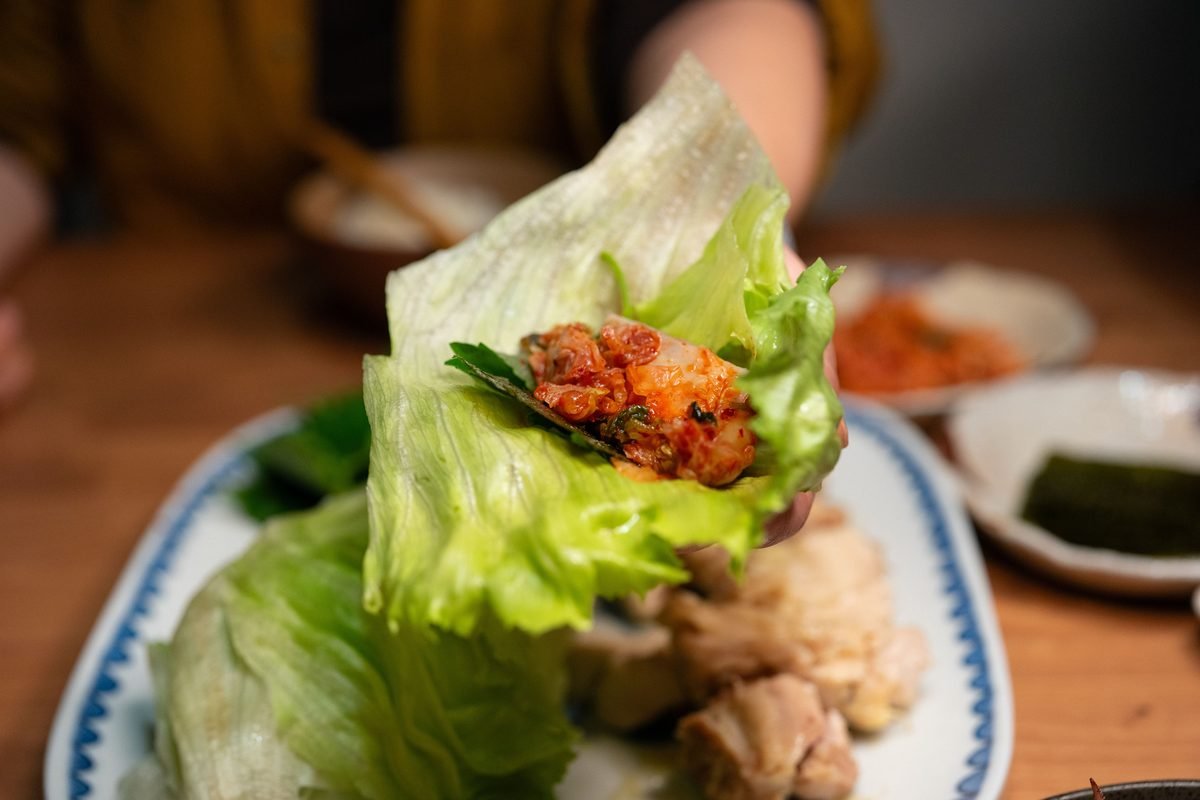
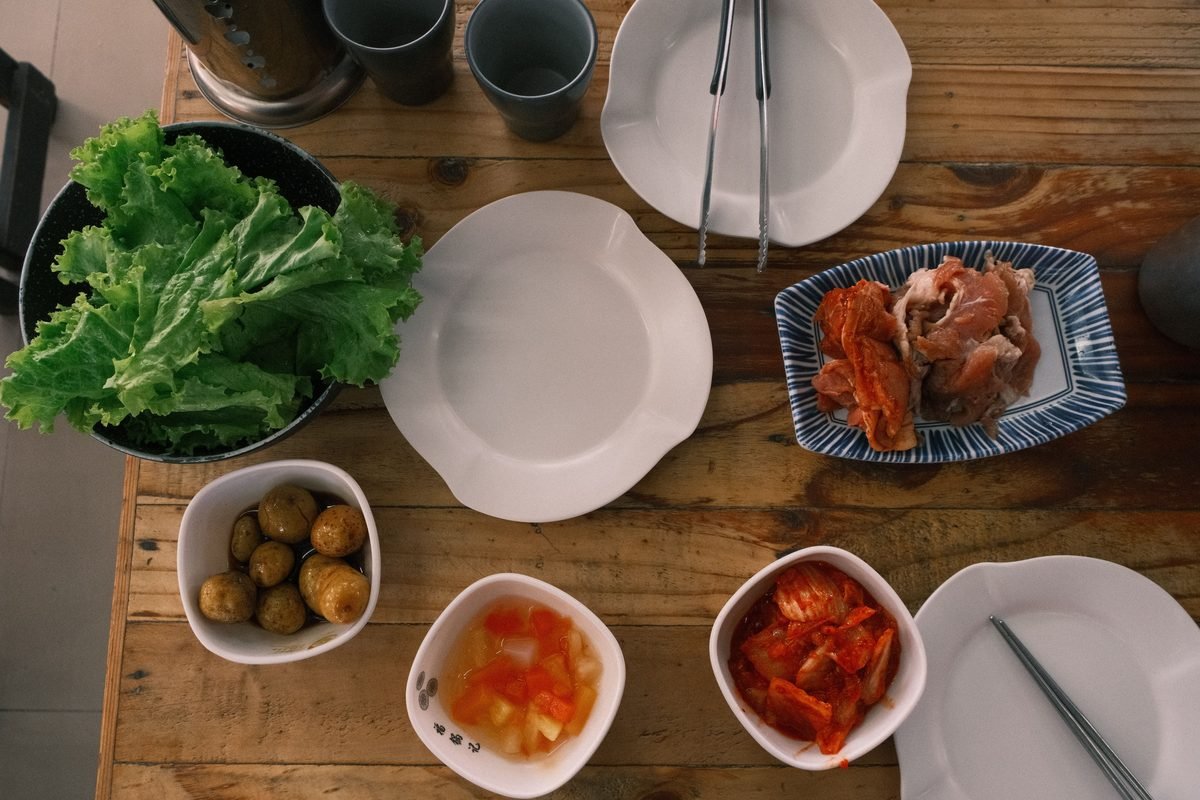
Gyeongju’s culinary landscape features distinct regional dishes developed around local agricultural traditions and its royal heritage. For a substantial midday meal near the historic core, order Gyeongju ssambap. This traditional meal centers around an array of fresh leafy greens, steamed cabbage, and kelp used to wrap seasoned rice, savory soybean paste, and marinated pork or beef. A typical spread includes anywhere from 15 to 20 small side dishes (banchan), ranging from braised acorn jelly to pickled wild mountain greens. Expect to pay between ₩15,000 and ₩18,000 (about $11 to $14) per person at established restaurants along Poseok-ro.
For snacks while exploring, do not miss Hwangnam-ppang, also known as Gyeongju bread. These small, thin-crusted round pastries are stamped with a floral pattern and stuffed to maximum capacity with smooth, whole red bean paste. The original bakery near the Daereungwon intersection has been producing them by hand since 1939. You can buy individual warm pastries for roughly ₩1,200 (about $0.90) or a boxed set of twenty for ₩24,000 (about $18) to take with you on your train ride.
If you head north toward Bomun Lake in the evening, visit the Bukgun-dong food village for a bowl of freshly curdled sundubu jjigae (soft tofu stew). The tofu is made daily using domestic soybeans, served bubbling in a spicy seafood broth with a raw egg cracked directly into the clay pot at your table. A hearty stew set with rice and side dishes generally costs around ₩12,000 (about $9).
Practical tips for getting around Gyeongju
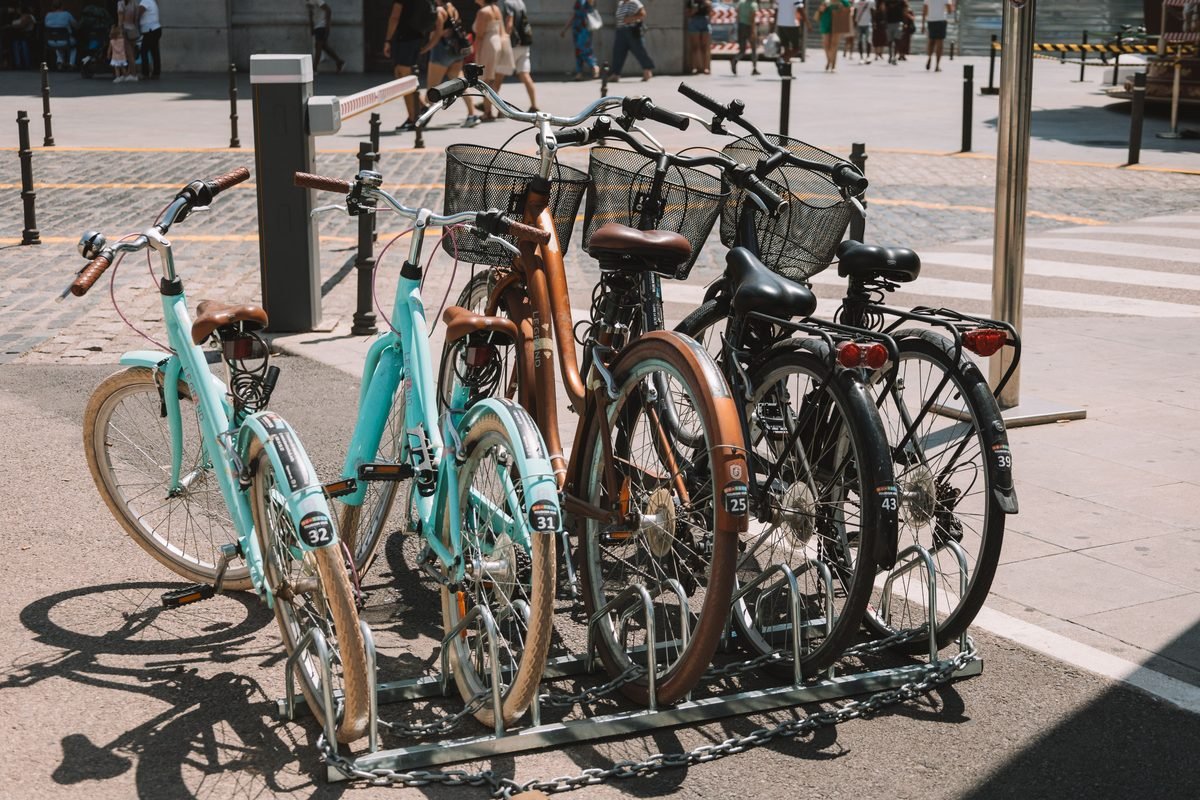
Getting around Gyeongju is relatively simple because the major downtown sights are clustered within a flat two-kilometer radius. Rent a simple town bicycle. Rental shops along Hwangnidan-gil and near the bus terminals rent single-speed cruiser bikes for roughly ₩5,000 to ₩10,000 (about $3.75 to $7.50) for half a day. Riding between Daereungwon, Cheomseongdae, and the National Museum is relaxed, thanks to dedicated paved bike paths and low-speed side streets. Avoid cycling on the narrow main street of Hwangnam-dong during busy weekend afternoons due to pedestrian density.
For journeys to outlying attractions like Bulguksa Temple or Bomun Lake, public buses provide efficient service. Take the local bus. Buses 10, 11, and 700 run frequent loops connecting the bus terminal, downtown stops, and eastern heritage zones. You can tap on and tap off using any standard Korean transportation card, such as T-Money, Cashbee, or linked international transit passes like WOWPASS. Single journeys cost ₩1,400 (about $1.05).
Foreign travelers should note that Google Maps does not provide functional walking directions or up-to-date bus schedules in South Korea due to national mapping data laws. Download Naver Map or KakaoMap before your journey. Both applications have comprehensive English interfaces and show real-time bus arrival countdowns down to the exact minute. If you arrive early before hotel check-in, use the electronic luggage lockers available inside both the Express Bus Terminal and Singyeongju KTX Station for ₩2,000 to ₩4,000 (about $1.50 to $3.00).
What it costs in Gyeongju
| Item | Local price | USD |
|---|---|---|
| KTX high-speed rail ticket from Seoul to Singyeongju (one way) | ₩49,300 | $37.00 |
| Express bus from Busan to Gyeongju Terminal (one way) | ₩5,800 | $4.35 |
| City bus fare per ride (using T-Money card) | ₩1,400 | $1.05 |
| Cheonmachong Tomb admission at Daereungwon | ₩3,000 | $2.25 |
| Donggung Palace and Wolji Pond evening admission | ₩3,000 | $2.25 |
| Traditional ssambap meal with assorted side dishes | ₩16,000 | $12.00 |
| Half-day standard bicycle rental in Hwangnam-dong | ₩7,000 | $5.25 |
| Mid-range hanok guesthouse room (per night) | ₩110,000 | $82.00 |
Prices checked September 2026. Always confirm with the provider before you book.
Where to stay in Gyeongju
Budget
A private room in a modern guesthouse near Gyeongju Bus Terminal
Ideal for solo travelers seeking quick bus connections and cheap dining, typically costing ₩40,000 to ₩65,000 (about $30 to $48) per night.
Mid-range
A restored traditional wooden hanok stay inside Hwangnam-dong
Perfect for couples wanting quiet courtyards and easy evening walks to cafes and tombs, running ₩95,000 to ₩150,000 (about $70 to $112) per night.
Splurge
A lakeside resort hotel with mountain views overlooking Bomun Lake
Best for travelers wanting quiet luxury, indoor saunas, and scenic lake promenades, costing roughly ₩220,000 to ₩360,000 (about $165 to $270) per night.
Mistakes to avoid
- Taking an expensive private taxi from Singyeongju KTX Station into town instead of taking city bus 700 or 50, which stops at the exact same downtown hub for a fraction of the cost.
- Visiting Donggung Palace and Wolji Pond during broad daylight instead of waiting for nightfall when the architectural illumination reflects on the water.
- Relying entirely on Google Maps for navigation rather than downloading Naver Map or KakaoMap, which provide precise walking paths and accurate bus arrival times in Korea.
FAQ
Is 2 days enough for Gyeongju?
Yes, a Gyeongju 2 day itinerary is the ideal timeframe to see both the central tomb complexes in town and the outlying mountain sites like Bulguksa Temple without rushing. Two full days give you time to enjoy the evening night illuminations and explore Hwangnidan-gil at a relaxed pace.
How do you get around Gyeongju without a rental car?
You can navigate Gyeongju easily by combining walking, renting a city bicycle for central sights, and taking local buses 10, 11, or 700 for outlying attractions. All city buses accept standard T-Money cards and run regular routes between the terminal and heritage zones.
What is the best neighborhood to stay in Gyeongju?
Hwangnam-dong and the streets surrounding Hwangnidan-gil are the best areas to stay for independent travelers. You will be within walking distance of Daereungwon, dozens of hanok cafes, craft breweries, and the intercity bus terminal.
Is Bulguksa Temple free to enter?
Yes, admission to Bulguksa Temple and Seokguram Grotto is now free of charge for all visitors after South Korea abolished cultural heritage entry fees at major Buddhist temples nationwide.
Can I visit Gyeongju as a day trip from Busan?
While you can visit Gyeongju on a day trip from Busan in under an hour by express bus, staying overnight is strongly recommended so you can see Donggung Palace and Woljeonggyo illuminated after dark.


7 Comments