The Perfect Luang Prabang 3 Day Itinerary

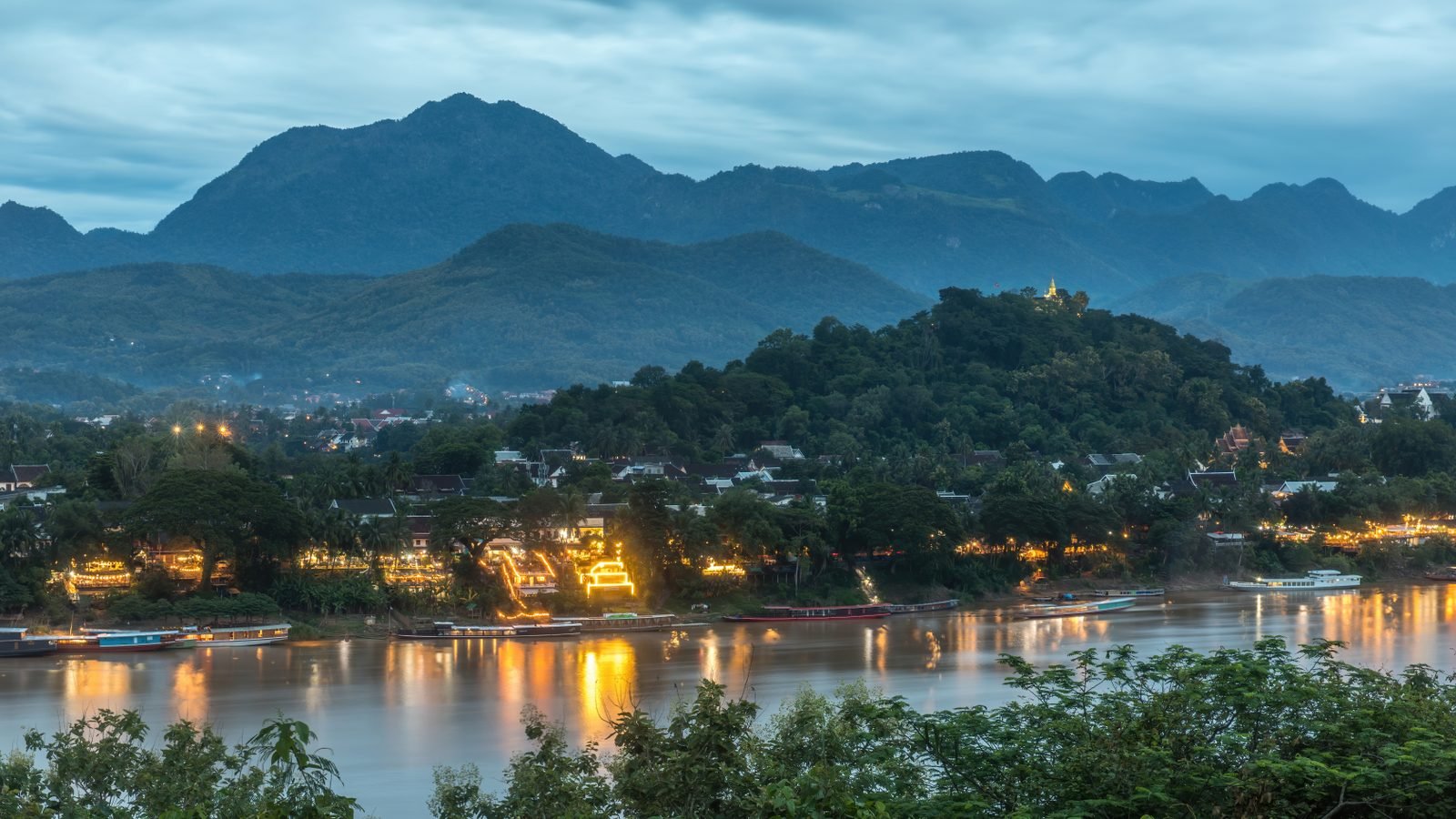
The drums of Wat Sen start at 4:00 AM, a low thrum that carries through the morning mist long before the sun clears the mountains. By the time the first light hits the saffron robes of the monks, the town is already awake, preparing for a ritual that has remained largely unchanged for centuries. Luang Prabang is a place where the pace of life is dictated by the flow of the Mekong and the ringing of temple bells rather than the frantic energy of modern cities.
This guide is for independent travelers who want to see the spiritual heart of Laos without rushing through it. This Luang Prabang 3 day itinerary covers the essential sunrise ceremonies, the turquoise pools of Kuang Si, and the best spots for local food while ensuring you have time to actually sit by the river with a coffee. The new railway has made the town far easier to reach, but the quiet magic of the Old Town remains intact if you know where to look.
How to get to Luang Prabang for your 3 day itinerary
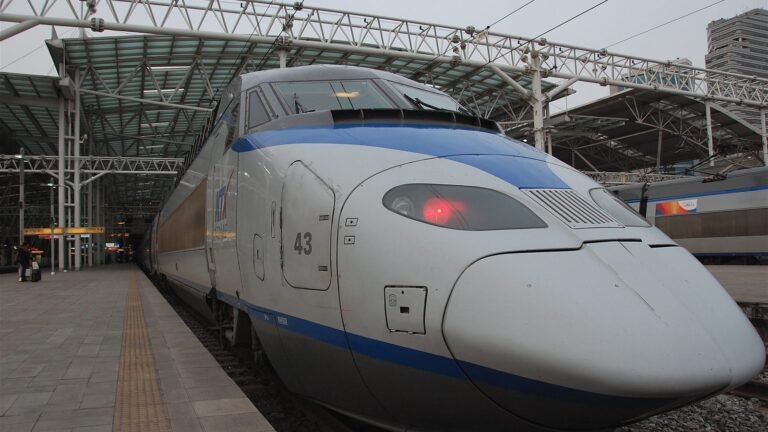
The train from Vientiane arrives at a station that looks more like a small airport than a provincial rail stop. The Laos-China Railway has completely changed how people move through the country, cutting a grueling ten-hour bus ride down to a smooth two-hour journey. If you are coming from the capital, a second-class seat costs roughly ₭330,000 (about $15). Seats go on sale seven days before departure through the LCR Ticket app — the window was only three days until mid-2025 — and the popular departures sell out, so book as soon as it opens. Once you arrive at the station, expect to pay about ₭40,000 (about $1.80) for a shared van into the town center, which takes about twenty minutes.
Flying is still the most convenient option if you are arriving from elsewhere in Southeast Asia. Luang Prabang International Airport (LPQ) is just four kilometers from the Old Town. A fixed-price taxi from the airport to any central guesthouse is ₭100,000 (about $4.50). If you are coming from Thailand, you might consider the two-day slow boat from Huay Xai. It is a long trip, but watching the jungle drift by from a wooden bench is a classic experience that many travelers prefer over a quick flight. It is much like the river transport I describe in my Bangkok Temple and River Boat Guide, though far more rural and rugged.
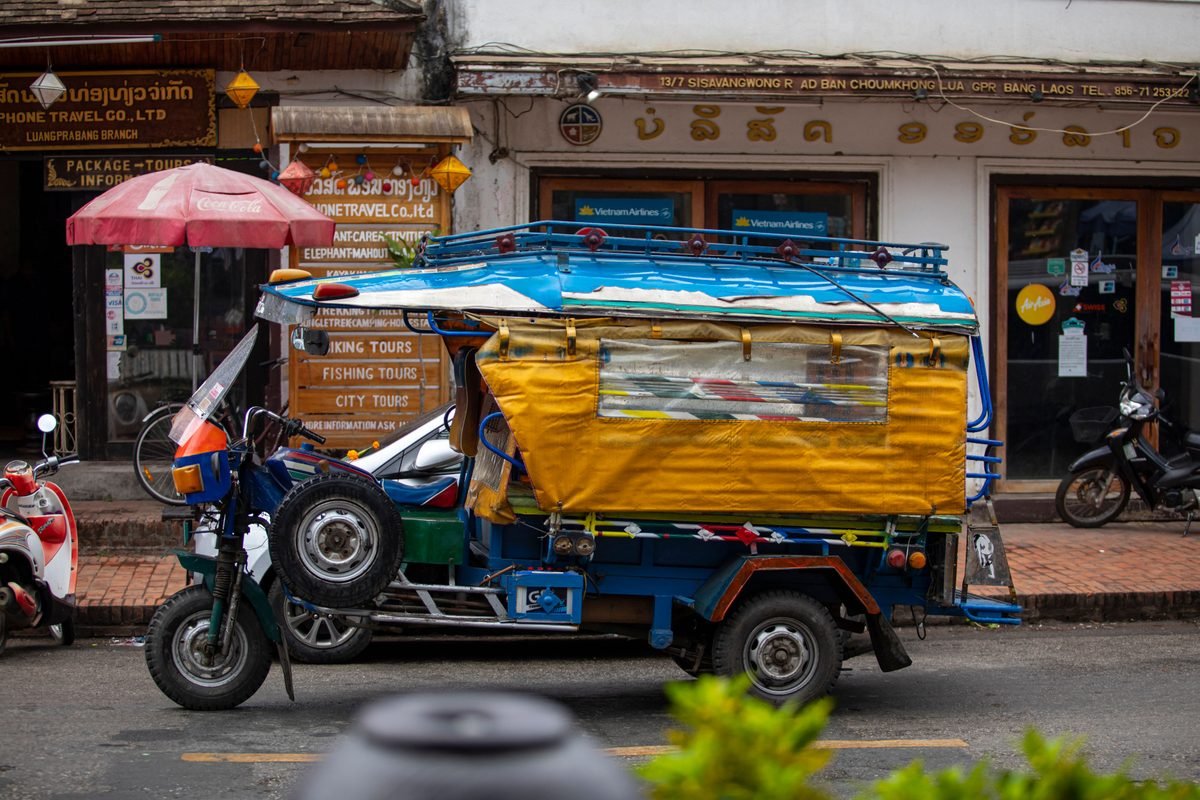
Getting around the town itself is easy on foot. The historic peninsula is narrow and flat, making it perfect for walking. For longer trips to the waterfalls or the railway station, you will rely on jumbo tuk-tuks. These are three-wheeled vehicles with two benches in the back. Always agree on a price before you climb in. A short ride within the town should not cost more than ₭30,000 (about $1.40). You can also rent a bicycle for about ₭50,000 (about $2.30) per day, which is the best way to explore the quiet lanes on the opposite side of the Nam Khan river.
Book ahead: Book Train Tickets Early
The LCR Ticket app requires a local phone number or a registered account; if you cannot get it to work, ask your hotel to book your train seats as soon as the seven-day window opens, for a small fee.
Day 1: Morning alms and the market
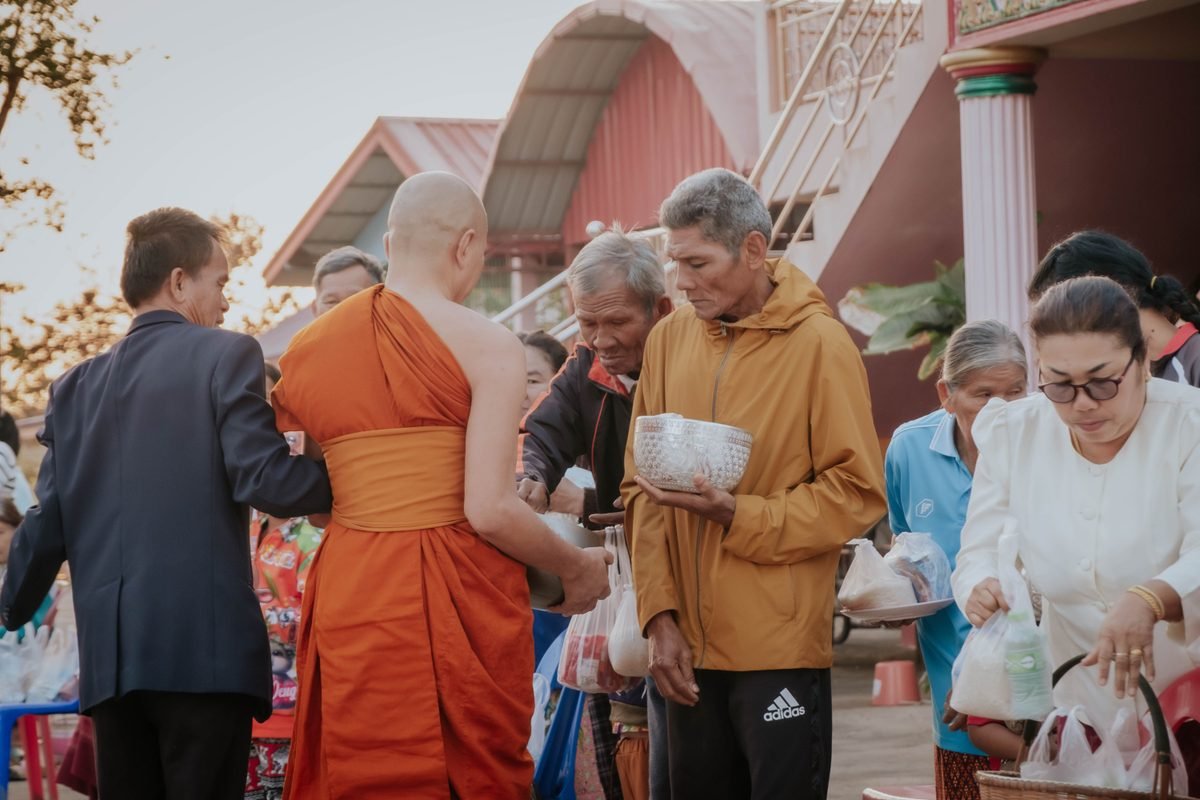
Mist clings to the Mekong at 5:30 AM as the Tak Bat, or alms giving ceremony, begins. This is a solemn religious practice, not a show. Monks from the various temples walk in a single file line to receive offerings of sticky rice from the local community. If you choose to watch, stay on the opposite side of the street and keep a respectful distance. Do not use a camera flash, as it is incredibly disruptive to the monks. Many tourists make the mistake of getting too close, which has led to tension in recent years. Dress modestly with your shoulders and knees covered, just as you would when following Korean Etiquette for Travelers or visiting any sacred site in Asia.
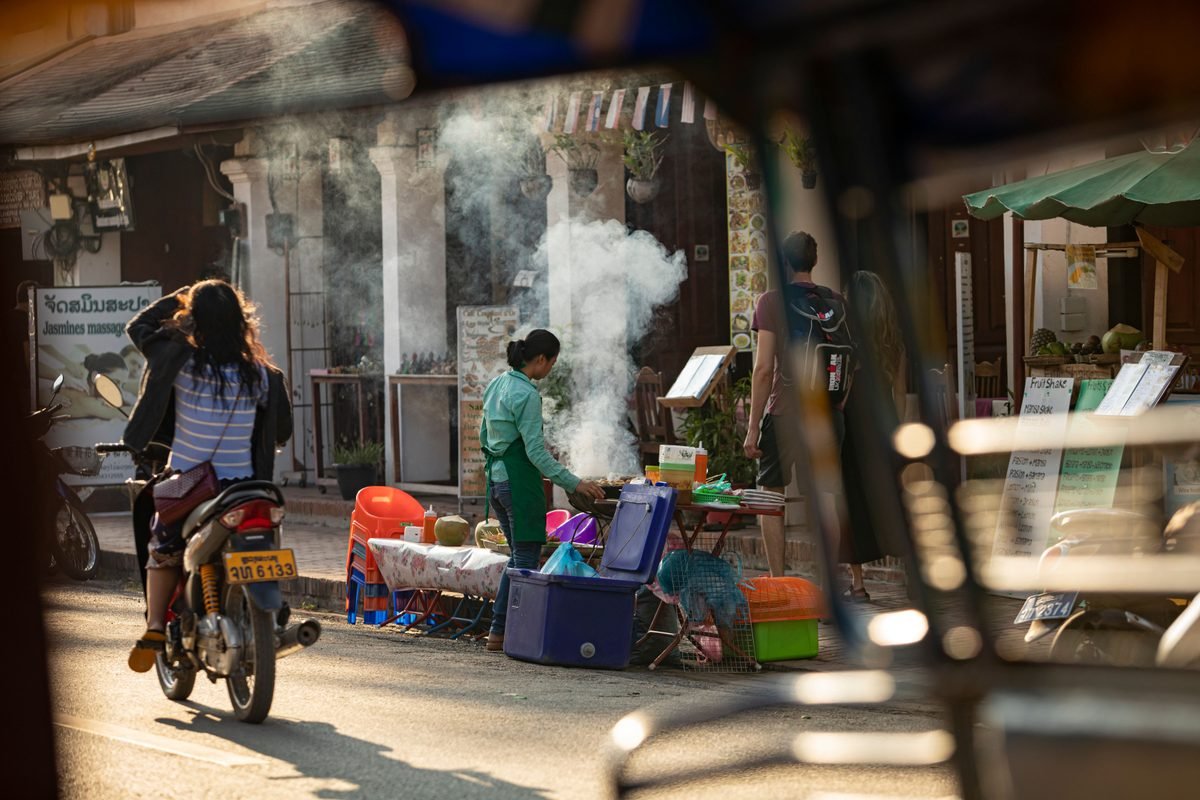
After the ceremony, walk toward the river to find the morning market. Unlike the night market, which is geared toward souvenirs, this is where locals shop for food. You will see piles of fresh galangal, stacks of river weed, and occasionally more unusual items like forest insects or honeycomb. It is a great place to try a bowl of Khao Piak Sen, a thick rice noodle soup with pork, for about ₭35,000 (about $1.60). The energy here is high but friendly. It is the best place to see the real life of the town before the heat of the day sets in.
Spend your afternoon exploring the temples of the Old Town. Wat Xieng Thong is the most famous, known for its sweeping roofs and the intricate “tree of life” glass mosaic on the rear wall. Entry is ₭20,000 (about $0.90). The temple dates back to the 16th century and is one of the few that was not destroyed during the Black Flag raids. Take your time here; the detail in the gold stencil work on the wooden pillars is remarkable. The grounds are quiet and offer plenty of shade. Close the day by walking the perimeter of the peninsula where the two rivers meet.
Heads up: Respect the Alms Ritual
Avoid buying rice from street vendors to give to the monks; if you want to participate, do it through your guesthouse so the food is prepared properly and safely.
Day 2: Swimming at Kuang Si Falls and Mekong sunsets
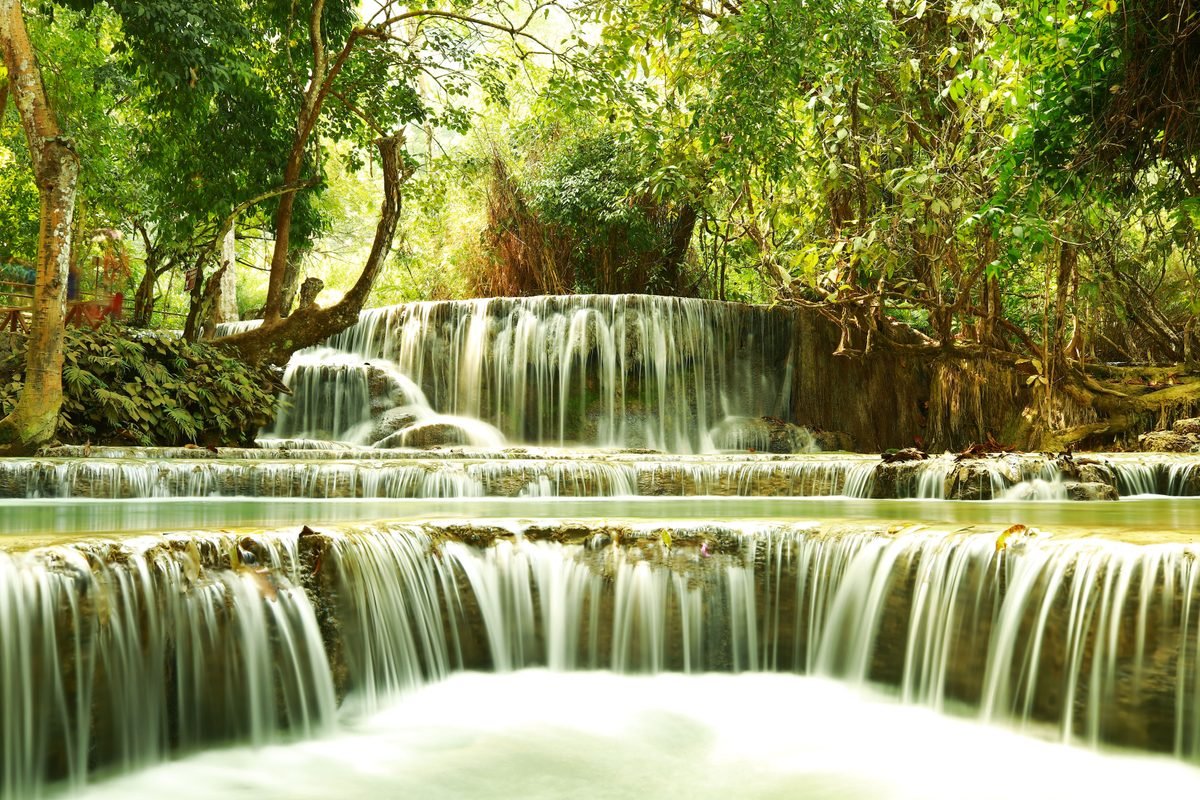
A shared minivan to Kuang Si Falls costs about ₭100,000 (about $4.50) for the forty-minute ride south of town. These vans usually depart at 9:00 AM and 1:30 PM from the post office. The falls are famous for their turquoise color, caused by the water flowing over limestone rocks which deposits calcium carbonate into the pools. Entry to the park is ₭25,000 (about $1.15). Before you reach the main pools, you will pass the Tat Kuang Si Bear Rescue Centre. This sanctuary houses Asiatic Black Bears rescued from the illegal wildlife trade. It is free to view the bears playing in their enclosures, though donations are encouraged.
The main falls are about 60 meters high, but the lower pools are where you can swim. The water is surprisingly cold, even in the humid heat of October. There are changing rooms available, so you do not need to wear your swimwear on the ride out. If you are feeling energetic, there is a steep trail to the top of the falls. It is often slippery and muddy, so wear decent shoes rather than flip-flops. From the top, you can see the source of the stream and find a much quieter area to sit away from the crowds that gather at the base.
Return to town by mid-afternoon and head to the riverbank for a sunset boat trip. You do not need to book this weeks ahead. Just walk down to the boat landings behind the Royal Palace and talk to the captains. A private longtail boat for an hour at sunset should cost around ₭150,000 (about $6.80) for the whole boat. Watching the sun drop behind the mountains while the Mekong turns a deep orange is the best way to end the day. Most boats will provide a small table if you bring your own drinks or snacks from a nearby convenience store.
From a local: The Secret Blue Lagoon
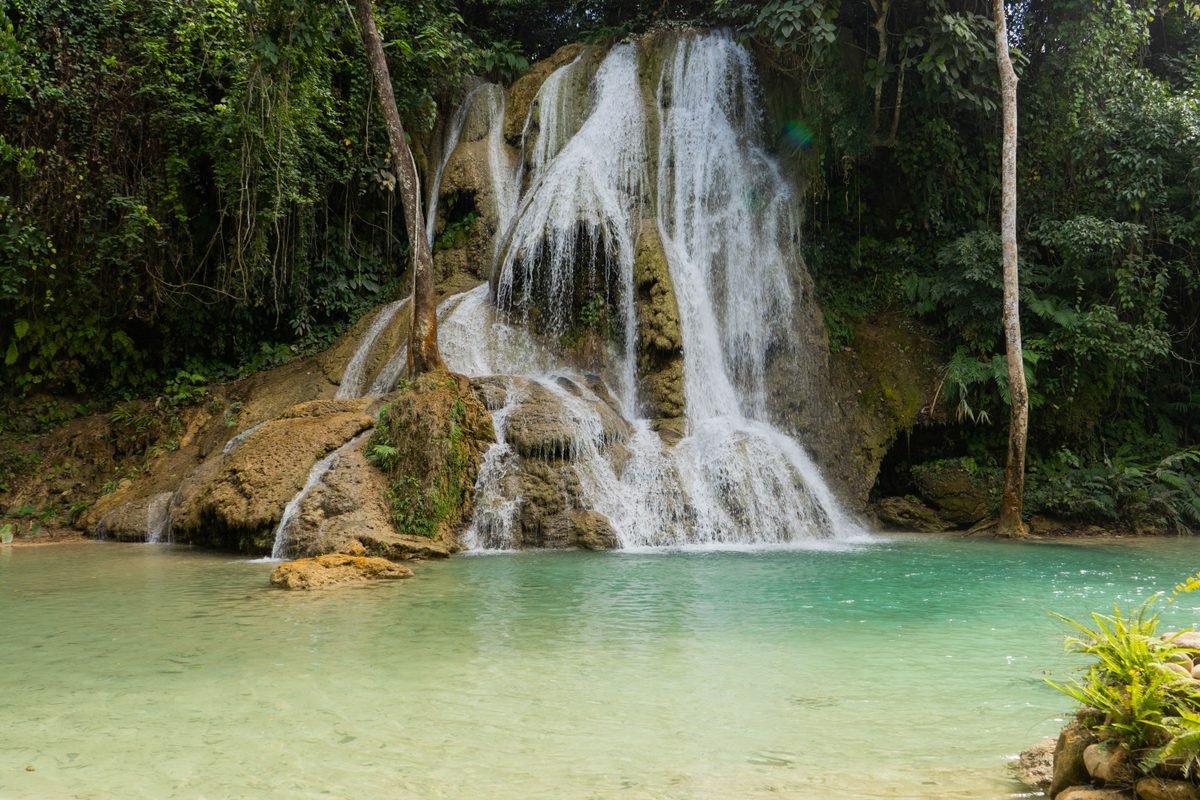
If Kuang Si is too crowded, ask a driver to take you to Tad Sae Falls instead; it is only reachable by boat and is a favorite for local families on weekends.
Day 3: Temples and the Mount Phousi climb
Three hundred and twenty-eight steps separate you from the golden stupa of Wat Chom Si at the top of Mount Phousi. Most people go up for sunset, which makes the narrow summit incredibly crowded. Instead, I recommend climbing the hill in the early morning or around 10:00 AM. The entry fee is ₭20,000 (about $0.90). From the top, you get a 360-degree view of the town, the Mekong, and the Nam Khan. You can see how the geography of the peninsula protected the town for centuries. There are several small shrines and Buddha statues along the different paths up the hill, including one tucked into a small cave.
After descending, visit the Royal Palace Museum. It was built in 1904 for King Sisavang Vong and combines Lao and French architectural styles. The throne room is decorated with vibrant red glass mosaics, and the garage houses a collection of vintage American cars used by the royal family. Note that the museum has a strict dress code and you must leave your bags and shoes in lockers before entering. Photography is strictly forbidden inside the palace buildings. The grounds also house the Prabang, the 83cm gold-alloy Buddha statue that gives the town its name.
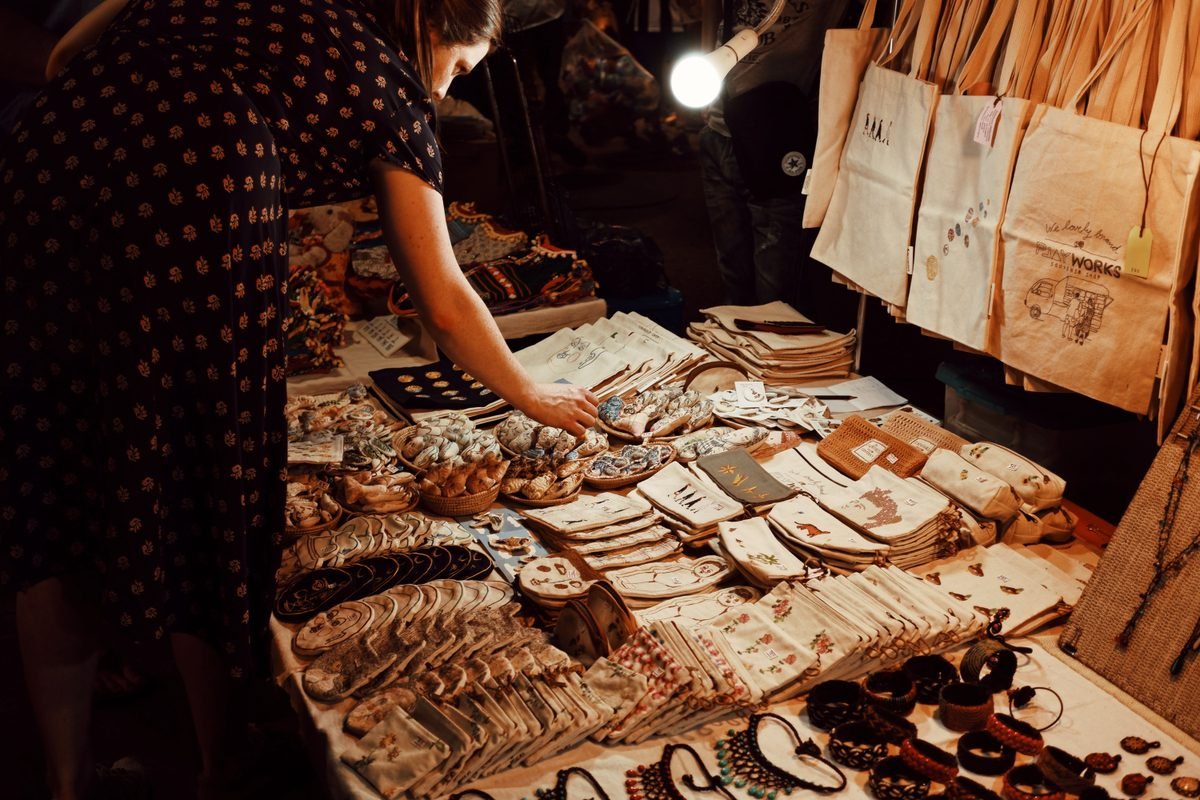
Spend your final evening at the night market, which takes over the main street from 5:00 PM. This is one of the most relaxed markets in Asia. The vendors, many from the Hmong hill tribes, do not shout or haggle aggressively. You can find hand-woven silk scarves, indigo-dyed shirts, and intricate paper lanterns. A high-quality silk scarf might cost ₭150,000 (about $6.80). It is much quieter than what you might find in a Chiang Mai 3 day itinerary. Between the stalls, you will find alleys filled with food vendors selling grilled meats and vegetarian buffets for a few dollars.
Tip: Climb the Back Way
Use the staircase on the Nam Khan river side (near Wat Siphoutthabath) to go up Mount Phousi; it is less crowded and passes several interesting Buddha statues in the forest.
Where to eat in Luang Prabang
Lao food is distinct from its neighbors, relying heavily on bitter herbs, fermented fish, and wood-fire grilling. Sticky rice is the foundation of every meal. It is served in small woven baskets called tip khao, and you should eat it with your hands, rolling a small ball to dip into sauces. One of the most famous dishes is Or Lam, a thick stew made with dried buffalo meat, eggplant, and a spicy wood called sakhaan that creates a numbing sensation on the tongue. You can find excellent Or Lam at Tamarind or Bamboo Tree for about ₭90,000 (about $4.10).
Another staple is Khao Soi, which is different from the coconut-based version in Thailand. In Luang Prabang, it is a clear noodle soup topped with a heavy, fermented soybean and minced pork ragu. The best place to try this is at the small stalls across from Wat Sen in the morning. A bowl costs about ₭40,000 (about $1.80). For a snack, look for Khanom Krok, which are small, sweet coconut milk pancakes cooked in a dimpled iron pan. They are sold in sets of ten for ₭15,000 (about $0.70) and are served in a banana leaf cone. The flavor is rich and slightly salty.
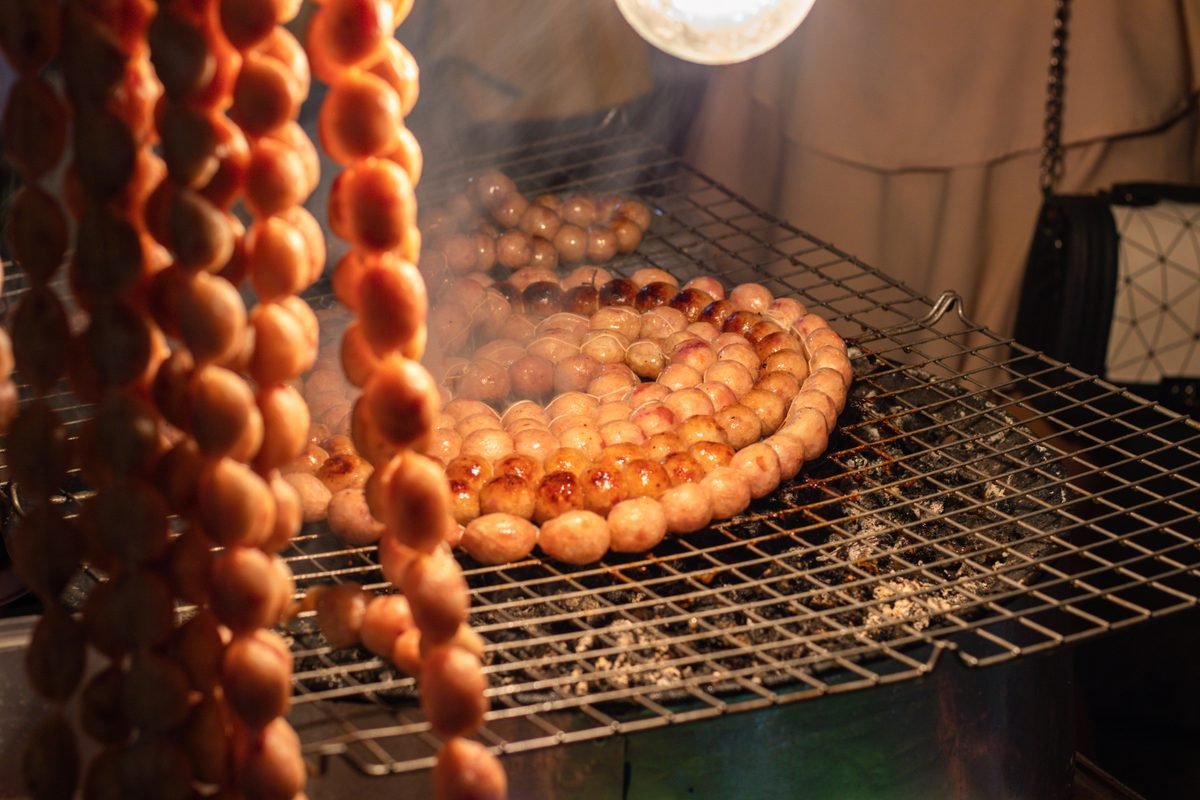
If you want to try a variety of flavors, look for a “Lao platter” which usually includes Luang Prabang sausage (herb-heavy pork), Jeow Bong (a sweet and spicy chili paste with buffalo skin), and Kai Pen (fried river weed topped with sesame seeds). This is very similar to the variety found in a Hanoi Street Food Guide, where fresh herbs are the star. For a drink, nothing beats a cold Beerlao while sitting at a wooden table overlooking the Mekong. A large bottle costs about ₭30,000 (about $1.40) at a riverside cafe. The atmosphere is social and easy-going, making it easy to meet other travelers.
From a local: The Best Coconut Cakes
The lady who sets up her Khanom Krok stand near the corner of the night market and the post office has been there for years; her cakes are the crispiest in town.
Practical tips for visiting Laos
The local currency is the Lao Kip (LAK). Due to high inflation, prices in Kip can change frequently, and many larger businesses or tour operators may quote prices in US Dollars or Thai Baht. However, for daily life, you should use Kip. ATMs are plentiful in the town center, but they often have a low withdrawal limit of about ₭2,000,000 (about $90) and charge a fee of ₭30,000 to ₭50,000 per transaction. It is often better to bring clean, crisp US Dollar bills and exchange them at the money changers near the morning market for a better rate.
Wi-Fi is available in almost every cafe and guesthouse, but it can be slow or unstable during heavy rain. If you need a reliable connection, buy a local SIM card from a Unitel or Lao Telecom shop. A 30-day data package with 10GB of data costs roughly ₭150,000 (about $6.80). You will need your passport to register the SIM. Coverage is generally good within the town and at major tourist sites like Kuang Si, but it will drop out quickly once you head into the mountains on the train or bus.
Respectful behavior is the most important part of your visit. Laos is a deeply conservative Buddhist country. Beyond the temples, you should dress modestly in public areas. Avoid raising your voice or showing outward signs of anger, as this is considered a loss of face and is very counterproductive. When entering a home or some small shops, remember to remove your shoes. A simple “Sabaidee” (hello) and a smile go a long way in making connections with the locals, who are among the most welcoming people you will meet in Southeast Asia.
What it costs in Luang Prabang
| Item | Local price | USD |
|---|---|---|
| Shared van from railway station | ₭40,000 | $1.80 |
| Entry to Wat Xieng Thong | ₭20,000 | $0.90 |
| Kuang Si Falls entry and transport | ₭125,000 | $5.70 |
| Sunset boat trip (private) | ₭150,000 | $6.80 |
| Mid-range dinner for two | ₭300,000 | $13.60 |
| Guesthouse (mid-range, per night) | ₭800,000 | $36.40 |
| Daily total (per person) | ₭1,200,000 | $54.50 |
Prices checked October 2026. Always confirm with the provider before you book.
Where to stay in Luang Prabang
Budget
Old Town, near the Morning Market
This area is perfect for those who want to be steps away from the alms giving and the best local breakfast stalls. Expect simple fan or AC rooms in traditional wooden houses for ₭350,000 to ₭500,000 ($16-$23).
Mid-range
Nam Khan Riverfront
The quieter side of the peninsula offers boutique guesthouses with balconies overlooking the river. It is a five-minute walk to the night market and rooms generally cost ₭800,000 to ₭1,500,000 ($36-$68).
Splurge
Outer Town Resorts
Located a 10-minute tuk-tuk ride from the center, these properties offer infinity pools and lush gardens. These converted villas or modern eco-resorts range from ₭3,500,000 to ₭7,000,000 ($160-$320) per night.
Mistakes to avoid
- Wearing revealing clothing during the alms giving ceremony.
- Using a camera flash when photographing monks.
- Trying to haggle aggressively at the night market where prices are already fair.
- Not booking train tickets the day the seven-day sales window opens.
- Forgetting to bring a light jacket for the cold water at Kuang Si Falls.
FAQ
Is three days enough time in Luang Prabang?
Yes, three days allows you to see the major temples, visit the waterfalls, and enjoy the sunset without feeling rushed. It is the perfect amount of time to get a feel for the town’s rhythm before moving on to Vang Vieng or Nong Khiaw.
What is the best time of year to visit?
The best time is from November to February when the weather is cool and dry. October is also good as the landscape is lush and green after the rains, though you might still have occasional afternoon showers.
Can I drink the tap water in Luang Prabang?
No, you should never drink the tap water. Most guesthouses provide large jugs of filtered water for free, and bottled water is available at every convenience store for about ₭10,000.