How to Use Post Office Shipping Services in Seoul

A customer packing bench at a central Seoul post office is one of the most practical spaces in the city. Rolls of clear tape hang on iron dispensers, glue sticks stand in plastic cups, and clean scissors wait beside flat cardboard cartons stacked neatly by size from one to five. When your luggage fills up after hauling skincare haul boxes through Myeongdong or ceramic bowls home from Insa-dong, lugging extra suitcases across subway transfers makes no sense. The postal system here, Korea Post, offers one of the smoothest, most affordable ways anywhere in Asia to send purchases straight to your doorstep back home or forward heavy bags between Korean cities.
This step-by-step guide walks you through exactly how to use post office shipping services Seoul branches run every weekday. We will cover finding your nearest branch, buying standard cartons at the counter, assembling and weighing your parcels, filling out the electronic EMS customs declaration smoothly on your phone or at the desk kiosk, understanding restricted goods, and calculating your shipping bill in Korean won.
How a Korea Post Branch in Seoul Is Laid Out
Walking into a neighborhood Korea Post branch (우체국, ucheguk) feels calm once you understand the rhythm of the floor. You will spot the red and yellow swallow logo hanging over the entrance of any district station across town. Most branch lobbies open Monday through Friday from 09:00 to 18:00, though parcel acceptance counters often stop processing international dispatches around 17:30. Weekend shipping is not offered at standard post offices, so plan your packing run during regular weekday business hours.
When you walk inside, ignore the automated bank queue machine near the door. Korean post offices handle both postal operations and state savings banking under one roof. The banking queue dispenses blue slips labeled geumyung (금융), while the parcel and mail windows handle upyeon (우편). Head straight toward the mailing counters or look for the number dispenser marked for mail. If you need to box up loose goods, you do not even take a number right away. You head straight to the communal self-service packing desk situated along the window or back wall.
Korean postal branches provide communal packing tables stocked with heavy tape dispensers, plastic strapping tools, safety box cutters, permanent markers, and stacks of newspaper or leftover bubble film. The packing tools are completely free to use. You assemble your carton, bubble-wrap your fragile items, tape up the seams, write your destination details, and then pull a paper ticket from the mailing queue machine when your box is fully sealed and ready for the scale. The system is designed for self-sufficiency.
Navigating to branches is straightforward if you check local navigation tools. If you are comparing transit options on your phone, remember that Naver Map vs Kakao Map for Tourists will give you the exact building entrances and service hours that foreign map apps often miss in Seoul.
Tip: Queue Ticket Sequence
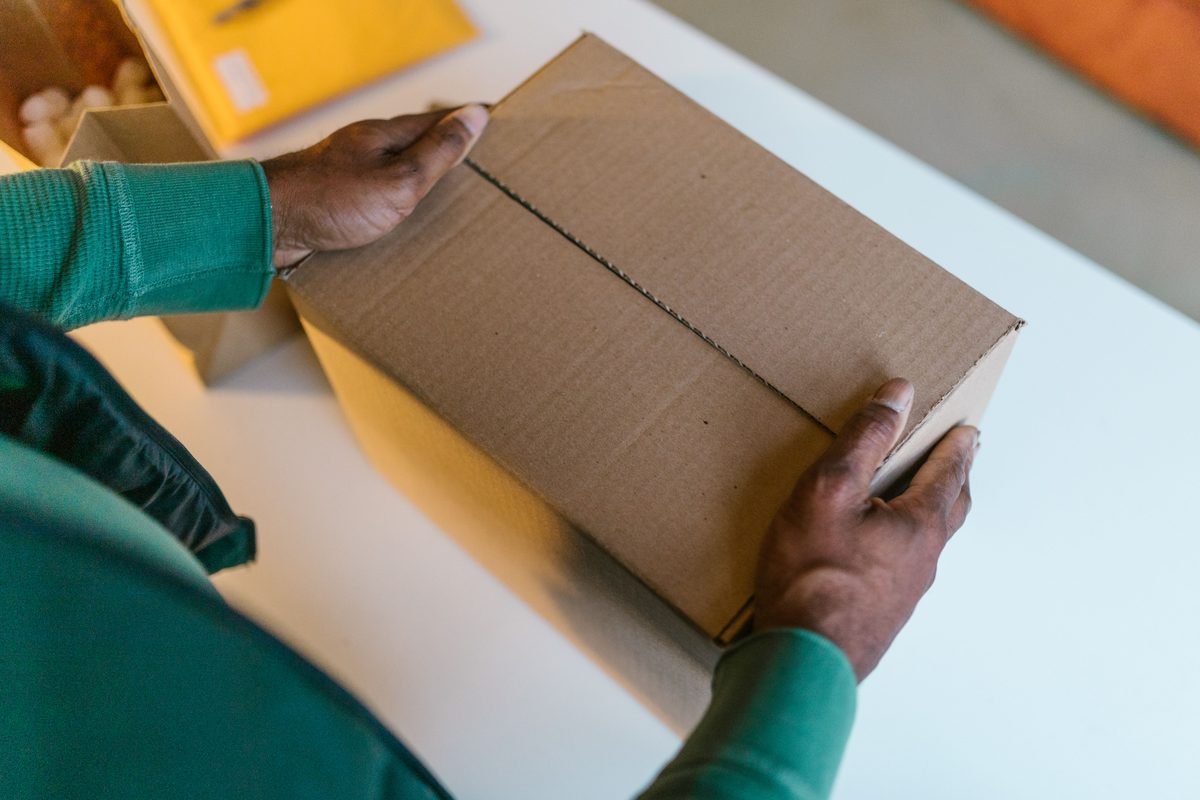
Pack and seal your parcel completely before taking a queue number from the postal ticket machine. Postal clerks work quickly and call numbers in rapid succession, so having an unsealed box at the window slows down the line.
Korea Post Standard Box Sizes and Packaging Stations
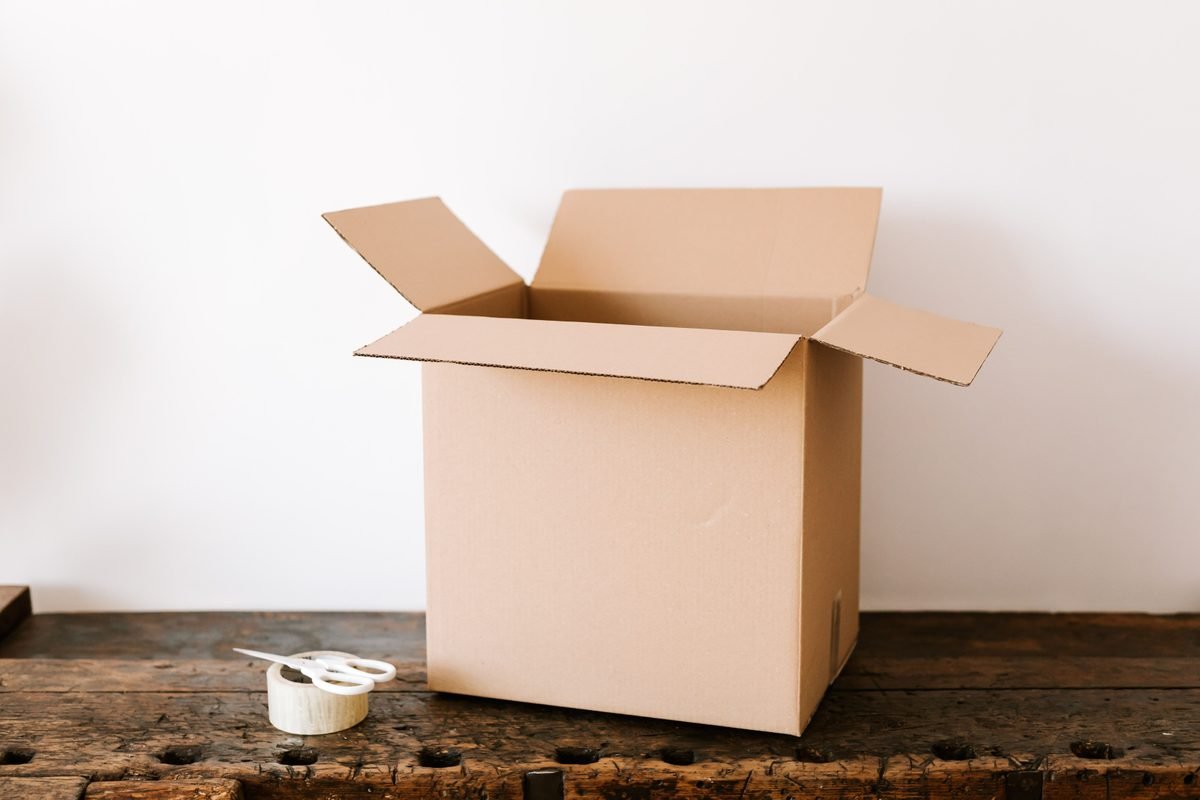
You do not need to bring your own shipping container to the post office. Korea Post stocks heavy-duty, double-walled brown corrugated cartons manufactured specifically to withstand regional and international postal sort facilities. These standardized boxes are sold directly on the floor or behind the clerk counter and come in five standard dimensions numbered from Size 1 to Size 5.
The smallest carton, Size 1 (22 × 19 × 9 cm), is ideal for compact jewelry, small cosmetic bottles, or charging cables and costs ₩700 (about $0.55). Size 2 (27 × 18 × 15 cm) works well for smaller fashion items, vitamins, or packaged face masks and sells for ₩800 (about $0.60). Size 3 (34 × 25 × 21 cm) is the most versatile option for general shopping, easily swallowing several cosmetic sets or bulky sweaters for ₩1,100 (about $0.85). Size 4 (41 × 31 × 28 cm) costs ₩1,700 (about $1.30) and accommodates winter coats, footwear, or larger pottery wrapped in cushioning. Size 5 (48 × 38 × 34 cm) is the maximum regular domestic box, priced at ₩2,300 (about $1.75). It holds full luggage contents or thick blankets.
Take the flat carton you need from the shelf beside the bench. In smaller neighborhood branches, you simply pull the flat cardboard box, build it, pack your belongings, and let the window teller add the box fee to your final shipping charge at payment. In high-volume central offices, such as the Seoul Central Post Office in Myeongdong, you may pay a dedicated packing attendant a few hundred won in cash or card first, or settle up at an automated counter. Bubble wrap (ppokppoki) is usually available in rolls near the packing desk. Feel free to use enough padding to keep fragile ceramics from shifting. Pack items tightly to avoid denting during sorting.
From a local: Box Sizing Limits
For international EMS, the maximum length must not exceed 1.5 meters, and the total of length plus twice the width plus twice the height cannot exceed 3 meters. Standard Post Office Box 5 falls safely inside these international dimensional restrictions.
How EMS International Shipping Works from Seoul
When sending items from Seoul across the globe, Express Mail Service (EMS) is the flagship option provided by Korea Post. EMS connects directly into national postal systems like USPS in the United States, Royal Mail in the United Kingdom, Canada Post, and Australia Post. For destinations requiring specialized express logistics or handling oversized items outside regular postal dimensions, Korea Post also operates EMS Premium in partnership with UPS. Parcels sent via standard EMS generally reach North America and Western Europe within four to seven business days, barring customs holds.
Before you place your parcel on the counter scale, you must complete an electronic customs declaration. Handwritten paper EMS waybills have been phased out across South Korea to comply with global customs data mandates. Fortunately, the electronic submission process is smooth. Every postal branch provides posters with QR codes that link directly to the multilingual Korea Post mobile declaration page, and larger offices maintain dedicated touchscreen computer kiosks where you can type in your sender and receiver details.
You will need your temporary local lodging address or hotel name in Seoul, your overseas home address, a working contact phone number, and an itemized breakdown of what is inside the box. You do not need an official Korean digital ID or resident registration number to fill out the guest customs form. You can select English on the kiosk or website interface, enter your passport details if prompted, specify whether the parcel is a commercial merchandise order or an unaccompanied personal gift, and submit the manifest. Once submitted, the system generates a mobile barcode or reference number on your phone screen.
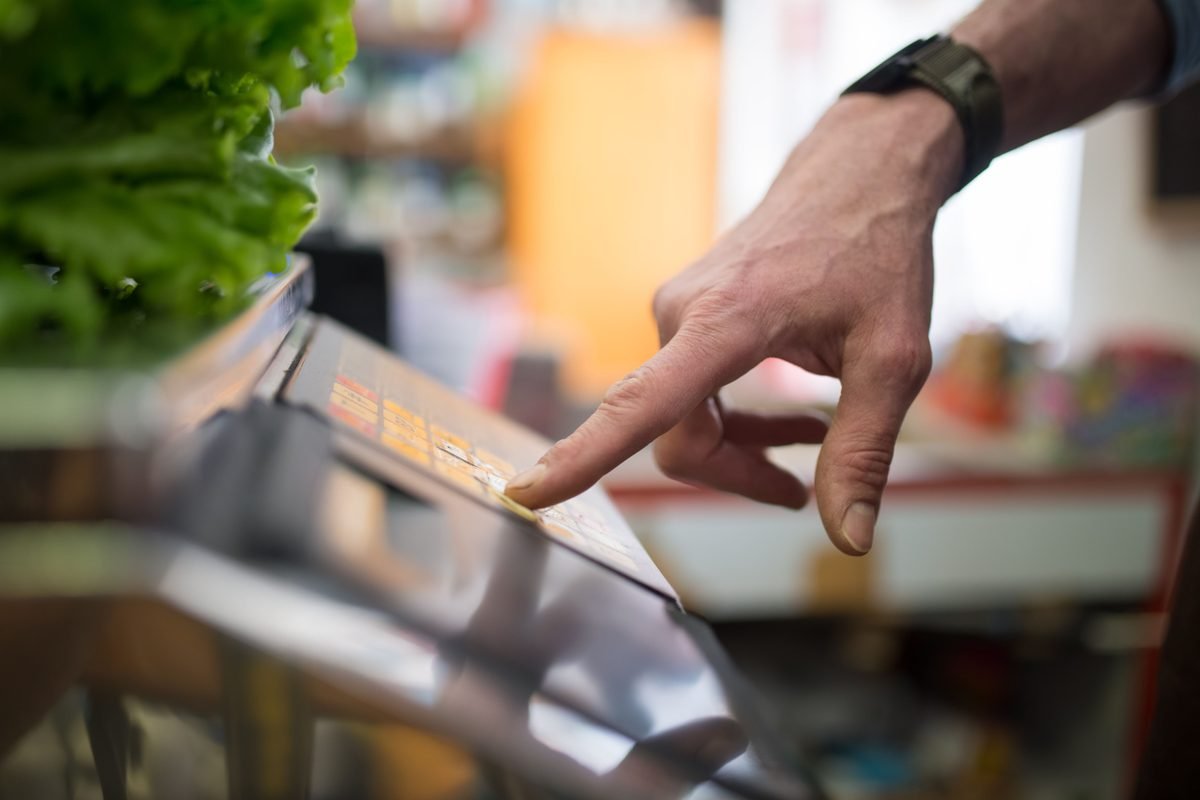
When your queue number appears above the window, step up to the teller. Hand the clerk your sealed carton and present the barcode on your phone. The teller scans the code, places your carton on the digital scale, confirms the destination nation, and prints out the final adhesive shipping label with tracking details automatically loaded.
Customs Declaration Forms and Valuation Guidelines
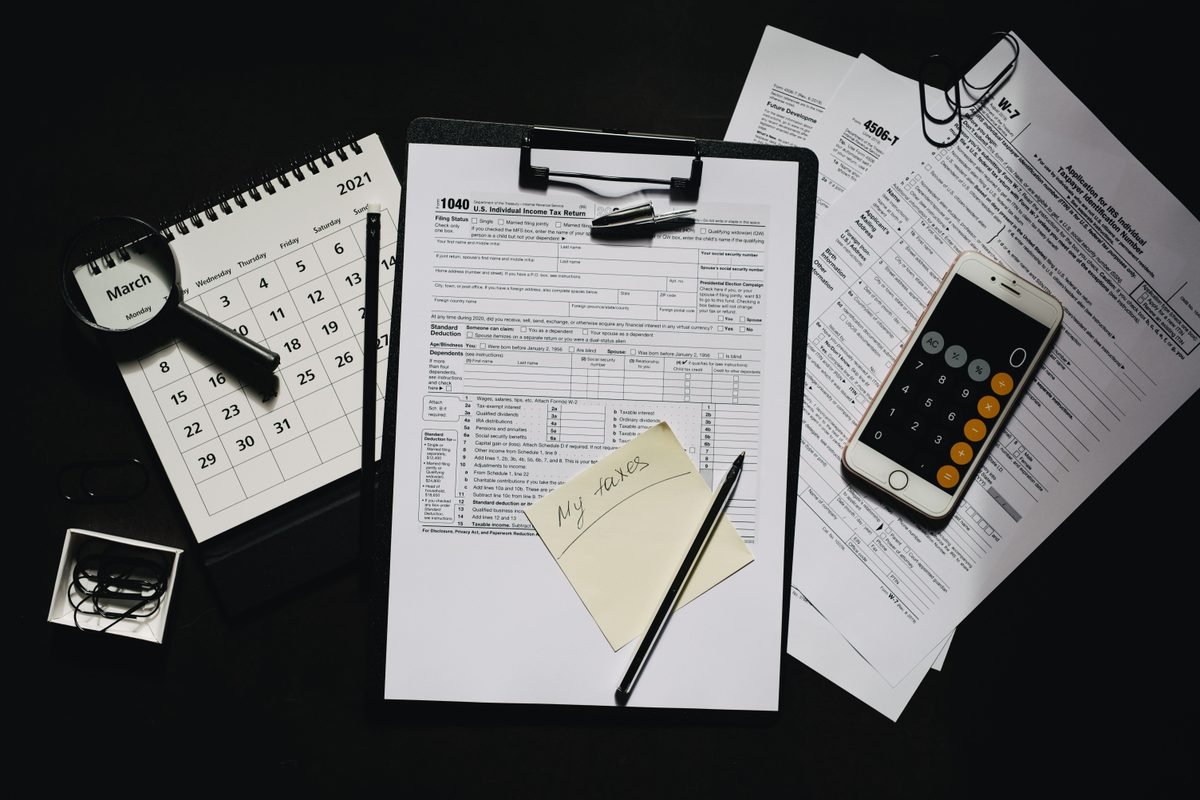
Filling out the customs manifest accurately prevents your package from getting flagged, opened, or delayed at destination border checkpoints. The digital declaration asks for three main pieces of item data: the specific category description, the quantity of each piece, and the estimated value in either Korean won or US dollars. Avoid vague generic labels. Writing ‘goods’ or ‘presents’ on the form will trigger automated rejections at the sorting hub.
Be precise with your labels. Write ‘cotton t-shirts’, ‘ceramic tea mugs’, ‘printed paper books’, or ‘facial sheet masks’. If you loaded up on skin essences and moisturizers after reading a Korean skincare shopping guide Seoul article, list them separately as skincare creams or serum samples rather than broadly writing ‘cosmetics’. This precision keeps customs screeners from suspecting pressurized aerosols or flammable alcohol solutions.
Always declare realistic purchase values. Many travelers wonder whether declaring an artificially low dollar value saves them import taxes back home. Keep in mind that your parcel insurance payout directly hinges on the declared value you enter. If you declare a collection of handmade Korean plates at ₩20,000 (about $15) to minimize customs scrutiny and the box gets damaged in transit, the post office will cap compensation at that declared amount rather than its actual replacement value.
Furthermore, destination customs agencies enforce distinct duty-free import thresholds. The United States allows generous duty-free entry for personal goods up to $800, whereas the European Union, the UK, and Australia apply local VAT or customs duties at far lower thresholds. If you are shipping your own used clothing and worn gear home to free up suitcase space, tick the box for ‘Personal Effects’ (이사화물 / 개인용품) on the digital form. Marking personal used garments helps clarify to overseas agents that the shipment does not represent untaxed retail transactions.
Heads up: Accurate Contact Details
Always provide an international phone number and email address that you actively monitor while traveling. If destination customs agents require identification or invoice clarification, they will reach out through those details before returning the carton to Korea.
Prohibited Items Checklist for Korean Air Mail
Aviation security standards at Incheon International Airport are strict. Every single carton sent via EMS passes through high-resolution X-ray inspection arches at the international logistics terminal before loading onto cargo holds. If prohibited items are flagged inside your box, your shipment gets rejected, returned to the local Seoul branch, and held until you retrieve it, forfeiting expensive air transit fees.
The most frequent pitfall for departing tourists involves lithium batteries. Standalone power banks, rechargeable camera batteries, wireless earbuds, electronic toothbrushes, and portable heated hand warmers cannot fly via air postal mail under any circumstances. If you bought portable electronics in Yongsan or Hongdae, pack them directly in your carry-on aircraft cabin baggage instead of mailing them. Devices with non-removable built-in lithium batteries face heavy restrictions and are widely refused at post office counters.
Liquid cosmetic limits and aerosol cans represent another regular stumbling block. Pressurized hair sprays, facial mist cans powered by propellant gas, room scents, and flammable nail polishes are strictly forbidden from air post. Perfumes containing high concentrations of denatured alcohol cannot ship via EMS. Liquid skin lotions, toners, and moisturizers are allowed, but they must be securely sealed to avoid leaks. If you bought traditional liquor like artisanal soju or makgeolli in town, note that high-proof alcohol cannot fly through regular postal parcels.
Fresh agricultural products, dried meats, sausages, and fresh ginseng roots are also barred from international mailings due to strict biosecurity quarantine treaties in destination countries. Commercially sealed, processed snacks like potato chips, packaged instant noodles, seaweed sheets, and vacuum-sealed candies are completely acceptable. Keep your shopping receipts inside the box or photographed on your phone in case inspectors request proof of contents.

Domestic Shipping and Luggage Forwarding Options
Korea Post is not just for sending packages halfway across the earth. It is also an extraordinarily cheap domestic freight courier for traveling around South Korea. If you plan to hike trails on Jeju Island or spend a week touring historic alleys in Gyeongju before circling back to Seoul, traveling light transforms the entire journey. Hauling hard-shell rolling suitcases onto high-speed trains or regional buses is exhausting. You can box up your excess shopping, winter parkas, or heavy hiking boots at any Seoul post office and dispatch them ahead to your future accommodation anywhere in the country.
Domestic parcel delivery (우체국 택배, ucheguk taekbae) takes one to two business days almost anywhere on the mainland. A standard Box 3 or Box 4 weighing under five kilograms costs around ₩4,500 to ₩5,000 (about $3.40 to $3.75) for mainland transit. Even sending a hefty 10-kilogram carton down to Busan or across to Gangwon-do rarely tops ₩7,000 (about $5.25). Shipping across the water to Jeju Island incurs a modest island surcharge of roughly ₩3,000 (about $2.25), but delivery remains remarkably fast.
To send parcels domestically, you do not need an electronic customs declaration. You simply pick up a sticky domestic address slip (택배 송장) from the desk. Write the recipient hotel or guesthouse name, their local Korean phone number, and the full address in either Korean script or clear English block letters. Always message your destination lodging beforehand to confirm they accept guest deliveries. For travelers seeking station-to-hotel baggage delivery without packing boxes, private options explained in our guide on whether does Korea have luggage forwarding provide alternative same-day luggage transfers directly from Incheon Airport or train stations.

Tip: Hotel Delivery Etiquette
Write your reservation guest name and check-in date clearly on the shipping box in bold marker beside the hotel address. This ensures front desk clerks store your parcel safely until you arrive at the reception desk.
What it costs in Seoul
| Item | Local price | USD |
|---|---|---|
| Standard Box No. 1 (22×19×9 cm) | ₩700 | $0.55 |
| Standard Box No. 3 (34×25×21 cm) | ₩1,100 | $0.85 |
| Standard Box No. 5 (48×38×34 cm) | ₩2,300 | $1.75 |
| Domestic Mainland Parcel (under 5 kg) | ₩4,500 – ₩5,000 | $3.40 – $3.75 |
| Domestic Parcel to Jeju Island (under 5 kg) | ₩7,500 – ₩8,000 | $5.65 – $6.00 |
| EMS to USA / Canada (2 kg parcel) | ₩45,000 – ₩55,000 | $33.75 – $41.25 |
| EMS to UK / Europe (2 kg parcel) | ₩42,000 – ₩50,000 | $31.50 – $37.50 |
| Typical 4 kg Souvenir Parcel via EMS (Box + Post) | ₩65,000 – ₩85,000 | $48.75 – $63.75 |
Prices checked October 2026. Always confirm with the provider before you book.
Mistakes to avoid
- Packing portable power banks or loose lithium-ion camera batteries inside international EMS boxes, causing the parcel to be returned from Incheon Airport security.
- Taking a queue ticket at the entrance before finishing packing and taping your parcel at the work tables.
- Using vague generic descriptions like ‘gift’ or ‘merchandise’ on digital customs forms instead of specific item names like ‘cotton shirt’ or ‘paper book’.
- Sending alcohol or pressurized aerosol cosmetics via air post, which triggers immediate confiscation or rejection at postal sorting centers.
- Declaring unrealistically low item valuations to bypass home customs, which caps maximum insurance reimbursement if the box is damaged or lost in transit.
FAQ
Can tourists send packages from Korea Post without an alien registration card?
Yes. Foreign visitors can easily ship packages domestically and internationally using a valid passport for identification. The mobile customs declaration system allows you to complete manifests as a temporary guest using your hotel address.
Do Seoul post offices accept international credit cards for shipping fees?
Yes, postal counters across Seoul accept foreign Visa, Mastercard, and American Express cards alongside local payment cards and cash. You can pay for packing boxes, packing tape supplies, and postage fees in a single card transaction.
How long does EMS take to arrive from Seoul to the US or Europe?
Standard EMS shipments generally take four to seven business days to reach major metropolitan addresses in North America and Western Europe. Remote rural deliveries or customs clearance holds in your destination country can occasionally extend transit times to ten business days.
What happens if my package contains an item rejected by airport security?
Korea Post flags the package at the Incheon hub and returns it to the originating local post office in Seoul. The post office sends an alert to the contact phone number or email you submitted on the declaration form so you can retrieve your goods.