A Local Seoul Second Hand Book Street Cheonggyecheon Guide

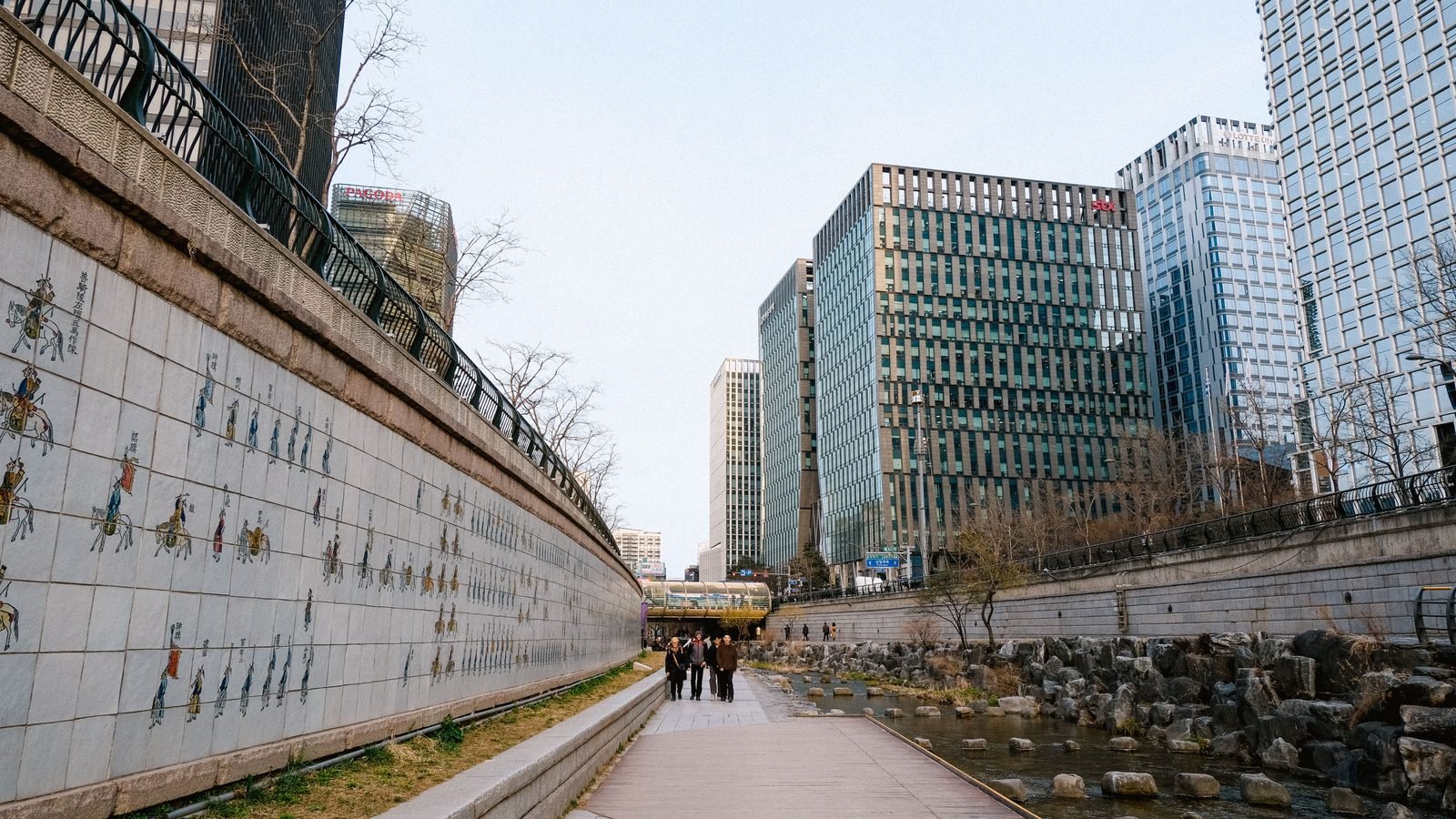
The air smells like paper and old ink as soon as you step off the main road and onto the narrow walkway beside the stream. In this corner of Seoul, the glass skyscrapers of the business district feel miles away, replaced by stacks of weathered paperbacks that reach toward the corrugated metal ceilings. I have spent many Saturday afternoons here, tracing the spines of books that have outlived their original owners, looking for that one rare photography collection or a faded map of the city from forty years ago.
This Seoul second hand book street Cheonggyecheon guide is for the traveler who prefers the scent of dust to the scent of new plastic. Whether you are hunting for vintage art books, out-of-print English guides, or just a quiet place to get lost in the stacks, this area offers a tangible link to the city’s past. I will cover how to find the best stalls, what to expect when you start browsing, and how to combine your visit with the nearby flea markets for a full day of vintage hunting.
Getting to the Cheonggyecheon second-hand book street
The core of the book market is located along the southern bank of the Cheonggyecheon stream, specifically between the bridges of Ogansugyo and Yeongdogyo. For those arriving by subway, the most efficient route is to head to Dongmyo Station on Line 1 or Line 6. Take Exit 3 and walk toward the stream; you will immediately find yourself in the middle of a lively flea market that eventually transitions into the specialized book stalls. Alternatively, you can use Dongdaemun Station (Line 1 and 4) and walk east for about ten minutes along the water. Look for the yellow signs. These markers help identify the official association of second-hand book sellers who have occupied this stretch for decades.
Navigating the Stacks
Unlike the polished chains in Gangnam, these shops do not have a digital database. You cannot simply walk in and ask the owner to check a computer for a specific ISBN. Instead, the geography of the street is the catalog. The shops are small, often no wider than a single room, but they utilize every inch of vertical space. Books are stacked in columns that frequently lean against the walls, creating narrow canyons where only one person can pass at a time. If you are looking for something specific, it helps to use Naver Map vs Kakao Map for Tourists to pin the exact coordinates of the larger shops like Pyeonghwa Bookstore, though half the fun is the accidental discovery of a shop you didn’t know existed. Most owners are elderly men who have been here since the 1970s or 80s. They may not speak much English, but they have an encyclopedic knowledge of their own inventory. If you show them a photo of a cover or a name written in Korean, they can often point you to the exact pile where it might be buried.

Hunting for vintage art books and English guides
The variety of inventory on Cheonggyecheon is staggering, but for international visitors, the art and history sections are the most rewarding. You will find massive coffee-table books documenting Korean traditional architecture, Buddhist art, and ceramics. These are often priced at a fraction of their original cost, sometimes as low as ₩10,000 (about $7.50) for a volume that would cost $50 new. The printing quality in Korea is exceptionally high, and even if you cannot read the Korean text, the photography and diagrams are worth the weight in your suitcase. I often look for the ‘Visual Korea’ series or old exhibition catalogs from the National Museum of Korea.
English Language Finds
For those looking for English material, keep an eye out for the ‘Foreign Books’ signs, which are often written in English. These sections are a mix of abandoned university textbooks, 1990s thrillers, and, most interestingly, old travel guides. Finding a 1980s guide to Seoul or a map of the city from before the 1988 Olympics is a special thrill. These books provide a window into how much the city has changed. You might also find English translations of Korean literature published by the Korea Foundation or local university presses. These are often hard to find outside of the country. If you find a book you like, check the condition carefully. Because many of these shops are open to the air, humidity can sometimes affect the paper. However, the owners generally take pride in keeping their best stock protected behind glass or in the drier back corners of the shop. Don’t expect a digital catalog. You must use your hands and eyes to find the treasures. Bring a sturdy tote bag. You will likely walk away with more than you intended to carry.


From a local: The Art Book Secret
Many of the best art books are hidden in the very back of the shops behind stacks of regular novels. Don’t be afraid to ask ‘Misul-chaek?’ (Art books?) and the owner will likely lead you to the heavy hitters.
Browsing the Dongmyo Flea Market connection
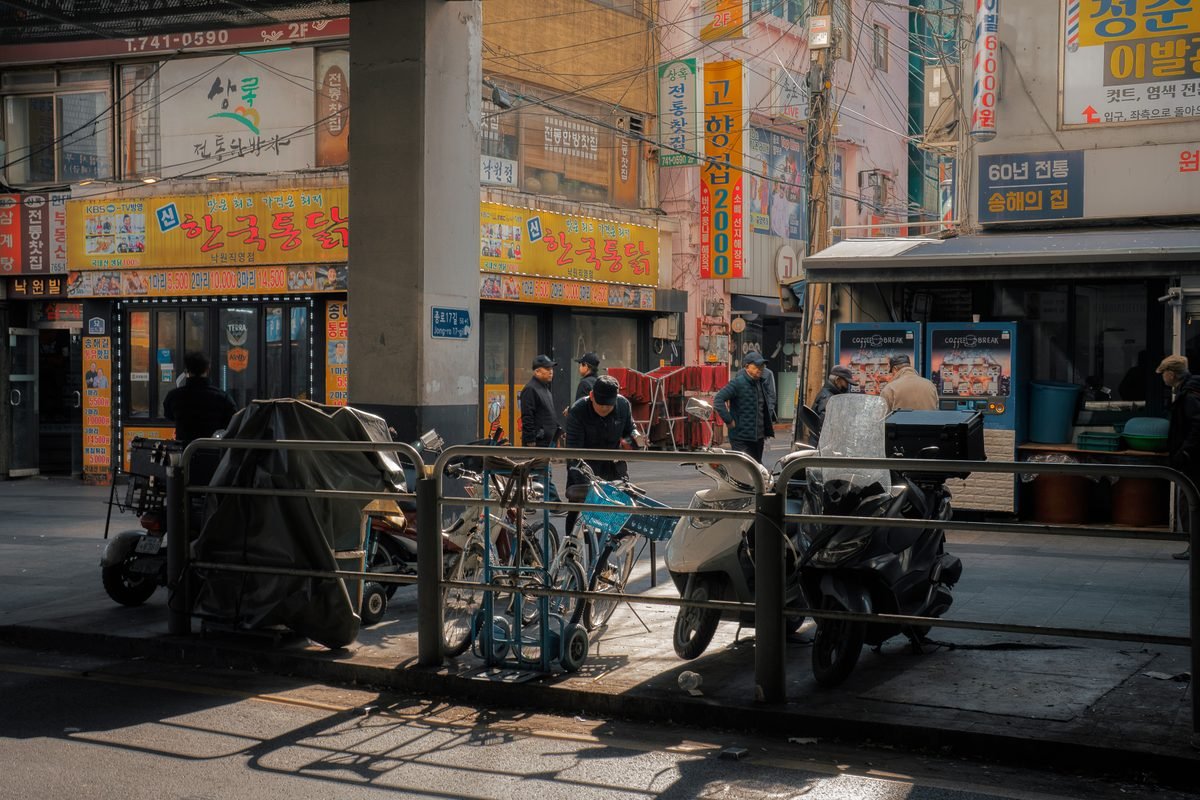
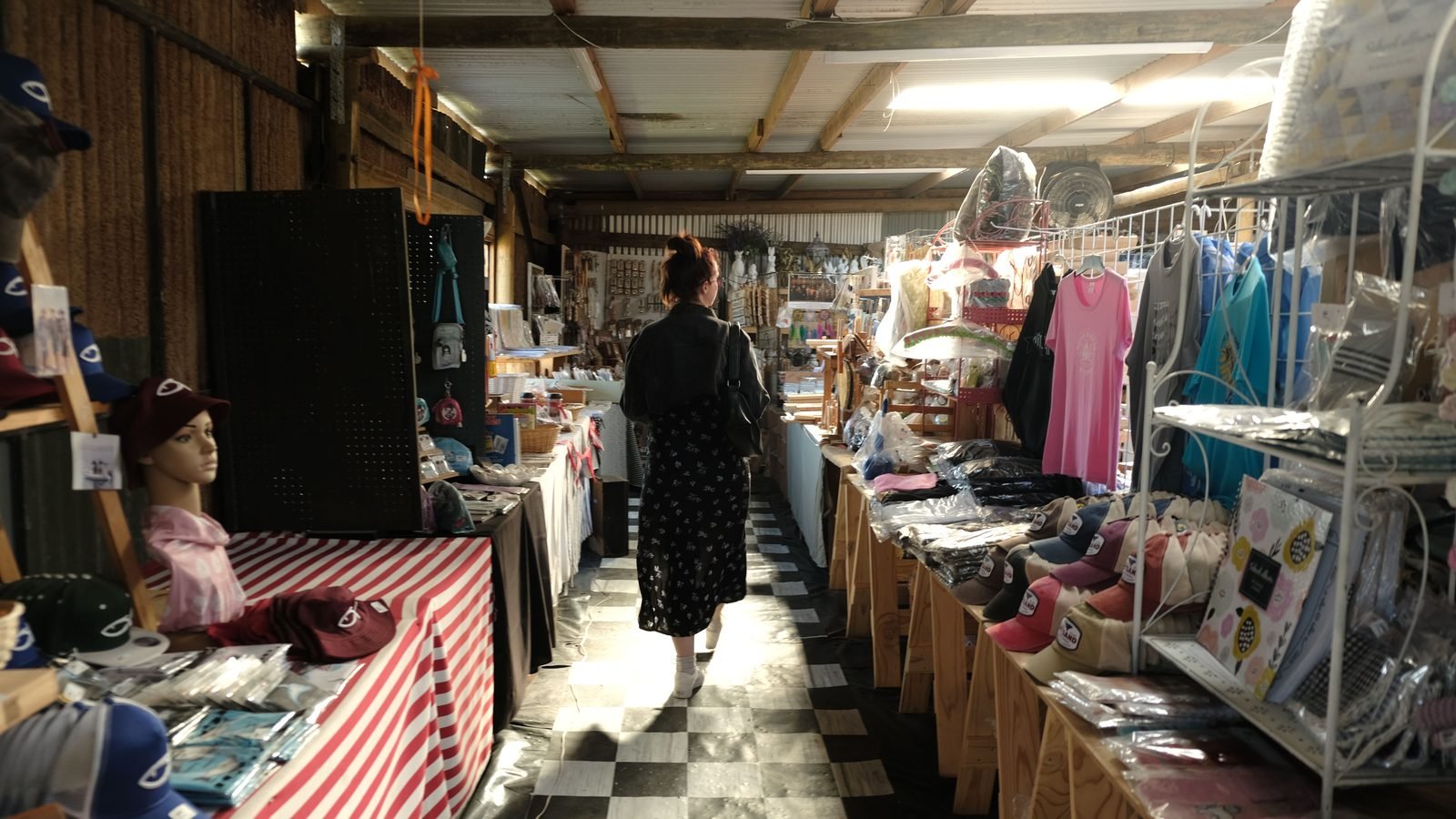
The book street doesn’t exist in a vacuum; it is the quiet sibling of the chaotic Dongmyo Flea Market. If you walk just a few minutes north from the stream, the atmosphere shifts from the hushed rustle of pages to the loud bargaining of clothes sellers. This area is often called the ‘elderly’s Hongdae’ because of the fashion-forward seniors who congregate here, but in recent years, it has become a magnet for younger Seoulites looking for vintage style. You can find everything here: 1970s film cameras, rotary phones, vinyl records, and mountains of second-hand clothes. Some of the clothes are sold by the kilogram, literally piled into hills on the pavement where shoppers dive in to find a brand-name jacket for ₩2,000 (about $1.50).
Vintage Furniture and Curios
Interspersed with the clothes are stalls selling curios that pair perfectly with a collection of old books. You might find brass candle holders, traditional wooden masks, or even mid-century Korean furniture. If you are interested in larger pieces, you should also check out our Seoul Vintage Furniture and Antique Market Guide which covers the more specialized shops in Dapsimni. On the book street itself, you might find old posters or postcards tucked inside the pages of magazines. These small ephemera are often my favorite finds. The flea market is at its peak on Saturday and Sunday afternoons. During the week, it is much quieter, and while there are fewer stalls, you have more room to move. In October, the weather is usually crisp and dry, which is perfect for spending three or four hours outdoors. Just be prepared for crowds. The energy is infectious, but it can be overwhelming if you aren’t used to the shoulder-to-shoulder shuffle of a Seoul market day.

How to negotiate and pay at the book stalls
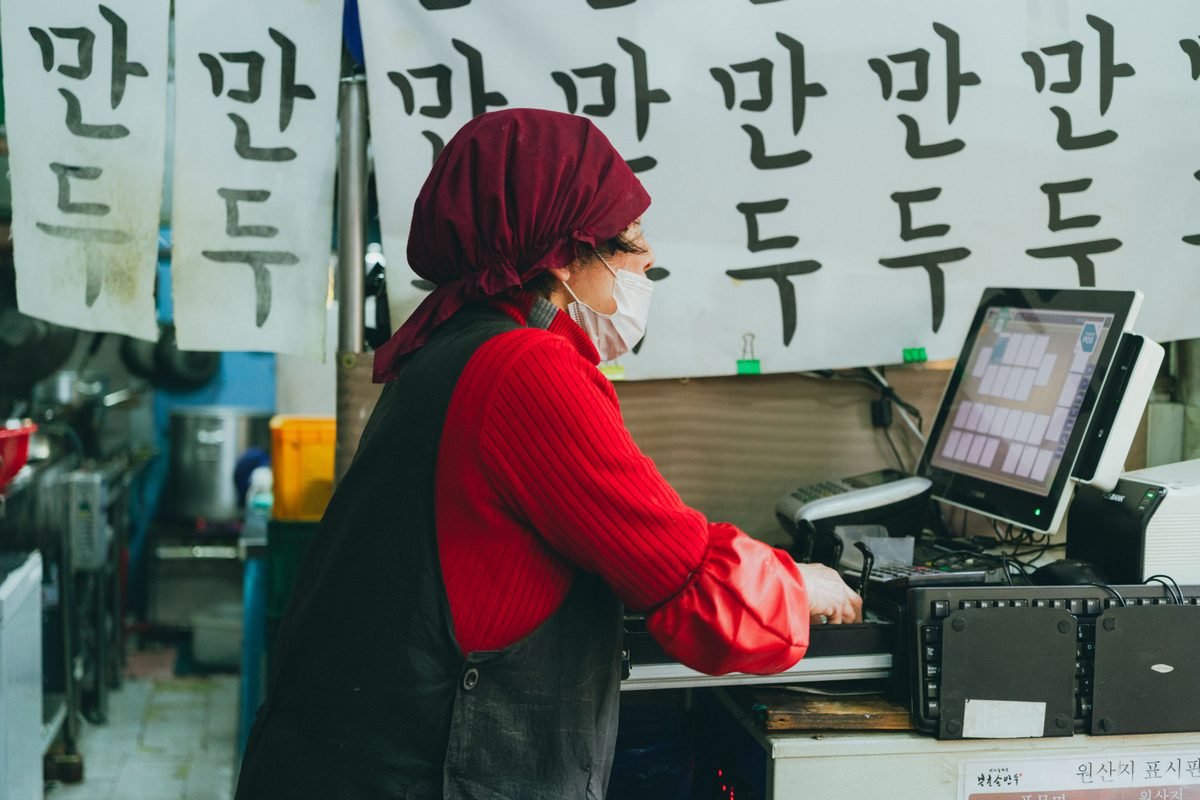
Negotiating the price of a book is different from haggling over a vintage jacket. In the book shops, prices are generally fair and based on the rarity and condition of the item. However, there is always a little room for a ‘service’ discount, especially if you are buying more than one item. Cash is king here. While some of the larger, more permanent shops might have a card terminal, the smaller stalls and the outdoor tables almost exclusively deal in cash or bank transfers. If you see a book priced at ₩12,000, offering ₩10,000 (about $7.50) is usually acceptable, but don’t push too hard if the owner refuses. These are small businesses with thin margins.
The Etiquette of Browsing
Because the stacks are so precarious, you should move with care. If you pull a book from the bottom of a pile, you might trigger a paper avalanche. It is always polite to ask before digging too deep. A simple ‘Bwado doelkkayo?’ (May I look?) goes a long way. If you find something you love, don’t put it back and expect it to be there in an hour. These items are often one-of-a-kind in this market. If you are worried about carrying heavy books all day, look for a Seoul Public Bicycle Ttareungi station nearby. You can rent a bike for ₩1,000 (about $0.75) for an hour and use the front basket to transport your haul back to your hotel or the nearest subway station. Just remember that cycling on the narrow sidewalks of the flea market is impossible; you will need to walk the bike to the main road first. Most shops open at ten in the morning and close around six or seven in the evening, though this varies by owner and weather.
Tip: The 'Service' Culture
In Korea, ‘service’ means something for free. If you buy three or four art books, the owner might throw in a small paperback or a vintage postcard for free. Don’t ask for it, but be grateful if it happens!
Where to eat and rest near Cheonggyecheon
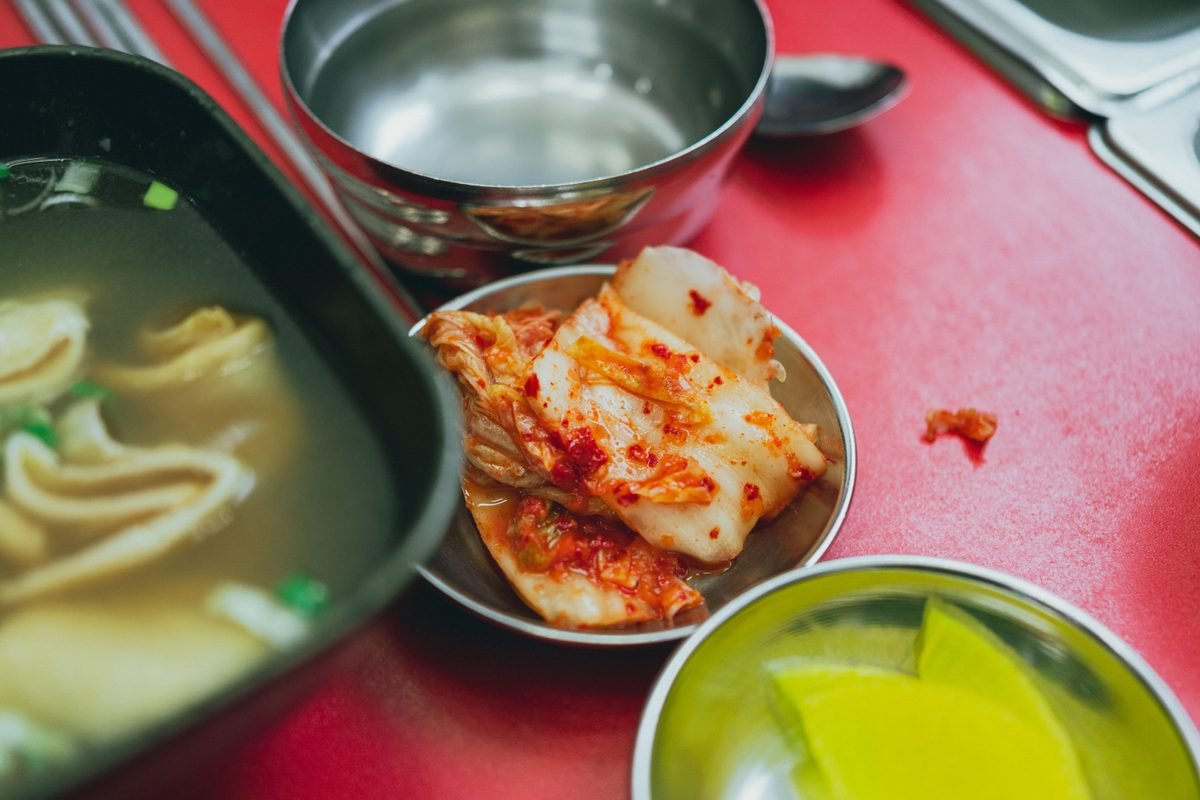
After a few hours of browsing, your back will likely be tired and your fingers will be covered in a thin layer of book dust. Fortunately, the area around Dongmyo and Dongdaemun is a goldmine for traditional, affordable food. Just behind the book street, you can find small alleys filled with ‘gukbap’ (soup with rice) restaurants that cater to the market workers. A bowl of hot beef bone soup will cost about ₩9,000 (about $6.75) and will give you the energy to keep going. For something even more local, look for the stalls selling ‘bindae-tteok’ (mung bean pancakes) or ‘tteokbokki’ (spicy rice cakes) right in the heart of the flea market. These are meant to be eaten standing up or on small plastic stools, providing a front-row seat to the market’s theatre.
Modern Cafes and Vinyl Breaks
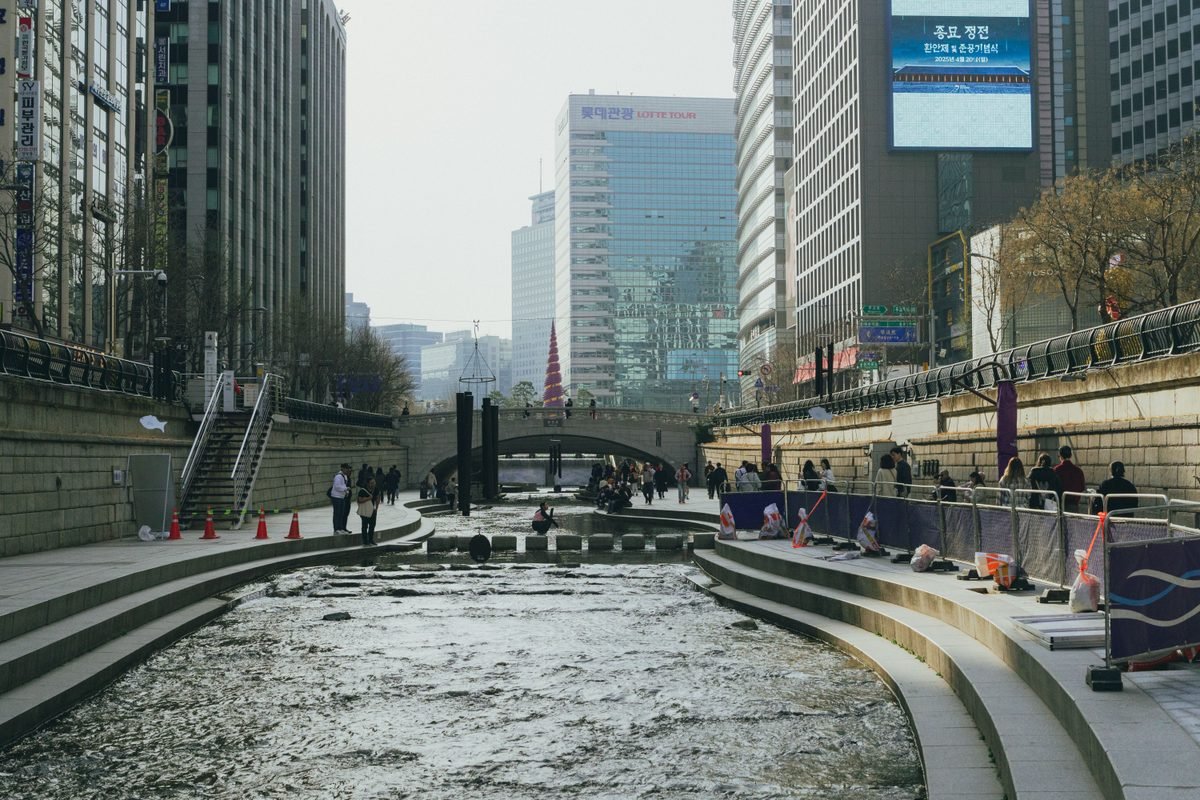
If you need a more modern break, the area toward Sinseol-dong has seen a surge in renovated warehouse cafes. These spots offer high-quality pour-over coffee and plenty of space to spread out your new purchases. For music lovers, the transition from vintage books to vintage records is a natural one. You might want to consult our Seoul Vinyl Record Bar and Music Lounge Guide to find a place where you can listen to some 1970s Korean psych-rock while you flip through your new art books. The stream itself also offers a place to rest. There are stone steps every few hundred meters where you can sit by the water and watch the ducks. It is a strangely peaceful contrast to the chaotic energy of the street above. In October, the trees along the water start to turn yellow and orange, making it one of the best times of year for a riverside stroll. Keep your T-money card handy for the bus or subway, as the base fare of ₩1,550 (about $1.15) makes it easy to hop to the next neighborhood once you have finished your hunt.
Practical tips for your book hunting trip
To make the most of your visit to the book street, timing is everything. While the flea market is busiest on weekends, the book shops themselves are more pleasant on a Tuesday or Wednesday. You will have the undivided attention of the owners, and the narrow aisles won’t be as crowded. Most shops open around 10:00 and start packing up by 18:00. If it is raining, many of the outdoor displays will be covered in plastic or moved inside, which significantly limits what you can see. October is generally the driest month in Seoul, so it is the ideal time for this trip. Make sure your phone is charged, as you will likely be using translation apps to read titles or signs. While Google Translate is okay, the ‘Papago’ app is much better for Korean-to-English translation, especially when using the camera feature to scan book covers.
Logistics and Storage
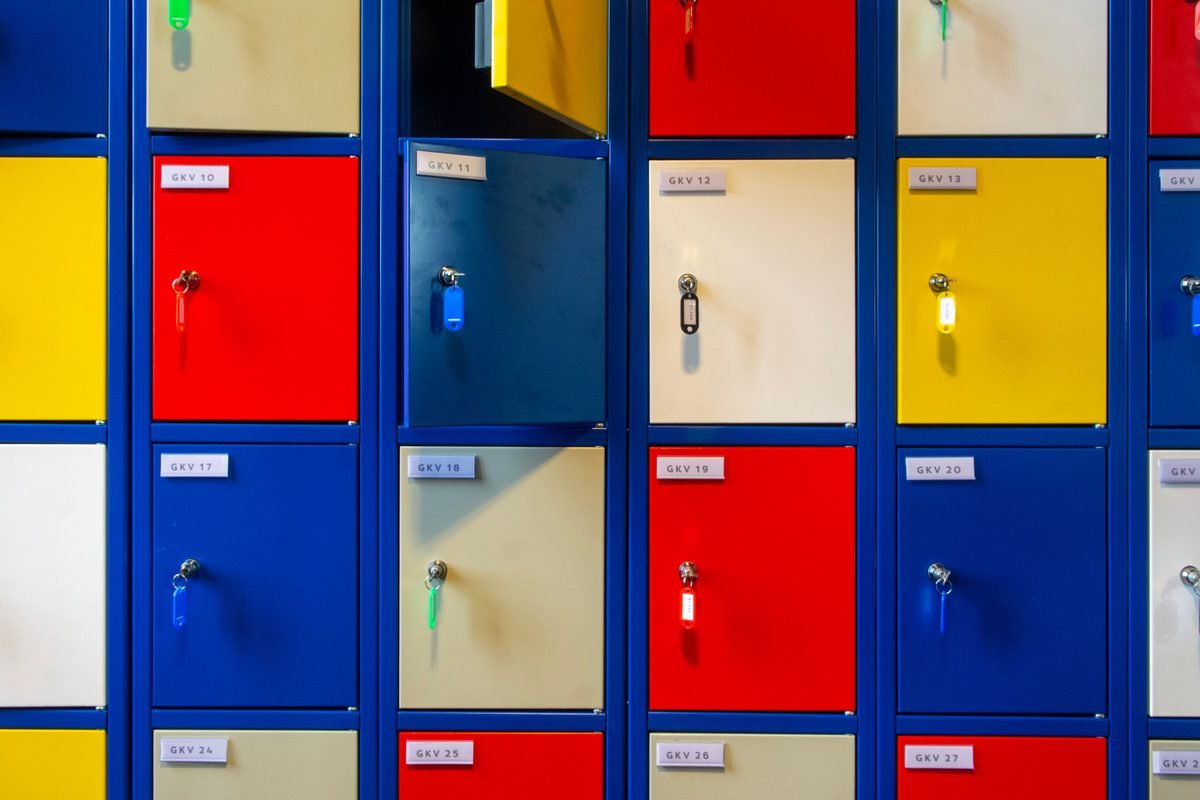
If you have bought a particularly heavy set of books and don’t want to carry them to your next destination, you can use the ‘T-Locker’ system found in almost every subway station. A medium-sized locker at Dongmyo Station will cost about ₩3,000 (about $2.25) for four hours. Alternatively, if you want to drop them off at a cafe or shop, the ‘Lugstay’ app allows you to book storage space at partner locations for a small fee. This is much better than trying to navigate a crowded bus with a ten-pound stack of art catalogs. Finally, remember that this is a working market. Be mindful of the small delivery motorcycles that zip through the alleys. They have the right of way and they won’t always slow down for browsing tourists. Keep your eyes up and your ears open, and you will have a fantastic time exploring one of Seoul’s most authentic corners.
Heads up: Monday Closures
While many shops are open seven days a week, a significant number of the older book dealers take Mondays off. To see the street at its full capacity, aim for a Tuesday through Sunday visit.
What it costs in Seoul
| Item | Local price | USD |
|---|---|---|
| Vintage Art Book | ₩10,000 – ₩30,000 | ($7.50 – $22.50) |
| English Paperback | ₩3,000 – ₩7,000 | ($2.25 – $5.25) |
| Market Gukbap Lunch | ₩9,000 | ($6.75) |
| Iced Americano | ₩4,500 | ($3.40) |
| Subway Base Fare | ₩1,550 | ($1.15) |
| T-Locker (4 hours) | ₩3,000 | ($2.25) |
| Total Estimated | ₩31,050 – ₩55,050 | ($23.30 – $41.30) |
Prices checked October 2026. Always confirm with the provider before you book.
Where to stay in Seoul
Budget
Dongdaemun, for guesthouses near the market
This area is perfect for those who want to be within walking distance of the book street and the 24-hour food stalls. Expect to pay between ₩45,000 and ₩70,000 per night for a clean, simple room.
Mid-range
Jongno 3-ga, for central access and hanok vibes
Located just two subway stops away, this area puts you near the Ikseon-dong cafe alleys and the traditional palaces. Nightly rates for modern business hotels range from ₩110,000 to ₩160,000.
Splurge
Euljiro, for boutique hotels in the industrial heart
Stay in a stylish converted space surrounded by Seoul's 'hip-jiro' bars and print shops. High-end boutique rooms typically cost between ₩220,000 and ₩350,000 per night.
Mistakes to avoid
- Expecting shops to have a searchable inventory or English-speaking staff.
- Forgetting to bring cash for the smaller stalls and flea market vendors.
- Visiting on a Monday when many of the older shopkeepers take their weekly rest.
- Trying to use Google Maps for walking directions; use Naver Map instead.
- Wearing uncomfortable shoes, as the market area involves a lot of standing and uneven pavement.
FAQ
Can I find many English books at the Cheonggyecheon book street?
Yes, but they are scattered. Look for shops with ‘Foreign Books’ signs or sections. You will find a mix of older novels, academic textbooks, and vintage travel guides, but don’t expect a curated selection like a modern bookstore.
What is the best time to visit the Cheonggyecheon second-hand book street?
The best time is a dry weekday afternoon between 13:00 and 16:00. This avoids the heavy weekend crowds of the flea market while ensuring most shop owners have opened their stalls for the day.
Is it okay to bargain for books?
Small discounts of ₩1,000 or ₩2,000 are common if you are buying multiple items, but heavy haggling is generally not practiced in the book shops. It is better to ask for a ‘service’ discount in a friendly manner.