Busan Twisted Hotteok Seed Street Snack Guide

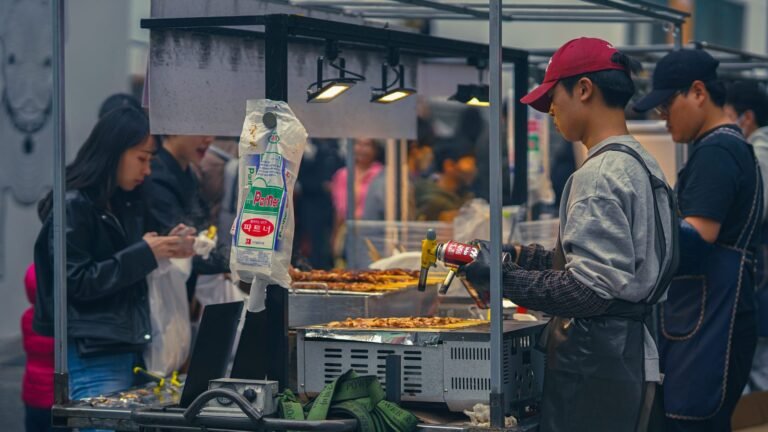
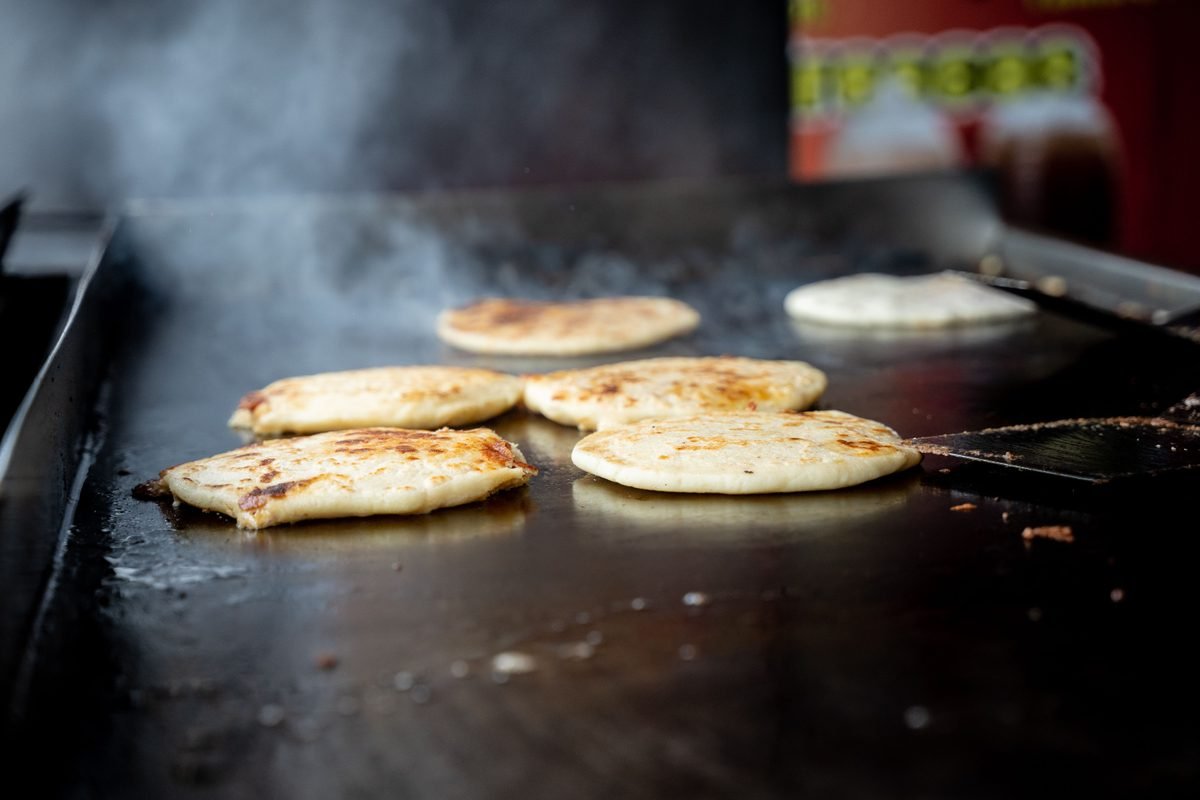
A flat round disc of yeasted dough hits the shallow pool of bubbling margarine, sizzling as the cook presses it down with a round steel stamper. In central Busan, the air around BIFF Square smells permanently of toasted seeds, yeasted flour, and caramelized brown sugar. You will smell the griddles before you spot the red awnings. Ordinary street pancakes across Korea come sealed with molten brown syrup inside, but Busan does something distinctive: cooks shear the hot pastry open with kitchen shears and pack the steaming cavity with a heaping ladle of roasted sunflower, pumpkin, and sesame seeds.
This Busan Twisted Hotteok Seed Street Snack Guide covers everything you need to navigate the cart alleys of Nampo-dong without getting scalded by molten sugar. Whether you take the high-speed train down from the capital using our Seoul to Busan KTX Guide or arrive on an extended southern tour, hitting these griddles at the right hour is essential. Here is where the best carts gather, how to queue like a local, what each pastry costs, and how to eat one on the pavement without ruining your clothes.
Where to Find the Best Carts in BIFF Square
The epicenter of Busan’s seed-stuffed pancake culture sits right along BIFF Square (Busan International Film Festival Square) in Nampo-dong. Take Line 1 on the Busan subway to Jagalchi Station and walk out of Exit 7. Turn left into the wide pedestrian street where bronze handprints of famous film directors line the paving stones. The base subway ride costs ₩1,600 (about $1.20) with a transit card. Within two minutes, you will walk into an open plaza flanked by convenience stores, clothing outlets, and twin clusters of street food stalls sheltered by vinyl canopies.
Competition is fierce along this fifty-meter corridor. Two veteran carts dominate the foot traffic: Seunggi Ssiat Hotteok and the neighboring cart with bright blue banners. Seunggi earned its fame decades ago after celebrity appearances, but both stalls produce an almost identical pastry made to order. You can spot the carts by their deep, rectangular griddle wells filled with shimmering yellow margarine and their stainless steel bins piled high with seed mixes. Do not stress over which cart is objectively superior. Both maintain very high turnover. High turnover means fresh dough.
Weekends see dense lines that spill across the pedestrian tiles. A dedicated queue wrangler directs foot traffic so paths to nearby storefronts remain clear. If you visit on a Saturday afternoon, expect to stand in line for fifteen to twenty minutes. The carts operate with mechanical speed. One cook works the raw dough, pulling sticky golf-ball-sized portions filled with cinnamon sugar. A second cook works the flat metal stampers on the griddle. A third person wields the scissors and scoops the seeds. It runs like clockwork.
Tip: Cash and Account Transfer
While some modern stalls now accept domestic QR codes or simple card readers, small carts strongly prefer cash. Bring crisp ₩1,000 and ₩5,000 banknotes or prepare your T-money card if supported.
How Seed Hotteok Differs from Standard Korean Pancakes
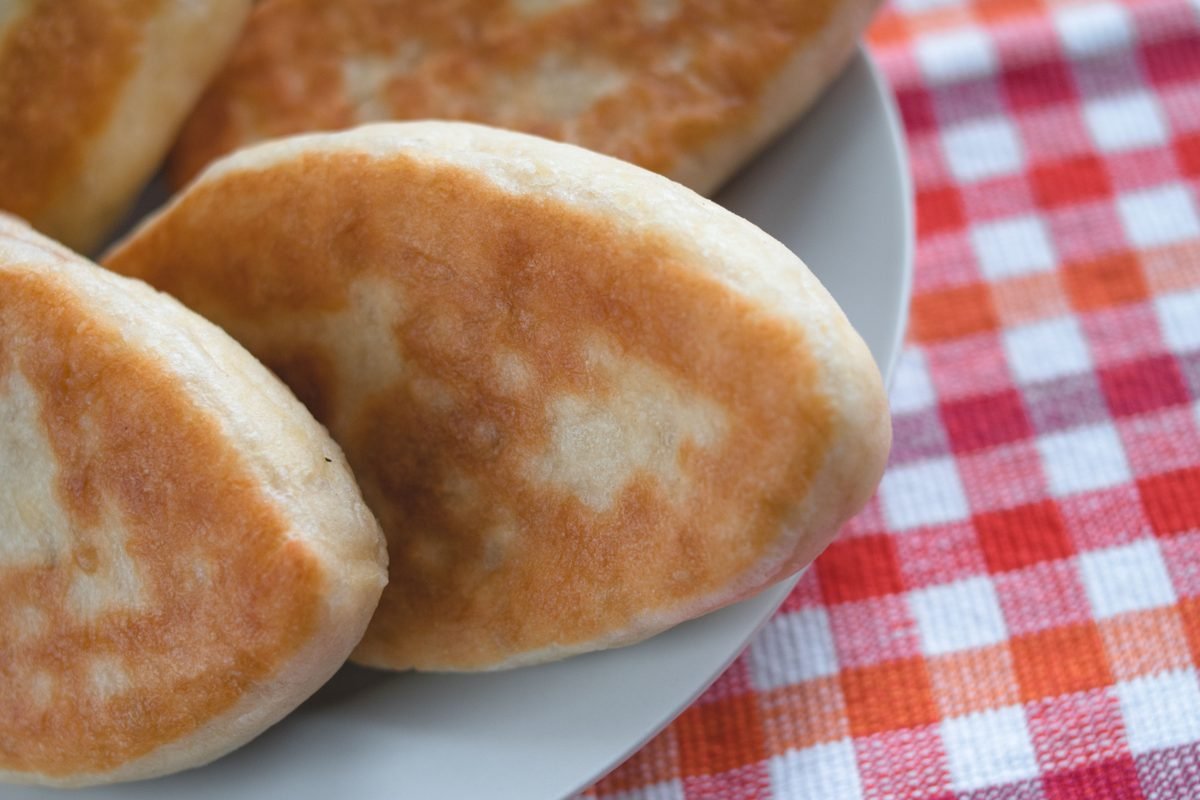
Standard street hotteok found across Seoul and central Korea is flat and soft. It is made from wheat flour and glutinous rice flour, stuffed with brown sugar, crushed peanuts, and cinnamon powder, then shallow-fried until golden. The sugar melts completely inside the pocket, turning into a scalding syrup that coats the dough walls. You bite into a chewy, doughy pillow filled with liquid sweetness. It is delicious, but it can be heavy and one-dimensional after a few bites.
Busan changed the formula completely in the late 1980s. Local vendors altered the dough base, often incorporating sweet rice flour, corn starch, and sometimes green tea powder or black rice to give the skin a crisper exterior crust that stays rigid when cut. The defining difference is what happens after frying. The cook lifts the fried disc out of the bubbling fat, places it on a metal cutting board, and snips an incision into the curved edge using heavy shears. They pry the steaming pocket open and stuff it with an overflowing spoonful of dry, roasted seeds.
The seed blend typically consists of hulled sunflower seeds, pumpkin seeds, pine nuts, and toasted black and white sesame seeds. Because the seeds are not fried inside the liquid sugar, they retain a clean, roasted crunch that balances the richness of the dough. The hot brown sugar syrup coats the seeds upon contact, creating a crunchy praline texture inside the chew of the fried dough. It is savory, nutty, and sweet all at once. The salt in the frying margarine sharpens the sweet filling wonderfully.
From a local: The Margarine Factor
Busan carts fry their pancakes in solid blocks of margarine rather than vegetable oil. This gives the dough an unmistakable buttery fragrance and a signature salty-sweet crust you will not find in home kitchens.
Stall Operating Hours and Best Times to Visit
Street vendors in BIFF Square do not keep strict clockwork hours like brick-and-mortar bakeries. Most ssiat hotteok carts begin rolling out their metal pushcarts and lighting their propane burners around 10:30 in the morning. By 11:30 AM, the margarine blocks have completely melted, the griddles are smoking hot, and the first batches of rested dough are ready for frying. Carts generally stay open until roughly 21:30 or 22:00, or whenever their fresh dough batches run out for the evening.
Timing your walk through Nampo-dong makes a massive difference in wait times. If you arrive between 13:00 and 17:30 on a Saturday or Sunday, lines wrap around the square. Tour groups, domestic travelers, and families with strollers crowd the walkways. If you dislike waiting, plan your visit on a weekday morning between 11:30 AM and 12:30 PM. The carts are fully running, the oil is fresh, and you rarely wait behind more than two or three people.
Rain rarely shuts down the main vendors because the heavy overhead canopies protect the griddles and queuing customers. Severe typhoon warnings or winter gales coming off the Korea Strait will cause early closures, however. If you visit in mid-winter, the steam coming off the griddles is mesmerizing. Eating a burning hot pancake in December wind feels incredible. Just be aware that stalls pack down early on quiet Sunday evenings during the colder months.
How to Order and Manage Molten Syrup Drips
Ordering at the cart is delightfully straightforward even if you speak no Korean. Single pieces currently cost ₩2,000 (about $1.50). Hold up your index finger for one, or two fingers for a pair. The seller will nod and slide your order into the production line. When your turn arrives, hand over your cash directly to the money tray beside the cutting board. Most vendors prefer you place the notes in the tray yourself rather than handing greasy cash to the cook handling food tongs.
Every hotteok comes served inside a folded, thick paper cup. The cook pinches the bottom of the paper cup so it holds the hot pancake upright like a clamshell. Take it carefully. The exterior crust will feel warm, but the molten brown sugar pool settled at the bottom is dangerously hot. First-time eaters routinely burn their tongues or dribble cinnamon syrup down the front of their shirts. Respect the heat.
Eat from the top down. Take small nibbles of the exposed, seed-filled crust first so steam can vent from the interior cavity. This cools the central core while letting you taste the crunch of the sunflower and pumpkin seeds. Never squeeze the bottom of the paper cup while eating. Squeezing acts like a syringe piston, forcing scalding molten syrup straight up toward your lips or over the rim onto your fingers. Keep the cup vertical, nibble down the edges, and tilt back slightly for the final sweet bites.
Heads up: Watch the Sugar Core
The melted brown sugar inside can reach over 80 degrees Celsius. Let the pancake sit in its paper cup for two full minutes before taking your first deep bite.
Other BIFF Square Street Snacks to Pair with Your Hotteok
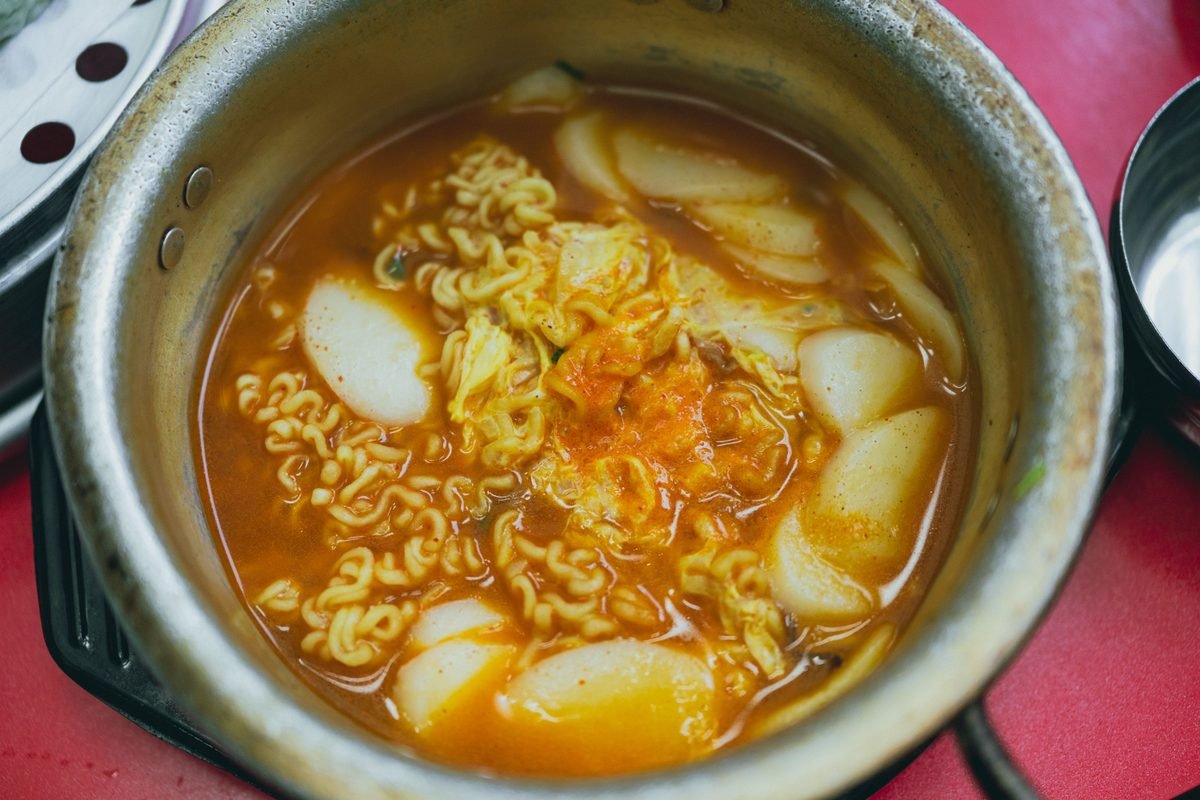
A single ssiat hotteok is rich enough to satisfy a sweet craving, but BIFF Square is an open-air buffet. If you are building a proper street crawl, balance the heavy brown sugar and margarine with savory classics from neighboring carts. Just steps from the pancake vendors, you will find carts selling Busan-style tteokbokki (simmered spicy rice cakes). Busan uses thick, chunky cylinder rice cakes (garae-tteok) stewed in an intense, thick gochujang sauce sweetened with grated radish. A plate costs about ₩4,000 (about $3.00).
Busan is famous for eomuk (fish cake), and BIFF Square carts offer metal troughs filled with skewered fish cake ribbons simmered in hot anchovy-kelp broth. Take a skewer for roughly ₩1,500 (about $1.15), dip it in seasoned soy sauce, and grab a paper cup of the hot steaming broth directly from the vat using the wooden ladle provided on the counter. Drinking the savory, peppery fish broth after a sugary hotteok cuts the sweetness immediately. It is customary and completely free to sip the broth while you eat skewers.
For another iconic pair, try bibim dangmyeon (spicy mixed glass noodles) served in shallow plastic bowls. These thin sweet-potato starch noodles are tossed with blanched spinach, pickled radish strips, fish cake slices, and a dollop of spicy pepper paste for around ₩5,000 (about $3.75). If you want an overview of classic cart foods across the country, check The Ultimate Korean Street Food Guide before you venture out.
Practical Tips for Exploring Nampo-dong and Beyond
Nampo-dong is one of the most walkable commercial districts in Busan, making it easy to pair street food snacking with cultural sightseeing. Once you finish your pancake, walk five minutes south across the main boulevard to Jagalchi Fish Market. The contrast between sugary pastry stalls and stalls selling live octopus, flatfish, and king crab is pure Busan energy. Our Busan Seafood Market and Raw Fish Guide: Eat Like a Local covers how to order raw fish across the street without paying tourist premiums.
Disposing of your paper cup requires some attention. Korea has very few public street bins on open sidewalks, and dumping food containers in shop doorways is poor manners. Return your empty paper cup and used paper napkins directly to the waste bin stationed next to the cart where you purchased it. The vendors provide large plastic buckets lined with garbage bags for this exact purpose. Use hand sanitizer afterward, as sticky sugar residue always finds its way onto fingers.
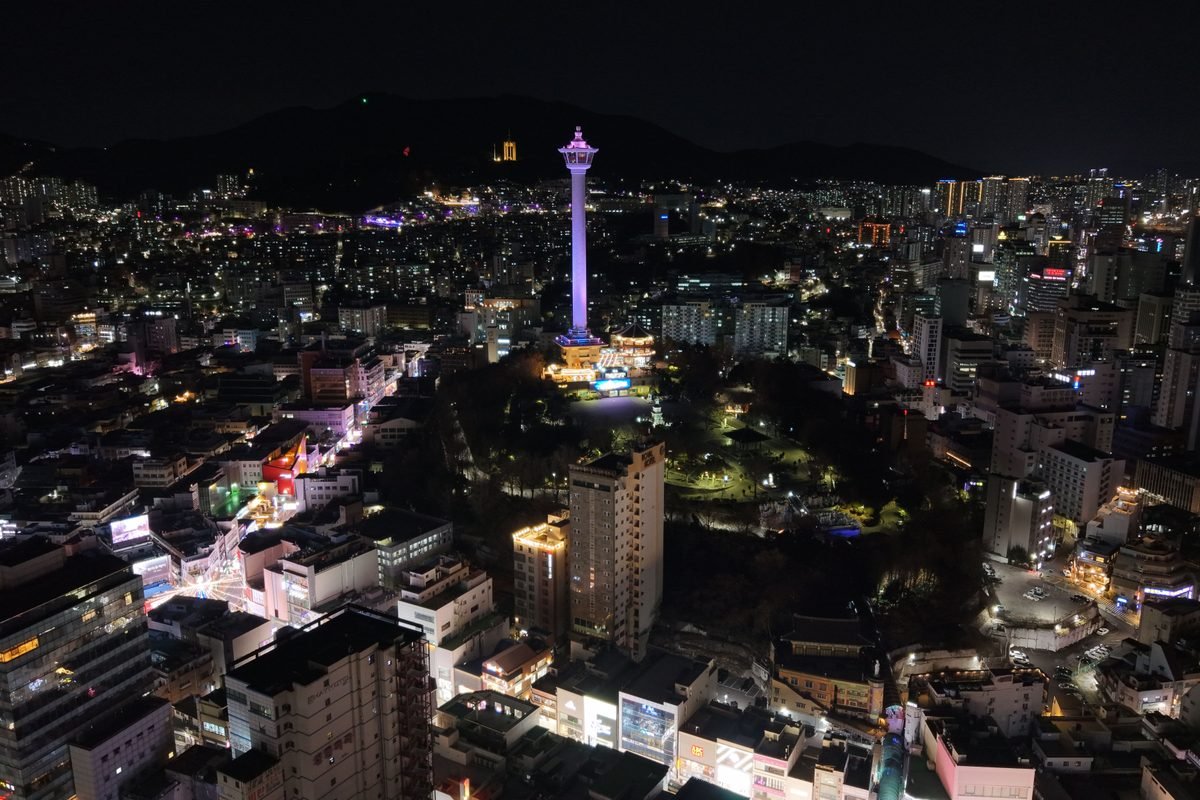
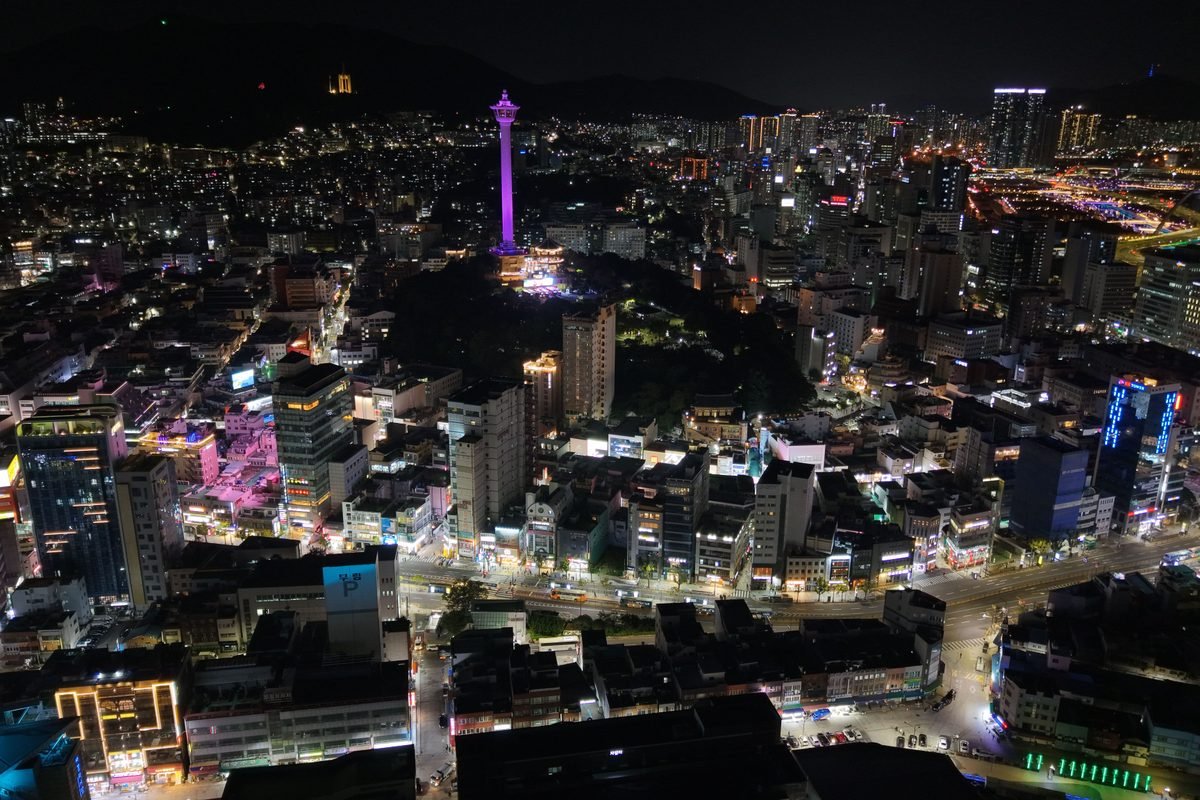
If you want to walk off the carbs, head ten minutes north into Yongdusan Park. An outdoor escalator carries visitors straight up from the shopping streets to the base of Busan Tower. The park offers shaded benches and expansive views over Busan Port, the container cranes, and the surrounding hill neighborhoods. It is quiet and leafy, offering a calm respite from the frantic neon energy of BIFF Square below.
Tip: Keep Small Wet Wipes Handy
Street stalls rarely supply wet napkins, only dry paper tissues. Carry a small pack of pocket wet wipes in your bag to clean sticky sugar syrup off your fingers after eating.
What it costs in Busan
| Item | Local price | USD |
|---|---|---|
| Ssiat Hotteok (Seed Pancake, 1 piece) | ₩2,000 | $1.50 |
| Busan Eomuk (Fish Cake Skewer + Broth) | ₩1,500 | $1.15 |
| Busan Thick Rice Cake Tteokbokki (1 plate) | ₩4,000 | $3.00 |
| Bibim Dangmyeon (Spicy Glass Noodles) | ₩5,000 | $3.75 |
| Busan Subway Single Ride (Zone 1, Transit Card) | ₩1,600 | $1.20 |
| Medium Taxi Base Fare (First 2 km) | ₩4,800 | $3.60 |
| Estimated Street Food Tasting Total | ₩14,100 | $10.60 |
Prices checked October 2026. Always confirm with the provider before you book.
Where to stay in Busan
Budget
Nampo-dong, near Jagalchi Station for guesthouses and clean budget hostels
This location puts you within a three-minute stroll of BIFF Square's hotteok carts and Jagalchi Market. You can easily catch subway Line 1 for rapid transit across the city, with dorm beds and simple private rooms typically running between ₩25,000 and ₩55,000 (about $19 to $41) per night.
Mid-range
Seomyeon, around the central transit interchange for modern business hotels
Seomyeon connects subway Line 1 and Line 2, giving you a direct ride down to Nampo-dong or east toward Haeundae Beach. The streets are packed with local barbecue restaurants, cafes, and late-night izakayas, with quality rooms averaging ₩75,000 to ₩130,000 (about $56 to $98) per night.
Splurge
Haeundae Beachfront, for full-service oceanfront luxury towers
This area suits travelers who want sweeping ocean views over the Korea Strait, heated infinity pools, and premier spa facilities. Haeundae sits roughly forty-five minutes from BIFF Square by metro or taxi, with high-end rooms ranging from ₩220,000 to over ₩450,000 (about $165 to $338) per night.
Mistakes to avoid
- Squeezing the bottom of the paper cup while eating, which propels molten brown sugar directly onto your chin and clothes.
- Arriving at BIFF Square before 10:30 AM expecting stalls to be open, when vendors are still setting up gas lines and melting margarine.
- Abandoning paper cups in storefront gutters instead of returning them to the waste bins beside the food carts.
- Relying solely on international credit cards at small traditional pushcarts without carrying small ₩1,000 cash notes.
- Wearing white canvas shoes or expensive jackets while eating in dense weekend crowds where sugar syrup drips frequently happen.
FAQ
What is inside a traditional Busan seed hotteok?
A Busan ssiat hotteok is filled with melted brown sugar, cinnamon, and a crunchy mixture of roasted sunflower seeds, pumpkin seeds, pine nuts, and sesame seeds. The seeds are packed into an incision cut into the fried dough right before serving.
How much does a hotteok cost at BIFF Square in Busan?
A single seed-stuffed hotteok currently costs ₩2,000 (about $1.50) at the famous stalls along BIFF Square. Most visitors bring cash or small ₩1,000 bills to pay vendor money trays directly.
Are the hotteok stalls open during rainy days?
Yes, stalls operate in normal rain because the vendors cook beneath heavy tarps and overhead canopies that cover the queue areas. Only severe coastal storms or typhoon warnings will force vendors to pack up early.
Can vegetarians eat ssiat hotteok?
Most ssiat hotteok recipes use wheat flour, rice flour, sugar, cinnamon, yeast, and plant seeds, which are plant-based. However, carts fry the dough in generous slabs of commercial margarine that may contain trace dairy, and cross-contamination with nearby meat snacks can occur.