Buyeo Baekje History and Lotus Pond Day Trip Guide


At 07:10 on a clear morning, the intercity bus pulls out of Seoul Nambu Terminal, slipping past southern commuter traffic before the morning rush peaks. Two hours later, you step onto the quiet platforms of Buyeo, where wide farm plains, weeping willows, and ancient stone foundation blocks replace high-rise apartments.
This Buyeo Baekje history and lotus pond day trip is written for independent travelers who want an easy, unhurried escape into southwestern Korea. Buyeo served as Sabi, the final royal capital of the Baekje Kingdom from 538 to 660 AD, and today you can explore royal garden ponds, wooded mountain fortress trails, and traditional dining on foot and by bicycle.
How to Plan a Buyeo Baekje History and Lotus Pond Day Trip
Buyeo sits in Chungcheongnam-do along the winding Baengmagang River. Unlike neighboring Gongju or Nonsan, Buyeo does not have its own KTX train station. That absence keeps large tour buses away and preserves the sleepy pace of an agricultural county seat. The morning air feels clean.
The most straightforward route from Seoul is the intercity express coach departing from Seoul Nambu Terminal (near Subway Line 3 Nambu Bus Terminal Station). Direct coaches depart roughly every 40 to 60 minutes throughout the morning. An adult one-way ticket on an *udeung* (deluxe 28-seat) bus costs ₩18,700 (about $14), and a handful of departures run as standard coaches for a few thousand won less. The ride takes roughly two hours and ten minutes, dropping you at Buyeo Intercity Bus Terminal right in the center of town.
If you prefer riding high-speed rails, you can take a KTX from Yongsan Station down to Gongju Station for ₩25,100 (about $18.80), but you will then need to catch local bus 207 or take a 25-minute taxi ride costing around ₩30,000 (about $22.50) into Buyeo. Taking the direct coach from Seoul Nambu Terminal avoids that transfer entirely and delivers you directly into town within walking distance of the historic core.
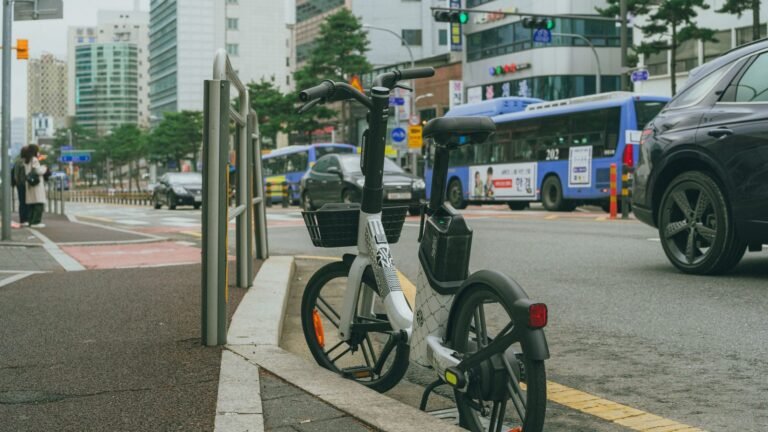
Once you arrive at Buyeo Intercity Bus Terminal, getting around is simple. The town center is compact and flat. You can rent a bicycle from shops near the terminal or Gudeurae Sculpture Park for around ₩4,000 to ₩5,000 (about $3.00 to $3.75) per hour, or ₩10,000 (about $7.50) for three hours. If you want to check local trail lines, be sure to use Naver Map vs Kakao Map for Tourists, as standard international navigation apps do not display walking routes in Korea.
Tip: Buy Your Return Ticket Upon Arrival
When you step off at Buyeo Intercity Bus Terminal, walk inside to the ticket counter and reserve your return seat to Seoul Nambu for late afternoon. Buses between 17:00 and 19:00 often sell out with local travelers heading back up north on weekends.
Best Seasons for Lotus Blooms and Quiet Trails
Timing shapes your day in Buyeo because the landscape changes drastically with the seasons. If your primary goal is to witness the lotus blooms at Gungnamji Pond, July and early August offer the peak flowering period. During the annual Buyeo Seodong Lotus Festival in mid-July, tens of thousands of pink and white lotus flowers and giant Victoria water lilies open across the ponds. The trade-off is intense summer heat and humidity, with midday temperatures regularly passing 32°C (90°F).
For walking and outdoor cycling, October and early November offer ideal conditions. The summer crowds vanish, leaving the lotus ponds covered in broad green seed heads, waving cattails, and yellowing willow frills. Afternoon temperatures hover around a crisp 18°C (64°F), making the forest paths of Busosanseong Fortress comfortable to climb. Along the banks of the Baengmagang River, fields of silver grass and cosmos flowers bloom beside the cycling trails. You can cross-reference regional foliage peaks in our Korea Autumn Foliage Guide to coordinate your journey with peak maple colors.
Spring is equally pleasant from mid-April through May. The wild cherry blossoms along the fortress walls bloom, fresh green reeds emerge from the pond water, and outdoor farm stands begin selling seasonal greens. Winter from December to February is peaceful and cold, though river cruise boats operate on reduced timetables or pause during freeze-ups.


Cycling Baekje Ruins: Jeongnimsaji to Busosanseong
After renting a bicycle near the terminal, your first stop should be the Jeongnimsaji Temple Site, located less than 800 meters down Seongwang-ro. Admission is ₩1,500 (about $1.15). What remains here is an expansive, open earthen plaza anchored by the Five-Story Stone Pagoda of Jeongnimsa Temple, which has stood intact since the Baekje Kingdom ruled this river valley in the 6th century. Pack light for this walk.
The pagoda is designated National Treasure No. 9. While the surrounding wooden monastery buildings burned during the fall of Baekje in 660 AD, the slender granite tiers survived with carved inscriptions made by Tang Dynasty general Su Dingfang. Beside the pagoda stands a stone seated Buddha from the later Goryeo period housed in an open pavilion. The on-site museum provides scale models showing how Sabi’s temple complexes were engineered with kiln-fired earthenware tiles and timber joinery.
From Jeongnimsaji, ride your bicycle north along the tree-lined avenue toward Busosanseong Fortress. The ride takes less than seven minutes along quiet side streets. If you want more background on these historic excavations before visiting, our Buyeo Baekje Historical Site Guide covers the regional dig sites and fortress walls in detail. Lock your bicycle at the designated racks beside the main fortress gate ticket office before heading uphill on foot.
From a local: Town Bicycle Racks and Locking
Buyeo is remarkably safe, but rental shops require you to use the integrated frame lock whenever leaving your bicycle at temple entrance plazas. Keep the physical key in a zipped pocket while you hike up into the fortress woods.
Nakhwaam Rock and the Baengmagang River Cruise
Busosanseong Fortress was the muddy earthen citadel protecting Sabi’s northern flank along the Baengmagang River. General admission is ₩2,000 (about $1.50). The shaded dirt trail climbs gently through dense pine and oak woods for about 1.3 kilometers toward the river bluffs. Along the way, you pass ancient military watchtowers, restored wooden command posts, and storehouse foundations where carbonized grain from the 7th-century siege was unearthed.
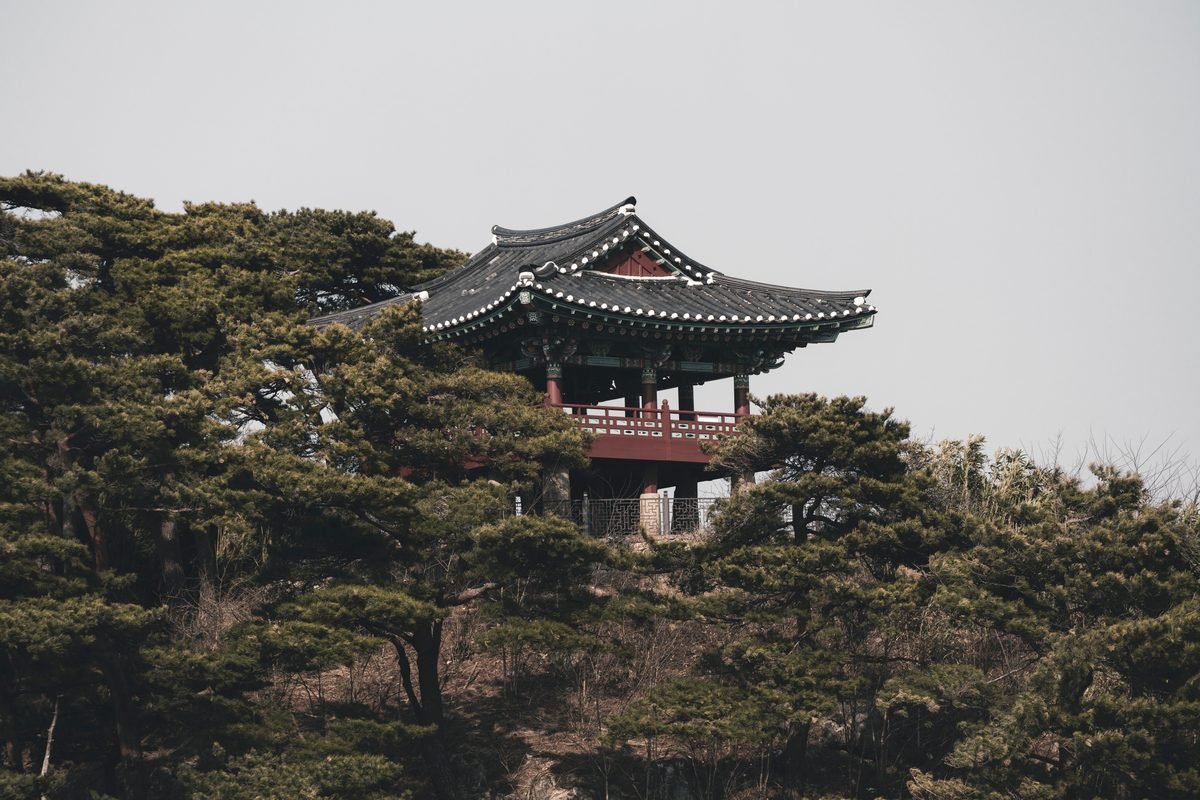
The trail terminates at Nakhwaam, a sheer granite bluff dropping forty meters straight down into the Baengmagang River. Legend says three thousand Baekje court women leaped from this cliff into the water to avoid capture when allied Silla and Tang forces breached the royal city. A wooden pavilion, Baekhwajeong, perches on the rocky edge, offering panoramic views of the curving river valley. The river drifted quietly below.
Steep stone stairs descend from Nakhwaam to Goransa Temple, a small hermitage clinging to the rocks just above the water level. Behind the main hall sits a spring trickling from the stone; local folklore claims drinking a cup knocks three years off your age. Just below Goransa lies the wooden ferry landing.
Instead of hiking back over the mountain trail, board a *hwangpodotbae*—a traditional flat-bottom wooden ferry equipped with a billowing canvas sail and an inboard motor. A one-way ticket downriver to Gudeurae Dock costs ₩5,000 (about $3.75), or ₩7,000 (about $5.25) return. Do not confuse it with the longer Goransa to Subukjeong run, which is ₩8,000 one way. The boat glides along the base of Nakhwaam, giving you an unobstructed perspective of the red cliff face from the water level before arriving at Gudeurae Sculpture Park in about ten minutes.

Heads up: Steep Steps Down to Goransa Dock
The descent from Nakhwaam Rock down to Goransa Temple and the ferry dock consists of narrow, uneven stone steps that can be slippery after morning moisture or rain. Wear sneakers with reliable grip rather than sandals.
Walking Gungnamji Lotus Pond and the Royal Gardens
Located on the southern side of the town center, Gungnamji is the earliest recorded royal artificial pond in Korean history. According to the *Samguk Sagi* (History of the Three Kingdoms), King Mu of Baekje built this garden lake in 634 AD, channeling water from more than seven kilometers away and planting weeping willows around its perimeter. Entry to the park is free.
The scale of the grounds is impressive. More than 120,000 square meters of ponds are separated by wide earthen dikes and wooden boardwalks. Lotus leaves blanket the water. In the center of the lake sits an artificial island topped by Poryongjeong, a classical wooden pavilion connected to the shoreline by a 70-meter arched timber bridge.
Walking around Gungnamji takes about an hour if you move slowly along the outer trails. In addition to native white and pink lotus plants, the grounds feature tropical water lilies, lotus seed pods drying in the breeze, and large carp swimming beneath the wooden footbridges. Benches sit beneath aged willow trees whose branches brush the water’s surface.
Gungnamji feels distinct from modern municipal parks in Korea because there are no commercial high-rises bordering the lake. The background consists entirely of farm ridgelines, low tile-roofed buildings, and open sky. Late afternoon is the best time for photography here, as the setting sun reflects off the still water channels and illuminates the dragon-painted beams of Poryongjeong Pavilion.
Where to Eat Traditional Lotus Leaf Rice in Buyeo
Buyeo’s signature culinary specialty is *yeonnipbap* (steamed lotus leaf rice), a dish directly tied to the town’s centuries-old lotus farming tradition. You will find several long-running family restaurants clustered near the entrance of Gungnamji and around the Gudeurae park area. The rice smells like tea.
To make the dish, short-grain glutinous rice is soaked and mixed with local chestnuts, jujubes, ginkgo nuts, pine nuts, black beans, and pumpkin seeds. The mixture is wrapped tightly inside a fresh, thick lotus leaf and steamed for about forty minutes. When the hot packet is set before you and unfolded, a herbal, earthy aroma rises from the dark green leaf. The sticky rice absorbs the natural oils and tannins, turning pale green with a delicate floral flavor.
Yeonnipbap is almost always served as a full banquet meal (*hanjeongsik*). A standard set costs between ₩18,000 and ₩24,000 (about $13.50 to $18.00) per person. Alongside the rice packet, tables are filled with fifteen to twenty small side dishes: seasonal river greens, fermented lotus root pickles, acorn jelly (*dotorimuk*), doenjang-jjigae, and grilled dried fish. Many local restaurants also include *tteokgalbi* (minced grilled short rib patties) or grilled *deodeok* (mountain root coated in sweet red pepper paste) as part of the spread.
Two reliable establishments within walking distance of Gungnamji are Yeonkkotbap Sangchaerim and Baekje Hyang. Both serve house-made lotus leaf rice sets along with cooled lotus leaf tea (*yeonnipcha*). Most restaurants accept credit cards and open from 11:30 to 20:00, with a brief kitchen break between 15:00 and 17:00.


Tip: Midday Lunch Rush Around Gungnamji
The premier lotus rice restaurants near Gungnamji fill quickly between 12:00 and 13:30 on weekends. Aim to eat early at 11:45 or delay your meal until 13:45 to avoid waiting in long queues at the door.
What it costs in Buyeo
| Item | Local price | USD |
|---|---|---|
| Deluxe Intercity Coach (Seoul Nambu to Buyeo) | ₩18,700 | $14.04 |
| Bicycle Rental (3 hours) | ₩10,000 | $7.50 |
| Jeongnimsaji Temple Site Admission | ₩1,500 | $1.15 |
| Busosanseong Fortress Admission | ₩2,000 | $1.50 |
| Baengmagang Ferry (Goransa to Gudeurae, one way) | ₩5,000 | $3.76 |
| Lotus Leaf Rice Hanjeongsik Lunch | ₩20,000 | $15.00 |
| Return Deluxe Intercity Coach (Buyeo to Seoul Nambu) | ₩18,700 | $14.04 |
| Total Day Trip Cost | ₩75,900 | $57.01 |
Prices checked October 2026. Always confirm with the provider before you book.
Where to stay in Buyeo
Budget
Buyeo Bus Terminal area, for budget motels and guesthouses
Staying near the terminal puts you within a five-minute walk of bicycle rental outfits, intercity transit, and convenient local diners. Clean private motel rooms in this neighborhood typically run between ₩45,000 and ₩60,000 (about $34 to $45) per night.
Mid-range
Gudeurae Park area, for modern tourist hotels and pensions
This district sits along the Baengmagang riverbank, placing you right at the ferry landing and within walking distance of prime lotus leaf rice restaurants. Nightly rates for comfortable double rooms generally range from ₩80,000 to ₩120,000 (about $60 to $90).
Splurge
Baekje Cultural Land vicinity, for full-service resort suites
Located just north of the river, this resort area offers spacious modern rooms, on-site dining, and immediate access to the reconstructed royal palaces and outlets. Expect nightly rates between ₩160,000 and ₩250,000 (about $120 to $188).
Mistakes to avoid
- Searching for a high-speed KTX train station in Buyeo; the town has no rail stop, so booking a direct express bus from Seoul Nambu Terminal is faster and cheaper.
- Hiking down from Nakhwaam Rock in flip-flops or smooth leather shoes; the rocky path down to Goransa Temple is steep and slick.
- Forgetting to reserve your return bus ticket to Seoul before starting your afternoon sightseeing; weekend return coaches frequently sell out.
- Visiting Gungnamji Pond at noon in midsummer without sun protection; the pond dikes offer virtually no overhead shade.
FAQ
How much time do you need for a day trip to Buyeo?
Plan for six to seven hours in town, excluding the two-hour bus ride each way. This allows plenty of time to explore Jeongnimsaji, hike Busosanseong, take the river boat, walk Gungnamji, and enjoy a sit-down lotus leaf rice meal.
Is a Buyeo Baekje history and lotus pond day trip doable without a rental car?
Yes, Buyeo is one of the easiest historic towns in Korea to tour without a car because the main fortress, stone pagoda, and royal lotus gardens all lie within a flat two-kilometer radius of the bus terminal. You can easily walk or rent a bicycle.
When is the lotus festival held at Gungnamji?
The Buyeo Seodong Lotus Festival takes place every year in mid-July when the blooms peak. While the blossoms are striking, visiting in spring or autumn offers much cooler weather and fewer crowds.