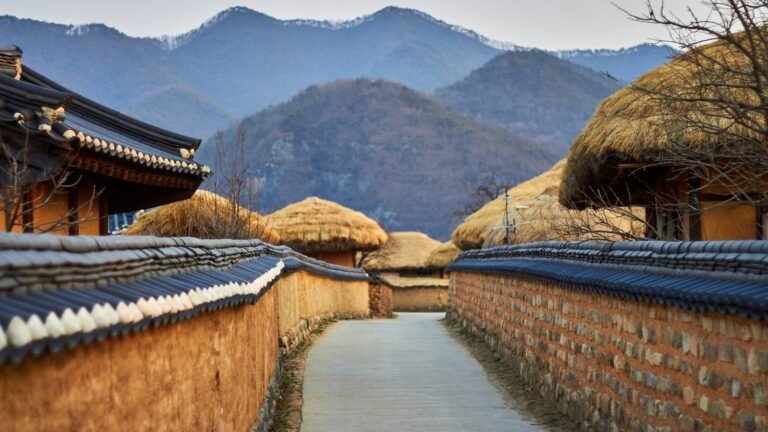
Damyang Bamboo Shoot Cuisine and Noodle Street Guide

The morning bus from Gwangju drops you off right by the Damyang stream, where the smell of boiling anchovy broth drifts across the riverbank. Damyang is known across South Korea as the country’s bamboo capital, but the real draw for domestic travelers is sitting down to a heavy wooden tray of bamboo stalk rice, tangy bamboo shoots, and grilled minced beef patties. If you want to experience authentic Damyang bamboo shoot cuisine and noodle street lunches, this pocket of Jeollanam-do offers one of the most rewarding food trips on the peninsula.
This guide is for independent travelers looking to explore beyond standard city center tours and sample classic regional dishes from southwestern Korea. We cover the logistics of reaching town, what to order at local specialty halls, how bamboo stalk rice is prepared, and how to combine lunch with a slow stroll along the ancient tree-lined dike.
How to Plan Damyang Bamboo Shoot Cuisine and Noodle Street
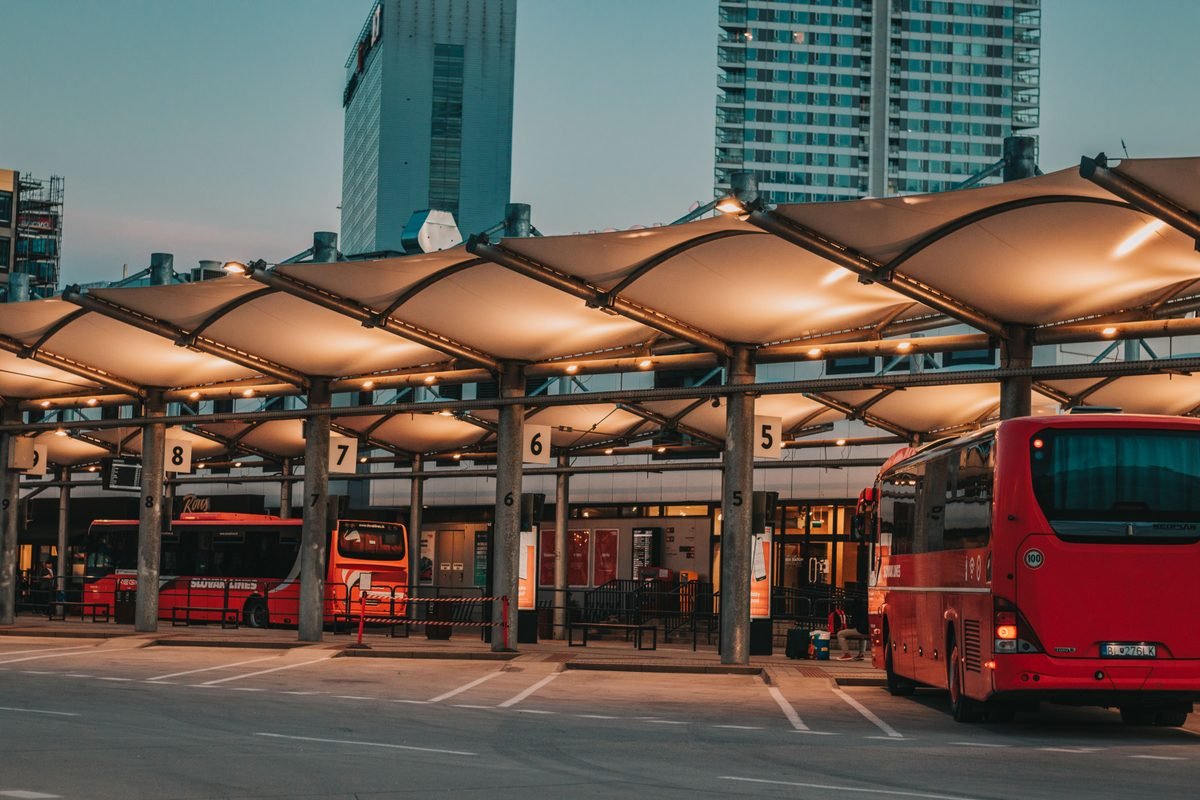
Damyang sits in Jeollanam-do, just north of the provincial hub of Gwangju. Getting here from Seoul requires minimal effort once you understand the transit hubs. The fastest rail option is boarding a KTX train from Yongsan Station to Gwangju-Songjeong Station, which takes about one hour and forty-five minutes and costs ₩42,000 (about $31.50). Jeonju and Gwangju high-speed trains depart from Yongsan rather than Seoul Station, so make sure you head to the correct terminal. From Gwangju-Songjeong, hop onto the local metro or take a taxi to the Gwangju U-Square Bus Terminal. Direct express buses to Damyang depart roughly every twenty minutes, with tickets priced at ₩2,800 (about $2.10) for a ride that lasts forty minutes.
You can also board a direct express intercity bus from Seoul Central City Bus Terminal (Express Bus Terminal Line 3, 7, and 9) directly to Damyang Bus Terminal. The standard coach runs four times daily, taking roughly three hours and thirty minutes for ₩23,600 (about $17.70), while the premium coach costs ₩34,600 (about $26). The direct bus drops you right in town, a fifteen-minute walk from the bamboo groves. Navigation is straightforward using local smartphone maps. While Google Maps does not provide functional walking or transit routes in Korea, checking routes on Naver Map vs Kakao Map for Tourists will get you through town without confusion.
The town center is compact and walkable. You will spend your day between three connected landmarks: the bamboo park at Juknokwon, the river dike park called Gwanbangjerim, and the outdoor food strip known as Damyang Guksu Geori (Noodle Street). Setting aside five to six hours allows you to eat two distinct meals, walk off the starch, and catch an evening train back.
Tip: Board from Yongsan
Remember that high-speed trains heading south to Gwangju depart from Yongsan Station, not Seoul Station. Double-check your departure hall before calling a morning taxi.
Daetongbap and Tteokgalbi: The Bamboo Feast
The foundation of Damyang bamboo cuisine is daetongbap (대통밥), rice steamed directly inside a freshly cut segment of thick bamboo trunk. Kitchens pack the green stalk with short-grain sticky rice, black rice, chestnuts, gingko nuts, jujubes, and pine nuts. The open end of the bamboo cylinder is sealed with traditional paper (hanji) and steamed for around forty-five minutes. The natural moisture and bamboo sap (jukryeok) infuse the grains, giving the warm rice a mild, woody aroma and a light herbal sweetness. You scrape the tender grains out with a wooden spoon, loosening the edges along the inner wall.
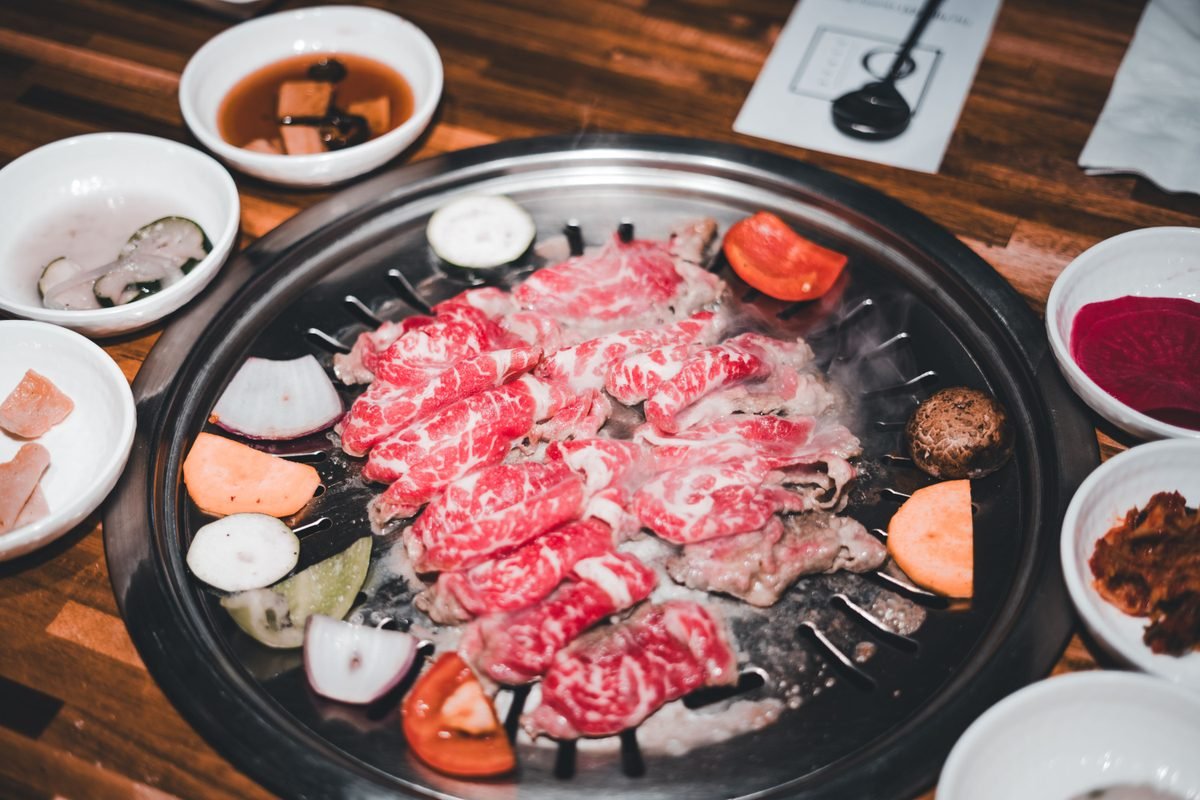
Daetongbap is rarely eaten in isolation. In Damyang, it is almost always paired with tteokgalbi (떡갈비), seasoned minced beef short ribs formed into thick squares and grilled over hardwood charcoal. Making tteokgalbi requires trimming beef from the rib bone, mincing it finely by hand with garlic, scallions, soy sauce, and sesame oil, then shaping it back onto the rib or into small patties. Grilling over open embers creates a caramelized crust with a melting, juicy interior that balances the earthy steam of the bamboo rice.
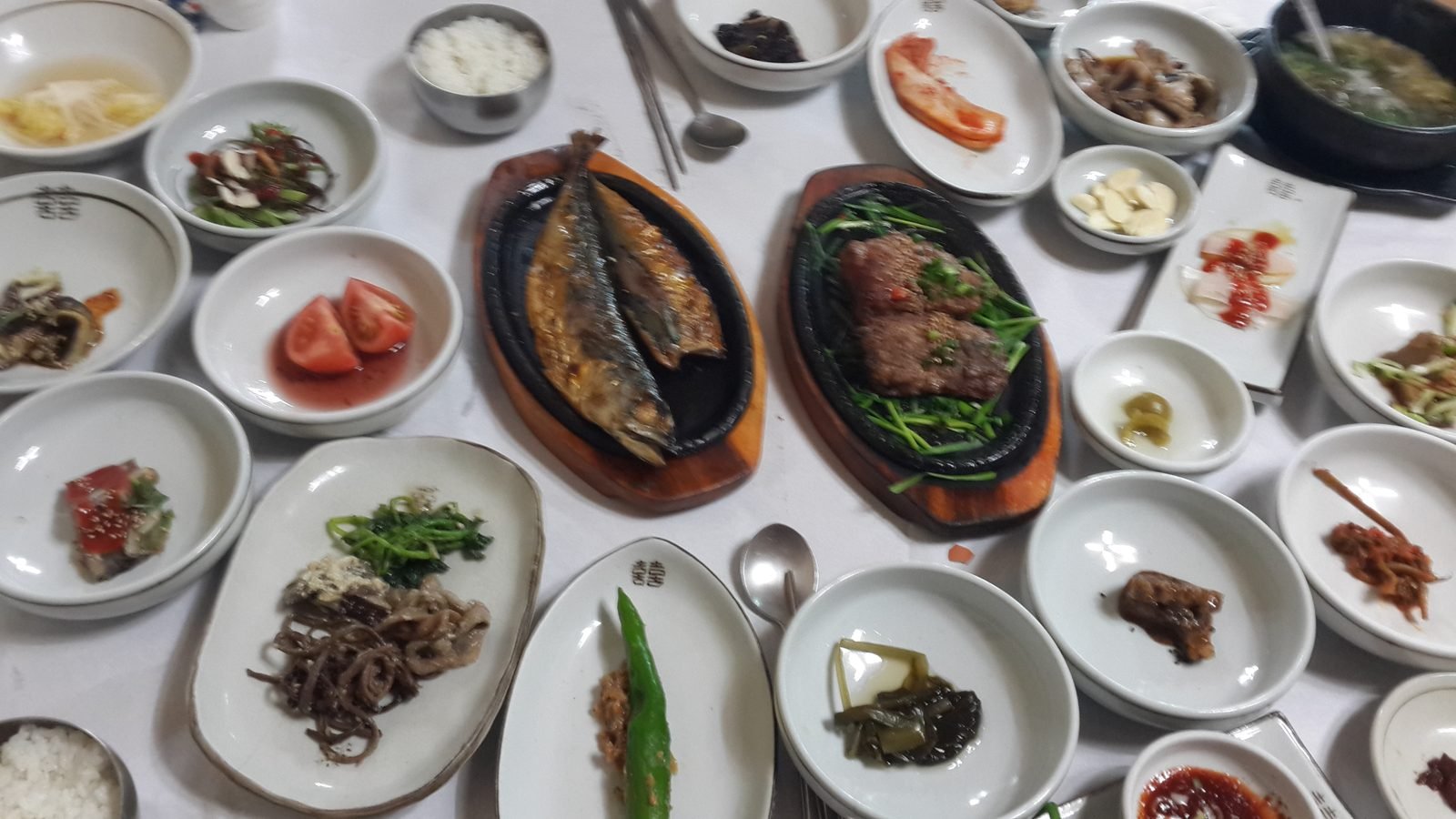
When you sit down at a dedicated restaurant near Juknokwon, expect an expansive table spread known as hanjeongsik. Along with the rice cylinder and sizzling beef patties, servers lay out a dozen side dishes: pickled bamboo slices, lotus root, deodeok root, dried seaweed soup, and fresh mountain greens. A complete set menu generally costs between ₩22,000 and ₩32,000 (about $16.50 to $24) per person, depending on whether the tteokgalbi is made purely of domestic Hanwoo beef or a mix of beef and pork. Food comes out quickly.
From a local: Keep the Bamboo Stalk
Most daetongbap restaurants discard the steamed bamboo stalks after one use because the wood splits under heat. Many shops will happily wash the stalk and let you take it home as a small pen holder or souvenir if you ask.
Juksun Muchim: Seasoned Bamboo Shoot Salad
While daetongbap brings comforting warmth, juksun muchim (죽순무침) supplies the bright acid and spice needed to cut through rich meat dishes. Juksun are young bamboo shoots harvested before they harden into timber. Damyang harvests prime shoots in late spring, slicing them into tender strips and blanching them to eliminate any raw astringency. Restaurants here preserve shoots across the year using traditional brine or quick-freezing, ensuring crisp texture even in late autumn.
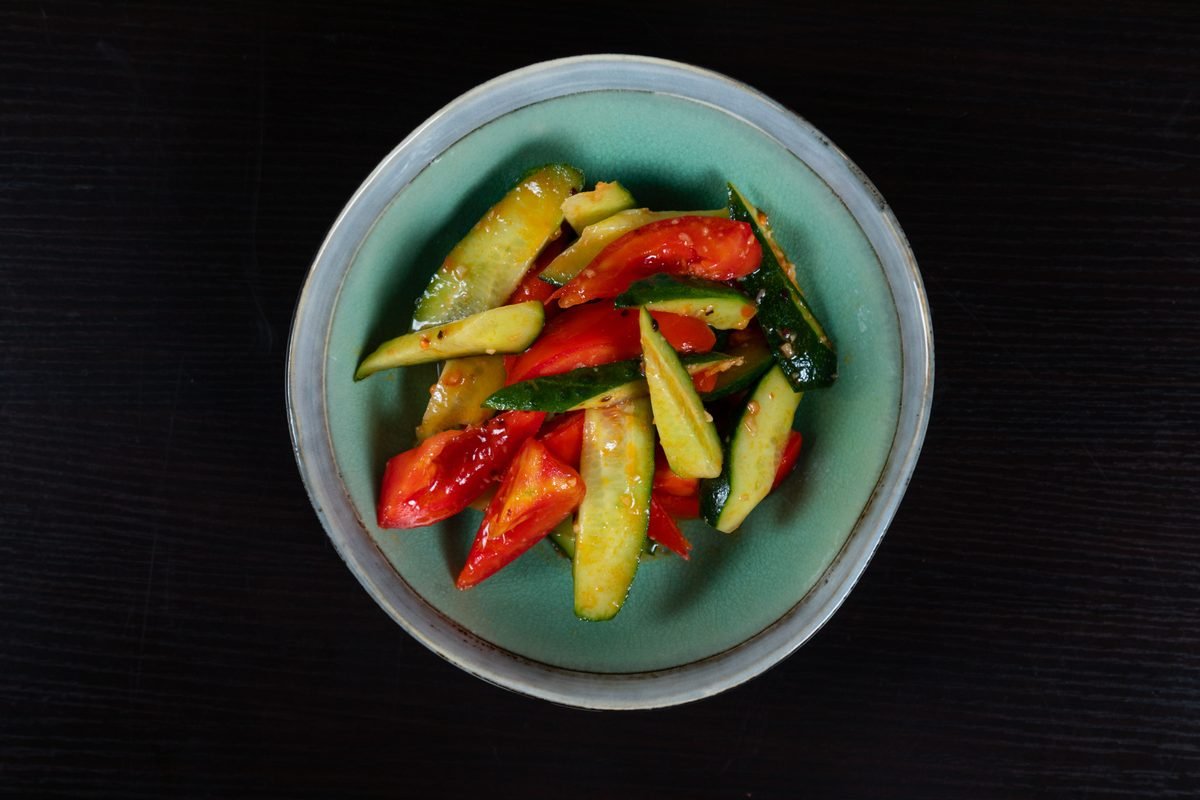
The salad dressing is a punchy blend of fermented red pepper paste (gochujang), local persimmon vinegar, minced garlic, raw sugar, and roasted sesame seeds. The blanched shoots are tossed by hand with fresh vegetables like thinly shaved cucumbers, onions, wild dropwort (minari), and occasionally boiled pond snails (ureong) or blanched squid for extra chew. Every bite delivers a sharp crunch. The sweetness of the shoots emerges beneath the chili heat, refreshing your palate between spoonfuls of rice and bites of rich beef.
You can order a standalone plate of juksun muchim for ₩12,000 to ₩18,000 (about $9 to $13.50), but it almost always appears as a core side dish in full bamboo table sets. Notice how local diners eat it: they wrap a piece of tender grilled short rib and a forkful of spicy bamboo shoots inside fresh lettuce leaves with ssamjang. The contrast between hot charcoal meat and crisp, chilled vinegar shoots shows why this southern province has such an enduring culinary reputation. If you want to dive deeper into the region’s famous food traditions, consider adding a day for the Jeonju Hanok Village Guide just an hour’s ride to the north.
Walking Gwanbangjerim Forest Path Between Meals
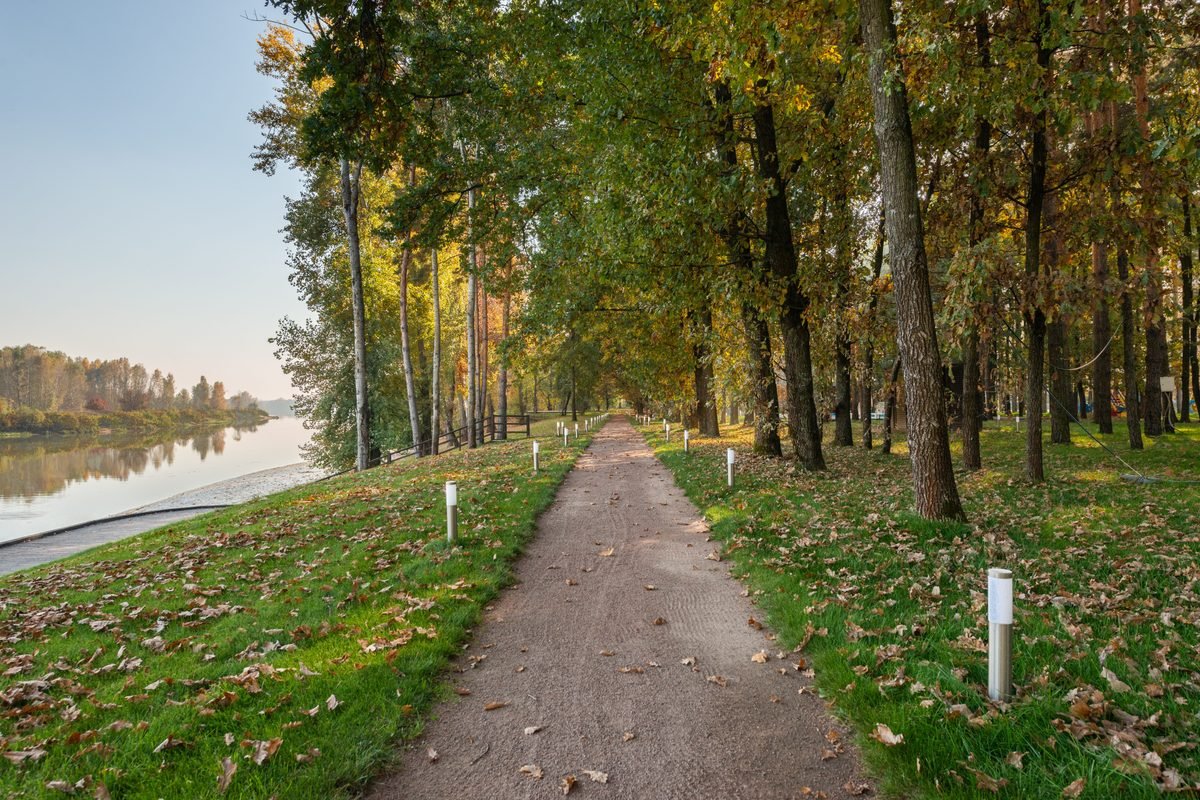
A short pedestrian crossing from the front gate of Juknokwon brings you directly to Gwanbangjerim (관방제림), a historic riverside forest path that provides the ultimate walking route after a heavy lunch. In the seventeenth century, frequent flooding from the Damyangcheon river destroyed homes and ruined grain fields along the floodplains. In 1648, the county magistrate mobilized residents to build a strong earthen flood dike, planting hundreds of deciduous trees across the embankment to reinforce the soil with deep root networks. More than three centuries later, those saplings have matured into a magnificent canopy stretching roughly two kilometers along the river.
Walking here is completely free of charge. Giant zelkova trees, Korean willows, cherry trees, and Chinese hackberries lean gently over the calm water, casting deep shadows across the packed gravel trail. In October and early November, the canopy shifts into shades of rust, amber, and gold, dropping leaves onto the wide benches placed along the embankment. Couples, families, and older locals from town stroll here at a quiet pace, stopping to look at stepping-stone bridges crossing the shallow stream. The forest path has an unhurried, serene rhythm that contrasts with the steep staircases of the commercial bamboo groves.
The path functions as the natural link connecting the bamboo parks with the dining quarter. Walking the length of Gwanbangjerim takes around thirty to forty minutes at a leisurely stroll. You can cross the stepping stones to watch ducks diving for small fish, or sit on a timber platform to rest your feet before the next meal. The path is flat and well maintained. It creates the perfect transition from the rich flavors of your mid-day bamboo feast to the casual bowls waiting along the riverfront.
Damyang Noodle Street: Broth, Sauce, and Steamed Eggs
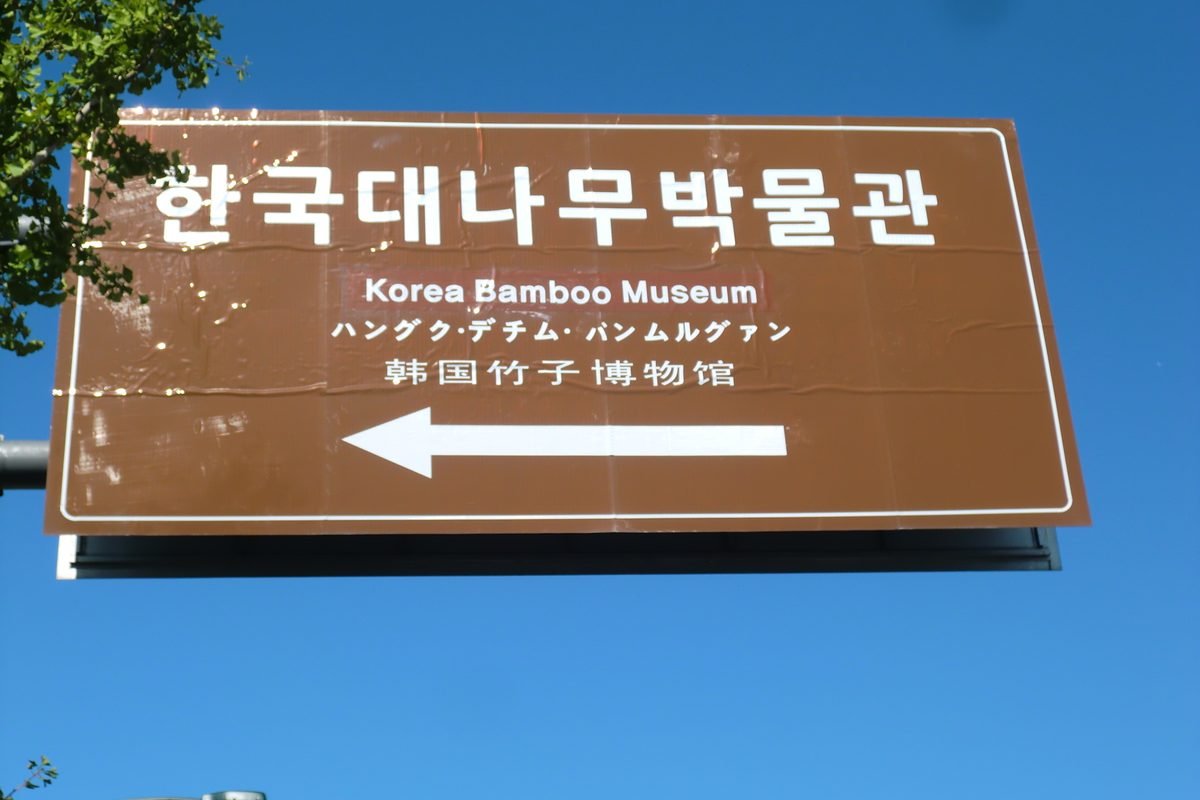
Directly above the Gwanbangjerim embankment, under the shade of the ancient trees, sits Damyang Guksu Geori (담양 국수거리). This open-air strip began over fifty years ago when market vendors began setting up modest low tables along the river dike to sell affordable wheat noodles to laborers and market day shoppers. Today, around a dozen rustic noodle houses line the street, each with indoor seating and rows of red plastic chairs or wooden raised benches (pyeongsang) facing out over the river greenery. On mild spring and autumn afternoons, eating outside beneath the giant branches is an essential Damyang custom.
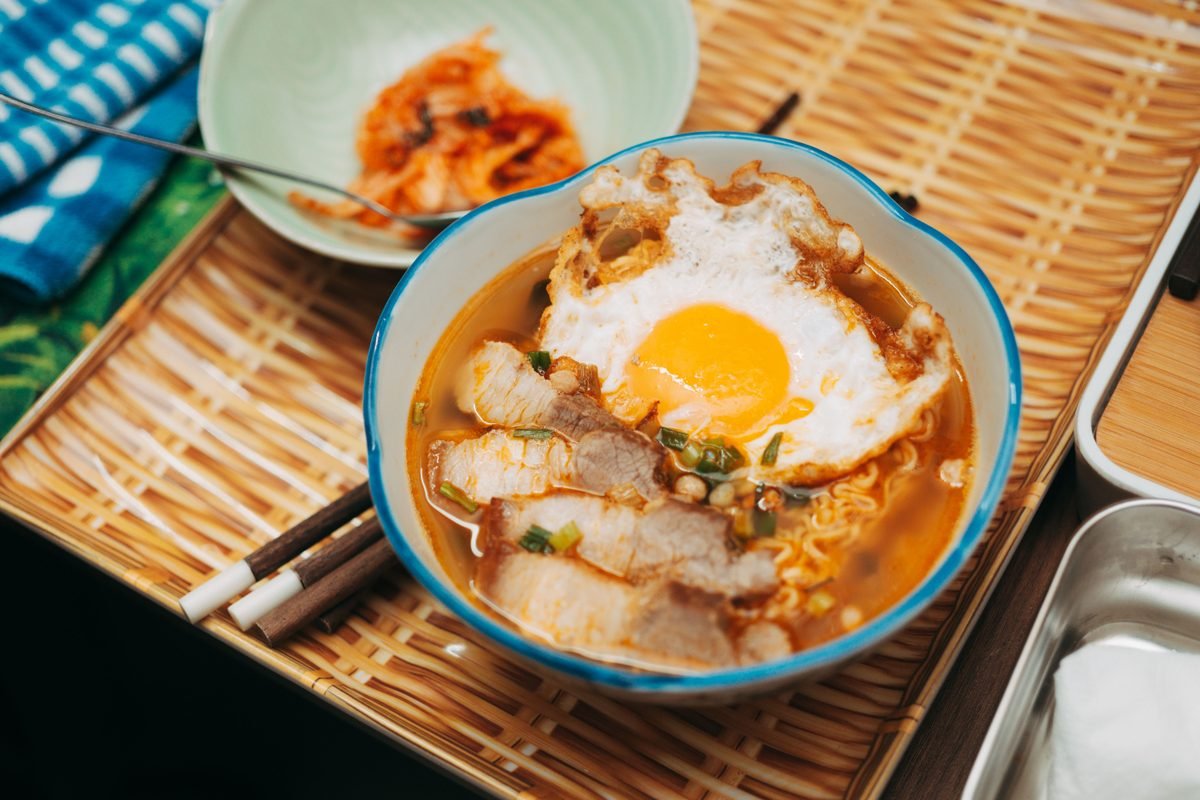
The menus here are deliberately brief and remarkably inexpensive. The flagship bowl is mul-guksu (물국수), warm wheat noodles served in a rich broth simmered for hours from dried anchovies, kelp, green onions, and whole dried chili pods. A dusting of spicy pepper powder, toasted seaweed flakes, and seasoned scallions crowns the bowl. The broth hits with a deep, clean savory punch backed by gentle chili heat. The alternative choice is bibim-guksu (비빔국수), cold wheat noodles tossed in a sweet and pungent gochujang dressing mixed with shredded cabbage, sesame oil, and crunchy radish. Bowls cost roughly ₩6,000 to ₩7,000 (about $4.50 to $5.25).
No visit to Noodle Street is complete without ordering yak-gyeran (약계란), eggs stewed for hours in vats of medicinal bamboo broth and herbal aromatics. The shells turn a dark speckled tea color, and the whites become firm and richly savory. Two eggs cost just ₩1,000 to ₩1,500 (about $0.75 to $1.15). Crack them against the wooden table, peel them while warm, and dip them straight into the salty anchovy soup. Pair your meal with a cold bowl of bamboo-infused makgeolli (rice wine) for ₩4,000 (about $3) for an unbeatable riverfront afternoon.
Heads up: Weekend Bench Crowds
On sunny Saturday and Sunday afternoons between 12:00 and 14:00, the river-facing outdoor benches fill up completely. Arrive around 11:30 or after 14:30 to grab a terrace seat without waiting in line.
Practical Tips for Eating and Touring in Damyang
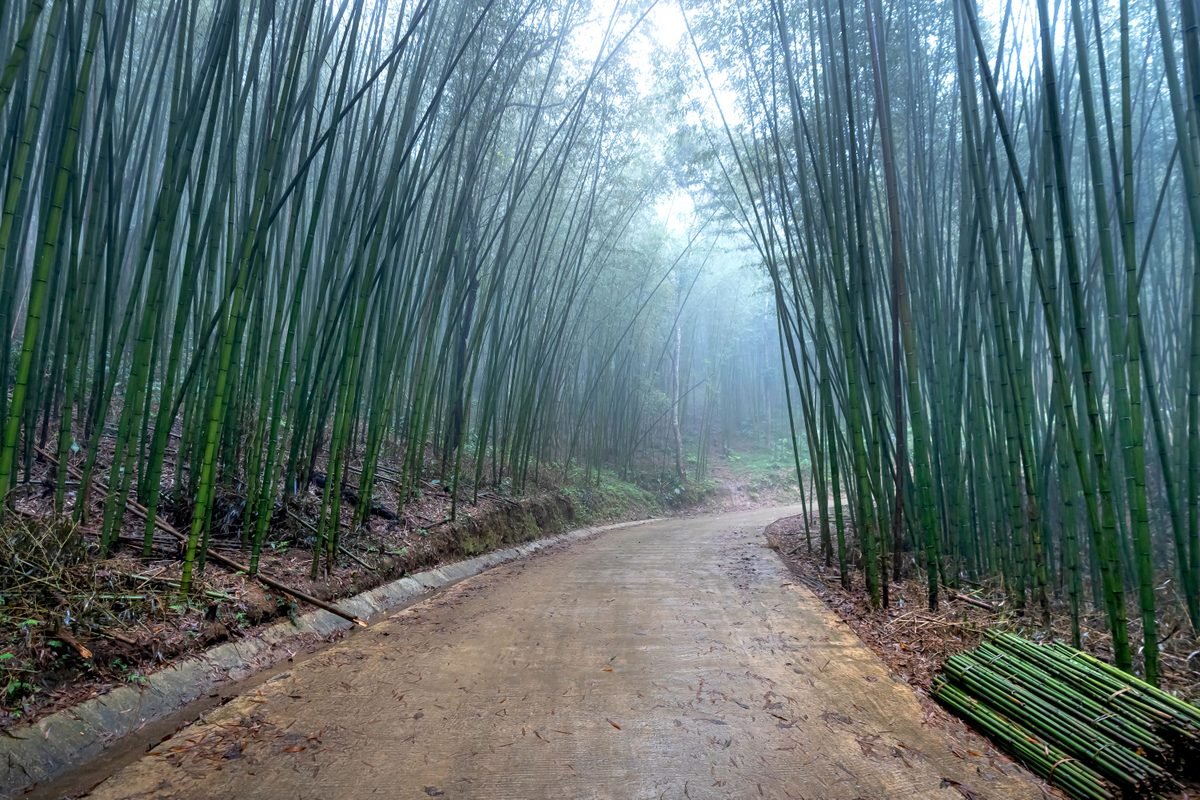
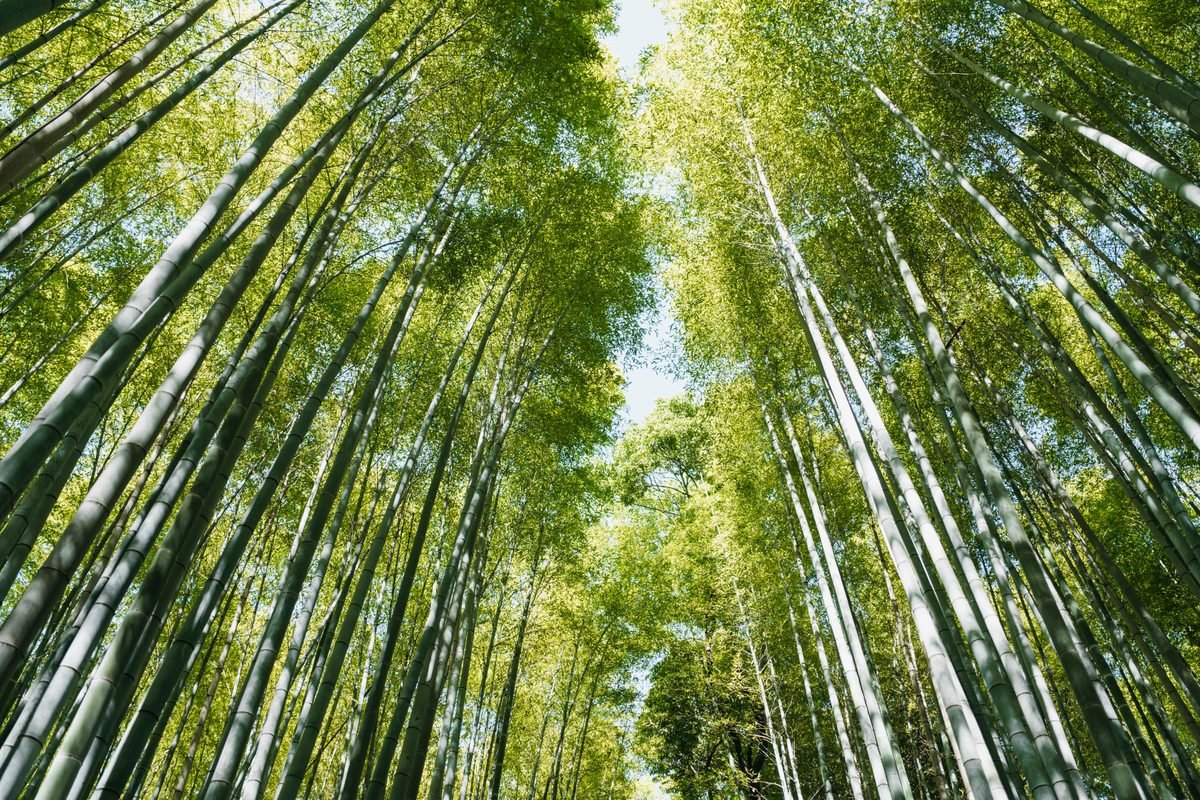
When planning your eating schedule, approach Damyang with an empty stomach and an early start. Most visitors pair a bamboo banquet with a visit to the neighboring bamboo forest; you can read our Damyang Bamboo Forest Day Trip guide for details on trail loops, temple pavilions, and ticket pricing inside Juknokwon, which charges ₩3,000 (about $2.25) for adults. Entering the bamboo forest early in the morning lets you wander the towering green stalks in complete silence before the mid-day tour groups arrive from Gwangju.
Timing your meals requires a deliberate strategy. The tteokgalbi and daetongbap sets are rich, heavy, and served in massive portions that can leave you lethargic if you plan heavy walking afterward. Eat your substantial bamboo stalk lunch around 12:00, spend ninety minutes walking the length of Gwanbangjerim and exploring the Meta Provence European-style village further down the trail, then circle back to Noodle Street around 15:30 or 16:00 for a lighter bowl of noodles and brown eggs. Most noodle vendors stay open until roughly 20:00, making it an easy early dinner option before catching the intercity bus home.
Card payments are accepted everywhere in Damyang, including small noodle shops and souvenir stands. However, carrying around ₩10,000 (about $7.50) in cash is helpful if you want to purchase roasted bamboo shoot crackers or candied ginkgo nuts from elderly vendors selling produce on folding tables near the river bridge. Dress in comfortable walking shoes because the stone steps around the groves and the gravel dike path add up quickly. A single day here easily reaches ten thousand steps.
Book ahead: Reserve Weekend Trains Early
KTX seats from Yongsan to Gwangju-Songjeong sell out days ahead on Friday evenings and Sunday returns. Book your tickets via the Korail+ app up to a month in advance.
What it costs in Damyang
| Item | Local price | USD |
|---|---|---|
| KTX Train (Yongsan to Gwangju-Songjeong, one way) | ₩42,000 | $31.50 |
| Intercity Bus (Gwangju U-Square to Damyang) | ₩2,800 | $2.10 |
| Juknokwon Bamboo Forest Entry | ₩3,000 | $2.25 |
| Daetongbap and Tteokgalbi Set Meal | ₩26,000 | $19.50 |
| Plate of Juksun Muchim (Bamboo Shoot Salad) | ₩15,000 | $11.25 |
| Warm Anchovy Noodle Soup (Mul-guksu) | ₩6,000 | $4.50 |
| Herbal Steamed Bamboo Eggs (2 eggs) | ₩1,000 | $0.75 |
| Estimated Daily Food and Local Travel Total | ₩95,800 | $71.85 |
Prices checked October 2026. Always confirm with the provider before you book.
Where to stay in Damyang
Budget
Damyang Town Center, for budget guesthouses near the bus terminal
Staying within walking distance of Damyang Bus Terminal puts you fifteen minutes on foot from Noodle Street and saves on taxi fares. Expect clean private rooms in small family guesthouses or motels ranging from ₩45,000 to ₩65,000 (about $34 to $49) per night.
Mid-range
Juknokwon Periphery, for traditional hanok stays near the bamboo gate
These courtyard hanok properties sit right at the base of the bamboo park, allowing you to walk straight into Gwanbangjerim at sunrise. Nightly rates generally sit between ₩80,000 and ₩130,000 (about $60 to $98) with peaceful garden surroundings.
Splurge
Metasequoia Lane Outskirts, for modern design pensions and private villas
Located about five minutes by taxi east of the town center, this quiet rural pocket offers spacious detached pensions featuring private terrace hot tubs and forest views. Modern luxury units cost between ₩180,000 and ₩280,000 (about $135 to $210) per night.
Mistakes to avoid
- Arriving at Seoul Station instead of Yongsan Station for the Honam Line KTX down to Gwangju.
- Ordering a full daetongbap banquet and attempting to eat a large bowl on Noodle Street immediately afterward without giving yourself a walking break along Gwanbangjerim.
- Relying on Google Maps for walking directions between the bus terminal, bamboo groves, and noodle alleys rather than Naver Map or KakaoMap.
- Assuming every noodle shop accepts cash only; all established brick-and-mortar restaurants take standard credit cards.
- Skipping the brown herbal steamed eggs on Noodle Street, which are cooked in medicinal bamboo water and taste completely different from regular boiled eggs.
FAQ
What makes Damyang bamboo shoot cuisine and noodle street dishes distinct from standard Korean food?
Damyang utilizes locally harvested young bamboo stalks and shoots directly in its cooking vessels and salads, infusing dishes with a woodsy, herbal fragrance rarely found in standard city dining. The adjacent Noodle Street features thick wheat noodles simmered in intensely concentrated anchovy broths cooked over outdoor burners, served alongside eggs steeped in bamboo medicinal water.
Can you do a Damyang food trip as a day trip from Seoul?
Yes, taking an early morning KTX from Yongsan to Gwangju-Songjeong and catching the local bus gets you to Damyang in about two and a half hours. You can easily spend four to five hours walking, eating lunch, exploring the forest trail, and having early dinner before catching an evening train back to Seoul.
Are there vegetarian options available in Damyang?
Pure daetongbap (bamboo stalk rice) is naturally vegan, packed with nuts and grains, but most banchan side dishes contain anchovy broth, fish sauce, or meat toppings. You can ask for a mushroom or vegetable set at select hanjeongsik restaurants, though standard tteokgalbi sets are strictly beef and pork.